Diatraea saccharalis
TaxID: 40085
Basic Information
Diatraea saccharalis
Sugarcane Borer, sugarcane borer
Diatraea saccharalis, the sugarcane borer, is a species of moth of the family Crambidae. It was described by Johan Christian Fabricius in 1794. It is native to the Caribbean, Central America, and the warmer parts of South America south to northern Argentina. It was introduced to Louisiana in about 1855, and has since spread to the other Gulf Coast states. The wingspan is 18 C28 mm for males and 27 C39 mm. The larvae are considered a pest on sugarcane and other crops such as corn, rice, sorghum and Sudangrass. Other food plants include Sorghum halepense, Paspalum, Panicum, Holcus and Andropogon.
from Wikipedia
Taxonomic Information
Metazoa
Arthropoda
Insecta
Lepidoptera
Crambidae
Diatraea
saccharalis
unclassified
Species
nan
k__Metazoa;p__Arthropoda;c__Insecta;o__Lepidoptera;f__Crambidae;g__Diatraea;s__Diatraea saccharalis
nan
Arthropods
Photos (5 photos)
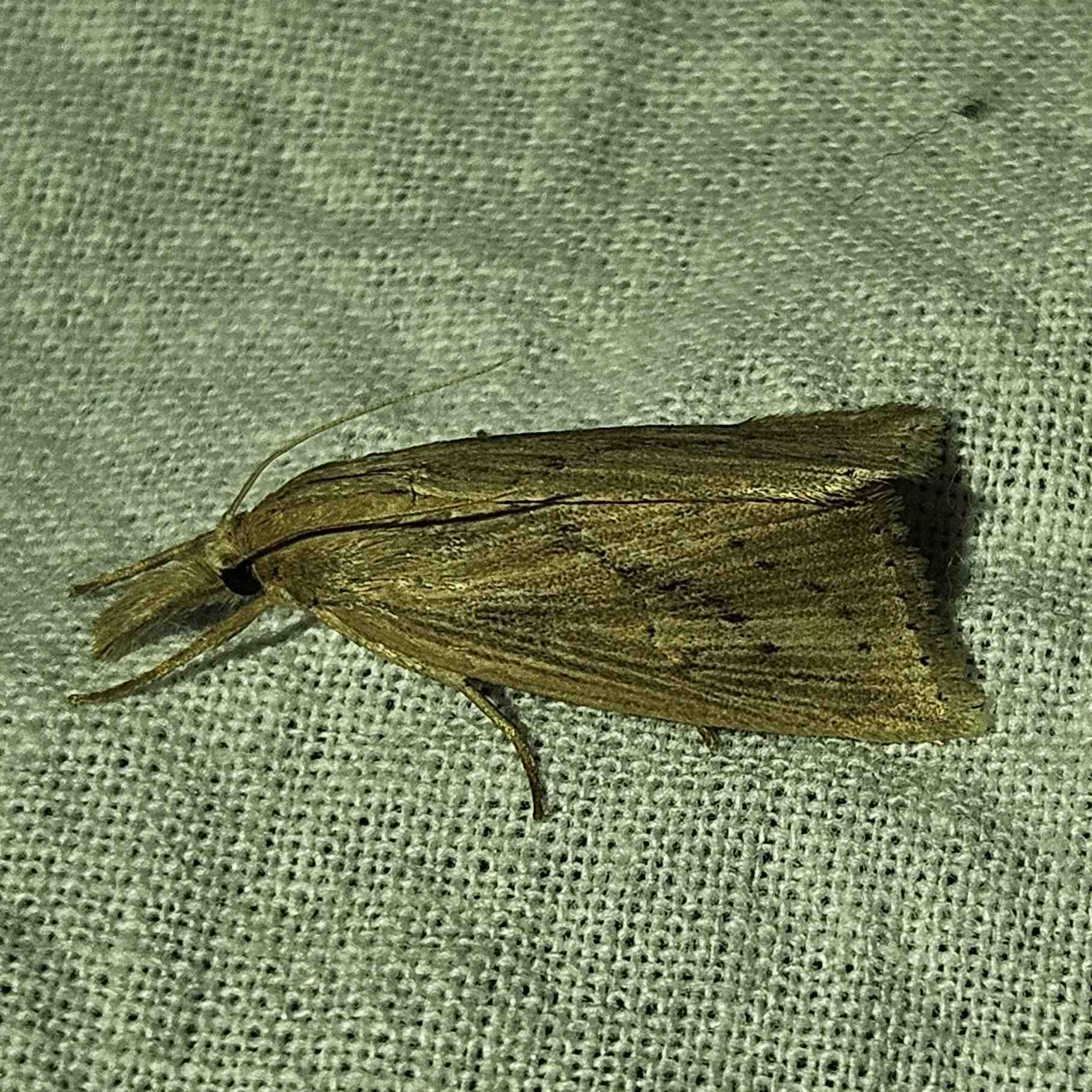
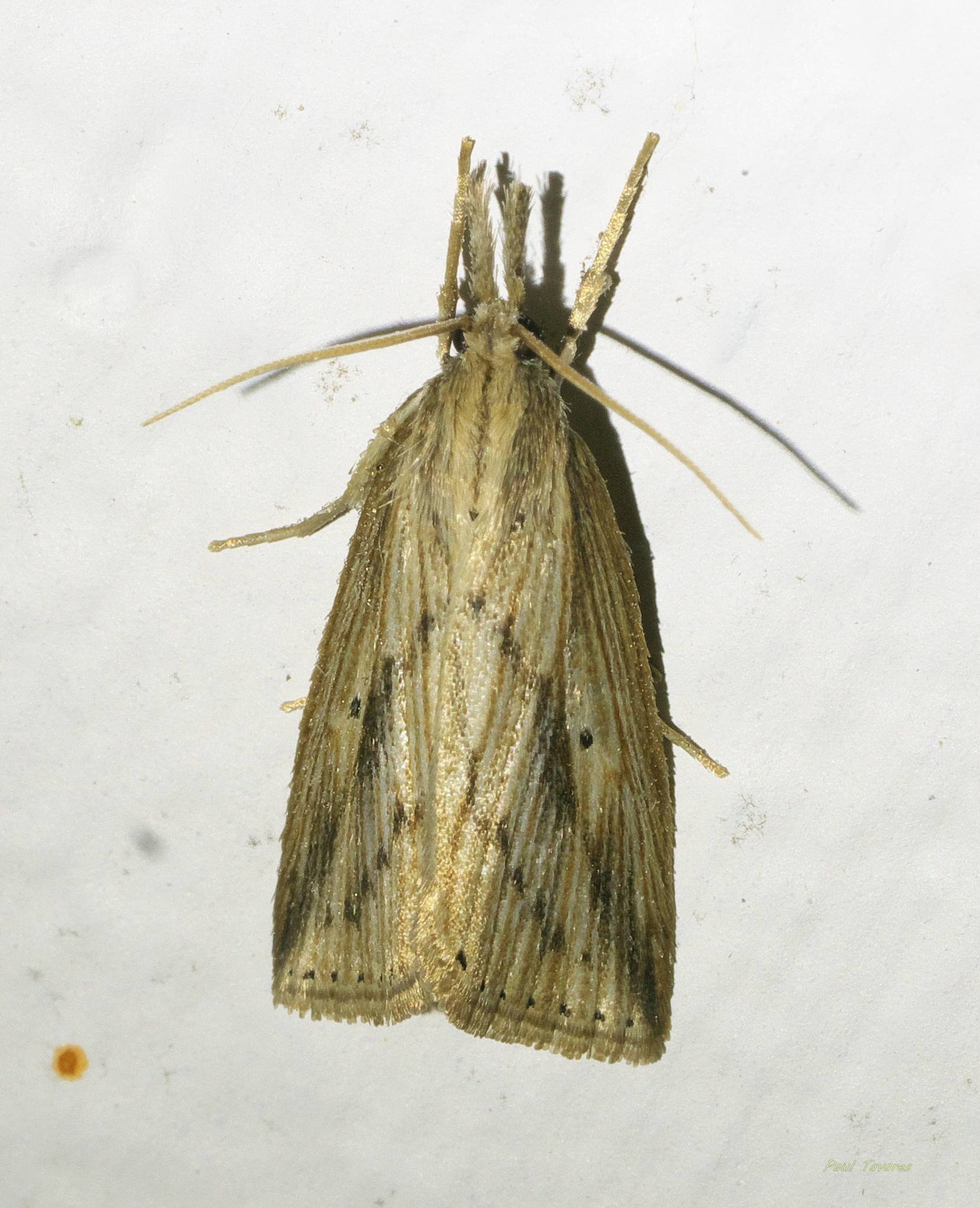
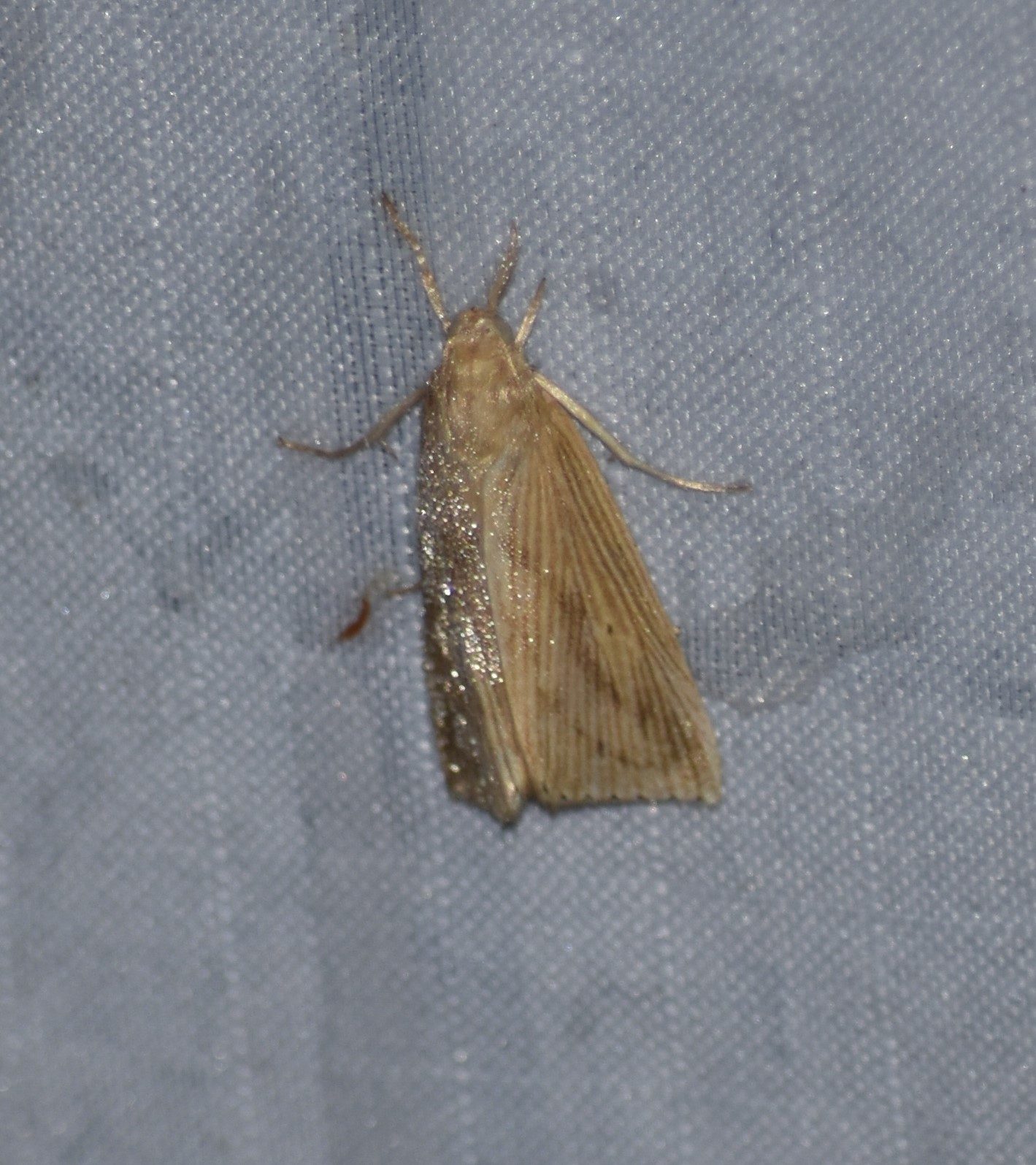
Morphological Features
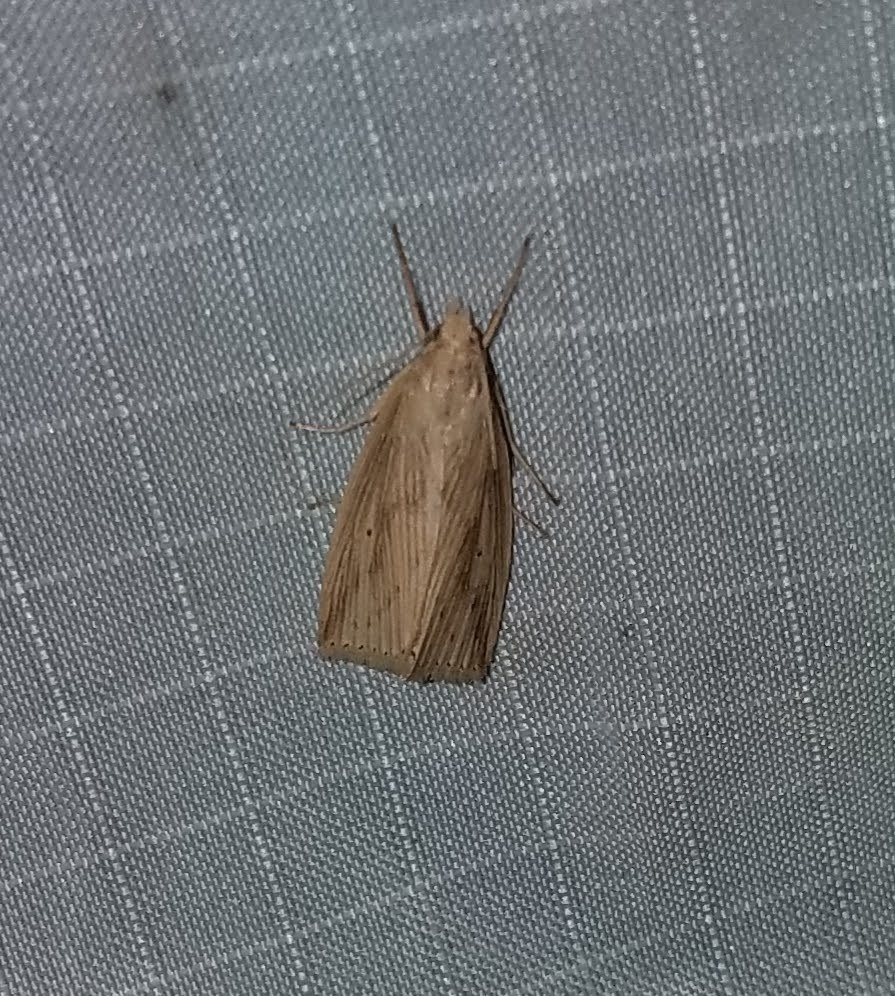
Adult. Wingspan 18–39 mm (males generally smaller than females; females 26–30 mm). Forewings brownish, thinly striated with dark brown, with two diffuse dark brown oblique lines running from the dorsum at mid length to the apex (more strongly marked in males), and with marginal dark brown spots between veins. Hindwings not described. Head, thorax, and abdomen not described in detail. Male genitalia with sternite VIII bearing a broad transverse pocket mostly concealing the ostium bursae; lamella antevaginalis composed of a pair of hardened, posteriorly projecting extensions that may cover or surround the genital opening. Female genitalia with cuticle laterad of lamella postvaginalis wrinkled and/or densely setose, contrasting with a smooth and glabrous medial area; lamella postvaginalis with a distinct pair of elevated transverse ridges posterad, not reaching posterior margin of sternite VIII; corpus bursae glabrous, pear-shaped, slightly longer than large.
Plazi taxonomic treatment
Host Plants (5 host plants)
Data sources: EPPO Global Database and relevant literature.
| Scientific Name | Status |
|---|---|
| Oryza sativa | Host |
| Poaceae | Host |
| Saccharum | Host |
| Saccharum officinarum | Host |
| Zea mays | Host |
Quarantine Status (18 records)
Data sources: IPPC website and national quarantine websites; verified by human review.
| Country | Status | Year Added |
|---|---|---|
| Bahrain | Quarantine pests | 2003 |
| China | Quarantine pests | 2021 |
| Egypt | Abesent | — |
| Ghana | Quarantine pests | — |
| Guinea | Quarantine pests | — |
| Indonesia | Absent | — |
| India | Quarantine pests | — |
| Iran | Absent | 2018 |
| Jordan | Absent | 2013 |
| Saint Kitts and Nevis | Quarantine pests | — |
Distribution (38 countries)
Data Sources: EPPO Global Database and GBIF.
| Country | Status | State |
|---|---|---|
| Antigua and Barbuda | Present | — |
| Argentina | Present | — |
| Belize | Present | — |
| Bolivia (Plurinational State of) | Present | — |
| Brazil | Present | |
| Barbados | Present | — |
| Colombia | Present | — |
| Costa Rica | Present | — |
| Cuba | Present | — |
| Dominica | Present | — |
Distribution Map (Latitude and longitude coordinates sourced from GBIF.)
Download CSVGenomes (2 records)
Data source: NCBI.
| Assembly Accession | Assembly Level | Genome Size(Mb) | Contig N50(Kb) | Scaffold N50(Kb) | BUSCO% | Downloads | Actions |
|---|---|---|---|---|---|---|---|
| GCA_918026875.4 | Chromosome | - | - | - | - | - |
|
|
PGI_DIATSA_v4 |
|||||||
| GCA_014843785.1 | Scaffold | 453 | 14 | 16 | - |
|
|
|
ESALQ_Dsac_1.0 |
|||||||
Transcriptomes (3 records)
Data source: NCBI.
| Run ID | Tissue | Developmental Stage | Sex | Read Count | Location | Actions |
|---|---|---|---|---|---|---|
| SRR10081741 | Gut | Larva | - | 19600238 | Brazil | |
|
PRJNA564321 SRX6814760 SRP220712 insect RNA-seq Diatraea saccharalis Gut RNA extraction from gut tissue of larva Fitoagro Controle Biolgico Ltda - Colony strain {'tissue': 'Gut', 'isolate': 'Fitoagro Controle Biolgico Ltda - Colony strain', 'dev_stage': 'Larva', 'treatment': 'Starved', 'geo_loc_name': 'Brazil', 'biosamplemodel': 'Invertebrate'} |
||||||
| SRR10081740 | Gut | Larva | - | 17458636 | Brazil | |
|
PRJNA564321 SRX6814761 SRP220712 insect RNA-seq Diatraea saccharalis Gut RNA extraction from gut tissue of larva Fitoagro Controle Biolgico Ltda - Colony strain {'tissue': 'Gut', 'isolate': 'Fitoagro Controle Biolgico Ltda - Colony strain', 'dev_stage': 'Larva', 'treatment': 'Starved', 'geo_loc_name': 'Brazil', 'biosamplemodel': 'Invertebrate'} |
||||||
| SRR10081739 | Gut | Larva | - | 48016674 | Brazil | |
|
PRJNA564321 SRX6814762 SRP220712 insect RNA-seq Diatraea saccharalis Gut RNA extraction from gut tissue of larva Fitoagro Controle Biolgico Ltda - Colony strain {'tissue': 'Gut', 'isolate': 'Fitoagro Controle Biolgico Ltda - Colony strain', 'dev_stage': 'Larva', 'treatment': 'Pool-treated', 'geo_loc_name': 'Brazil', 'biosamplemodel': 'Invertebrate'} |
||||||
Literature
Fetching literature from NCBI PubMed...
Failed to fetch literature