Schistocerca gregaria
TaxID: 7010
Basic Information
Schistocerca gregaria
Desert Locust, desert locust
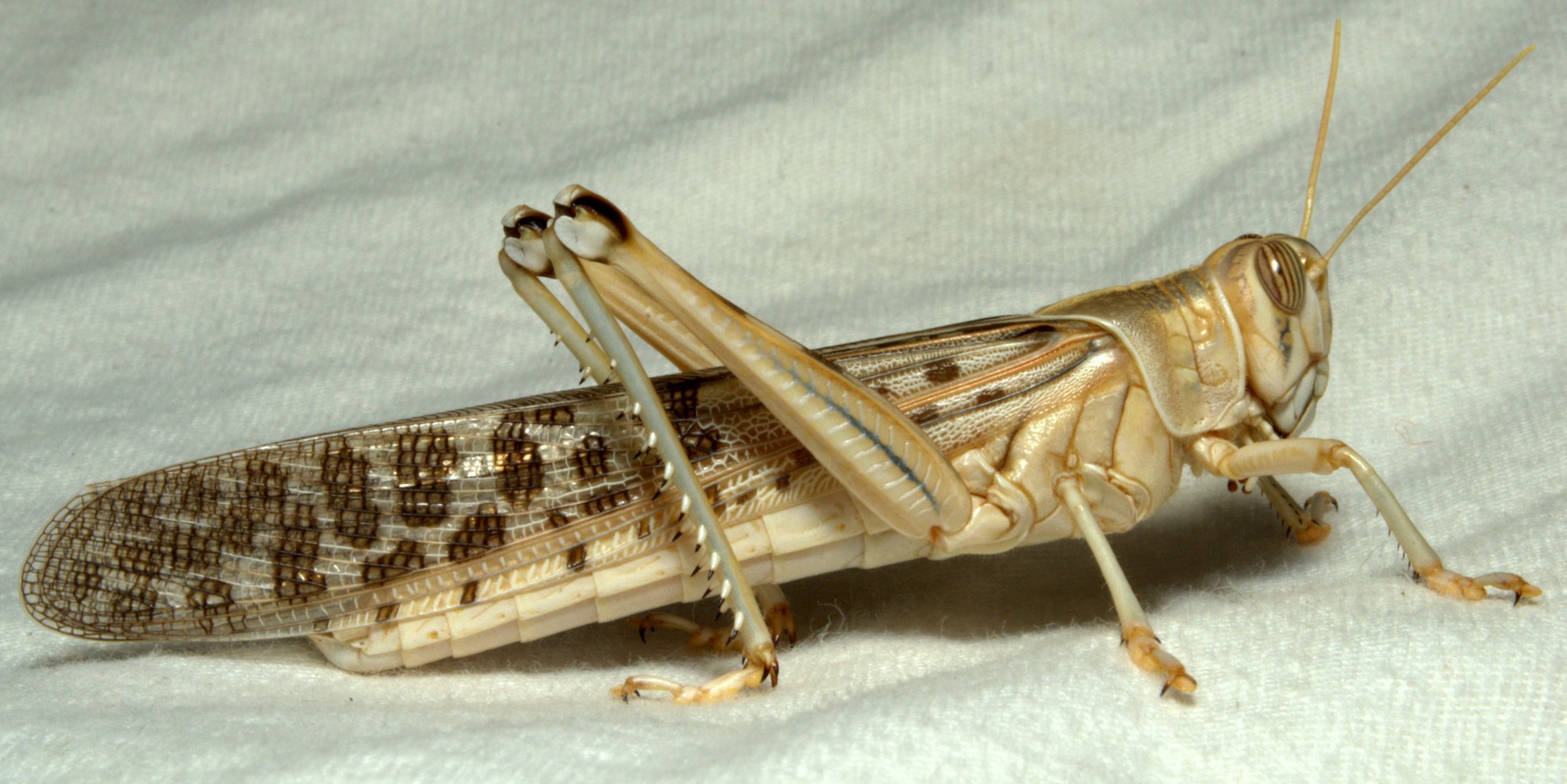
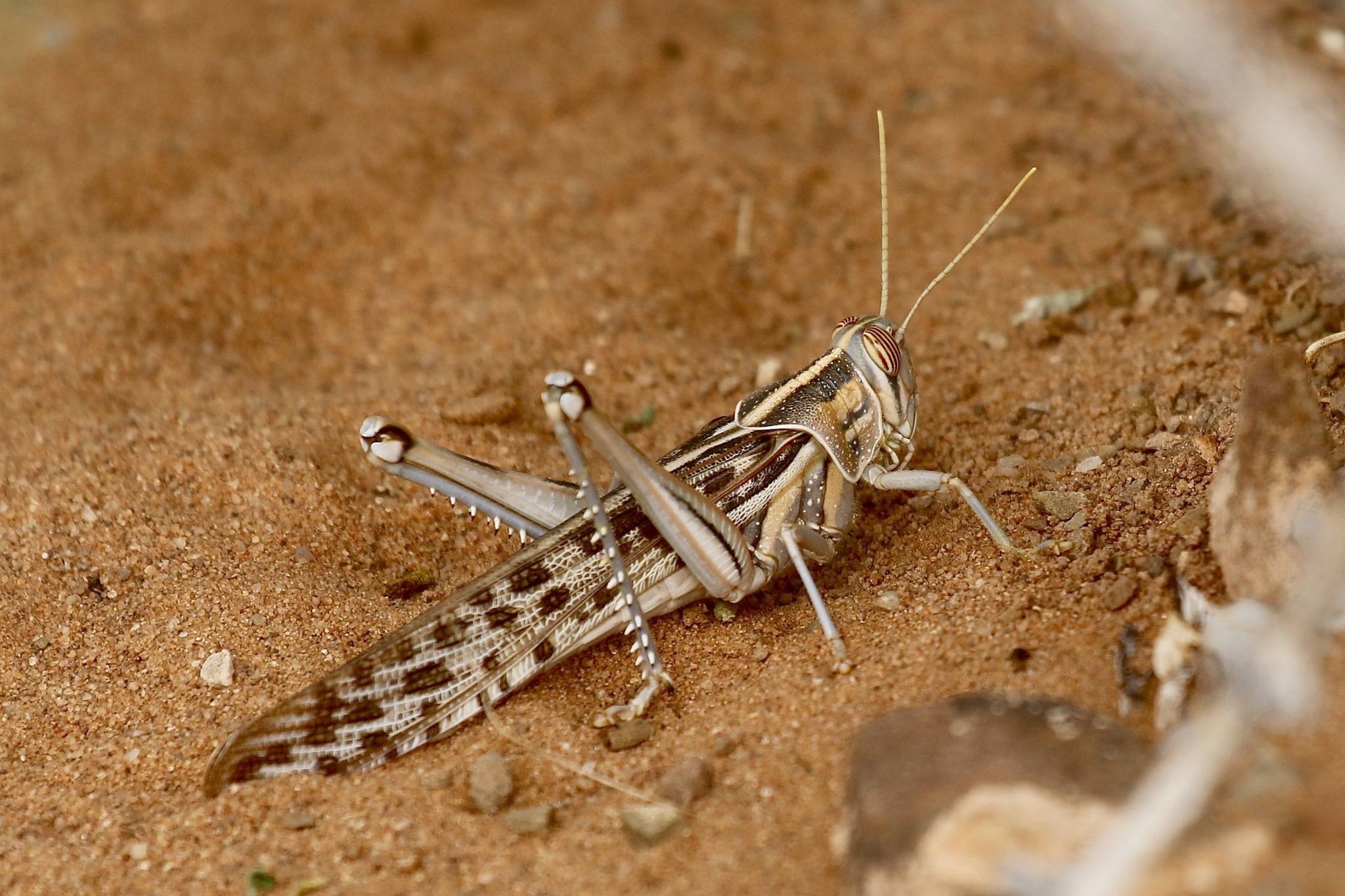
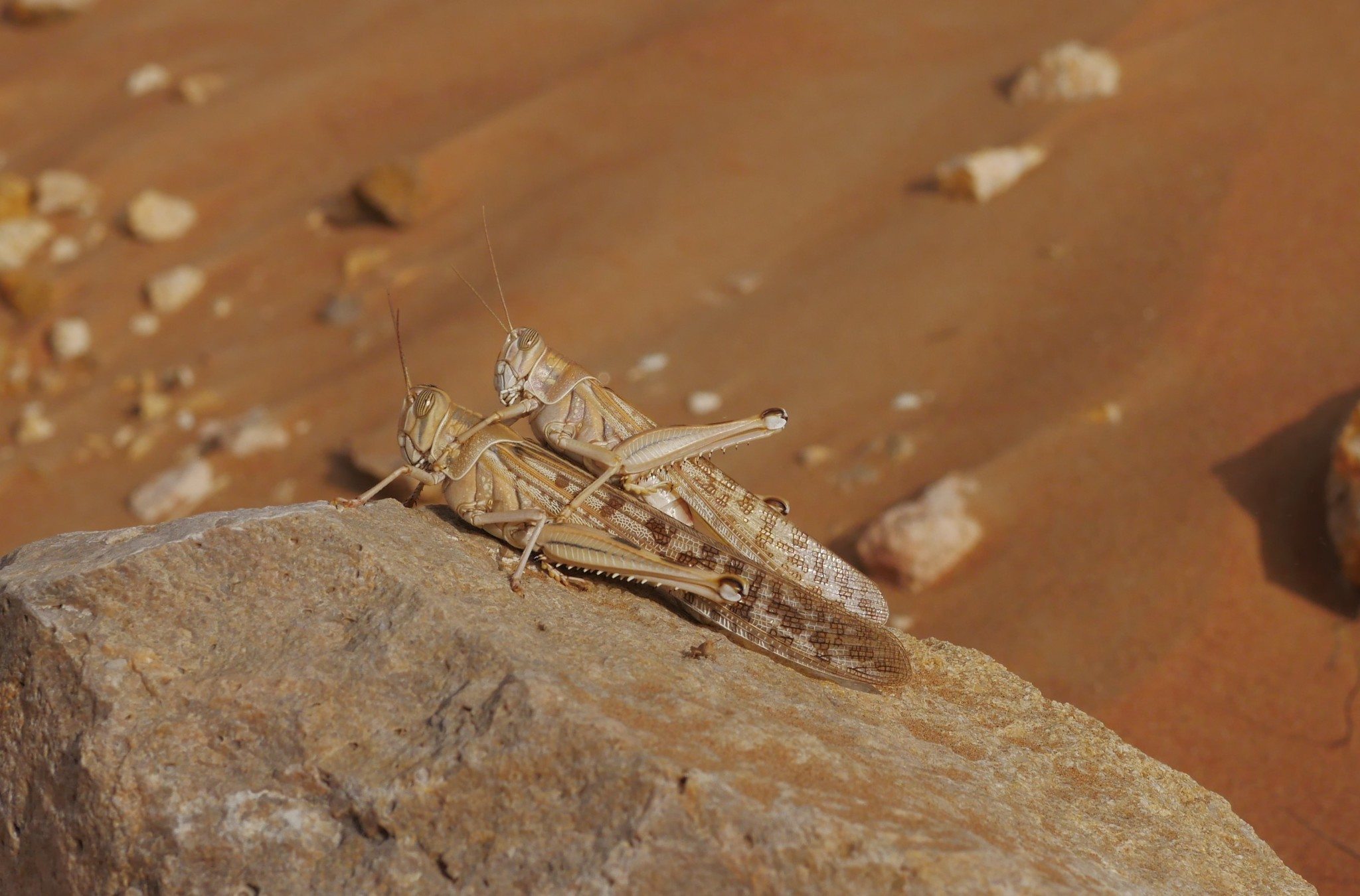
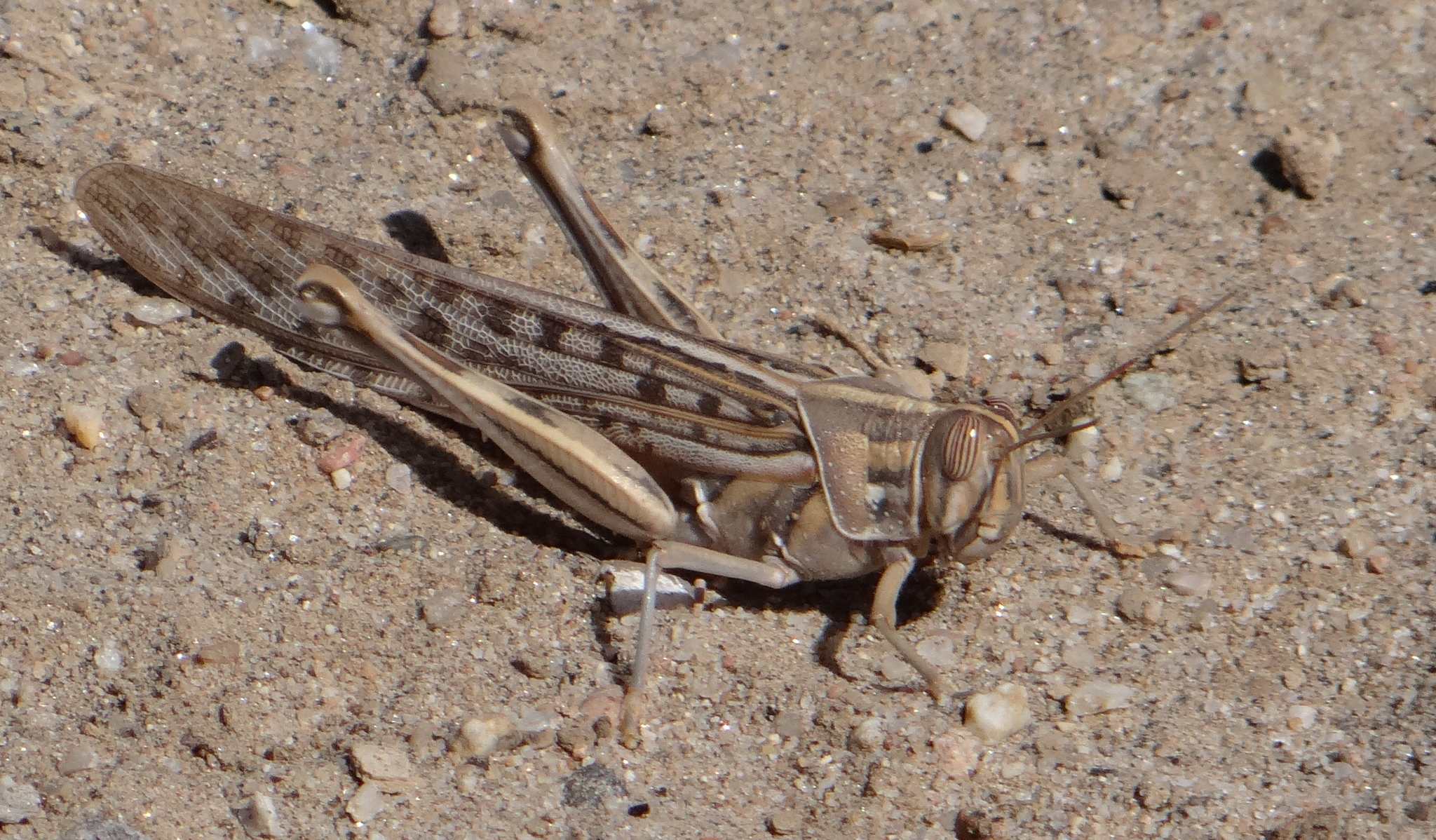
The desert locust (Schistocerca gregaria) is a species of locust in the grasshopper family, Acrididae. A periodically swarming, short-horned bird grasshopper, it is found primarily in the deserts and dry areas of northern and eastern Africa, Arabia, and southwest Asia. During population surge years, its range may extend north into parts of Southern Europe, Eastern Africa, and Northern India. The desert locust shows periodic changes in its body form and can change in response to environmental conditions over several generations. It begins life as a solitary, shorter-winged, highly fecund (producing enormous amounts of offspring), non-migratory form, to a gregarious, long-winged, and migratory phase in which it may travel long distances into new areas. Due to this traveling, it may join groups, thus, forming locust plagues. This involves invading new areas where it may consume all vegetation including valuable crops. Although at other times, it may live unnoticed in small numbers in various areas. During plague years, when the desert locust does group with others, it can cause widespread damage to crops as it is highly mobile and feeds on large quantities of any kind of green vegetation. A typical swarm can be made up of 150 million locusts per square kilometre (390,000,000 per square mile) and fly in the direction of the prevailing wind, up to 150 km (93 mi) in one day. Even a very small, 1-square-kilometre (0.39 sq mi) locust swarm can eat the same amount of food in a day as about 35,000 people. As an international transboundary pest that threatens agricultural production and livelihoods in many countries in Africa, the Near East, and southwest Asia, its population has been routinely monitored through a collaborative effort between countries and the United Nations Food and Agriculture Organization (FAO) Desert Locust Information Service (DLIS), which provides global and national assessments, forecasts, and early warning to affected countries and the international community. The desert locust's migratory nature and capacity for rapid population growth present major challenges for control, particularly in remote semiarid areas, which characterize much of its range. Locusts differ from other grasshoppers in their ability to change from a solitary living form into gregarious, highly mobile, adult swarms and hopper bands, as their numbers and densities increase. They exist in different states known as recessions (with low and intermediate numbers), rising to local outbreaks and regional upsurges with increasingly high densities, to plagues consisting of numerous swarms. They have two to five generations per year. The desert locust risk increases with a one-to-two-year continuum of favourable weather (greater frequency of rains) and habitats that support population increases leading to upsurges and plagues. The desert locust is potentially the most dangerous of the locust pests because of the ability of swarms to fly rapidly across great distances. The major desert locust upsurge in 2004 C05 caused significant crop losses in West Africa and diminished food security in the region. The 2019 C2021 upsurge caused similar losses in northeast Africa, the Near East, and southwest Asia.
from Wikipedia
Taxonomic Information
Metazoa
Arthropoda
Insecta
Orthoptera
Acrididae
Schistocerca
gregaria
unclassified
Species
nan
k__Metazoa;p__Arthropoda;c__Insecta;o__Orthoptera;f__Acrididae;g__Schistocerca;s__Schistocerca gregaria
nan
Arthropods
Photos (5 photos)
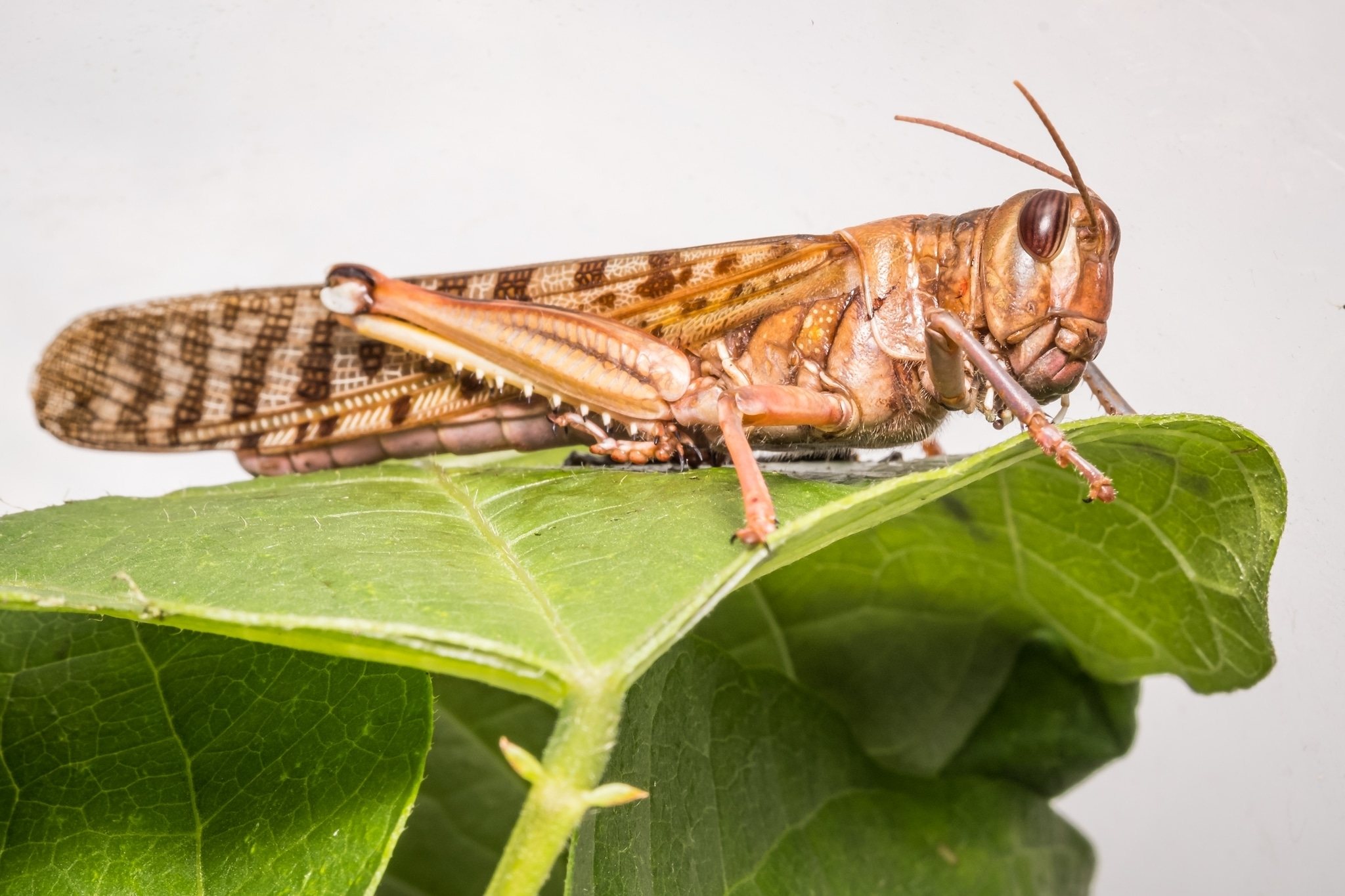
Morphological Features
The pronotum is saddle-shaped and constricted in the prozona.
Plazi taxonomic treatment
Host Plants (0 host plants)
Data sources: EPPO Global Database and relevant literature.
No host plants available.
Quarantine Status (4 records)
Data sources: IPPC website and national quarantine websites; verified by human review.
| Country | Status | Year Added |
|---|---|---|
| Brazil | A1 list | 2018 |
| Japan | Quarantine pests | — |
| Republic of Korea | Quarantine pests | — |
| United States of America | Quarantine pests | — |
Distribution (51 countries)
Data Sources: EPPO Global Database and GBIF.
| Country | Status | State |
|---|---|---|
| Afghanistan | Present | — |
| Algeria | Present | — |
| United Arab Emirates | Present | — |
| Austria | Present | — |
| Belgium | Present | — |
| Bahrain | Present | — |
| Switzerland | Present | — |
| Cabo Verde | Present | — |
| Cyprus | Present | — |
| Czechia | Present | — |
Distribution Map (Latitude and longitude coordinates sourced from GBIF.)
Download CSVGenomes (2 records)
Data source: NCBI.
| Assembly Accession | Assembly Level | Genome Size(Mb) | Contig N50(Kb) | Scaffold N50(Kb) | BUSCO% | Downloads | Actions |
|---|---|---|---|---|---|---|---|
| GCF_023897955.1 | Chromosome | 8742 | 44584 | 791150 | 0.988295555% |
|
|
|
iqSchGreg1.2 |
|||||||
| GCA_023898265.1 | Scaffold | 7821 | 1734 | 1734 | - |
|
|
|
iqSchGreg1.1 alternate haplotype |
|||||||
Transcriptomes (3 records)
Data source: NCBI.
| Run ID | Tissue | Developmental Stage | Sex | Read Count | Location | Actions |
|---|---|---|---|---|---|---|
| SRR23275341 | Mullers Organ | Adult | male | 71768464 | Mauritania | |
|
PRJNA929531 SRX19218700 SRP420089 insect RNA-Seq of Schistocerca gregaria Muller's Organ: 10 days post final moult Illumina Sequencing PE 150, read depth 60 million Young biological replicate 2 {'age': '10 days adult', 'sex': 'male', 'tissue': 'Mullers Organ', 'isolate': 'Young biological replicate 2', 'dev_stage': 'Adult', 'geo_loc_name': 'Mauritania', 'biosamplemodel': 'Invertebrate', 'collection_date': '2021', 'isolation_source': 'University of Leicester strain, 2016'} |
||||||
| SRR23275340 | Mullers Organ | Adult | male | 59612337 | Mauritania | |
|
PRJNA929531 SRX19218701 SRP420089 insect RNA-Seq of Schistocerca gregaria Muller's Organ: 10 days post final moult Illumina Sequencing PE 150, read depth 60 million Young biological replicate 3 {'age': '10 days adult', 'sex': 'male', 'tissue': 'Mullers Organ', 'isolate': 'Young biological replicate 3', 'dev_stage': 'Adult', 'geo_loc_name': 'Mauritania', 'biosamplemodel': 'Invertebrate', 'collection_date': '2021', 'isolation_source': 'University of Leicester strain, 2016'} |
||||||
| SRR23275339 | Mullers Organ | Adult | male | 72639248 | Mauritania | |
|
PRJNA929531 SRX19218702 SRP420089 insect RNA-Seq of Schistocerca gregaria Muller's Organ: 10 days post final moult Illumina Sequencing PE 150, read depth 60 million Young biological replicate 4 {'age': '10 days adult', 'sex': 'male', 'tissue': 'Mullers Organ', 'isolate': 'Young biological replicate 4', 'dev_stage': 'Adult', 'geo_loc_name': 'Mauritania', 'biosamplemodel': 'Invertebrate', 'collection_date': '2021', 'isolation_source': 'University of Leicester strain, 2016'} |
||||||
Literature
Fetching literature from NCBI PubMed...
Failed to fetch literature