Spodoptera litura
TaxID: 69820
Basic Information
Spodoptera litura
Asian Cotton Leafworm, Cotton Worm
Spodoptera litura, otherwise known as the tobacco cutworm or cotton leafworm, is a nocturnal moth in the family Noctuidae. S. litura is a serious polyphagous pest in Asia, Oceania, and the Indian subcontinent that was first described by Johan Christian Fabricius in 1775. Its common names reference two of the most frequent host plants of the moth. In total, 87 species of host plants that are infested by S. litura are of economic importance. The species parasitize the plants as larvae through vigorous eating patterns, oftentimes leaving the leaves completely destroyed. The moth destroys economically important agricultural crops and decreases yield in some plants completely. Their potential impact on the many different cultivated crops, and subsequently the local agricultural economy, has led to serious efforts to control the pests. S. litura is often confused with its close relative, Spodoptera littoralis. These two species are hard to discriminate between because the larvae and adult forms are identical. Inspecting the genitalia is the most certain way to tell the two species apart.
from Wikipedia
Taxonomic Information
Metazoa
Arthropoda
Insecta
Lepidoptera
Noctuidae
Spodoptera
litura
unclassified
Species
nan
k__Metazoa;p__Arthropoda;c__Insecta;o__Lepidoptera;f__Noctuidae;g__Spodoptera;s__Spodoptera litura
nan
Arthropods
Photos (5 photos)
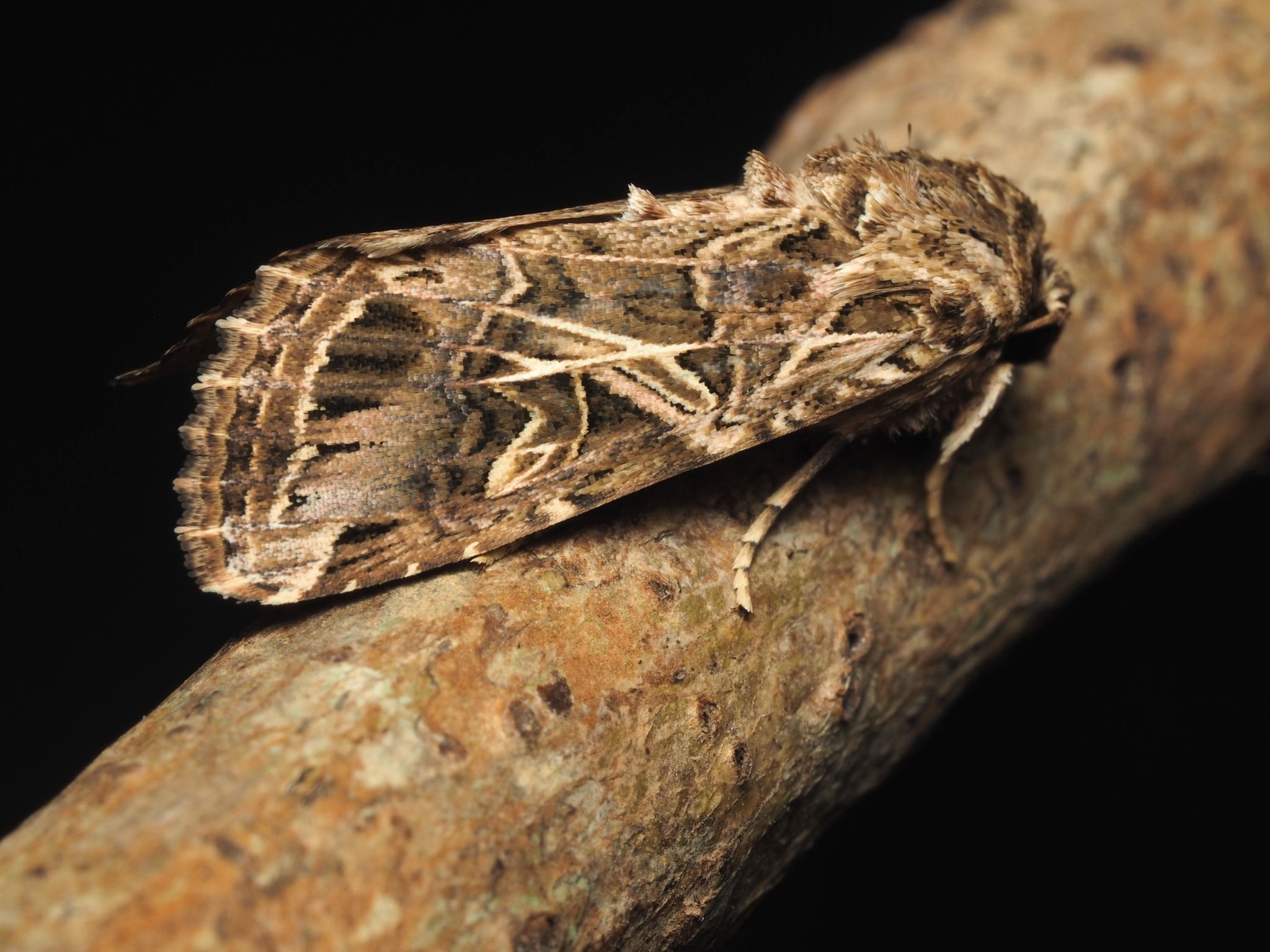
Morphological Features
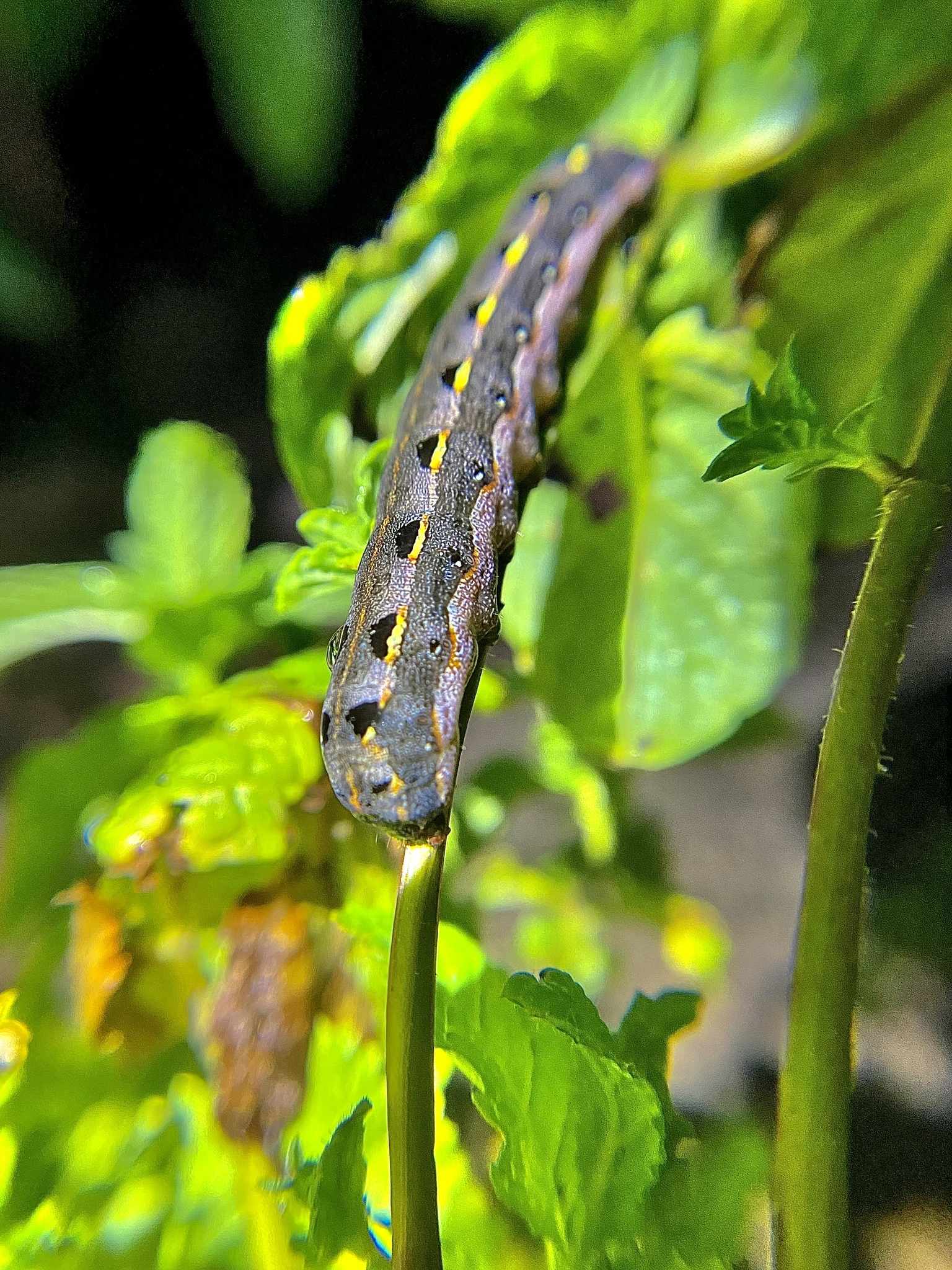
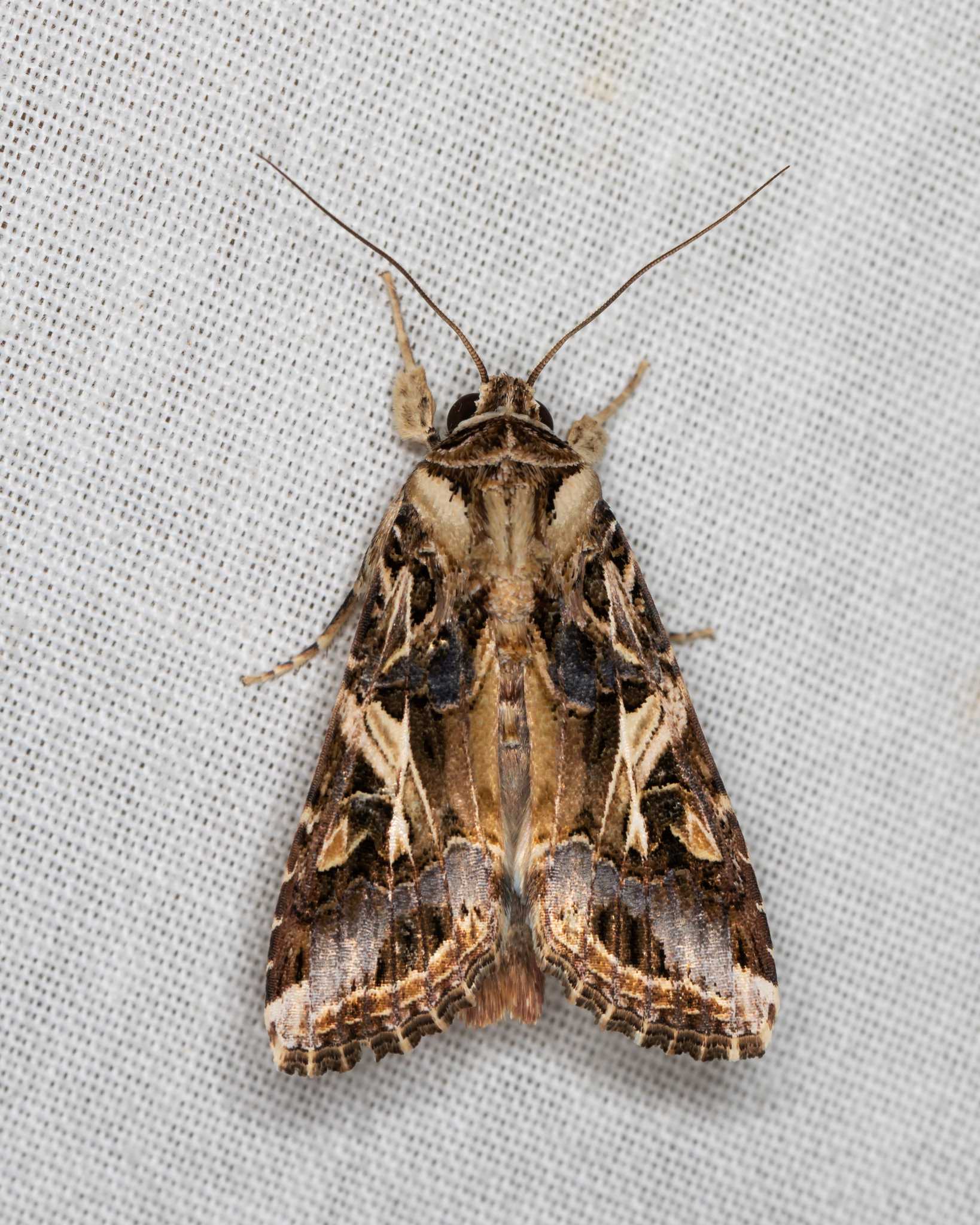
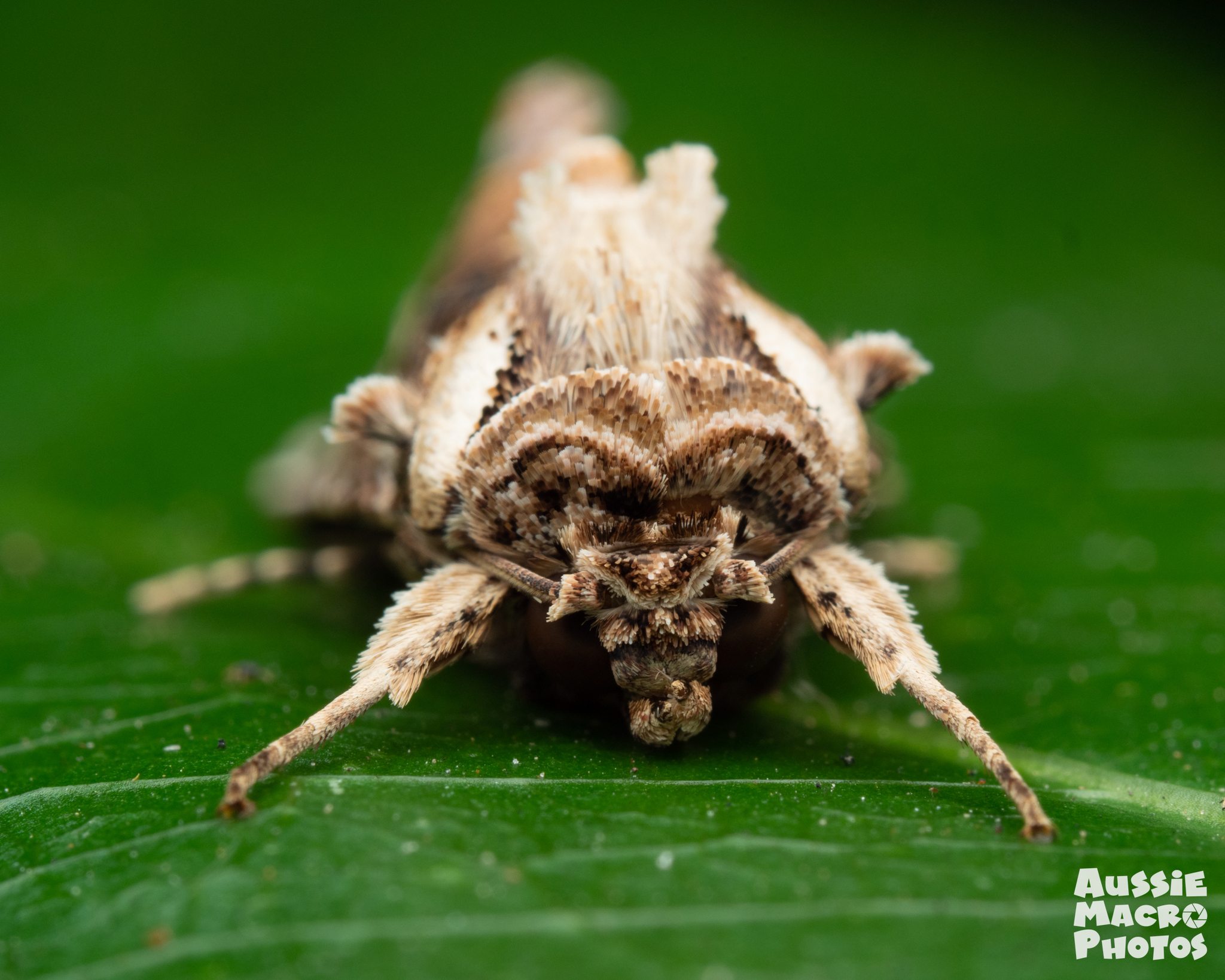
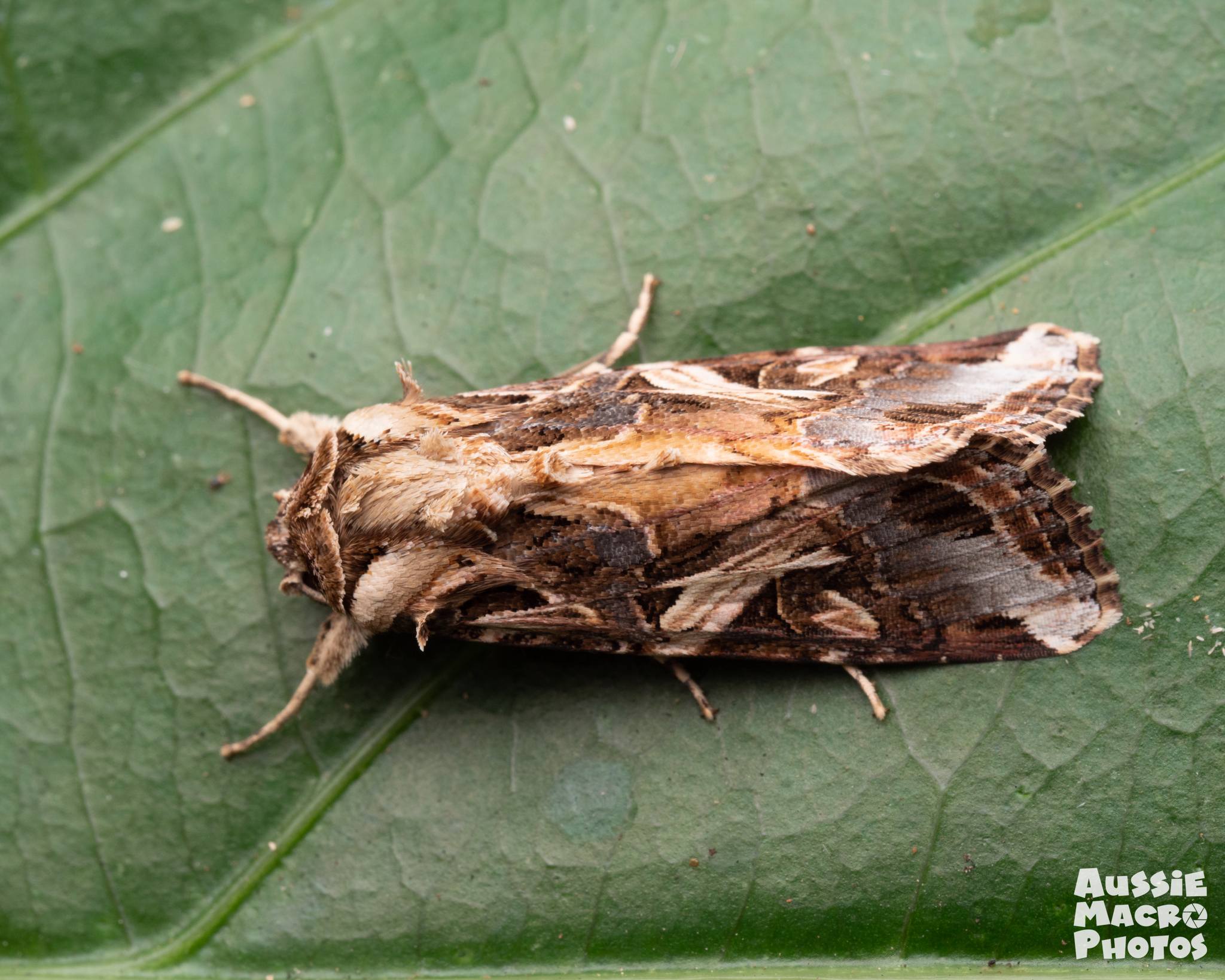
Adults are 15–20 mm in body length. Forewings are greyish-brown to reddish-brown with complex markings and wavy transverse lines; hindwings are white, semi-transparent with brown margins. Eggs are laid in masses covered with hairs from the female's abdomen, initially light green and turning dark before hatching. Larvae have six instars; newly hatched larvae are pale green, while mature larvae vary in color (dark grey, dark green to blackish-brown) with dark spots forming longitudinal bands dorsally and laterally; body segments bear distinct tubercles. Pupae are reddish-brown, about 15–20 mm long, with two short spines on the cremaster, and usually form an earthen cell in soil.
EPPO (2023). Spodoptera litura datasheet. EPPO Global Database.
Host Plants (45 host plants)
Data sources: EPPO Global Database and relevant literature.
| Scientific Name | Status |
|---|---|
| Abelmoschus esculentus | Host |
| Allium cepa | Host |
| Arachis hypogaea | Host |
| Brassica oleracea | Host |
| Camellia sinensis | Host |
| Capsicum annuum | Host |
| Chenopodium album | Host |
| Citrus reticulata | Host |
| Colocasia esculenta | Host |
| Convolvulus arvensis | Host |
Quarantine Status (68 records)
Data sources: IPPC website and national quarantine websites; verified by human review.
| Country | Status | Year Added |
|---|---|---|
| Albania | Quarantine pests | — |
| Argentina | A1 list | 2019 |
| Armenia | Absent | — |
| Austria | Quarantine pests | 2019 |
| Azerbaijan | Absent | 2024 |
| Belgium | Unknow | 2019 |
| Bulgaria | Quarantine pests | 2019 |
| Bahrain | Quarantine pests | 2003 |
| Belarus | Absent | 1994 |
| Brazil | A1 list | 2018 |
Distribution (71 countries)
Data Sources: EPPO Global Database and GBIF.
| Country | Status | State |
|---|---|---|
| Afghanistan | Present | — |
| United Arab Emirates | Present | — |
| American Samoa | Present | — |
| Australia | Present | |
| Australia | Absent | |
| Bangladesh | Present | — |
| Brunei Darussalam | Present | — |
| Bhutan | Present | — |
| Cambodia | Present | — |
| Cocos Islands | Present | — |
Distribution Map (Latitude and longitude coordinates sourced from GBIF.)
Download CSVGenomes (2 records)
Data source: NCBI.
| Assembly Accession | Assembly Level | Genome Size(Mb) | Contig N50(Kb) | Scaffold N50(Kb) | BUSCO% | Downloads | Actions |
|---|---|---|---|---|---|---|---|
| GCF_002706865.2 | Chromosome | - | - | - | - | - |
|
|
ASM270686v3 |
|||||||
| GCA_002706865.1 | Chromosome | 438 | 68 | 915 | - |
|
|
|
|
|||||||
Transcriptomes (3 records)
Data source: NCBI.
| Run ID | Tissue | Developmental Stage | Sex | Read Count | Location | Actions |
|---|---|---|---|---|---|---|
| SRR32584762 | whole body | - | - | 23720227 | China:Jiangxi | |
|
PRJNA1232425 SRX27891274 SRP568246 insect RNA-seq datasets of Spodoptera litura epicentre Ribo-ZeroTM kit {'host': 'Nelumbo nucifera', 'breed': 'tobacco cutworm', 'tissue': 'whole body', 'geo_loc_name': 'China:Jiangxi', 'biosamplemodel': 'Invertebrate', 'collection_date': '2023-05-08'} |
||||||
| SRR32584761 | whole body | - | - | 24483037 | China:Jiangxi | |
|
PRJNA1232425 SRX27891275 SRP568246 insect RNA-seq datasets of Spodoptera litura epicentre Ribo-ZeroTM kit {'host': 'Nelumbo nucifera', 'breed': 'tobacco cutworm', 'tissue': 'whole body', 'geo_loc_name': 'China:Jiangxi', 'biosamplemodel': 'Invertebrate', 'collection_date': '2023-05-09'} |
||||||
| SRR32584760 | whole body | - | - | 23106911 | China:Jiangxi | |
|
PRJNA1232425 SRX27891276 SRP568246 insect RNA-seq datasets of Spodoptera litura epicentre Ribo-ZeroTM kit {'host': 'Nelumbo nucifera', 'breed': 'tobacco cutworm', 'tissue': 'whole body', 'geo_loc_name': 'China:Jiangxi', 'biosamplemodel': 'Invertebrate', 'collection_date': '2023-05-10'} |
||||||
Literature
Fetching literature from NCBI PubMed...
Failed to fetch literature