Puccinia pittieriana
TaxID: 573697
Basic Information
Puccinia pittieriana
Common Potato Rust
Puccinia pittieriana is a species of rust fungus. It is a plant pathogen which infects agricultural crops such as potato and tomato. Its common names include common potato rust and common potato and tomato rust. This fungus was first made known to science in 1904 when it was collected from potatoes (Solanum tuberosum) in cultivation on the slopes of Iraz Volcano in Costa Rica. It was later found on wild potato species such as Solanum demissum and on tomato crops. It is now known from Central and South America and from Mexico. Its known hosts now include many wild and cultivated species of Solanum. This is the only rust fungus that infects tomatoes. Fungal infection manifests as greenish white spots a few millimeters wide on the undersides of a plant's leaves. The upper surfaces of the leaves may be dimpled as the lesions penetrate the blades. The lesions turn whitish with red to brown centers. The lesions spread across the leaf, which then dies and falls. Lesions can also form on the petioles, stems, flowers, and fruits. The fungal spores are borne on the wind and infect plants when the plant surface is moist and the average temperature is around 10 C. Symptoms appear in about two weeks and the lesions are largest by 20 to 25 days after infection by spores. Several potato cultivars are resistant to the rust.
from Wikipedia
Taxonomic Information
Eukaryota
Basidiomycota
Pucciniomycetes
Pucciniales
Pucciniaceae
Puccinia
pittieriana
Undefined
Species
nan
d__Eukaryota;p__Basidiomycota;c__Pucciniomycetes;o__Pucciniales;f__Pucciniaceae;g__Puccinia;s__Puccinia pittieriana
nan
Fungal organisms
Photos (5 photos)
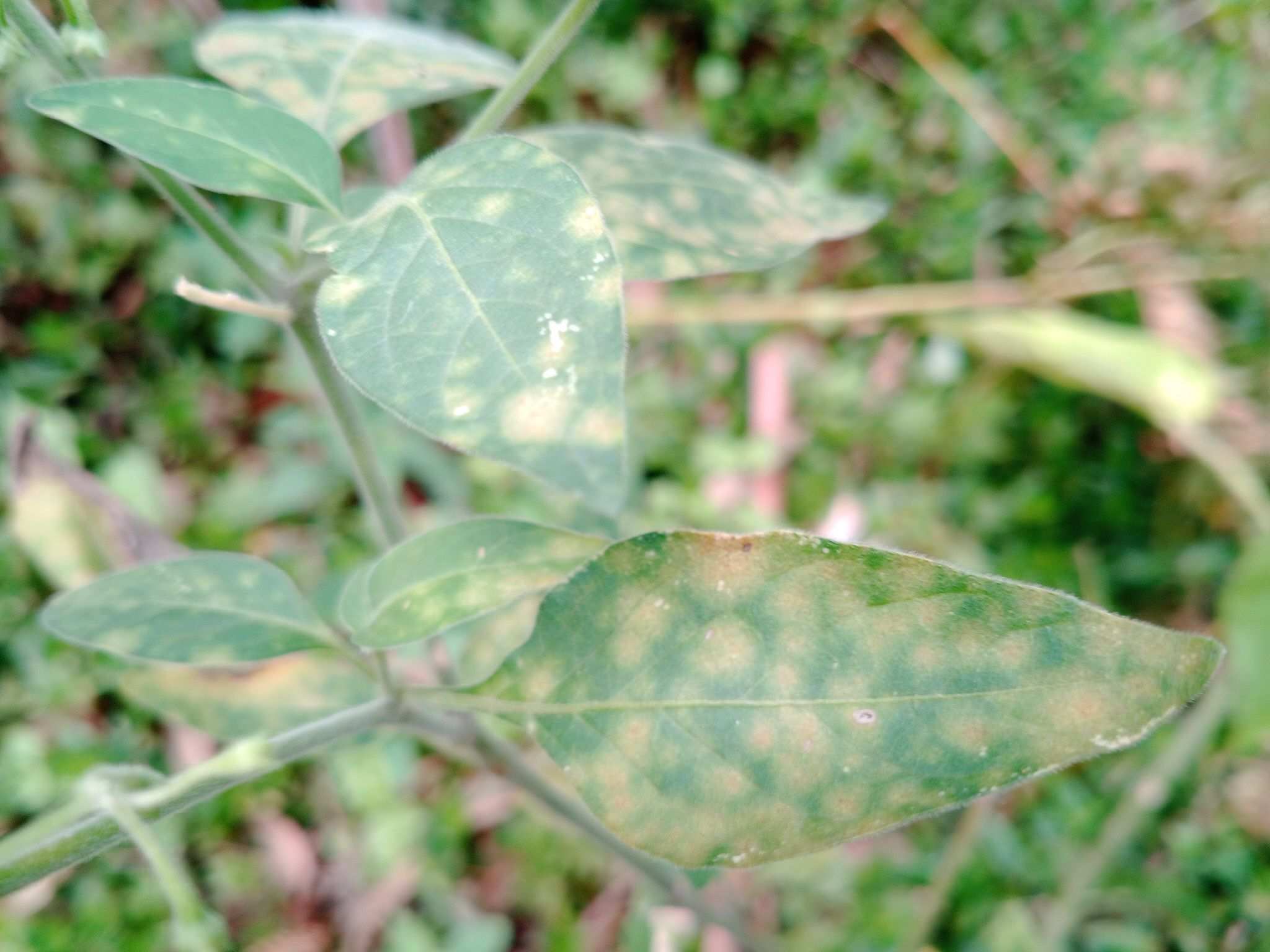
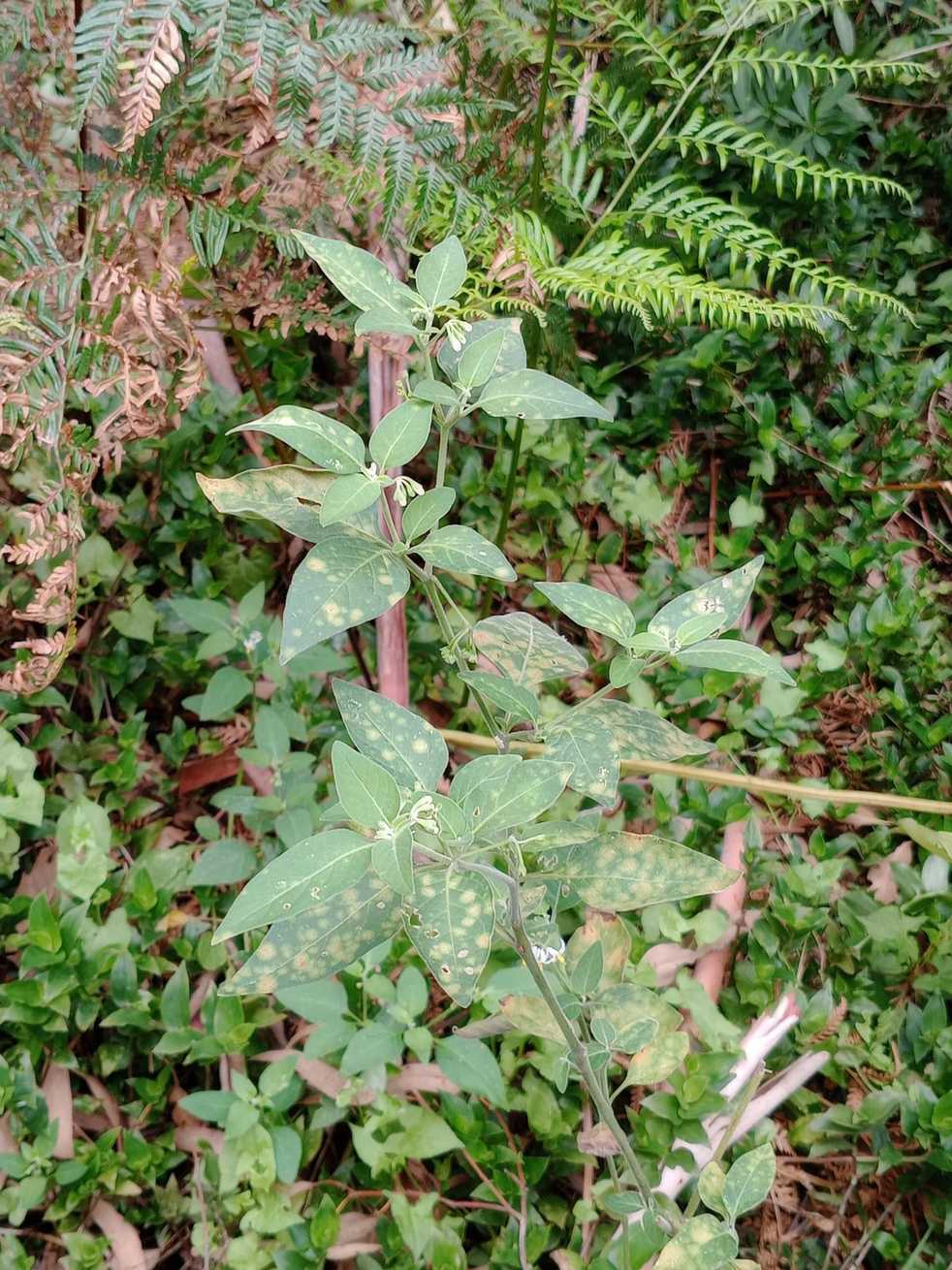
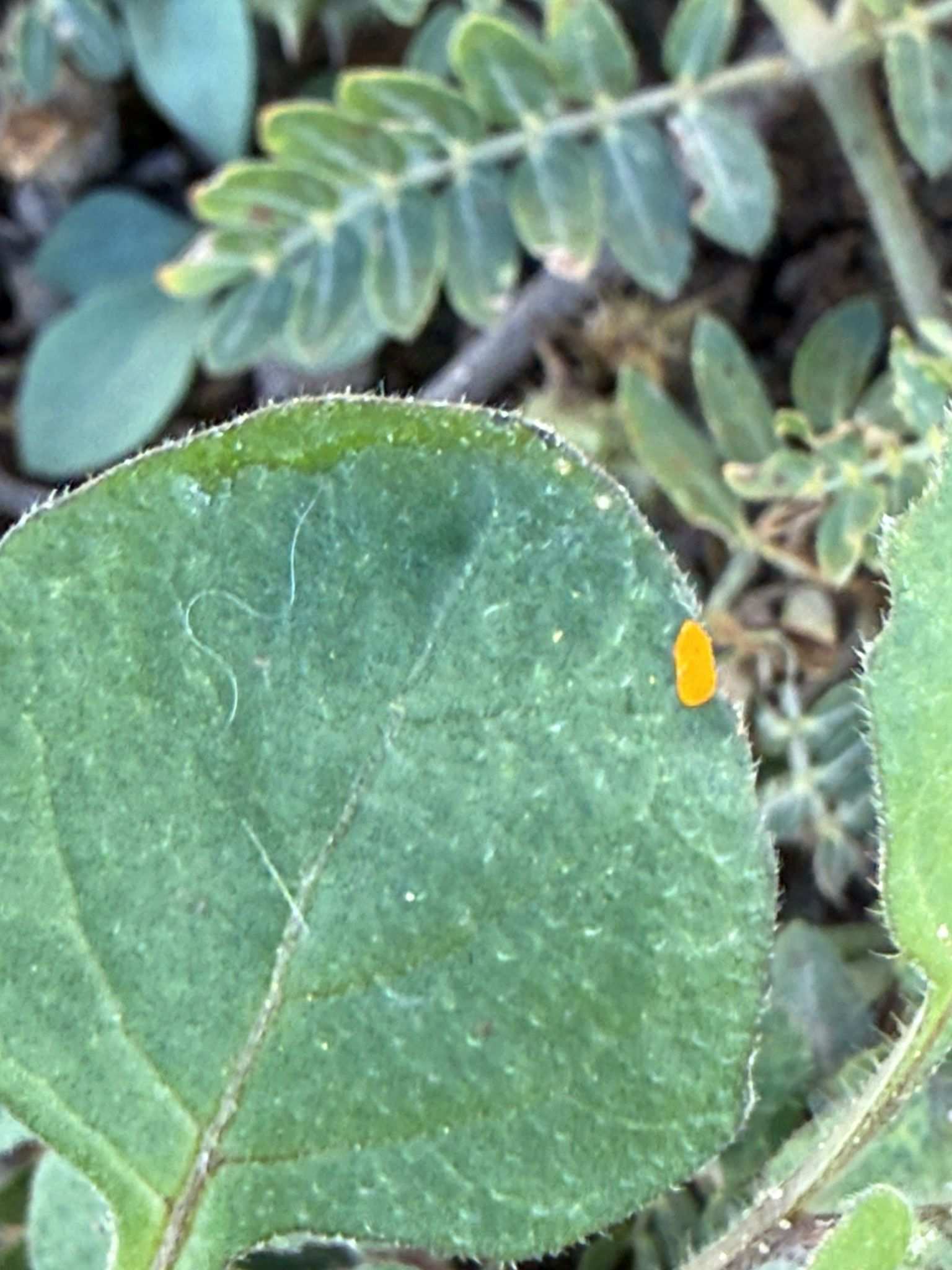
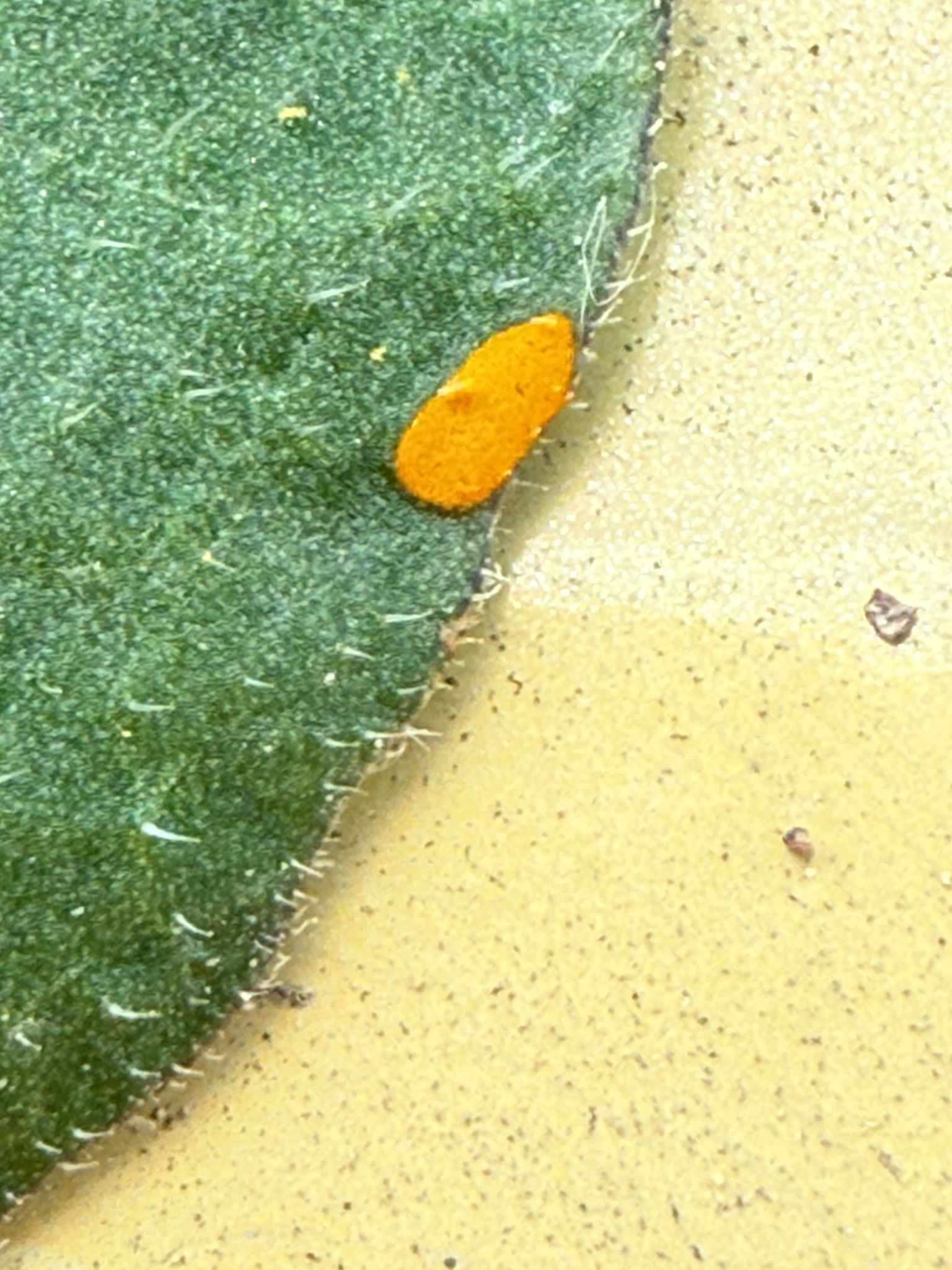
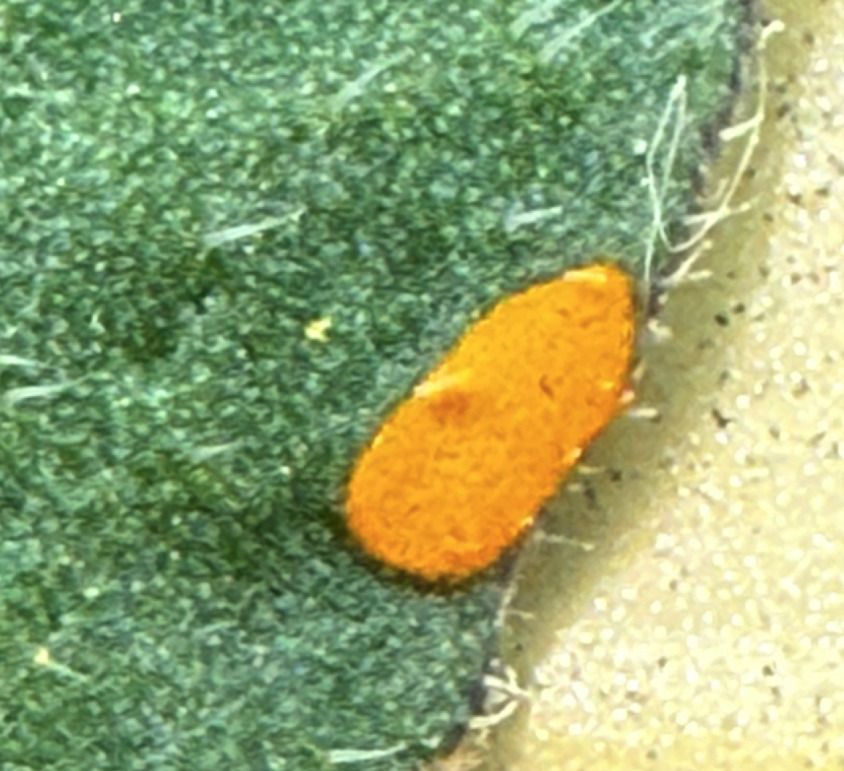
Morphological Features
The spore-producing fruiting bodies (telia) develop into aggregates of 2–5 mm in diameter (individual telium 0.2 mm diameter). Teliospores are yellowish-amber to dull brown, mainly two-celled but occasionally one-celled, broadly ellipsoidal with rounded or deformed ends, not or slightly constricted at the septum, measuring 22–38 × 14–29 μm. The spore wall is apically thickened up to 7 μm. Pedicels are up to 60 μm long, and the hyaline basidiospores are 8–18 × 11–25 μm.
EPPO Global Database. Puccinia pittieriana datasheet.
Host Plants (5 host plants)
Data sources: EPPO Global Database and relevant literature.
| Scientific Name | Status |
|---|---|
| Lycianthes radiata | Host |
| Solanum demissum | Host |
| Solanum nigrum | Host |
| Solanum tuberosum | Host |
| Solanum verrucosum | Host |
Quarantine Status (59 records)
Data sources: IPPC website and national quarantine websites; verified by human review.
| Country | Status | Year Added |
|---|---|---|
| Austria | Quarantine pests | 2019 |
| Belgium | Unknow | 2019 |
| Burkina Faso | Absent | — |
| Bulgaria | Quarantine pest ((EU) 2019/2072 Annex II A) | 2019 |
| Bahrain | Quarantine pests | 2003 |
| Switzerland | A1 list | 2019 |
| Chile | Quarantine pests | 2019 |
| Cyprus | Quarantine pest ((EU) 2019/2072 Annex II A) | 2019 |
| Czechia | Quarantine pests | 2019 |
| Germany | Unknow | 2019 |
Distribution (12 countries)
Data Sources: EPPO Global Database and GBIF.
| Country | Status | State |
|---|---|---|
| Bolivia (Plurinational State of) | Absent | — |
| Brazil | Absent | |
| Colombia | Present | — |
| Costa Rica | Present | — |
| Ecuador | Present | — |
| Mexico | Absent | — |
| Netherlands | Absent | — |
| Panama | Present | — |
| Peru | Present | — |
| Paraguay | Absent | — |
Distribution Map (Latitude and longitude coordinates sourced from GBIF.)
Download CSVGenomes (0 records)
Data source: NCBI.
No genome records available.
Transcriptomes (0 records)
Data source: NCBI.
No transcriptome records available.
Literature
Fetching literature from NCBI PubMed...
Failed to fetch literature