Lasioderma serricorne
TaxID: 295660
Basic Information
Lasioderma serricorne
Cigarette Beetle, cigarette beetle
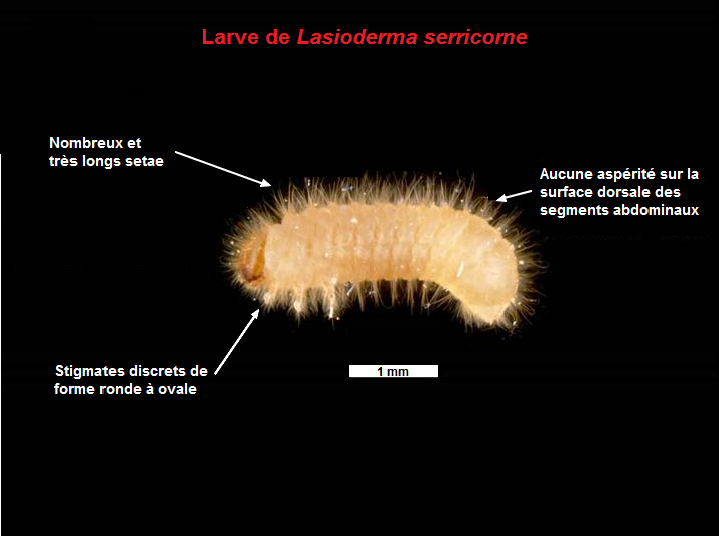
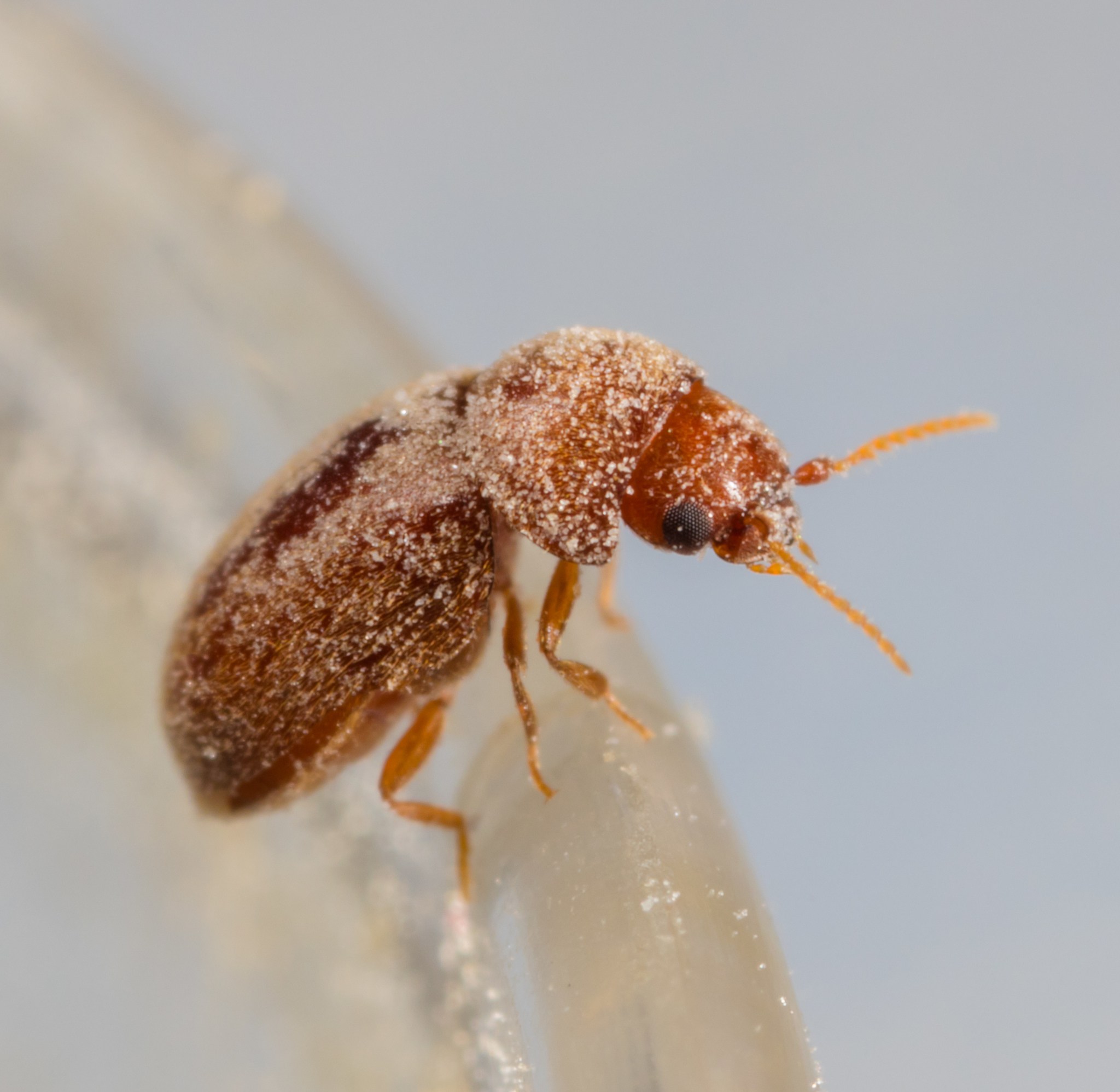
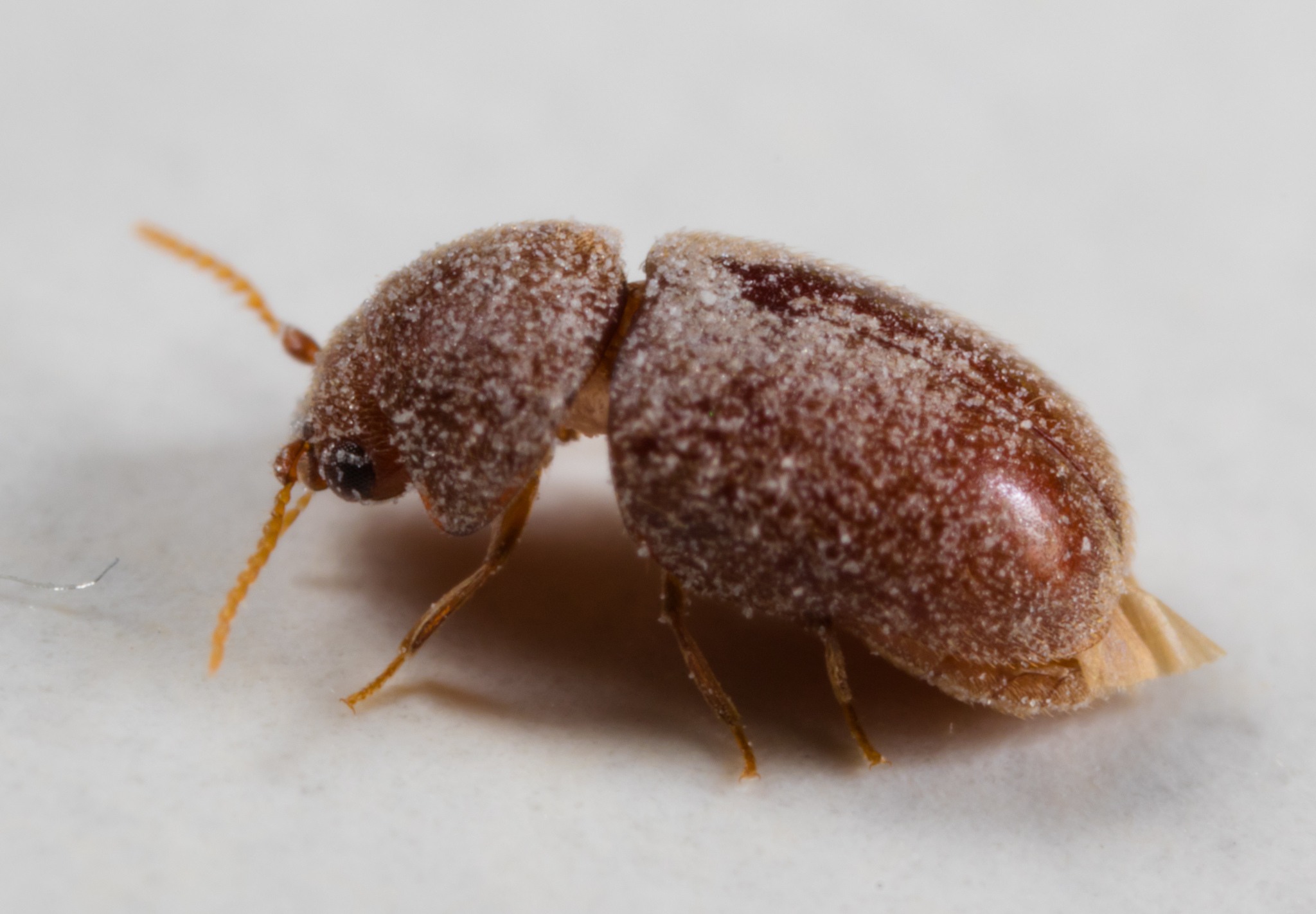
Lasioderma serricorne, more commonly referred to as the cigarette beetle, cigar beetle, paprika beetle or tobacco beetle, is a small beetle that shares a resemblance with the drugstore beetle (Stegobium paniceum) and the common furniture beetle (Anobium punctatum). The cigarette beetle, along with the drugstore and furniture beetles, all belong to the beetle family Ptinidae. The cigarette beetle can be distinguished from A. punctatum by its flatter thorax, whereas A. punctatum boasts a humped thorax. The cigarette beetle can be further differentiated from S. paniceum by its uniformly serrated antennae with unmodified apex, unlike the three-segmented apical "club" of S. paniceum. Additionally, L. serricorne has no evident grooves in its elytra, or hardened wing covers, compared to A. punctatum and S. paniceum which both have grooves. In addition to cigarette beetle, other common names for L. serricorne include "tobacco bug", "tobacco borer", "tobacco weevil" and "cheroot beetle". Lastly, another common name for the species is "tow bug", after the species' tendency to feed on upholstery fillings such as tow, hemp, and flax. The cigarette beetle measures between 2 and 3 mm in length, making the cigarette beetle relatively small, and it is dark brown in color. Despite its diminutive size, the cigarette beetle is a significant pest in tobacco related industries for which it gets its namesake. Beyond tobacco, the cigarette beetle will infest most dry goods, including cereals, dried fruits, herbs, flour, and certain animal products. Geographically, L. serricorne is naturally found in pan-tropical regions, but they have been distributed all over the world through the dried goods trade. The distribution and success of reproduction of the species is heavily tied to their environment. Larvae of the cigarette beetle require temperatures between 15 C and 40 C in order to successfully hatch, with the most optimal range for fecundity being between 30 C and 33 C. While the cigarette beetle can be found globally, this temperature preference allows the species to thrive best in tropical zones where temperature conditions are most suitable to this ideal range. The cigarette beetle also has strong flight capability, which contributes to its migration pattern. This ability to move efficiently between infested food sources to uninfested food sources greatly contributes to the species' success as a pest and its geographic range. The primary food source for this species includes the stored commodities they infest, such as spices, seeds, rice, cereals, and most notably, dried tobacco leaves. The food source of the cigarette beetle significantly influences fecundity, developmental time, survival rates, and body weight. The lowest fecundity was reported with tobacco leaves as a food source, while flour produced the highest fecundity.
from Wikipedia
Taxonomic Information
Metazoa
Arthropoda
Insecta
Coleoptera
Ptinidae
Lasioderma
serricorne
unclassified
Species
nan
k__Metazoa;p__Arthropoda;c__Insecta;o__Coleoptera;f__Ptinidae;g__Lasioderma;s__Lasioderma serricorne
nan
Arthropods
Photos (5 photos)

Morphological Features
No morphological description available.
Host Plants (0 host plants)
Data sources: EPPO Global Database and relevant literature.
No host plants available.
Quarantine Status (1 records)
Data sources: IPPC website and national quarantine websites; verified by human review.
| Country | Status | Year Added |
|---|---|---|
| Egypt | Disinfected-Admitted | — |
Distribution (59 countries)
Data Sources: EPPO Global Database and GBIF.
| Country | Status | State |
|---|---|---|
| Argentina | Present | — |
| Australia | Present | — |
| Austria | Present | — |
| Belgium | Present | — |
| Brazil | Present | — |
| Botswana | Present | — |
| Canada | Present | — |
| Switzerland | Present | — |
| China | Present | — |
| Côte d'Ivoire | Present | — |
Distribution Map (Latitude and longitude coordinates sourced from GBIF.)
Download CSVGenomes (0 records)
Data source: NCBI.
No genome records available.
Transcriptomes (1 records)
Data source: NCBI.
| Run ID | Tissue | Developmental Stage | Sex | Read Count | Location | Actions |
|---|---|---|---|---|---|---|
| SRR10242786 | Whole body | - | - | 21624651 | China: Qingdao | |
|
PRJNA576340 SRX6961435 SRP224705 insect Transcriptome of Lasioderma serricorne Total RNA was isolated from individuals of Lasioderma serricorne using TRIzol (Invitrogen). Poly(A) mRNA was isolated. Strain of Lasioderma serricorne collected in Qingdao, China {'age': 'Larvae, Pupae, Adults', 'tissue': 'Whole body', 'isolate': 'Strain of Lasioderma serricorne collected in Qingdao, China', 'geo_loc_name': 'China: Qingdao', 'biosamplemodel': 'Invertebrate', 'collection_date': '2018-05-30', 'isolation_source': 'Individuals of Lasioderma serricorne were cellected in Qingdao Experiment Station of Tobacco Research Institute, Chinese Academy of Agricultural Sciences.'} |
||||||
Literature
Fetching literature from NCBI PubMed...
Failed to fetch literature