Orgyia thyellina
TaxID: 335473
Basic Information
Orgyia thyellina
White-spotted Tussock Moth, white-spotted tussock moth
Orgyia thyellina, the white-spotted tussock moth, is a species of moth of the subfamily Lymantriinae first described by Arthur Gardiner Butler in 1881.. The wingspan is 21 C29 mm for males and 30 C42 mm for females of the first two generations. The larvae mainly feed on Rosaceae species, including mulberry (Morus), Pyrus, Prunus avium, Prunus domestica and Malus. Other recorded food plants include Rosa, Prunus persica, Salix, Betula, Quercus, Acer negundo, Wisteria, Kennedia, Clianthus puniceus, and Citrus paradisi.
from Wikipedia
Taxonomic Information
Metazoa
Arthropoda
Insecta
Lepidoptera
Erebidae
Orgyia
thyellina
unclassified
Species
nan
k__Metazoa;p__Arthropoda;c__Insecta;o__Lepidoptera;f__Erebidae;g__Orgyia;s__Orgyia thyellina
nan
Arthropods
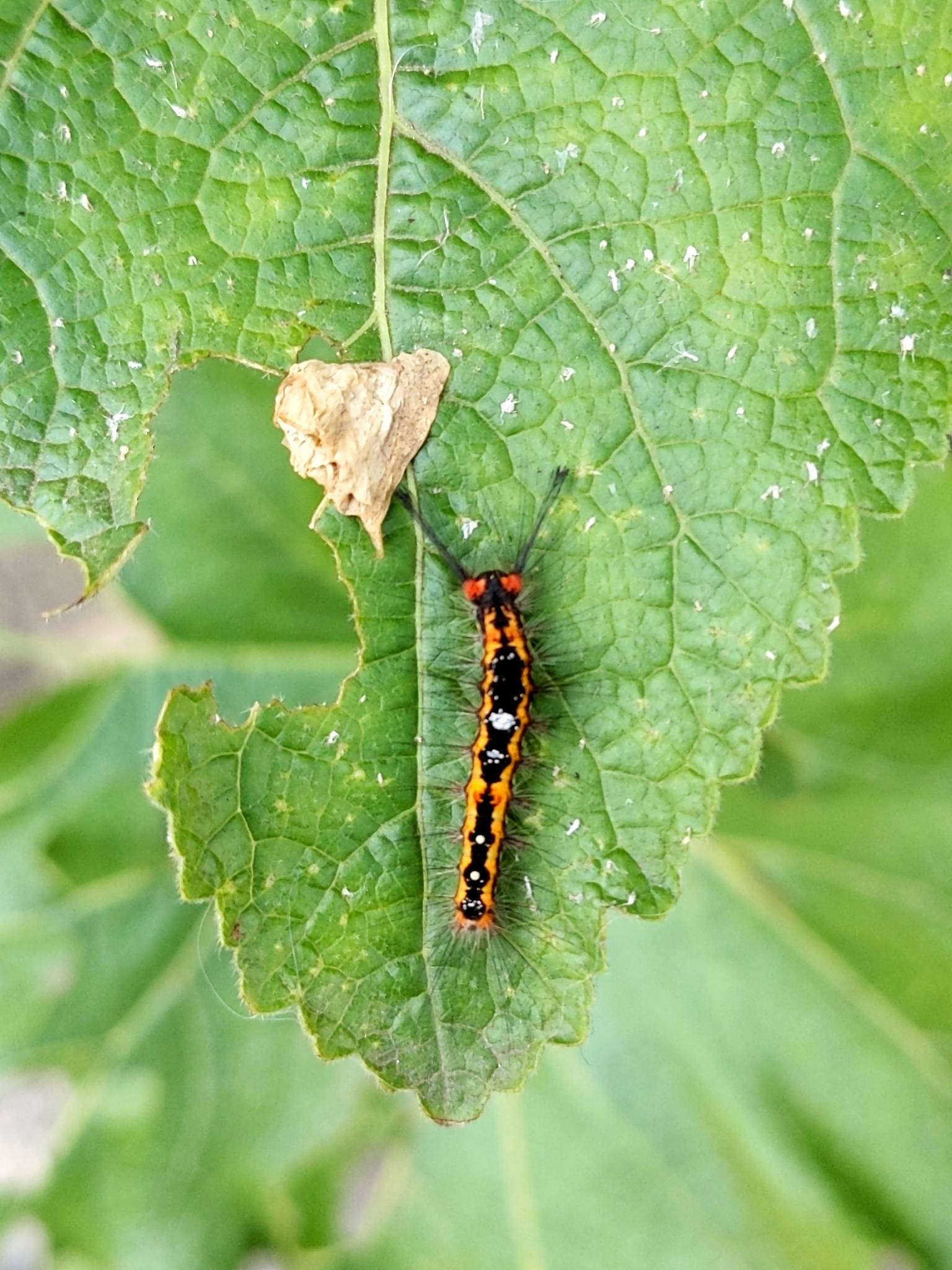
Photos (5 photos)
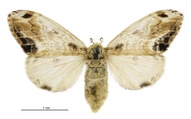
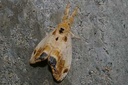
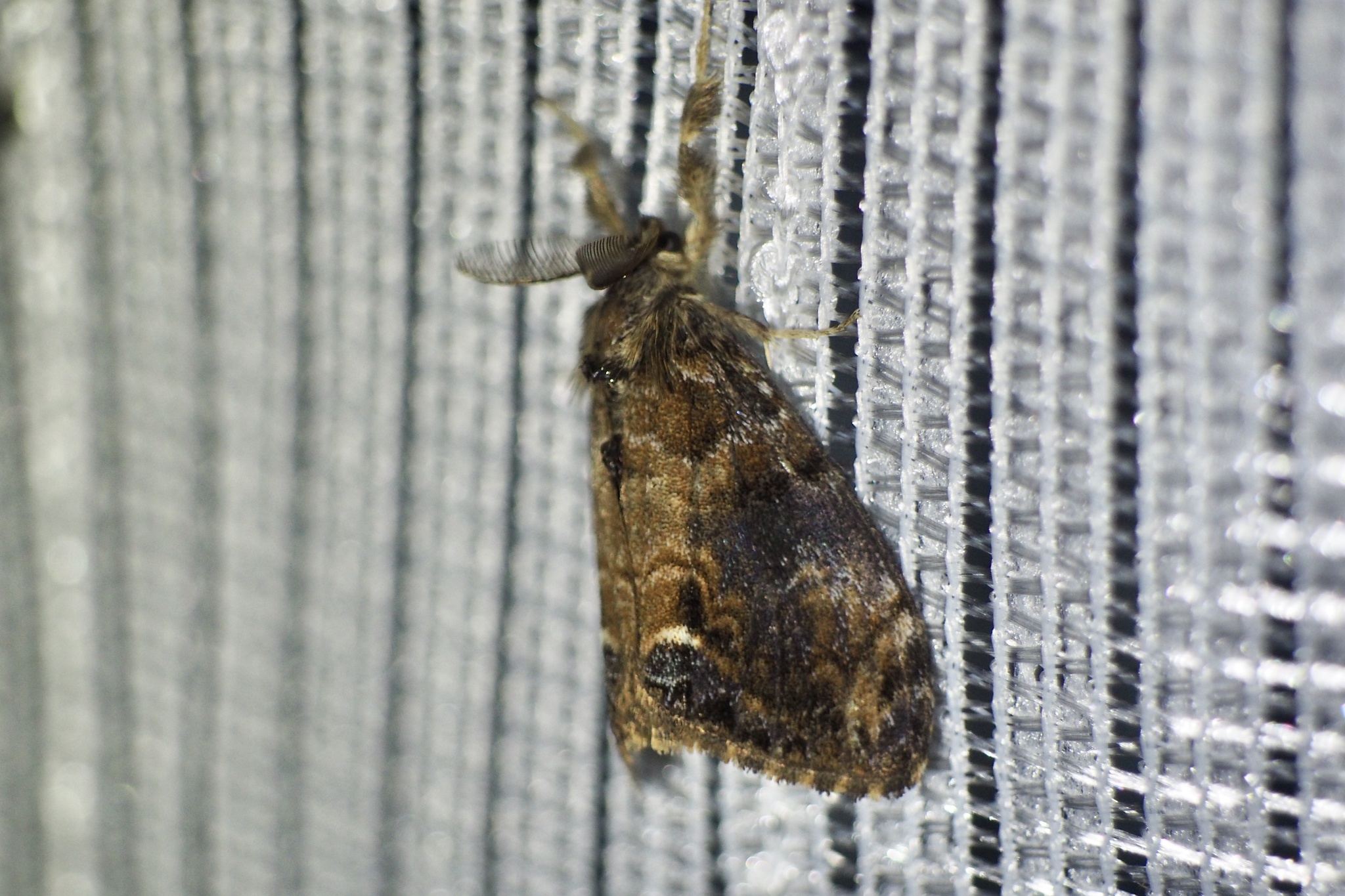
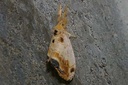
Morphological Features
Female adult of Orgyia thyellina exhibits seasonal wing dimorphism. Under long-day photoperiod, females are long-winged with forewing length 19.96 ± 0.23 mm; under short-day photoperiod, females are short-winged with forewing length 8.78 ± 0.19 mm. Despite size difference, wing shape and color pattern are similar between forms. Scales are petal-shaped in both forms, but scale density is much higher in short-winged females. The wing surface of short-winged females is much rougher and thicker than that of long-winged females. The short wing is similar in size and morphology to the pupal wing, developing almost without spreading after eclosion.
Akihiro Yoshida, Yoshiomi Kato. 2019. Morphology and development of the short wing in the seasonal dimorphism of the tussock moth, Orgyia thyellina (Lepidoptera: Lymantriidae): comparison with the long wing. Applied Entomology and Zoology
Host Plants (0 host plants)
Data sources: EPPO Global Database and relevant literature.
No host plants available.
Quarantine Status (2 records)
Data sources: IPPC website and national quarantine websites; verified by human review.
| Country | Status | Year Added |
|---|---|---|
| Chile | Quarantine pests | 2019 |
| New Zealand | Quarantine pests | — |
Distribution (3 countries)
Data Sources: EPPO Global Database and GBIF.
| Country | Status | State |
|---|---|---|
| Japan | Present | — |
| New Zealand | Present | — |
| Russian Federation | Present | — |
Distribution Map (Latitude and longitude coordinates sourced from GBIF.)
Download CSVGenomes (0 records)
Data source: NCBI.
No genome records available.
Transcriptomes (0 records)
Data source: NCBI.
No transcriptome records available.
Literature
Fetching literature from NCBI PubMed...
Failed to fetch literature