Takecallis arundinariae
TaxID: 691750
Basic Information
Takecallis arundinariae
Aphid, Black-spotted Bamboo Aphid
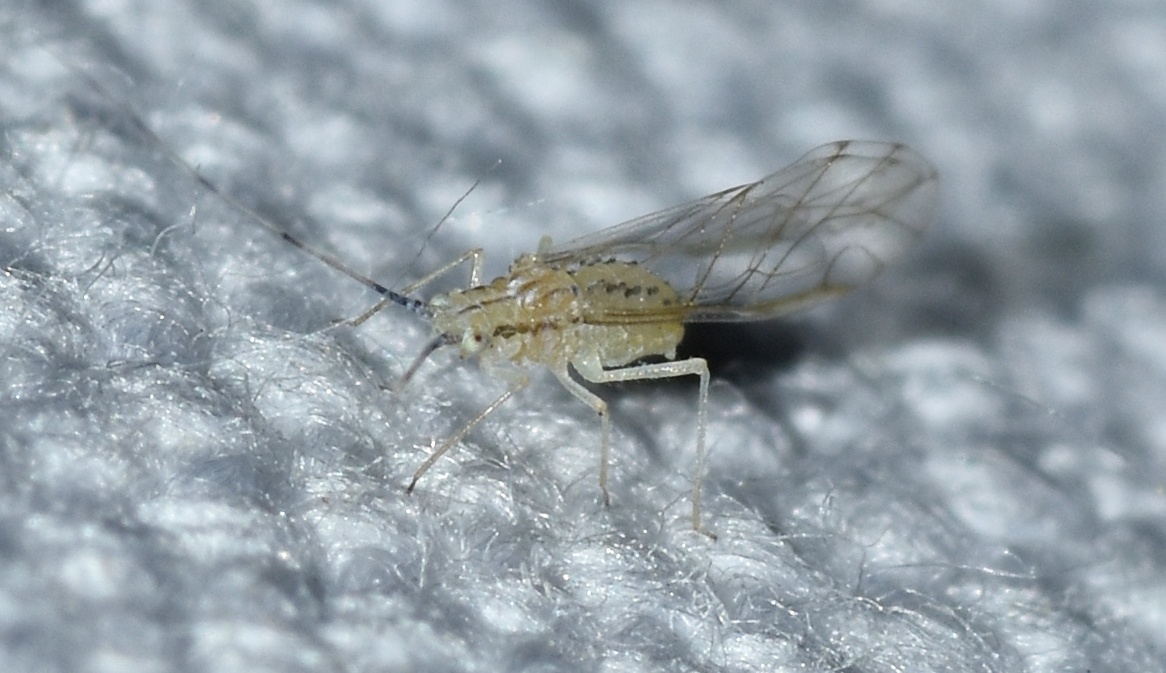
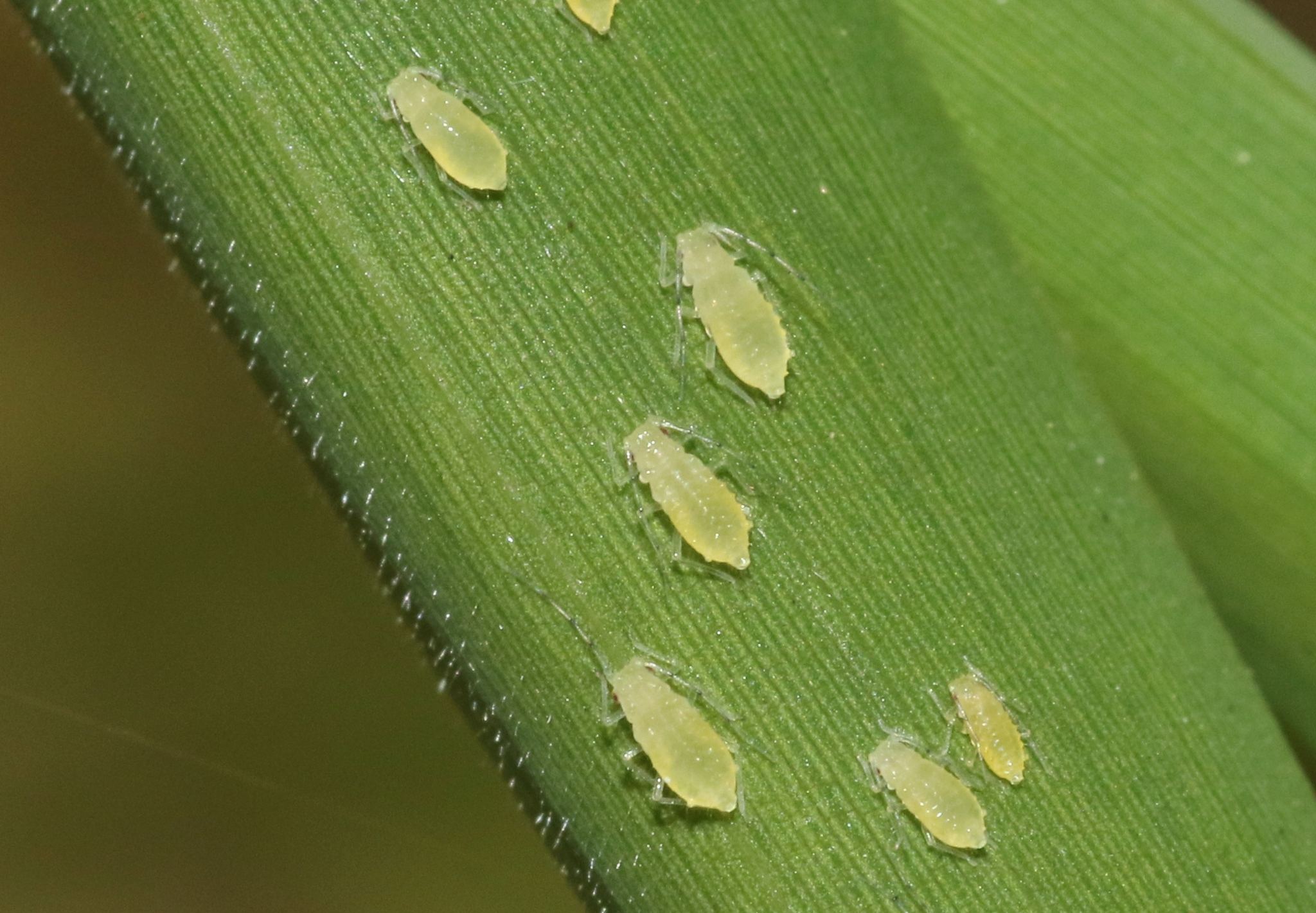
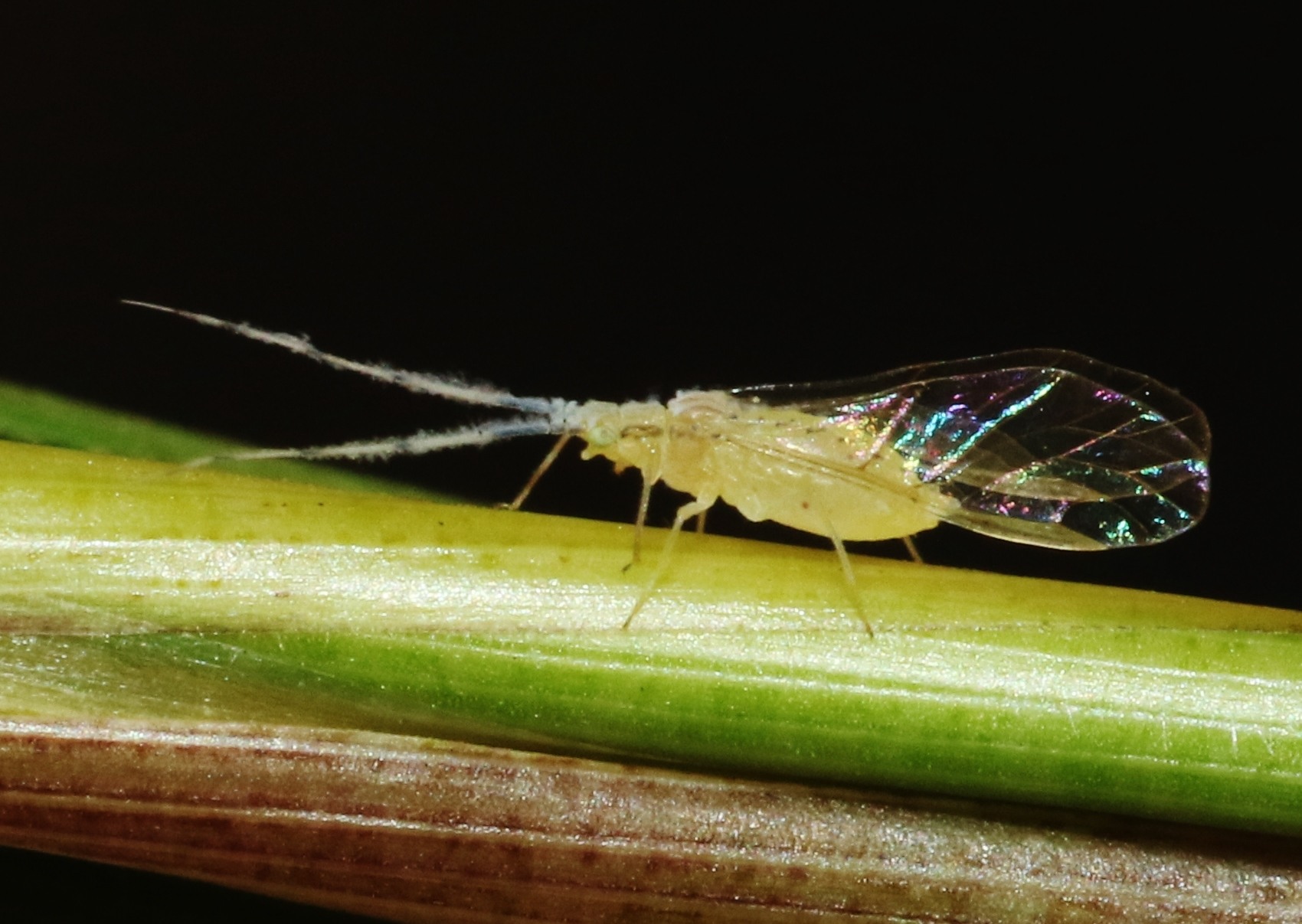
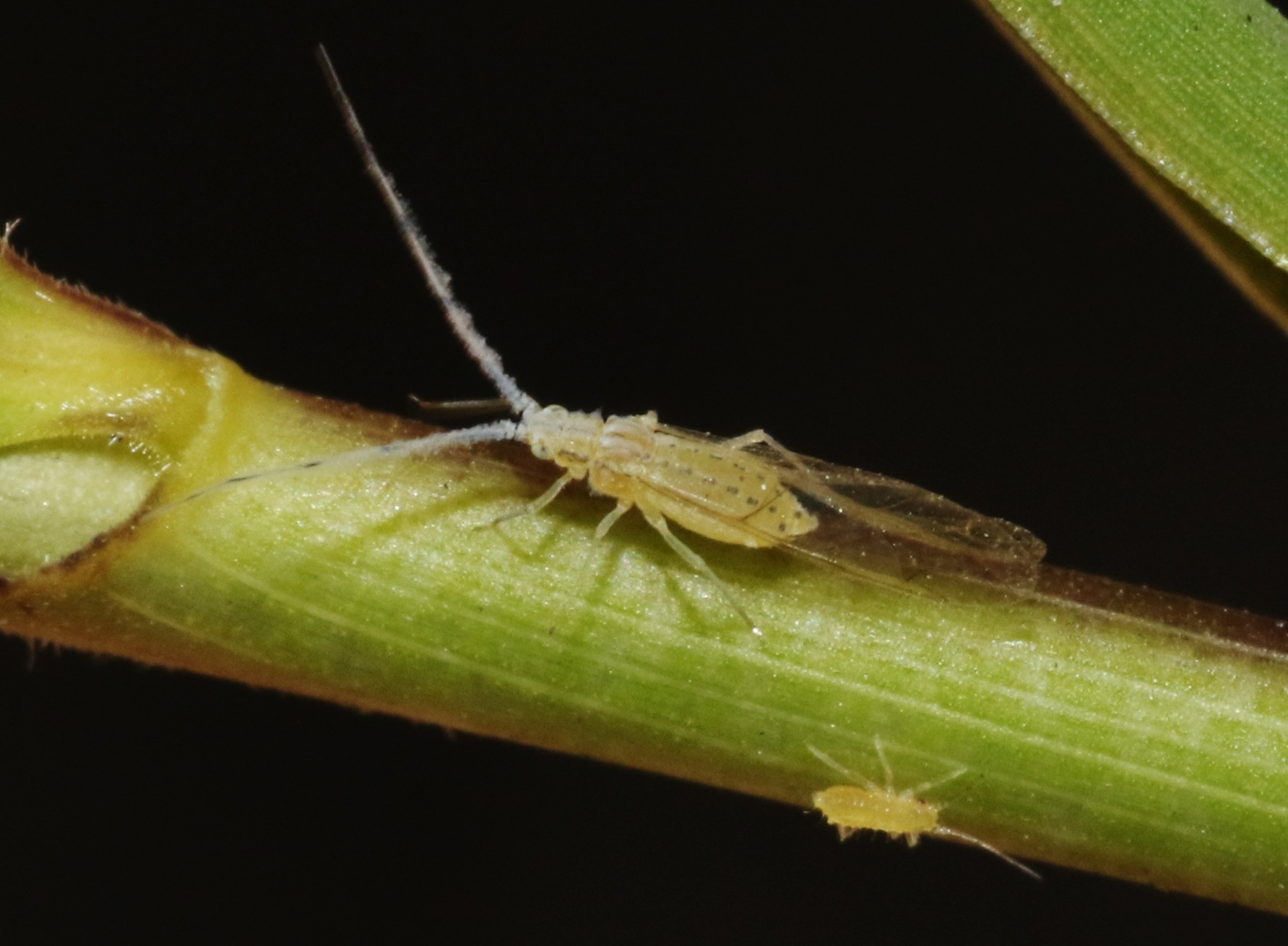
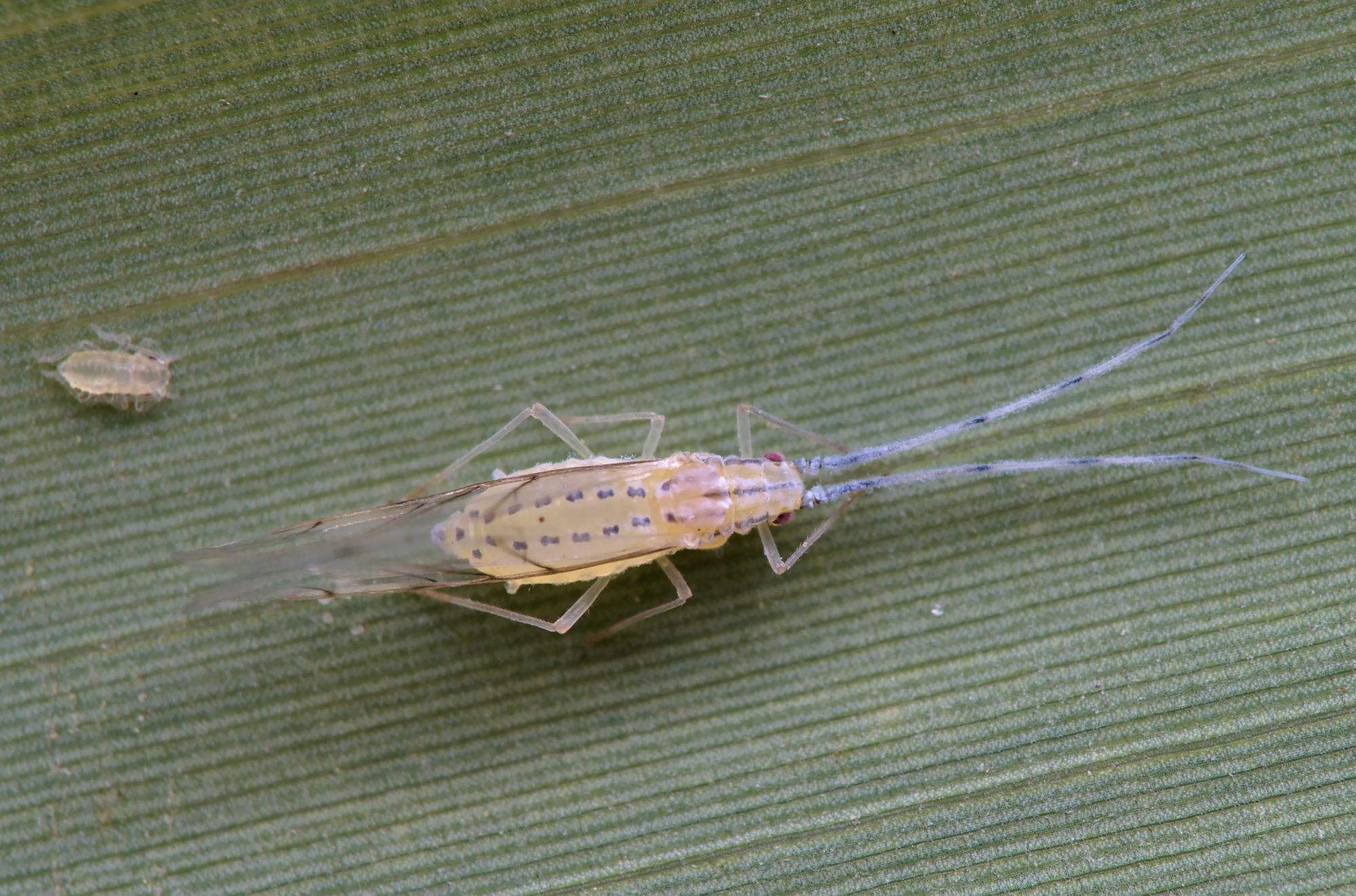
Takecallis arundinariae, commonly known as the black-spotted bamboo aphid, is a species of aphid found worldwide, originating in Eurasia. This species uses various bamboo species worldwide. This species is not picky in its host plants, and major infestations can cause problems for the plants if left uncontrolled. The overall appearance is an aphid living underneath the leaves of bamboo plants, black spots across the whiteish abdomen. there are stripes towards the head. The antenna are fuzzy and long. The siphunculi are small and cup shaped. Takecallis arundinariae was described by Edward Oliver Essig in 1917.
from Wikipedia
Taxonomic Information
Metazoa
Arthropoda
Insecta
Hemiptera
Aphididae
Takecallis
arundinariae
unclassified
Species
nan
k__Metazoa;p__Arthropoda;c__Insecta;o__Hemiptera;f__Aphididae;g__Takecallis;s__Takecallis arundinariae
nan
Arthropods
Photos (5 photos)
Morphological Features
Alate viviparous female. Body medium-sized, pale yellow. Head pale to bright yellow with a black stripe on dorsum; compound eye pale red. Median protrusion on frons developed; epicranial suture and antennal tubercle developed; head dorsum without tubercles. Clypeus with a nose-like processus. Rostrum very short, passing over fore coxae; ultimate rostral segment short, blunted, 0.05–0.06 mm, with four accessory setae. Fore coxae enlarged. First tarsal segments with 5–7 setae; hind tarsomere II 0.10–0.12 mm long. Siphunculi cylindrical, 0.05–0.07 mm long, bearing a single seta about 0.03–0.06 mm. Abdominal tergites I–VII each with a pair of spinal setae on small elevations; tergite VIII with a pair of spinal setae. Abdominal tergites with a series of elongate black spots.
Plazi taxonomic treatment
Host Plants (17 host plants)
Data sources: EPPO Global Database and relevant literature.
| Scientific Name | Status |
|---|---|
| Arundinaria | Host |
| Bambusa | Host |
| Bambusa textilis | Host |
| Fargesia rufa | Host |
| Fargesia spathacea | Host |
| Phyllostachys aurea | Host |
| Phyllostachys bambusoides | Host |
| Phyllostachys bissetii | Host |
| Phyllostachys dulcis | Host |
| Phyllostachys viridiglaucescens | Host |
Quarantine Status (1 records)
Data sources: IPPC website and national quarantine websites; verified by human review.
| Country | Status | Year Added |
|---|---|---|
| French Polynesia | Absent | — |
Distribution (31 countries)
Data Sources: EPPO Global Database and GBIF.
| Country | Status | State |
|---|---|---|
| Argentina | Present | — |
| Australia | Present | |
| Austria | Present | — |
| Belgium | Present | — |
| Brazil | Present | |
| Canada | Present | — |
| Switzerland | Present | — |
| Chile | Present | — |
| China | Present | |
| Colombia | Present | — |
Distribution Map (Latitude and longitude coordinates sourced from GBIF.)
Download CSVGenomes (0 records)
Data source: NCBI.
No genome records available.
Transcriptomes (1 records)
Data source: NCBI.
| Run ID | Tissue | Developmental Stage | Sex | Read Count | Location | Actions |
|---|---|---|---|---|---|---|
| SRR2496618 | whole insect | - | - | 22360320 | France: Monpellier | |
|
PRJNA295704 SRX1277777 SRP064089 insect Transcriptome of Takecallis arundinariae "Construction of libraries and sequencing on the Illumina HiSeq2500 were performed at the W. M. Keck Center for Comparative and Functional Genomics at the University of Illinois at Urbana-Champaign. Messenger RNA was selected from one microgram of high quality total RNA. RNAseq libraries were constructed using the TruSeq Stranded RNA Sample Preparation Kit (Illumina, San Diego, CA). Libraries were sequenced on an Illumina HiSeq2500 with TruSeq SBS sequencing kits version 4. The libraries were sequenced from both ends of the molecules to a total read length of 100nt from each end. The raw .bcl files were converted into demultiplexed fastq files with Casava 1.8.2 (Illumina)." {'host': 'Phyllostachys aurea', 'breed': 'wildtype', 'tissue': 'whole insect', 'lat_lon': '43.6179 N 3.8696 E', 'collected_by': 'Colin Favret', 'geo_loc_name': 'France: Monpellier', 'biosamplemodel': 'Invertebrate', 'collection_date': '2014-10-26', 'isolation_source': 'wild-caught'} |
||||||
Literature
Fetching literature from NCBI PubMed...
Failed to fetch literature