Diaprepes abbreviatus
TaxID: 13040
Basic Information
Diaprepes abbreviatus
Diaprepes root weevil, Root weevil, Diaprepes Root Weevil
Diaprepes abbreviatus, also known as the diaprepes root weevil, citrus root weevil and sugarcane rootstock borer weevil, is a species of weevil that is native to the Caribbean, where in Spanish it is colloquially called chich . It has become an invasive pest in several locations in the United States.
from Wikipedia
Taxonomic Information
Metazoa
Arthropoda
Insecta
Coleoptera
Curculionidae
Diaprepes
abbreviatus
unclassified
Species
nan
k__Metazoa;p__Arthropoda;c__Insecta;o__Coleoptera;f__Curculionidae;g__Diaprepes;s__Diaprepes abbreviatus
nan
Arthropods
Photos (5 photos)
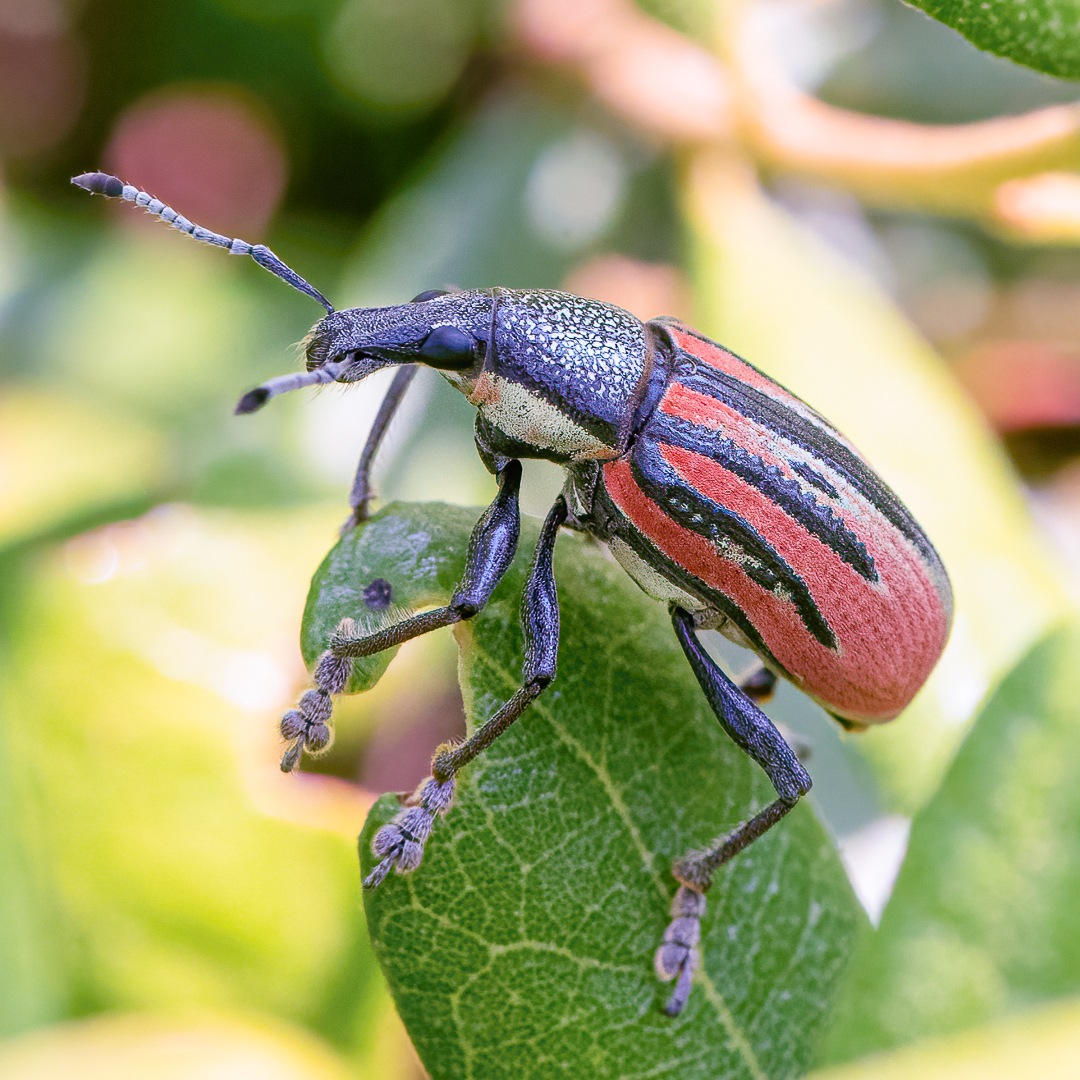
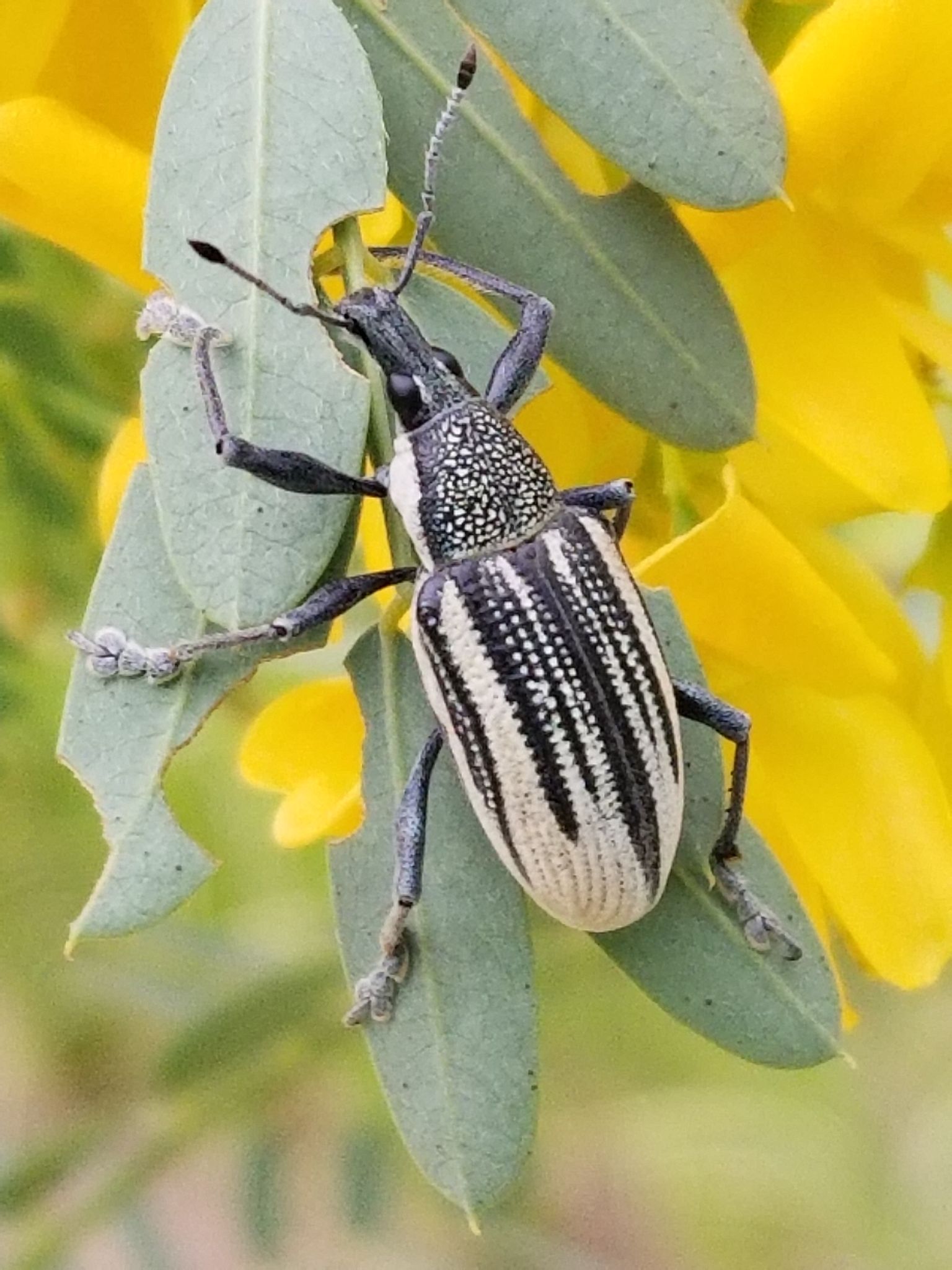
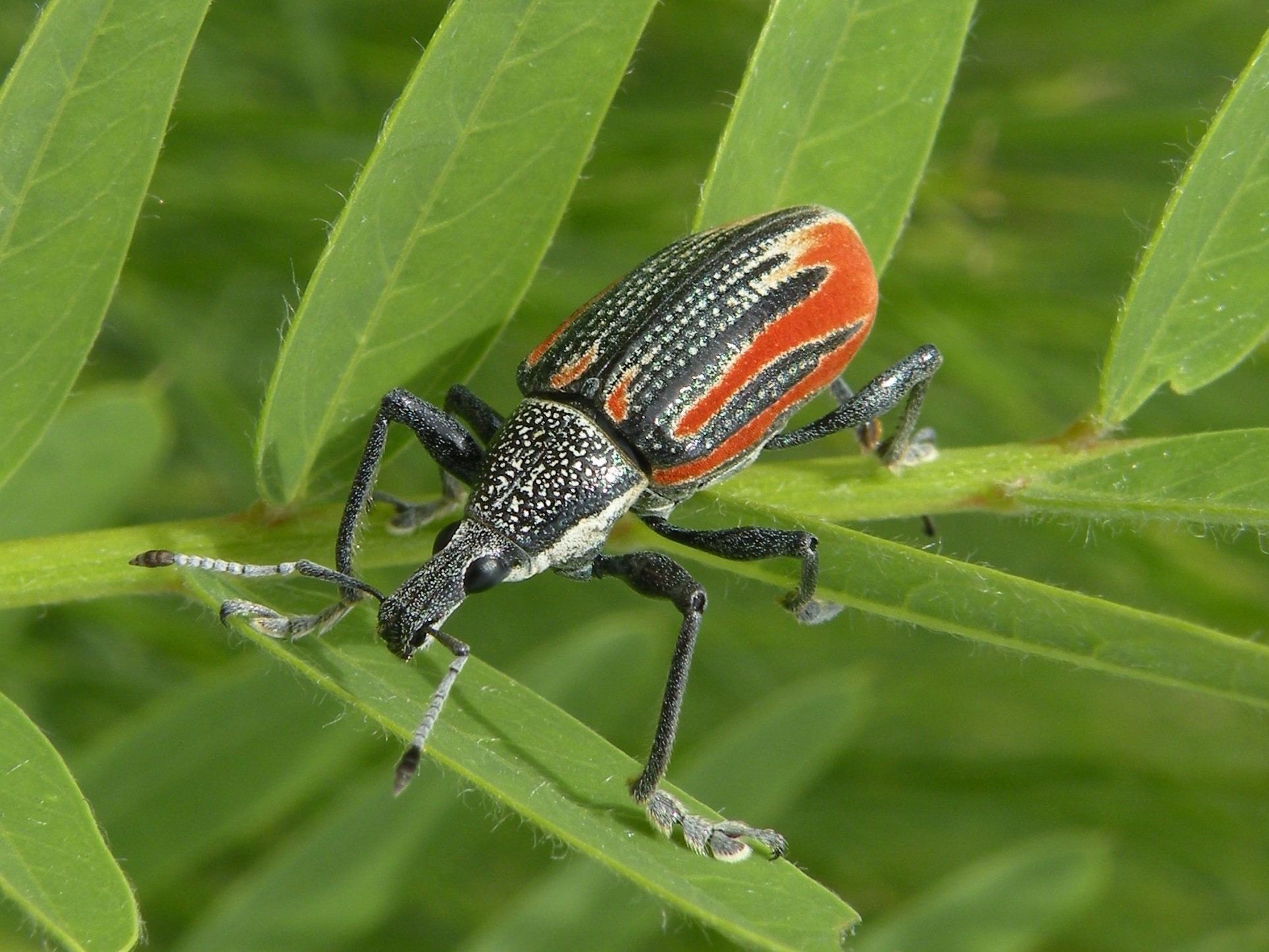
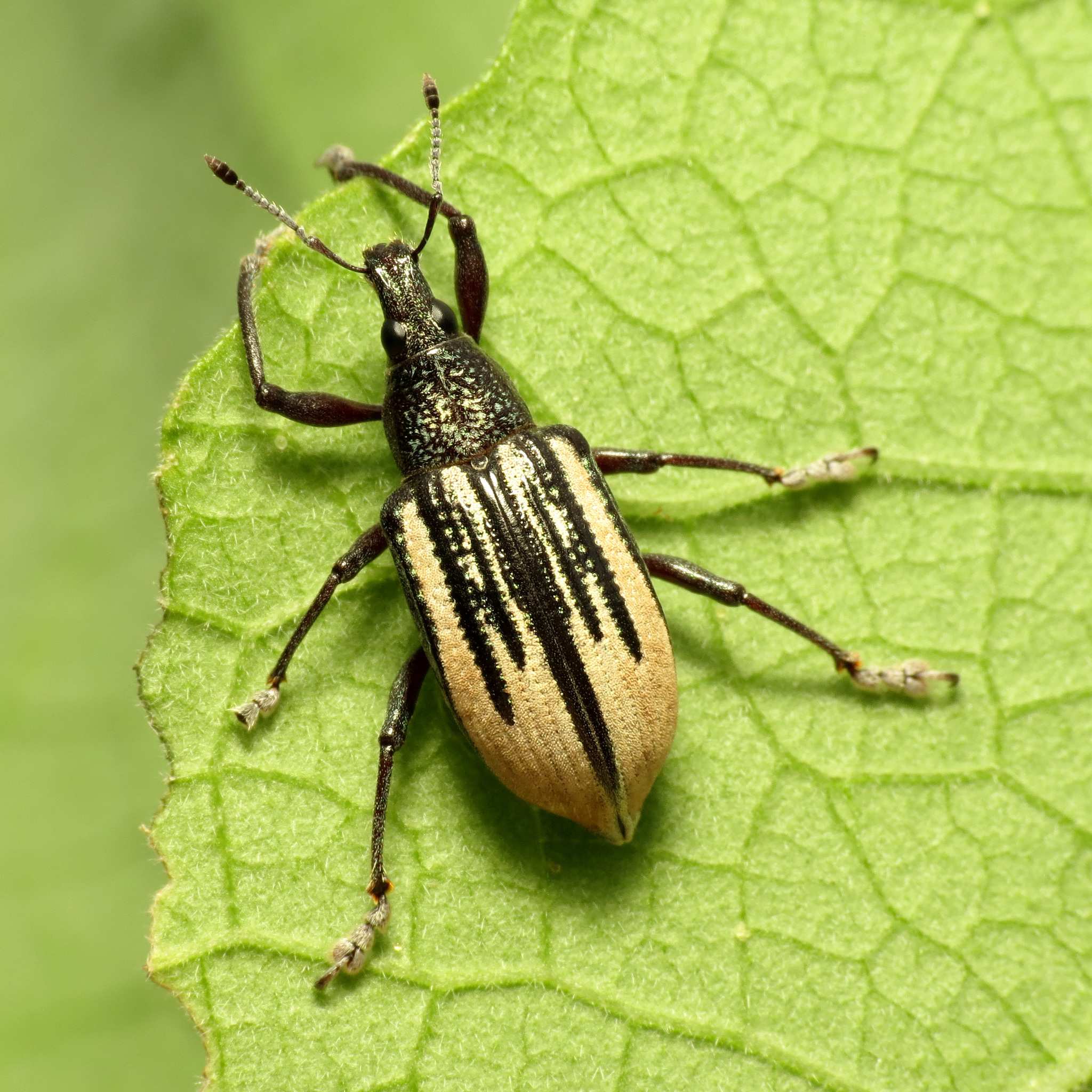
Morphological Features
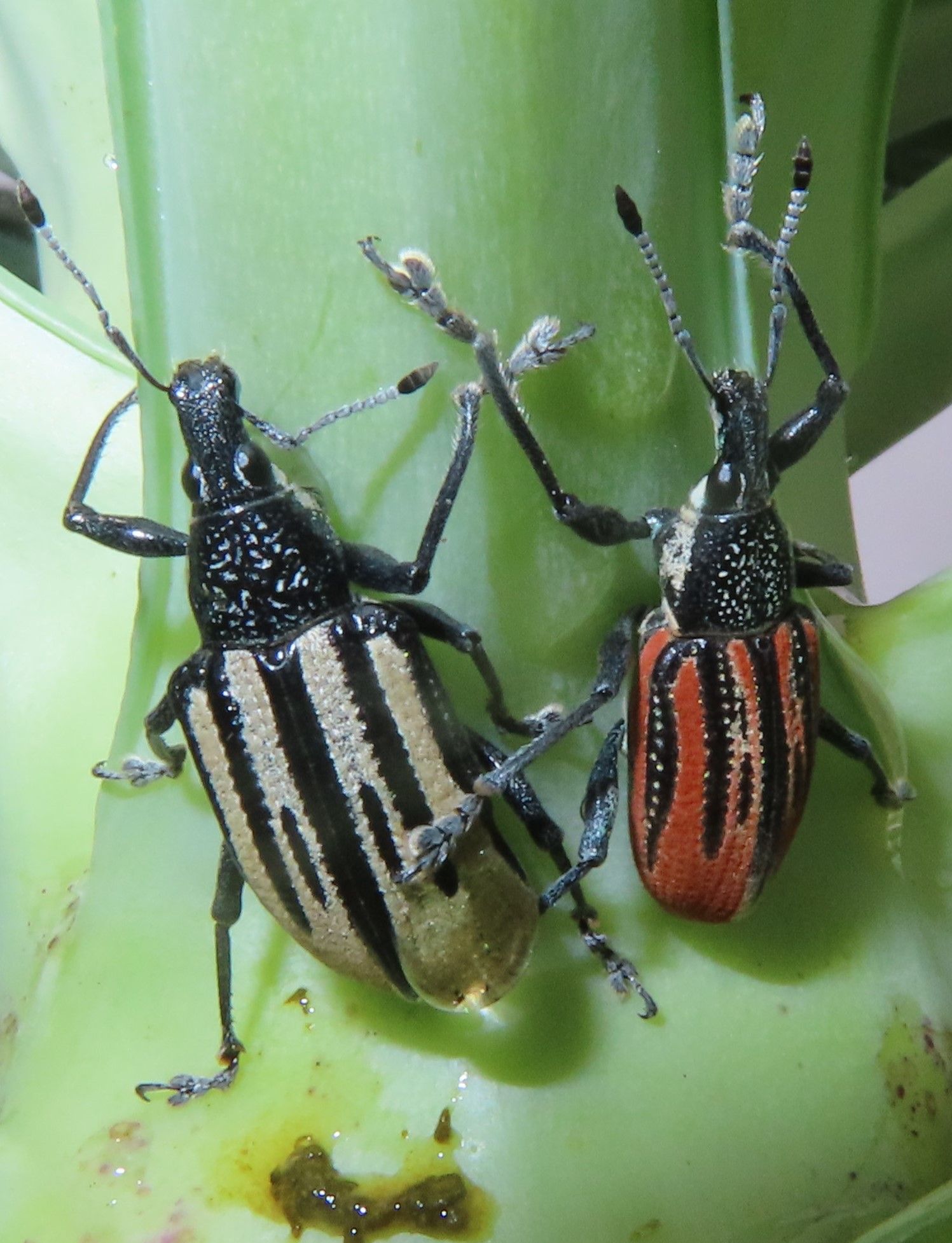
Male. Length 1.28–2.66 mm (rostrum/pronotum length ratio 0.57–0.67, rostrum length/width ratio 1.32–1.48). Body oval to elongate, length/width ratio 2.50–2.83. Head with dorsal margin surrounding each eye with two to three rows of appressed whitish scales; frons with median carina extending from frontal fovea to anterior region of occiput. Eyes separated from anterolateral margin of pronotum by nearly 10 rows of scales; interocular distance distinctly shorter than maximum width of eye. Rostrum dorsally subplane, with transverse, slightly angulate carina along posterior edge of epistoma, median line carinate, with two dorsolateral carinae. Antennae with funicular antennomeres progressing from elongate to equilateral; club similar in length to funicular antennomeres III–VI, nearly three times longer than wide. Pronotum equilateral to trapezoidal, length/width ratio 0.88–0.98, pronotum/elytra length ratio 0.31–0.33; in lateral view subquadrate to conical, with foveate to longitudinal impressions above procoxal cavities. Scutellum subcircular, glabrous, margins finely setose. Elytra with intervals subplane to strongly convex; intervals of mesal margin/I and VIII/IX elevated, glabrous along anterior three-quarters; lateral margins subparallel along most of length, anterior one-sixth slightly expanded (alate). Wings with wing/body length ratio 1.12–1.15, wing length/width ratio 3.42–3.48. Legs with mucro shorter than tarsal claw; mesotibia slightly shorter than metatibia, slightly arcuate. Venter with sterna III and IV centrally subplane, laterally slightly convex. Pale whitish to yellowish scales arranged in distinct patch- or stripe-like pattern on head, pronotum, prosterna, elytra, and ventral sterna. Scale colour varies from white to various shades of yellow to rusty brown or nearly orange, or with limited pinkish regions.
Plazi taxonomic treatment
Host Plants (15 host plants)
Data sources: EPPO Global Database and relevant literature.
| Scientific Name | Status |
|---|---|
| Arachis hypogaea | Host |
| Brachychiton sp. | Host |
| Cajanus cajan | Host |
| Citrus | Host |
| Citrus sinensis | Host |
| Coffea | Host |
| Eugenia uniflora | Host |
| Ipomoea batatas | Host |
| Manihot esculenta | Host |
| Markhamia lutea | Host |
Quarantine Status (22 records)
Data sources: IPPC website and national quarantine websites; verified by human review.
| Country | Status | Year Added |
|---|---|---|
| Chile | Quarantine pests | 2019 |
| China | Quarantine pests | 2021 |
| Cuba | Absent | — |
| Ecuador | Quarantine pests | — |
| Ghana | Quarantine pests | — |
| Guinea | Quarantine pests | — |
| Greece | Quarantine pests | — |
| Guatemala | Absent | — |
| Indonesia | Absent | — |
| India | Quarantine pests | — |
Distribution (30 countries)
Data Sources: EPPO Global Database and GBIF.
| Country | Status | State |
|---|---|---|
| Antigua and Barbuda | Present | — |
| Bahamas | Present | — |
| Barbados | Present | — |
| Canada | Present | — |
| Cuba | Absent | — |
| Dominica | Present | — |
| Dominican Republic | Present | — |
| Spain | Present | |
| France | Present | — |
| United Kingdom | Present |
Distribution Map (Latitude and longitude coordinates sourced from GBIF.)
Download CSVGenomes (1 records)
Data source: NCBI.
| Assembly Accession | Assembly Level | Genome Size(Mb) | Contig N50(Kb) | Scaffold N50(Kb) | BUSCO% | Downloads | Actions |
|---|---|---|---|---|---|---|---|
| GCA_034092305.1 | Contig | 1623 | 7800 | 7800 | - |
|
|
|
|
|||||||
Transcriptomes (3 records)
Data source: NCBI.
| Run ID | Tissue | Developmental Stage | Sex | Read Count | Location | Actions |
|---|---|---|---|---|---|---|
| SRR33756283 | not provided | Larvae-1 | - | 41542247 | USA: Florida | |
|
PRJNA1269720 SRX28979169 SRP588729 insect Larvae-1-R2 35 million reads Citrus root weevil {'age': '3', 'tissue': 'not provided', 'isolate': 'Citrus root weevil', 'cultivar': 'Citrus root weevil', 'dev_stage': 'Larvae-1', 'geo_loc_name': 'USA: Florida', 'biosamplemodel': 'Model organism or animal', 'collection_date': '2025-01-01'} |
||||||
| SRR33756282 | not provided | Larvae-1 | - | 39573608 | USA: Florida | |
|
PRJNA1269720 SRX28979170 SRP588729 insect Larvae-1-R3 35 million reads Citrus root weevil {'age': '3', 'tissue': 'not provided', 'isolate': 'Citrus root weevil', 'cultivar': 'Citrus root weevil', 'dev_stage': 'Larvae-1', 'geo_loc_name': 'USA: Florida', 'biosamplemodel': 'Model organism or animal', 'collection_date': '2025-01-01'} |
||||||
| SRR33756281 | not provided | Larvae-2 | - | 38901667 | USA: Florida | |
|
PRJNA1269720 SRX28979171 SRP588729 insect Larvae-2-R1 35 million reads Citrus root weevil {'age': '3', 'tissue': 'not provided', 'isolate': 'Citrus root weevil', 'cultivar': 'Citrus root weevil', 'dev_stage': 'Larvae-2', 'geo_loc_name': 'USA: Florida', 'biosamplemodel': 'Model organism or animal', 'collection_date': '2025-01-01'} |
||||||
Literature
Fetching literature from NCBI PubMed...
Failed to fetch literature