Puccinia asparagi
TaxID: 231640
Basic Information
Puccinia asparagi
Asparagus Rust
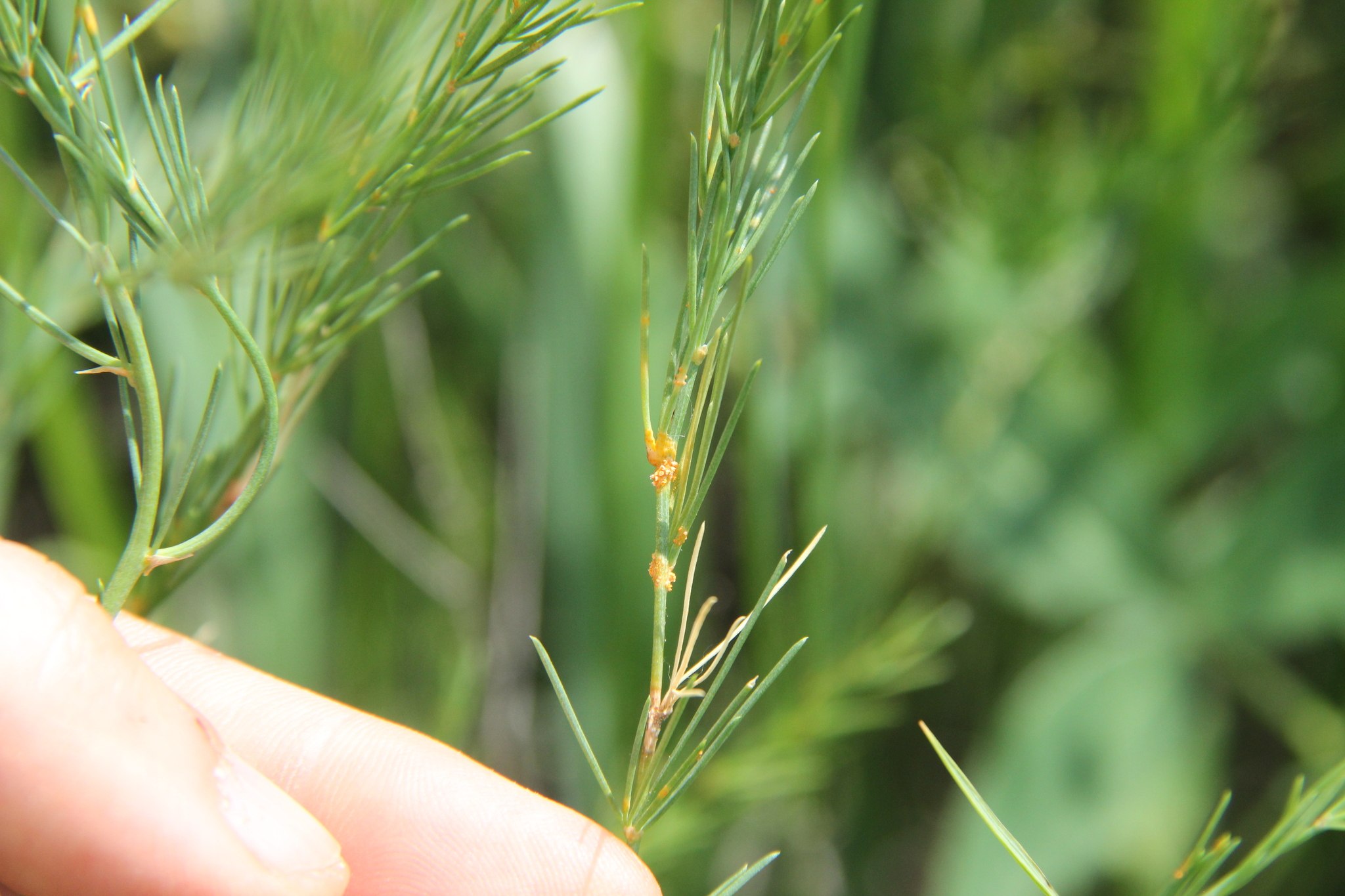
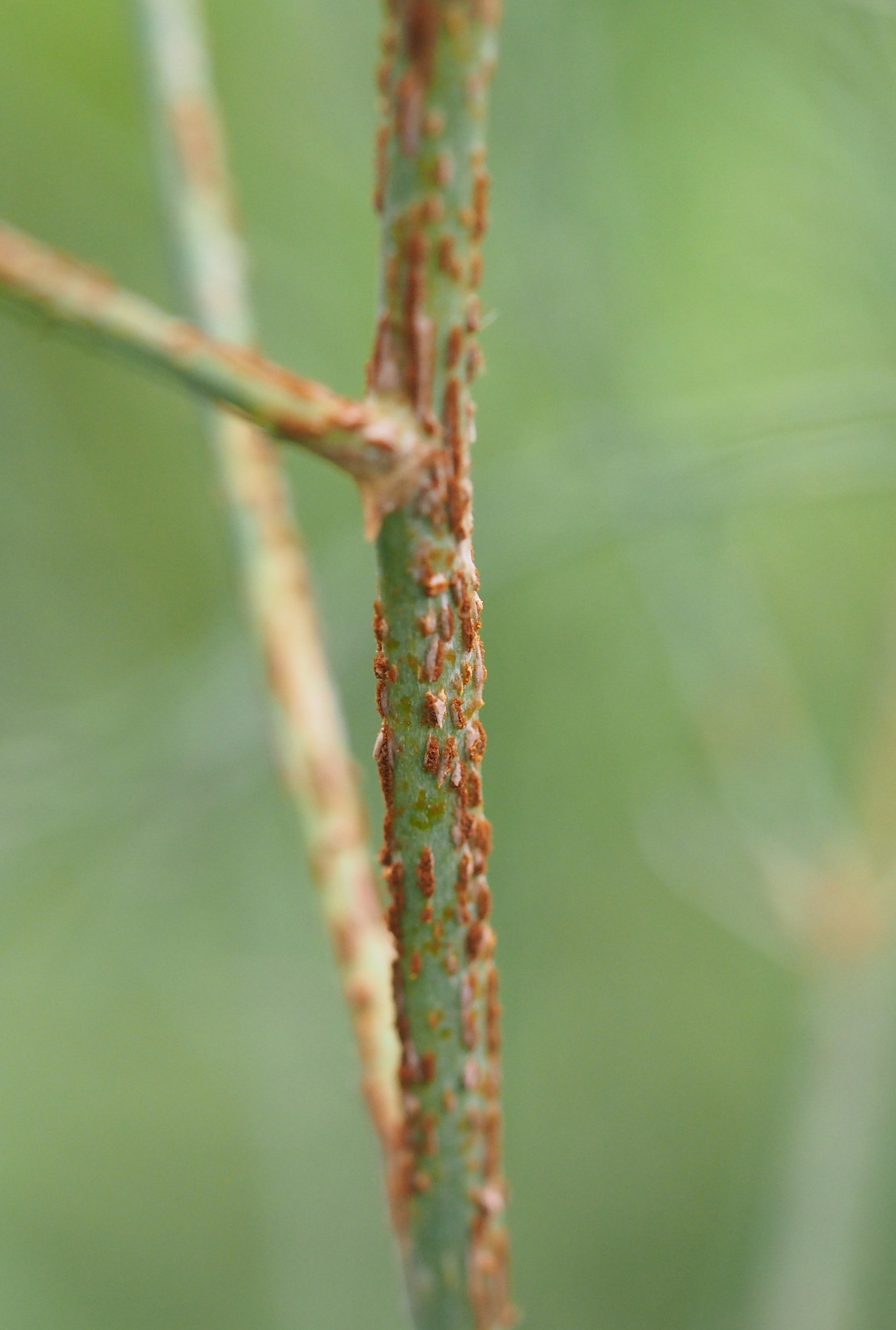
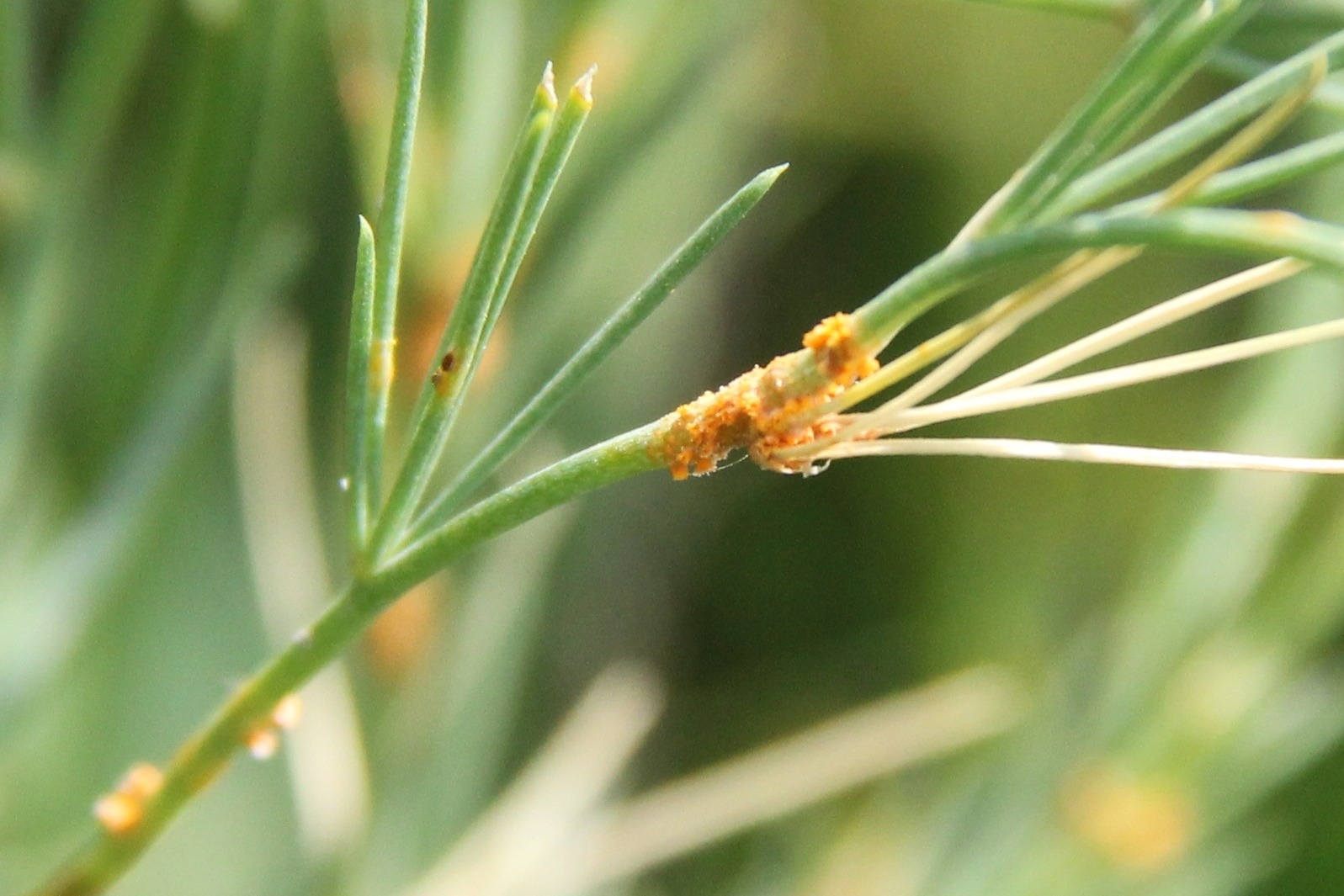
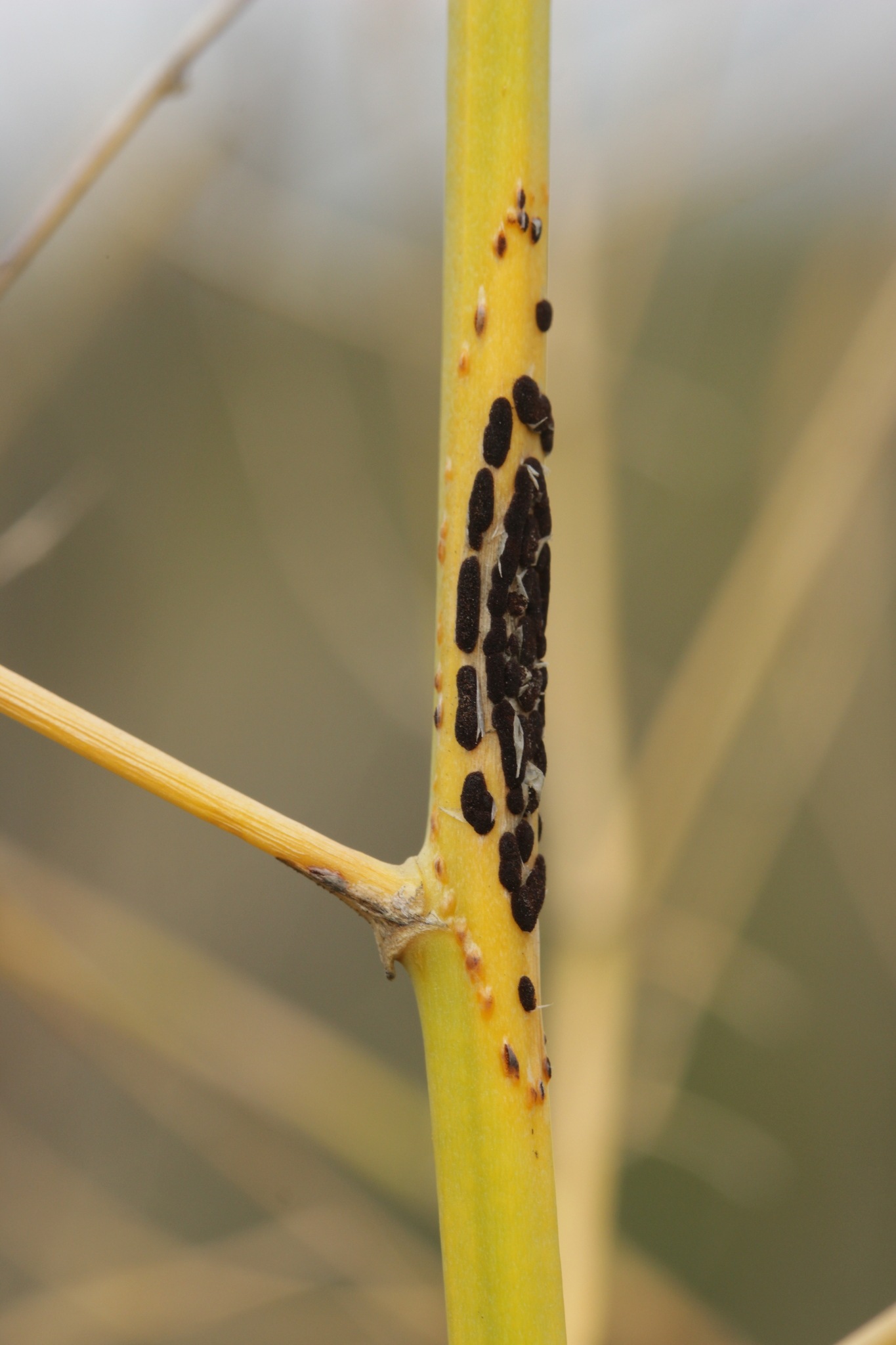
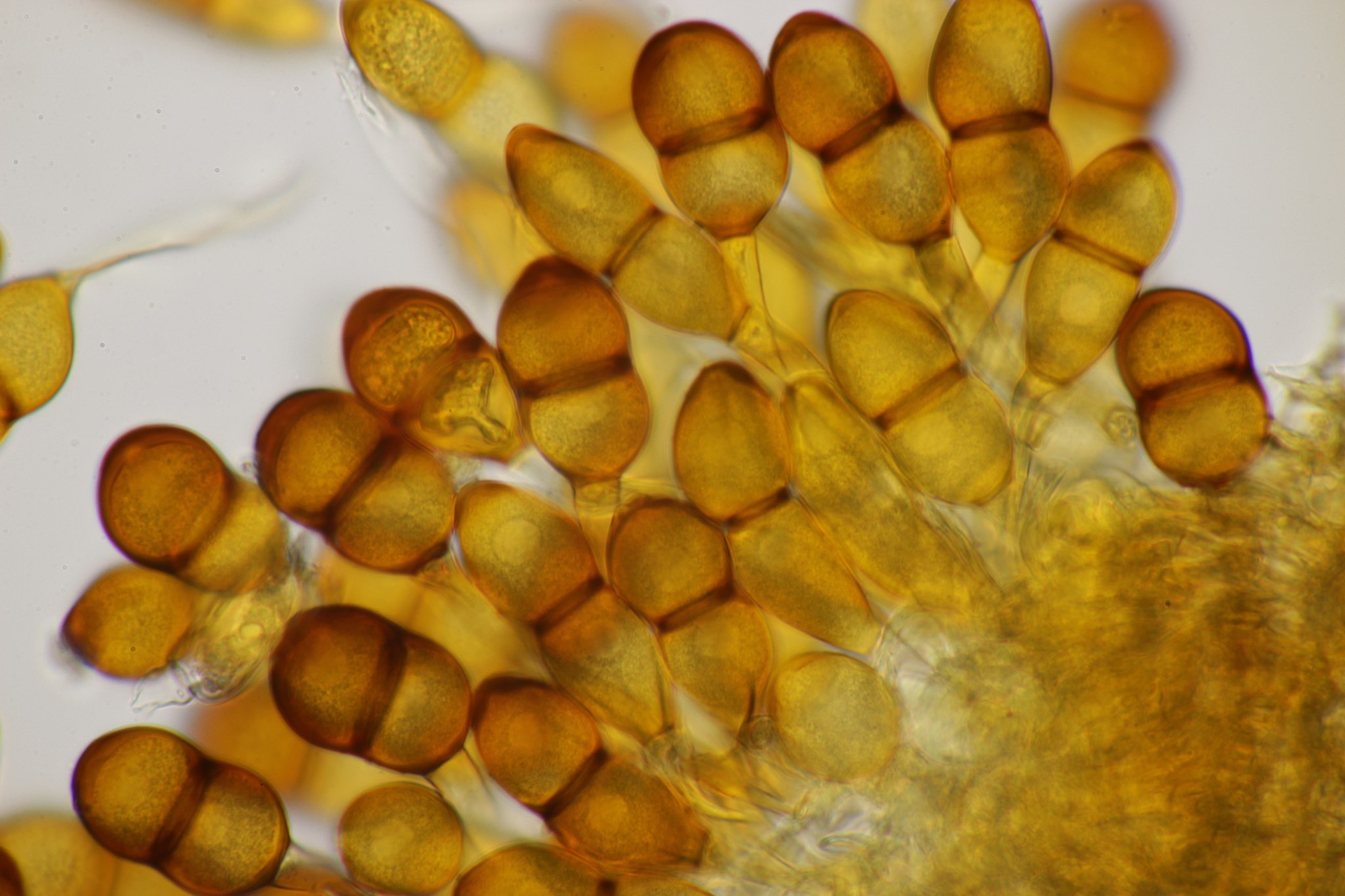
Puccinia asparagi is the causative agent of asparagus rust. It is an autoecious fungus, meaning that all stages of its life cycle C pycniospores, aeciospores, and teliospores C all develop upon the same host plant . Rust diseases are among the most destructive plant diseases, known to cause famine following destruction of grains, vegetables, and legumes. Asparagus rust occurs wherever the plant is grown and attacks asparagus plants during and after the cutting season. Asparagus spears are usually harvested before extensive rust symptoms appear. Symptoms are first noticeable on the growing shoots in early summer as light green, oval lesions, followed by tan blister spots and black, protruding blisters later in the season. The lesions are symptoms of Puccinia asparagi during early spring, mid-summer and later summer to fall, respectively. Severe rust infections stunt or kill young asparagus shoots, causing foliage to fall prematurely, and reduce the ability of the plant to store food reserves. The Puccinia asparagi fungus accomplishes this by rust lowering the amounts of root storage metabolites. The infected plant has reduced plant vigor and yield, often leading to death in severe cases. Most rust diseases have several stages, some of which may occur on different hosts; however, in asparagus rust all the life stages (orange spore in spring, red spore in summer, and black spore in autumn and winter) occur on asparagus. Because of this, many observers mistake the different stages of the Puccinia asparagi life cycle as the presence of different diseases. The effects of Puccinia asparagi are present worldwide wherever asparagus is being grown. Asparagus rust is a serious threat to the asparagus industry.
from Wikipedia
Taxonomic Information
Eukaryota
Basidiomycota
Pucciniomycetes
Pucciniales
Pucciniaceae
Puccinia
asparagi
Undefined
Species
nan
d__Eukaryota;p__Basidiomycota;c__Pucciniomycetes;o__Pucciniales;f__Pucciniaceae;g__Puccinia;s__Puccinia asparagi
nan
Fungal organisms
Photos (5 photos)
Morphological Features
No morphological description available.
Host Plants (0 host plants)
Data sources: EPPO Global Database and relevant literature.
No host plants available.
Quarantine Status (12 records)
Data sources: IPPC website and national quarantine websites; verified by human review.
| Country | Status | Year Added |
|---|---|---|
| Argentina | Absent | 2019 |
| Burkina Faso | Absent | — |
| Chile | Quarantine pests | 2019 |
| Costa Rica | Absent | — |
| Dominican Republic | Quarantine pests | — |
| Ecuador | Quarantine pests | — |
| Egypt | Abesent | 2018 |
| Indonesia | Absent | — |
| Sri Lanka | Quarantine pests | — |
| Nicaragua | Absent | — |
Distribution (55 countries)
Data Sources: EPPO Global Database and GBIF.
| Country | Status | State |
|---|---|---|
| Angola | Present | — |
| Australia | Absent | |
| Austria | Present | — |
| Azerbaijan | Present | — |
| Belgium | Present | — |
| Bulgaria | Present | — |
| Canada | Present | |
| Switzerland | Present | — |
| China | Present | |
| Democratic Republic of the Congo | Present | — |
Distribution Map (Latitude and longitude coordinates sourced from GBIF.)
Download CSVGenomes (0 records)
Data source: NCBI.
No genome records available.
Transcriptomes (0 records)
Data source: NCBI.
No transcriptome records available.
Literature
Fetching literature from NCBI PubMed...
Failed to fetch literature