Opogona sacchari
TaxID: 753211
Basic Information
Opogona sacchari
Banana Moth
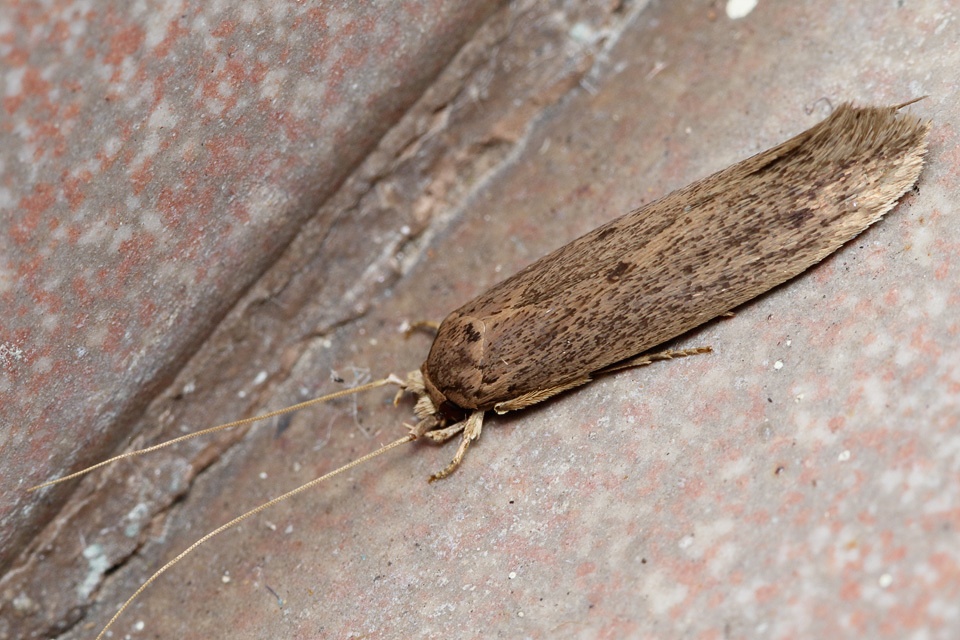
Opogona sacchari, the banana moth, is a moth of the family Tineidae. The species was first described by Wenceslas Bojer in 1856. It is native to the humid tropical and subtropical regions of sub-Saharan Africa, where it is also found in Madagascar, Mauritius, R union, Rodrigues Island, the Seychelles and St. Helena. It was first reported from the Canary Islands in the 1920s. In the 1970s, it was introduced into Brazil and Central America, and also appeared in Europe. It has been reported from Florida since 1986. The wingspan is 18 C25 mm. Adults are bright yellowish brown. The larvae feed on a wide range of plants, including bananas, pineapples, bamboo, maize and sugarcane. In glasshouses in European countries, it has been found infesting various tropical or subtropical ornamentals, including Cactaceae, Dracaena, Strelitzia and Yucca, but also occasionally Alpinia, Begonia, Bougainvillea, Bromeliaceae, Chamaedorea and other palms, Cordyline, Dieffenbachia, Euphorbia pulcherrima, Ficus, Gloxinia, Heliconia, Hippeastrum, Maranta, Philodendron, Sansevieria, Streptocarpus sect. Saintpaulia, Capsicum and aubergines. The pupae are shorter than 10 mm, brown and formed in a cocoon of 15 mm. At 15 C it has a life cycle of about three months: eggs hatch in 12 days, larval development 50 days, pupal stage 20 days and adult life 6 days.
from Wikipedia
Taxonomic Information
Eukaryota
Arthropoda
Insecta
Lepidoptera
Tineidae
Opogona
sacchari
nan
Species
nan
k__Eukaryota;p__Arthropoda;c__Insecta;o__Lepidoptera;f__Tineidae;g__Opogona;s__Opogona sacchari
nan
Arthropods
Photos (5 photos)
Morphological Features
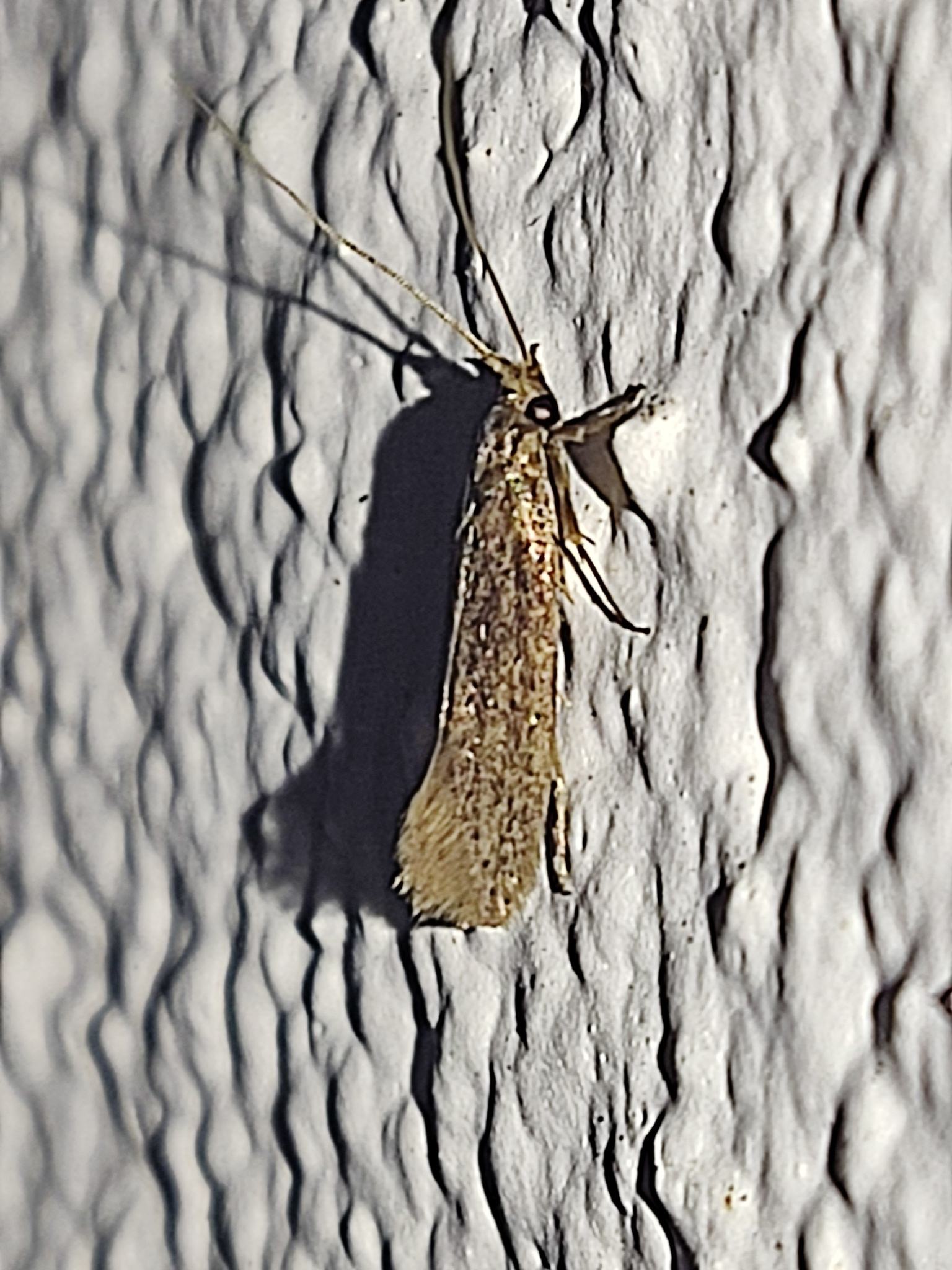
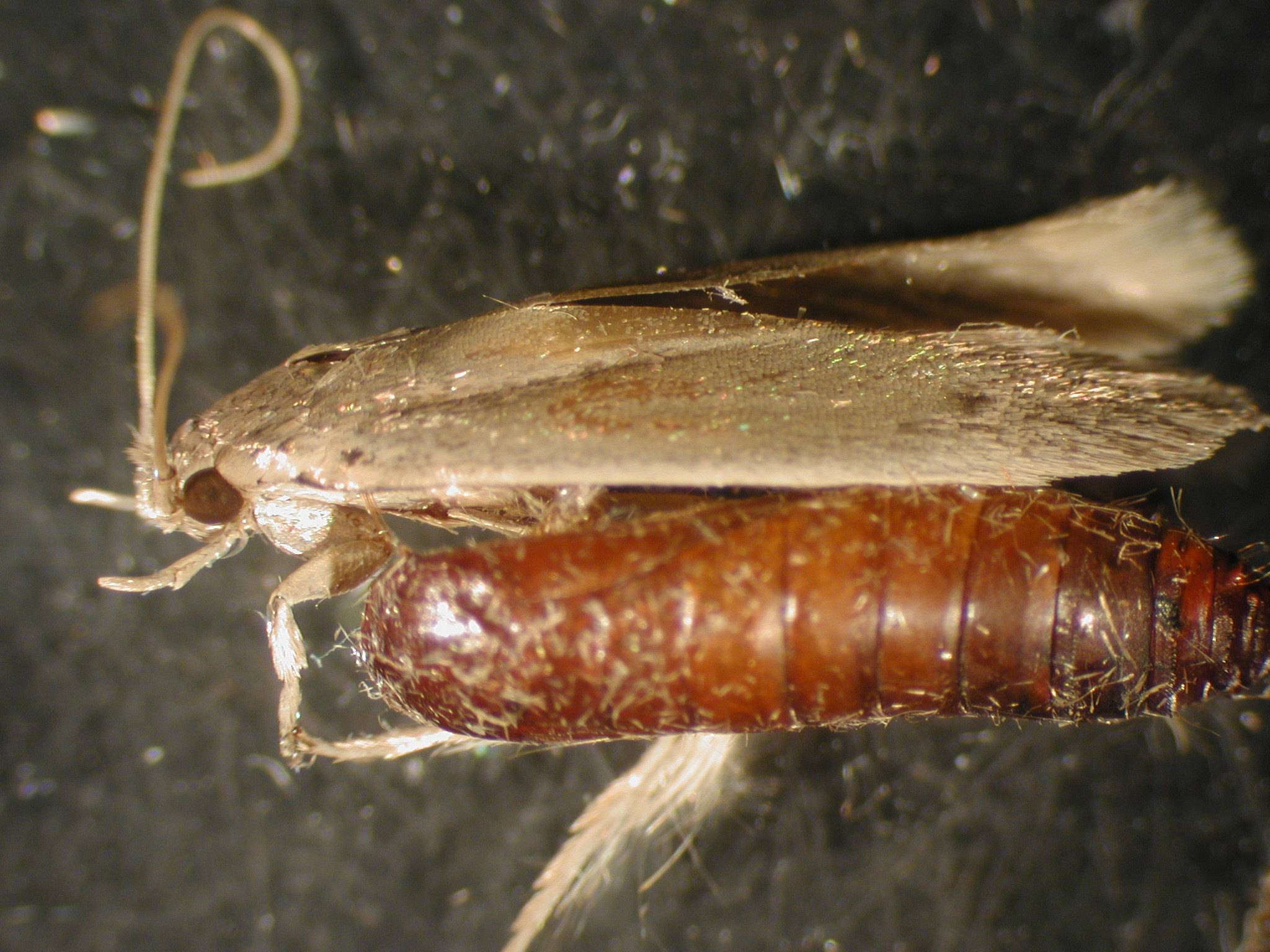
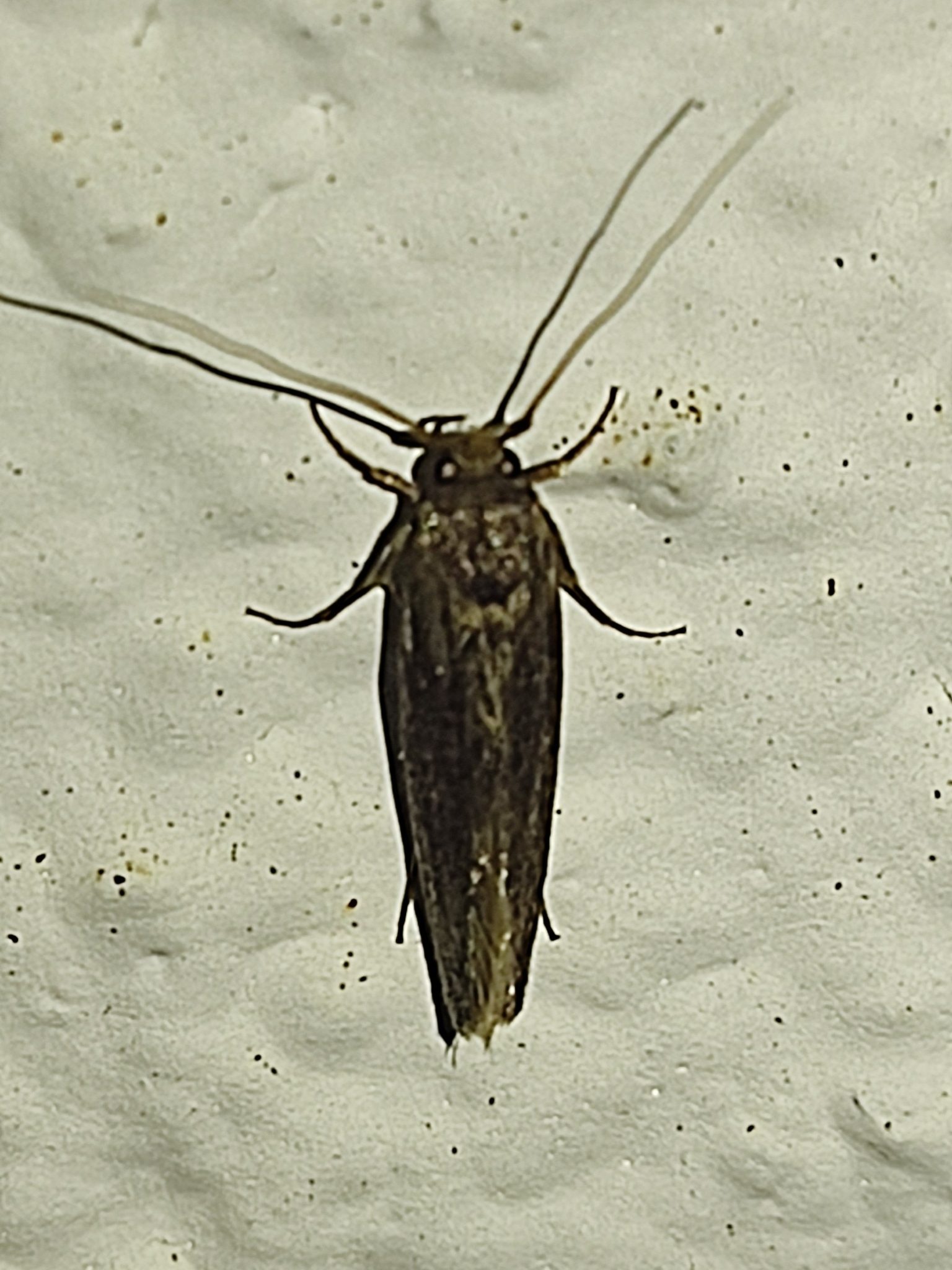
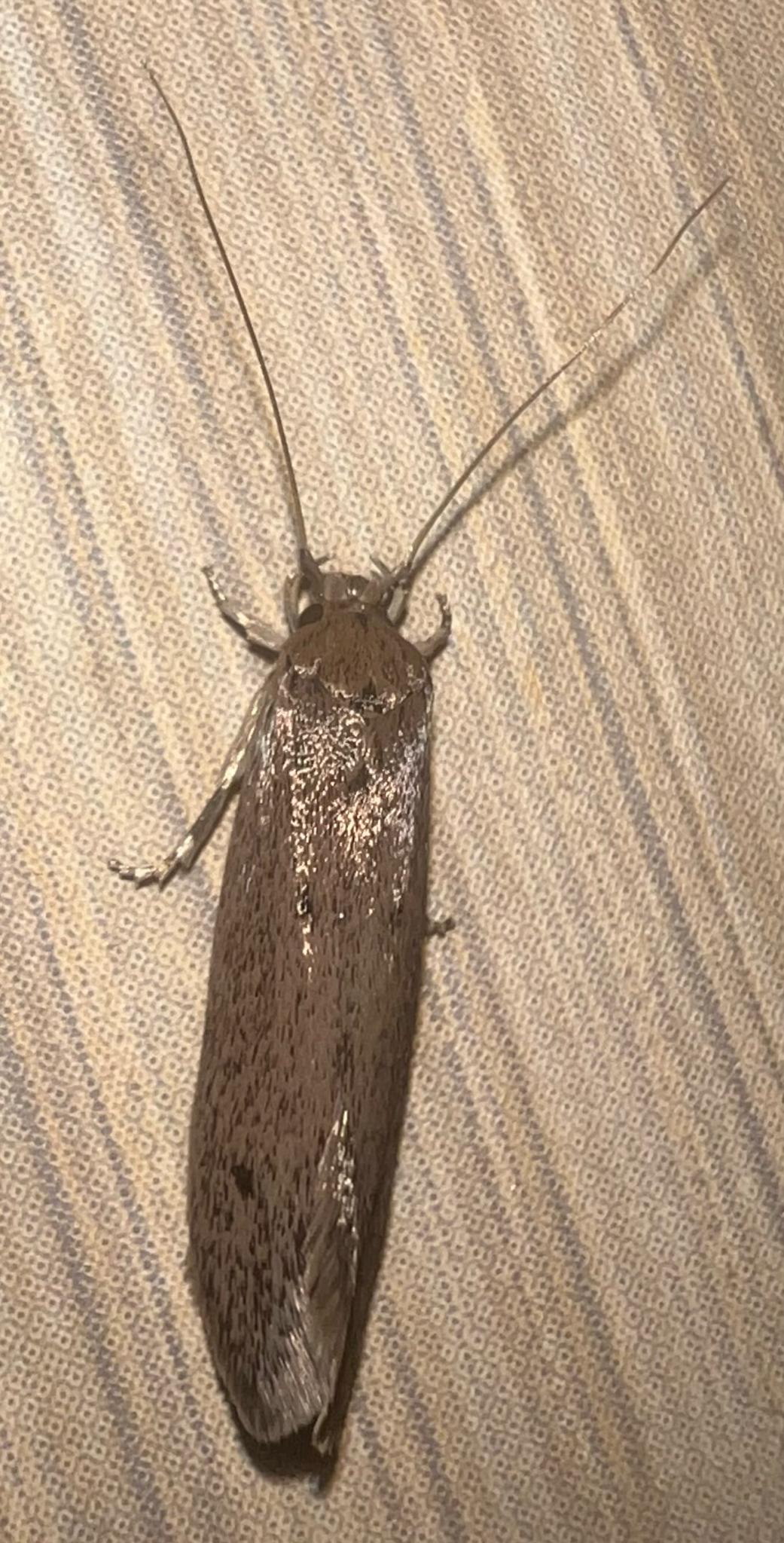
Eggs are very small (0.5–0.55 mm long; 0.38 mm in diameter), light yellow when freshly laid, turning yellowish-brown before hatching. Larvae are dirty-white and partially transparent (so that the intestines can be seen), with a bright reddish-brown head bearing a lateral ocellus on each side, and clearly visible brownish spots on thoracic and abdominal segments; they measure 21–26 mm in length with a diameter of 3 mm. Pupae are brown, up to 10 mm long, contained in a 15 mm cocoon spun at the end of the gallery; the abandoned pupal skin protruding from the plant tissue bears two bent hooks at the tip of the abdomen, characteristic of the species. Adults are yellowish-brown moths, 11 mm long with a wingspan of 18–25 mm; forewings may show longitudinal darker brown banding, and males have a dark-brown spot towards the apex; hindwings are paler and brighter. At rest, the long antennae point forwards.
EPPO (2005). Diagnostic protocol PM 7/71 Opogona sacchari. EPPO Bulletin, 35(3), 431-434.
Host Plants (111 host plants)
Data sources: EPPO Global Database and relevant literature.
| Scientific Name | Status |
|---|---|
| Aechmea fasciata | Host |
| Aechmea sp. | Host |
| Albizia julibrissin | Host |
| Alocasia | Host |
| Aloe comosa | Host |
| Ananas comosus | Host |
| Anthurium andraeanum | Host |
| Anthurium crystallinum | Host |
| Archontophoenix alexandrae | Host |
| Areca | Host |
Quarantine Status (69 records)
Data sources: IPPC website and national quarantine websites; verified by human review.
| Country | Status | Year Added |
|---|---|---|
| Albania | Quarantine pests | — |
| Argentina | Absent | 2019 |
| Austria | RNQP ((EU) 2019/2072 Annex IV) | 2019 |
| Belgium | RNQP ((EU) 2019/2072 Annex IV) | 2019 |
| Bulgaria | Present | 2019 |
| Bahrain | Quarantine pests | 2003 |
| Belarus | Absent | — |
| Cambodia | Quarantine pests | — |
| Switzerland | Regulated non-quarantine pest | 2019 |
| Chile | Quarantine pests | 2019 |
Distribution (51 countries)
Data Sources: EPPO Global Database and GBIF.
| Country | Status | State |
|---|---|---|
| Netherlands Antilles | Absent | — |
| Austria | Present | — |
| Belgium | Absent | — |
| Bermuda | Present | — |
| Brazil | Present | |
| Barbados | Present | — |
| Canada | Present | — |
| Switzerland | Present | — |
| China | Present | |
| Cabo Verde | Present | — |
Distribution Map (Latitude and longitude coordinates sourced from GBIF.)
Download CSVGenomes (0 records)
Data source: NCBI.
No genome records available.
Transcriptomes (0 records)
Data source: NCBI.
No transcriptome records available.
DNA Barcodes (20 records)
View allData source: BOLD.
| Process ID | BIN | Marker | Length | Country | Date | Lat/Lon | Sequence |
|---|---|---|---|---|---|---|---|
| TINJP001-22 | BOLD:AAK5680 | COI-5P | 658 | Japan | 2021-06-13 | 25.8549, 131.2223 | |
| MNAM416-10 | - | COI-5P | 307 | United States | 1988-07-11 | 25.469, -80.478 | |
| MNAM415-10 | BOLD:AAK5680 | COI-5P | 658 | United States | 1988-07-11 | 25.469, -80.478 | |
| MNAM414-10 | - | COI-5P | 307 | United States | 1988-07-11 | 25.469, -80.478 | |
| MNAM413-10 | BOLD:AAK5680 | COI-5P | 657 | United States | 1988-07-05 | 25.469, -80.478 | |
| MNAM412-10 | - | COI-5P | 307 | United States | 1988-07-11 | 25.469, -80.478 | |
| MNAM411-10 | BOLD:AAK5680 | COI-5P | 658 | United States | 1998-10-15 | 19.354, -154.979 | |
| MNAM410-10 | BOLD:AAK5680 | COI-5P | 658 | United States | 1998-10-15 | 19.354, -154.979 | |
| MNAM409-10 | BOLD:AAK5680 | COI-5P | 658 | United States | 1998-10-15 | 19.354, -154.979 | |
| MNAM408-10 | BOLD:AAK5680 | COI-5P | 658 | United States | 1998-10-15 | 19.354, -154.979 |
Literature
Fetching literature from NCBI PubMed...
Failed to fetch literature