Thaumetopoea pityocampa
TaxID: 208016
Basic Information
Thaumetopoea pityocampa
Pine Processionary, pine processionary moth
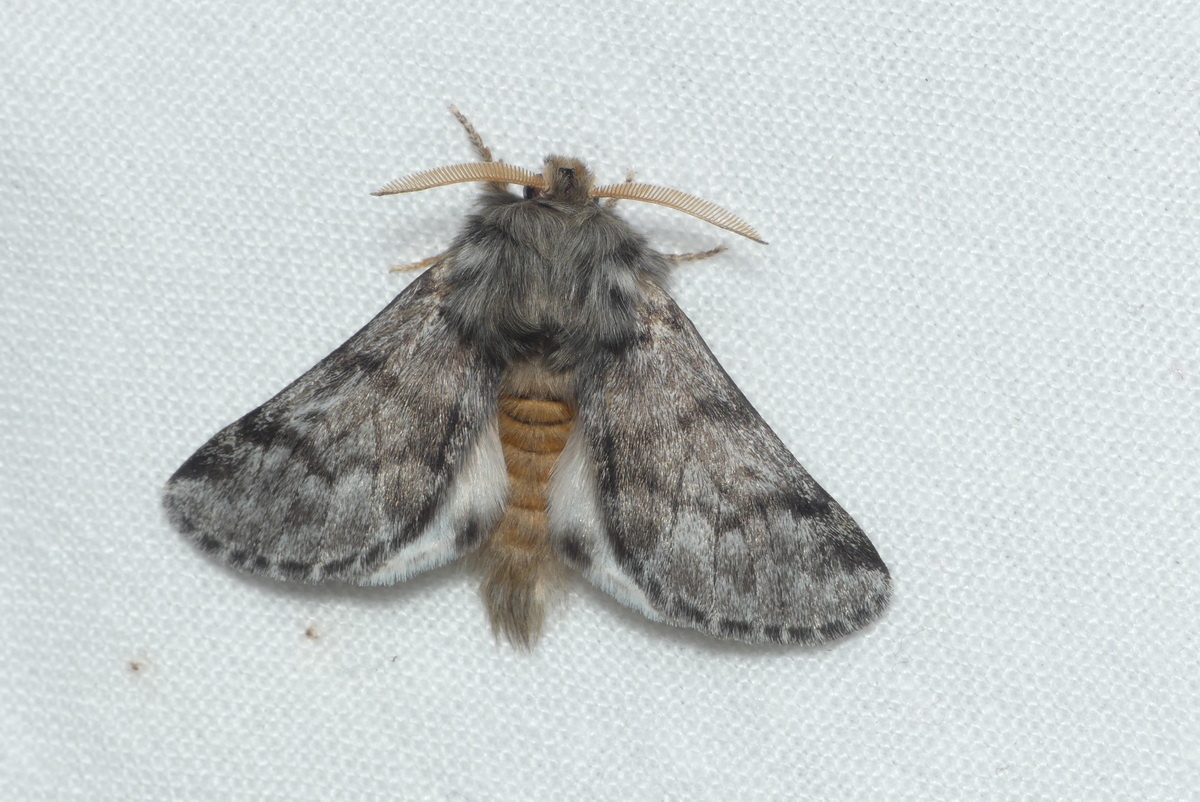
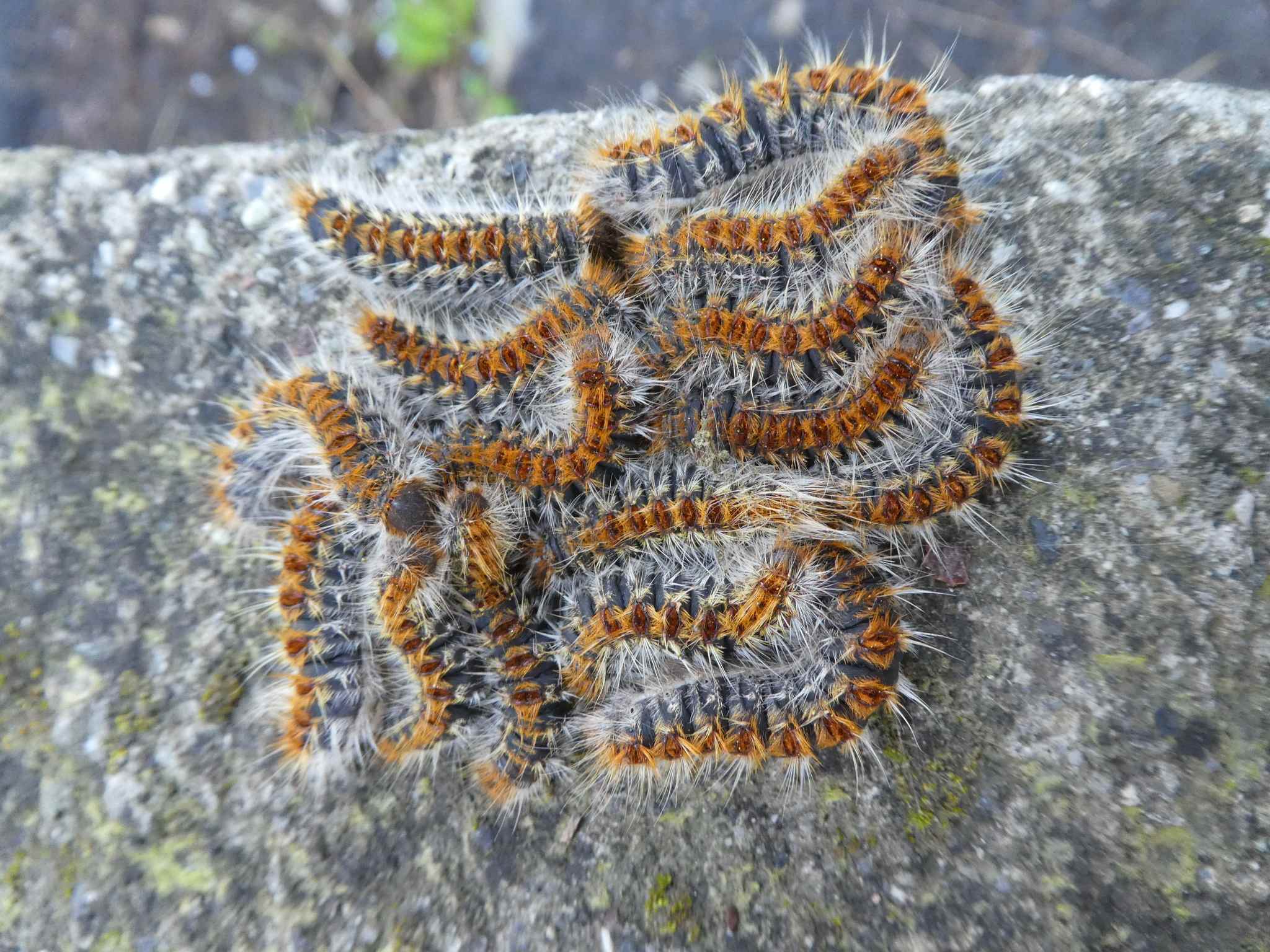
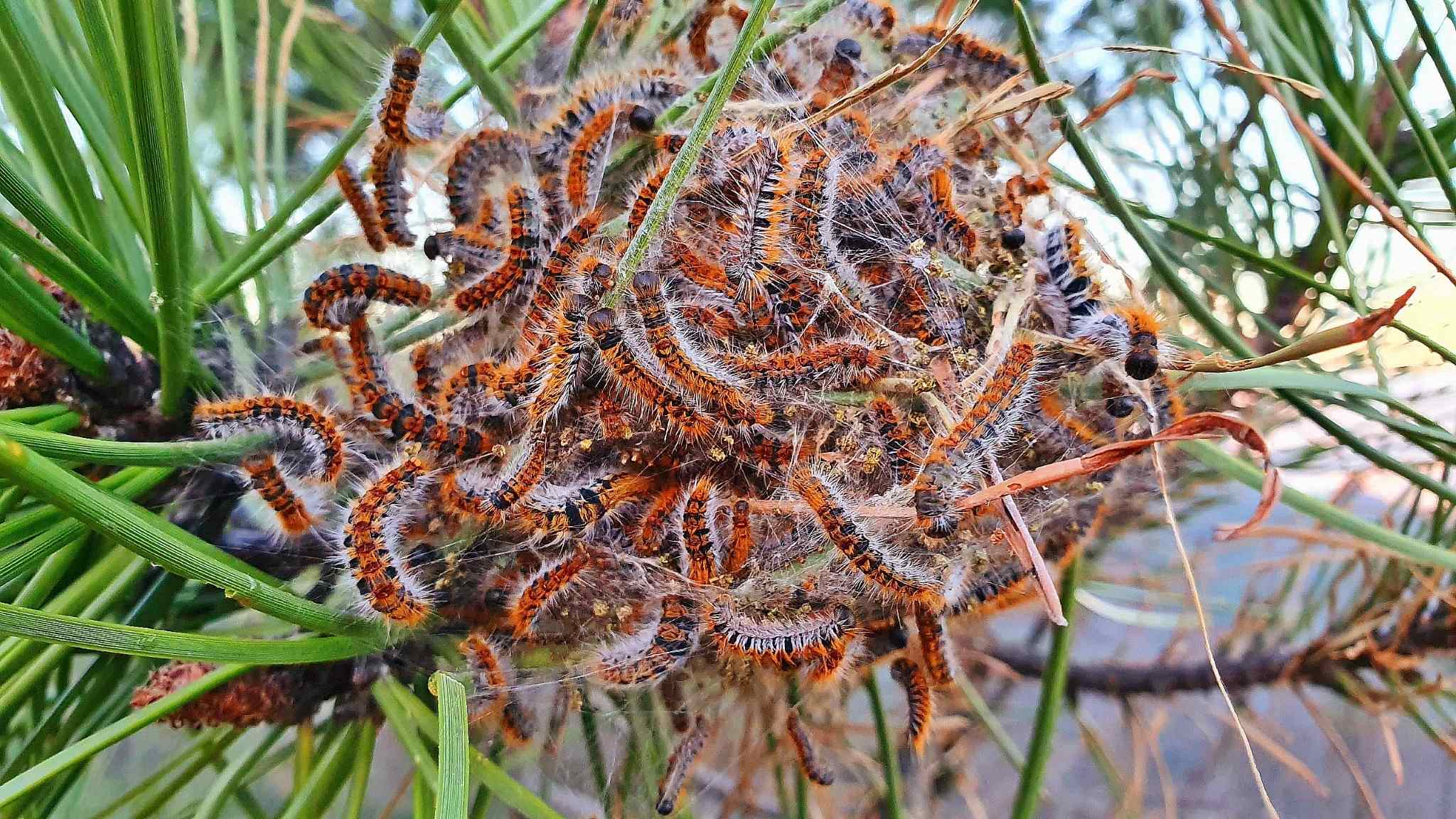
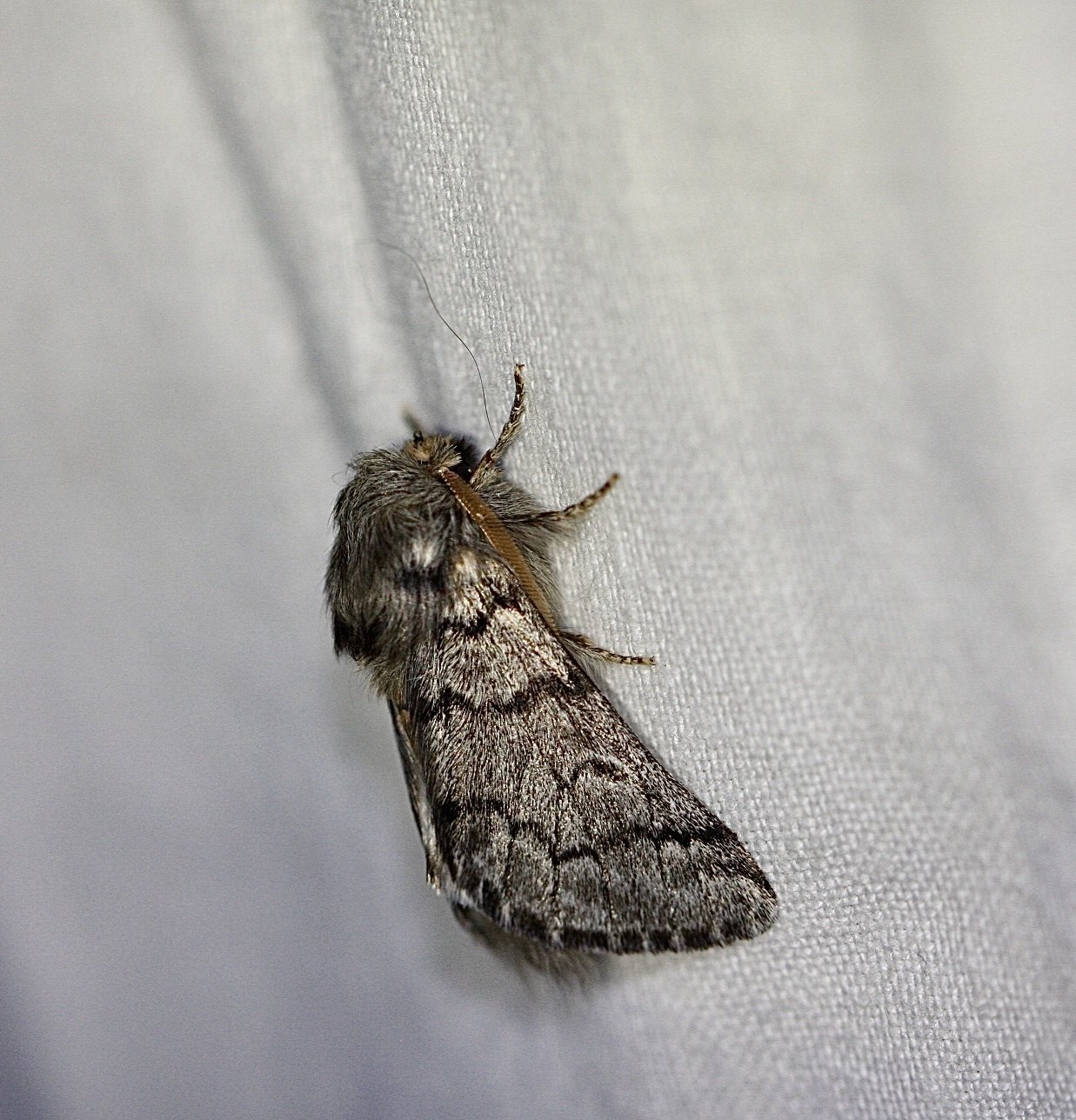
The pine processionary (Thaumetopoea pityocampa) is a moth of the subfamily Thaumetopoeinae in the family Notodontidae, known for the irritating hairs of its caterpillars, their processions, and the economic damage they cause in coniferous forests. The species was first described scientifically by Michael Denis and Ignaz Schifferm ller in 1775, though it was known to the ancients, with remedies described by Theophrastus, Dioscorides and Pliny the Elder. Its processionary behaviour was described in 1916 by the French entomologist Jean-Henri Fabre. It is one of the most destructive species to pines and cedars in Central Asia, North Africa and southern Europe. The species is notable for the behaviour of its caterpillars, which overwinter in tent-like nests high in pine trees, and which proceed through the woods in nose-to-tail columns, protected from predators by their severely irritating hairs. The species is one of the few insects where the larva develops in winter in temperate zones. Global warming is causing the species to affect forests progressively further north. The urticating hairs of the caterpillar larvae cause harmful (and in some cases allergic) reactions, in humans and other mammals.
from Wikipedia
Taxonomic Information
Metazoa
Arthropoda
Insecta
Lepidoptera
Notodontidae
Thaumetopoea
pityocampa
unclassified
Species
nan
k__Metazoa;p__Arthropoda;c__Insecta;o__Lepidoptera;f__Notodontidae;g__Thaumetopoea;s__Thaumetopoea pityocampa
nan
Arthropods
Photos (5 photos)
Morphological Features
No morphological description available.
Host Plants (9 host plants)
Data sources: EPPO Global Database and relevant literature.
| Scientific Name | Status |
|---|---|
| Cedrus atlantica | Host |
| Larix decidua | Host |
| Pinus brutia | Host |
| Pinus canariensis | Host |
| Pinus halepensis | Host |
| Pinus nigra | Host |
| Pinus nigra subsp. laricio | Host |
| Pinus pinea | Host |
| Pinus sylvestris | Host |
Quarantine Status (39 records)
Data sources: IPPC website and national quarantine websites; verified by human review.
| Country | Status | Year Added |
|---|---|---|
| Argentina | Absent | 2019 |
| Austria | PZ Quarantine pest ((EU) 2019/2072 Annex III) | 2019 |
| Belgium | PZ Quarantine pest ((EU) 2019/2072 Annex III) | 2019 |
| Bulgaria | PZ Quarantine pest ((EU) 2019/2072 Annex III) | 2019 |
| Brazil | A1 list | 2018 |
| Chile | Quarantine pests | 2019 |
| China | Quarantine pests | 2021 |
| Cyprus | PZ Quarantine pest ((EU) 2019/2072 Annex III) | 2019 |
| Czechia | PZ Quarantine pest ((EU) 2019/2072 Annex III) | 2019 |
| Germany | PZ Quarantine pest ((EU) 2019/2072 Annex III) | 2019 |
Distribution (30 countries)
Data Sources: EPPO Global Database and GBIF.
| Country | Status | State |
|---|---|---|
| Albania | Present | — |
| Algeria | Present | — |
| Andorra | Present | — |
| Austria | Present | — |
| Bulgaria | Present | — |
| Bosnia and Herzegovina | Present | — |
| Switzerland | Present | — |
| Cyprus | Present | — |
| Germany | Absent | — |
| Spain | Present |
Distribution Map (Latitude and longitude coordinates sourced from GBIF.)
Download CSVGenomes (1 records)
Data source: NCBI.
| Assembly Accession | Assembly Level | Genome Size(Mb) | Contig N50(Kb) | Scaffold N50(Kb) | BUSCO% | Downloads | Actions |
|---|---|---|---|---|---|---|---|
| GCA_017165845.1 | Scaffold | 593 | 4 | 28 | - |
|
|
|
BOUN_Tpit_1 |
|||||||
Transcriptomes (3 records)
Data source: NCBI.
| Run ID | Tissue | Developmental Stage | Sex | Read Count | Location | Actions |
|---|---|---|---|---|---|---|
| SRR12627527 | Various developmental stages : larvae, pupae and Moth | - | - | 34251971 | Italy:Cimolais | |
|
PRJNA662036 SRX9109802 SRP282176 insect HiSeq RNAseq library of T. pityocampa adult RNA was extracted with Triazol extraction procedure. Libraries were constructed using the TruSeq stranded mRNA sample prep. The libraries were sequenced using 3 lanes of an Illumina HiSeq2000, using the paired end protocol (2 by 100nt) at the Montpellier GenomiX (MGX) sequencing core facility. Early population {'tissue': 'Various developmental stages : larvae, pupae and Moth', 'isolate': 'Early population', 'lat_lon': '46.3166667 N 12.45 E', 'altitude': '650 m', 'geo_loc_name': 'Italy:Cimolais', 'biosamplemodel': 'Invertebrate', 'collection_date': '2012-06', 'isolation_source': 'pine forest'} |
||||||
| SRR12629076 | Various developmental stages : larvae, pupae and Moth | - | - | 55893599 | Italy:Cinto Euganeo,Tregnano | |
|
PRJNA662036 SRX9111343 SRP282176 insect HiSeq RNAseq library of T. pityocampa adult RNA was extracted with Triazol extraction procedure. Libraries were constructed using the TruSeq stranded mRNA sample prep. The libraries were sequenced using 3 lanes of an Illumina HiSeq2000, using the paired end protocol (2 by 100nt) at the Montpellier GenomiX (MGX) sequencing core facility. Late populatio {'tissue': 'Various developmental stages : larvae, pupae and Moth', 'isolate': 'Late populatio', 'lat_lon': '45.2666667 N 11.65 E', 'altitude': '200 m', 'geo_loc_name': 'Italy:Cinto Euganeo,Tregnano', 'biosamplemodel': 'Invertebrate', 'collection_date': '2012-08', 'isolation_source': 'pine forest'} |
||||||
| SRR12643372 | eggs, L3 and L5 larvae, pupae (early and late), adults | - | pooled male and female | 55480253 | Portugal: Mata Nacional de Leiria | |
|
PRJNA663237 SRX9125304 SRP282464 insect HiSeq RNAseq library of T. pityocampa adult RNA was extracted with Triazol extraction procedure. Libraries were constructed using the TruSeq stranded mRNA sample prep. The libraries were sequenced using 3 lanes of an Illumina HiSeq2000, using the paired end protocol (2 by 100nt) at the Montpellier GenomiX (MGX) sequencing core facility. Winter Population (SP) {'sex': 'pooled male and female', 'tissue': 'eggs, L3 and L5 larvae, pupae (early and late), adults', 'isolate': 'Winter Population (SP)', 'lat_lon': '39.47 N 8.58 W', 'geo_loc_name': 'Portugal: Mata Nacional de Leiria', 'biosamplemodel': 'Invertebrate', 'collection_date': '2010/2012', 'isolation_source': 'pine forest'} |
||||||
Literature
Fetching literature from NCBI PubMed...
Failed to fetch literature