Sinoxylon unidentatum
TaxID: 3003922
Basic Information
Sinoxylon unidentatum
Conifer Auger Beetle, False Powder-post Beetle
Sinoxylon unidentatum, the conifer auger beetle, is a species of horned powder-post beetle in the family Bostrichidae. It is found in Africa, North America, Oceania, South America, and Southern Asia.
from Wikipedia
Taxonomic Information
Eukaryota
Arthropoda
Insecta
Coleoptera
Bostrichidae
Sinoxylon
unidentatum
nan
Species
nan
k__Eukaryota;p__Arthropoda;c__Insecta;o__Coleoptera;f__Bostrichidae;g__Sinoxylon;s__Sinoxylon unidentatum
nan
Arthropods
Photos (5 photos)
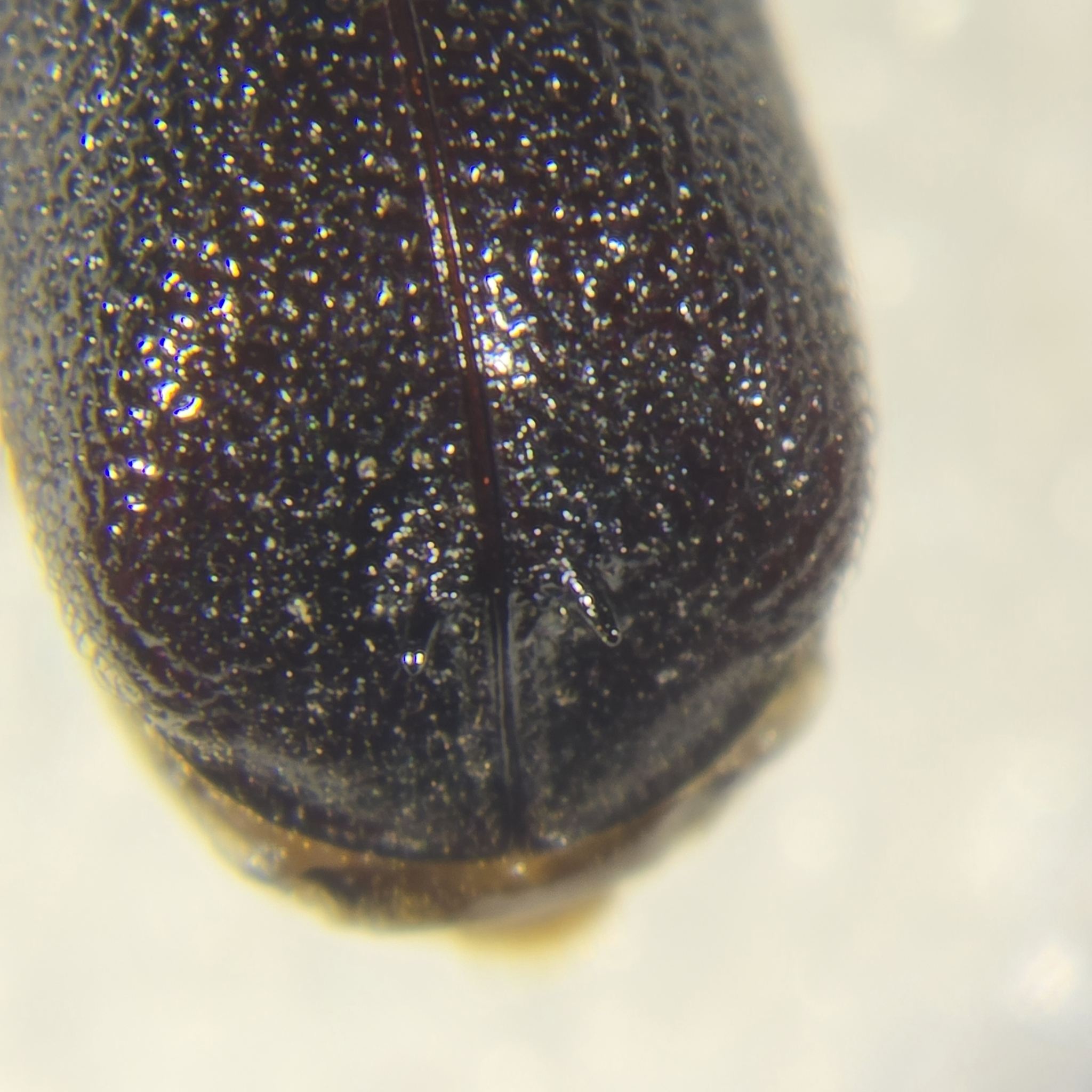
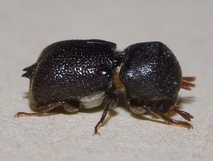
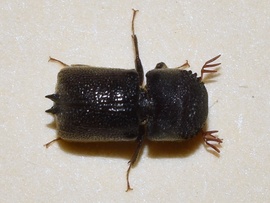
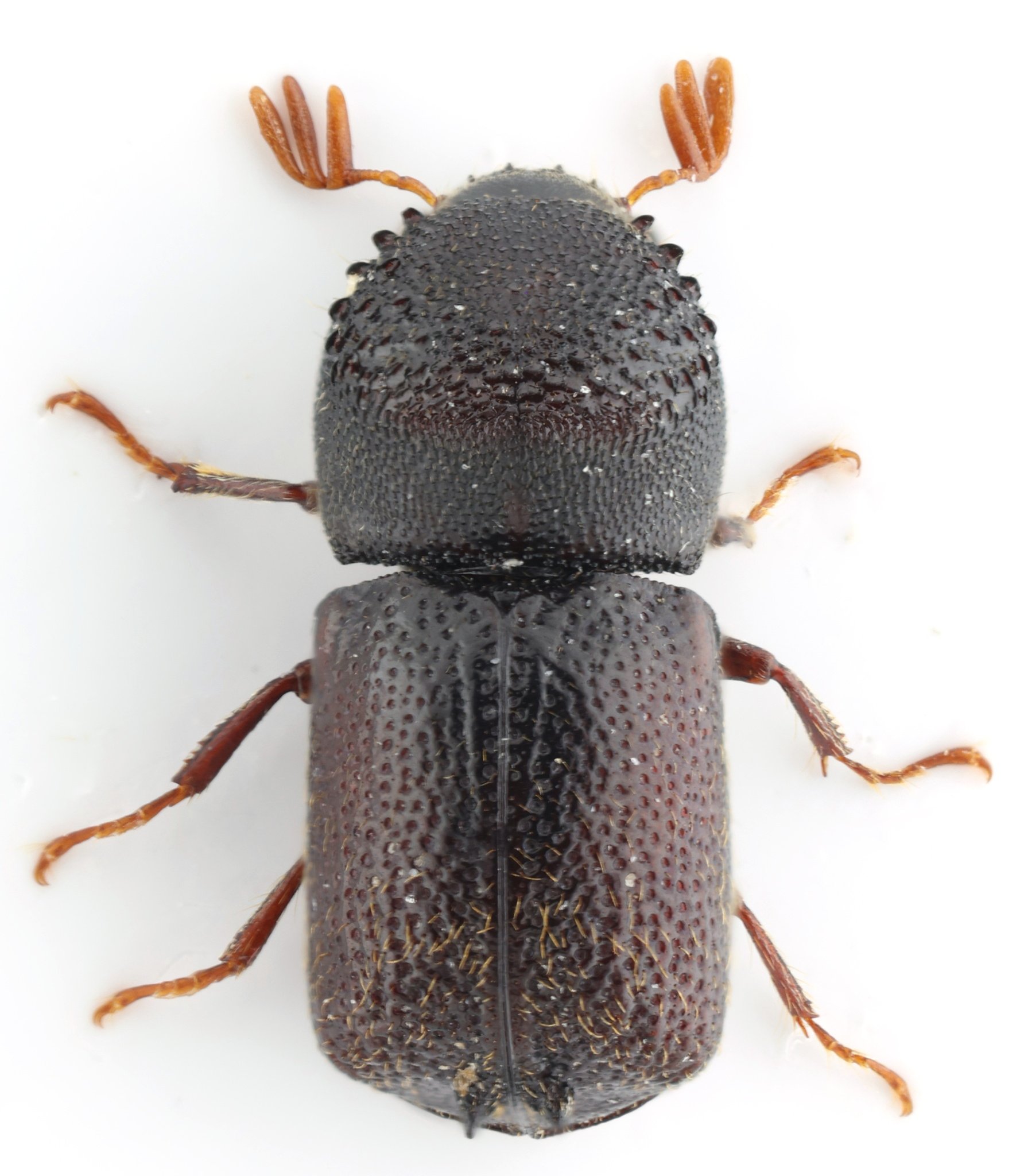
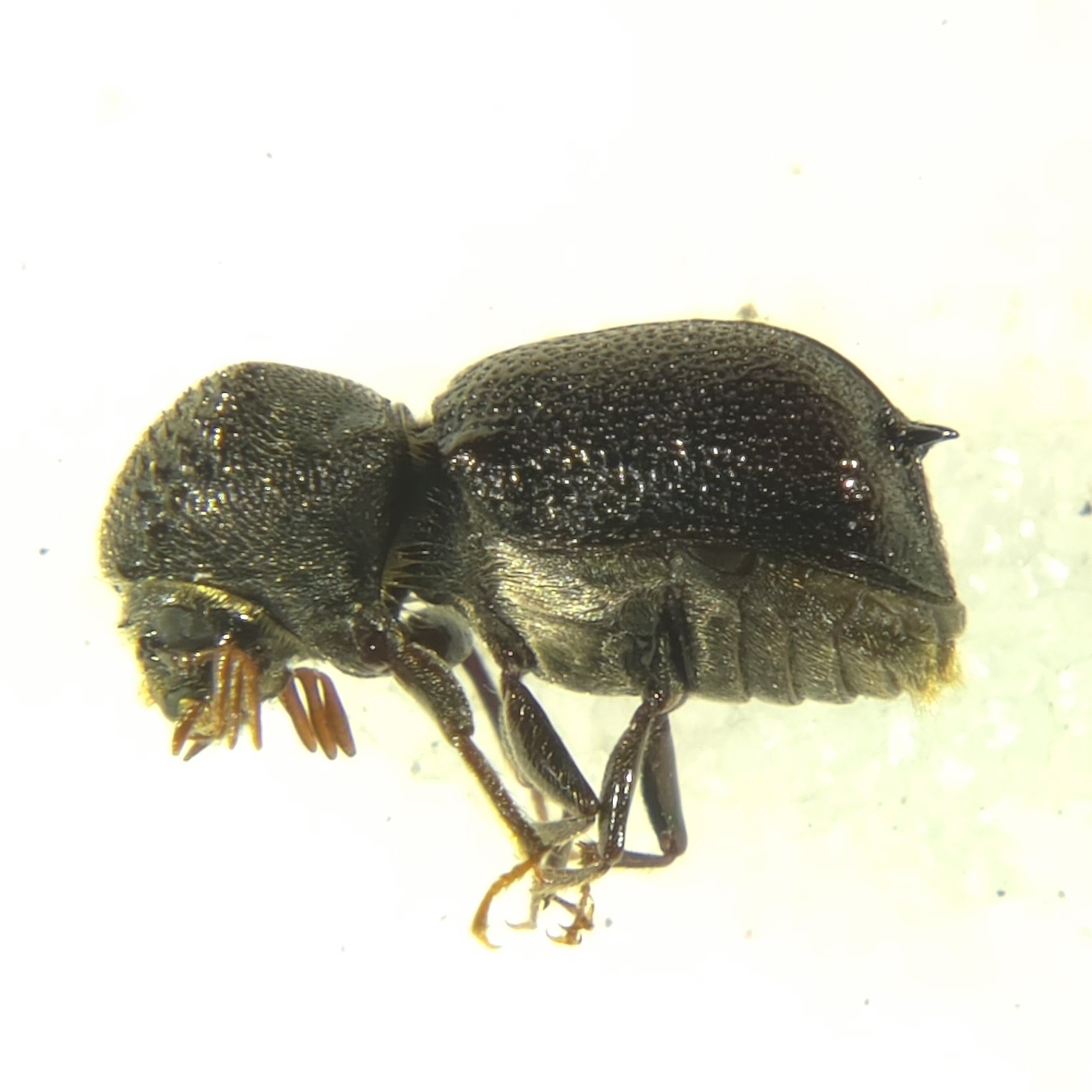
Morphological Features
Body length 3.5–5.5 mm, about 2.2 times as long as wide; elytra barely enlarged posteriorly. Black to dark reddish brown, with antennae, palpi, legs and abdomen in part light reddish brown or brownish yellow. Frons granulate, quadridentate, covered by appressed setae towards center, mixed with few sparse long erect setae. Antennal club flabelliform, first club antennomere about 4–5 times as wide as long, second about 6–7 times as wide as long, third strongly dilated towards apex with a sensitive sulcus along anterior margin or only near apex. Clypeus finely sparsely granulose with very few short setae on sides, anterior margin more or less sinuate, double V form. Pronotum wider than long, anterior angle with an uncinate tooth, posterior angles sharp, slightly projecting posteriorly; middle of posterior part with very dense longitudinal carinules, granulate laterally; vestiture short, very short sparse setae, longer along anterior and lateral margins; punctation dense, slightly larger posteriorly, sometimes confluent, with short sparse appressed setae, recurved laterally. Elytral declivity slightly concave, mixed with large and median punctures above juxtasutural spines, small and attenuate towards apex, covered by very short erect or recurved setae; declivity without marginal tubercles or sometimes indicated by weak calluses; declivital suture very slightly raised, juxtasutural spines inserted at middle level of declivity next to raised suture, conical, pointed, base half covered with projecting grains forming a gnawing mass, smooth, shiny.
Plazi taxonomic treatment
Host Plants (3 host plants)
Data sources: EPPO Global Database and relevant literature.
| Scientific Name | Status |
|---|---|
| Bambusa | Host |
| Hevea brasiliensis | Host |
| Manihot esculenta | Host |
Quarantine Status (4 records)
Data sources: IPPC website and national quarantine websites; verified by human review.
| Country | Status | Year Added |
|---|---|---|
| Moldova | Quarantine pest | 2017 |
| Ukraine | A1 list | 2019 |
| United States of America | Quarantine pests | — |
| Uzbekistan | A1 list | 2008 |
Distribution (43 countries)
Data Sources: EPPO Global Database and GBIF.
| Country | Status | State |
|---|---|---|
| American Samoa | Present | — |
| Australia | Absent | — |
| Belize | Present | — |
| Brazil | Present | |
| Barbados | Present | — |
| China | Present | |
| Costa Rica | Present | — |
| Spain | Present | — |
| France | Absent | — |
| United Kingdom | Absent | — |
Distribution Map (Latitude and longitude coordinates sourced from GBIF.)
Download CSVGenomes (0 records)
Data source: NCBI.
No genome records available.
Transcriptomes (0 records)
Data source: NCBI.
No transcriptome records available.
DNA Barcodes (2 records)
View allData source: BOLD.
| Process ID | BIN | Marker | Length | Country | Date | Lat/Lon | Sequence |
|---|---|---|---|---|---|---|---|
| GBCL6944-10 | - | COI-5P | 616 | - | - | - | |
| COANT1066-22 | BOLD:ACS5797 | COI-5P | 654 | Guadeloupe | 2022-03-28 | 16.408, -61.494 |
Literature
Fetching literature from NCBI PubMed...
Failed to fetch literature