Bagrada hilaris
TaxID: 1690043
Basic Information
Bagrada hilaris
Bagrada Bug, Bagrada bug
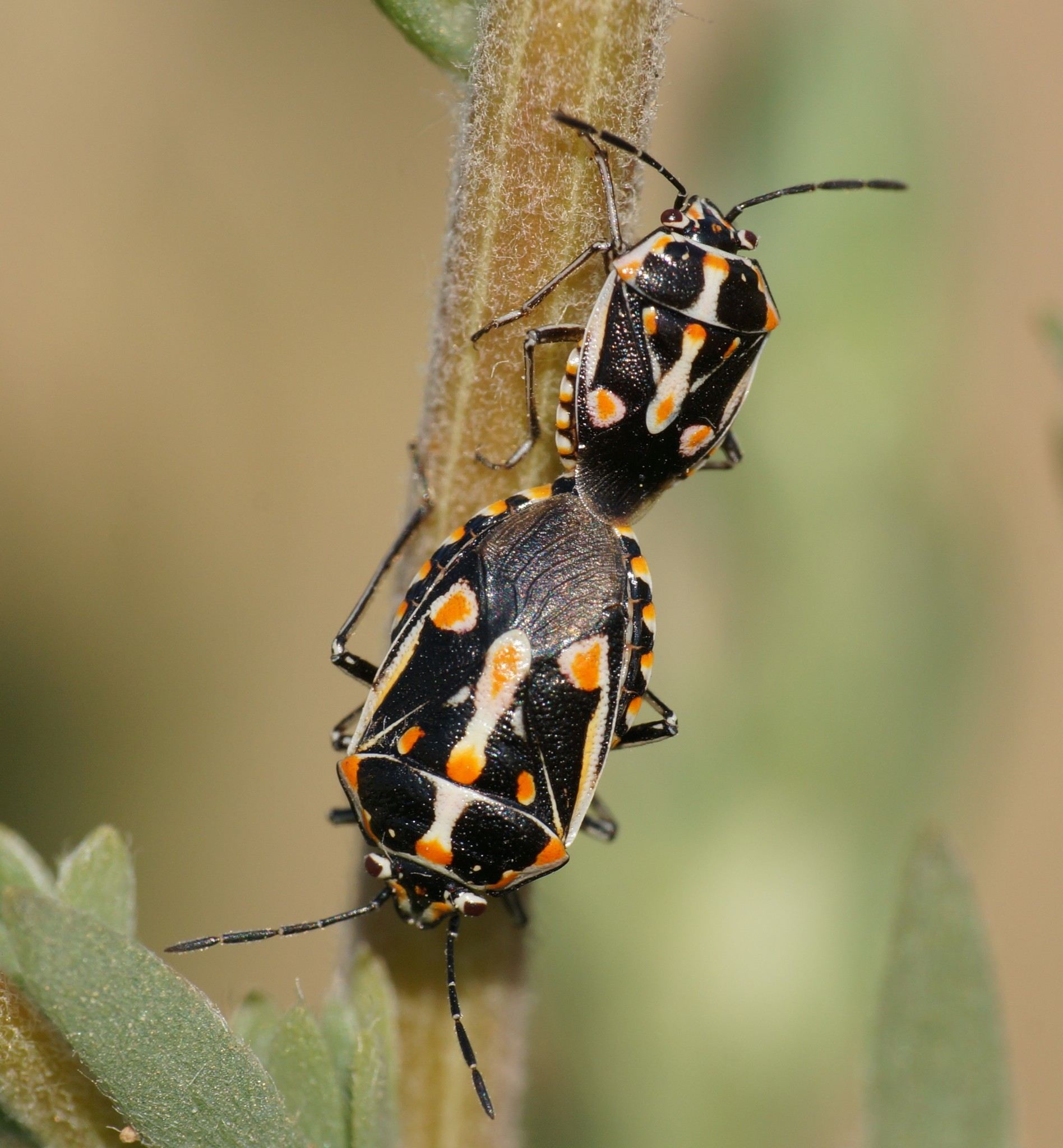
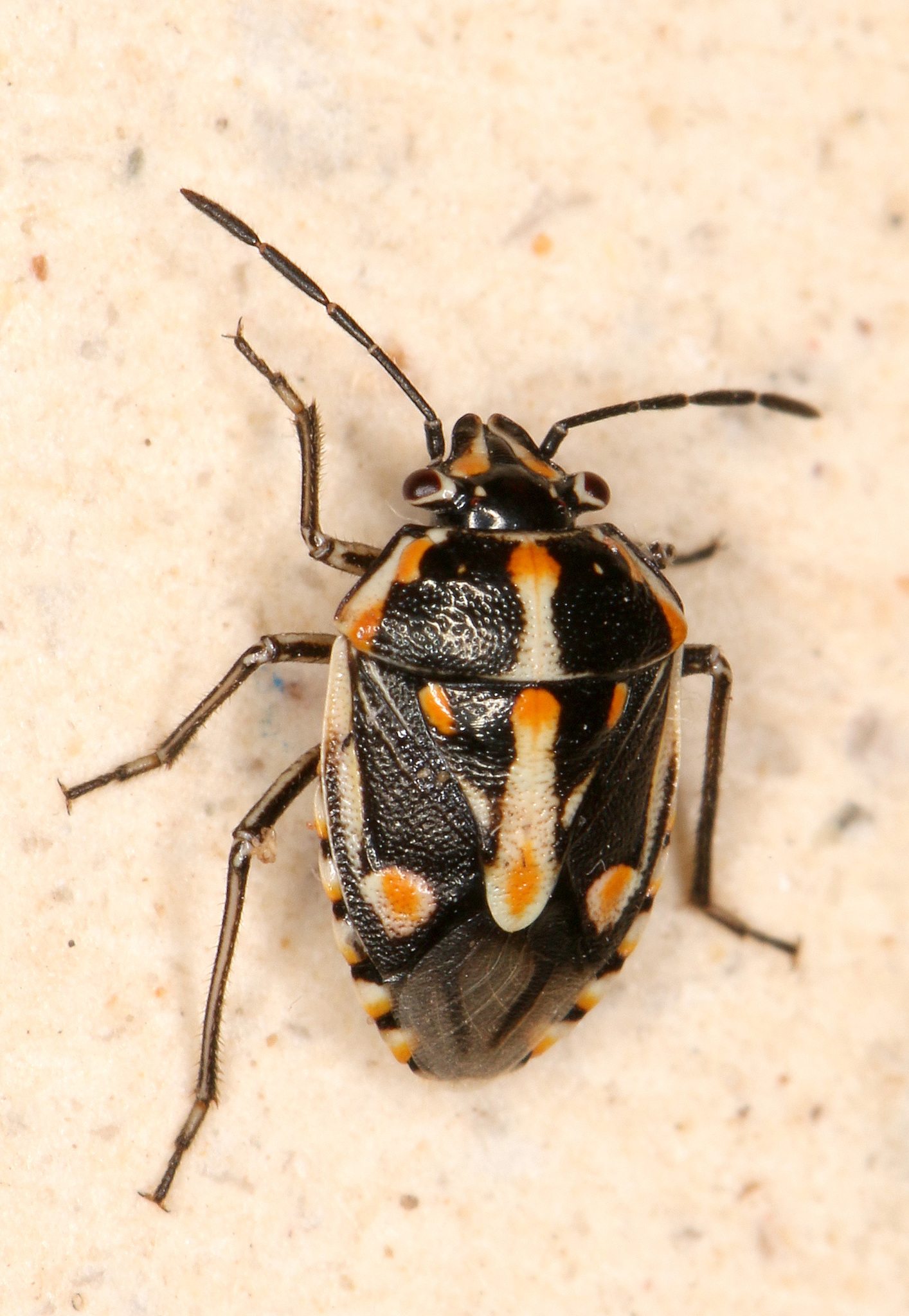
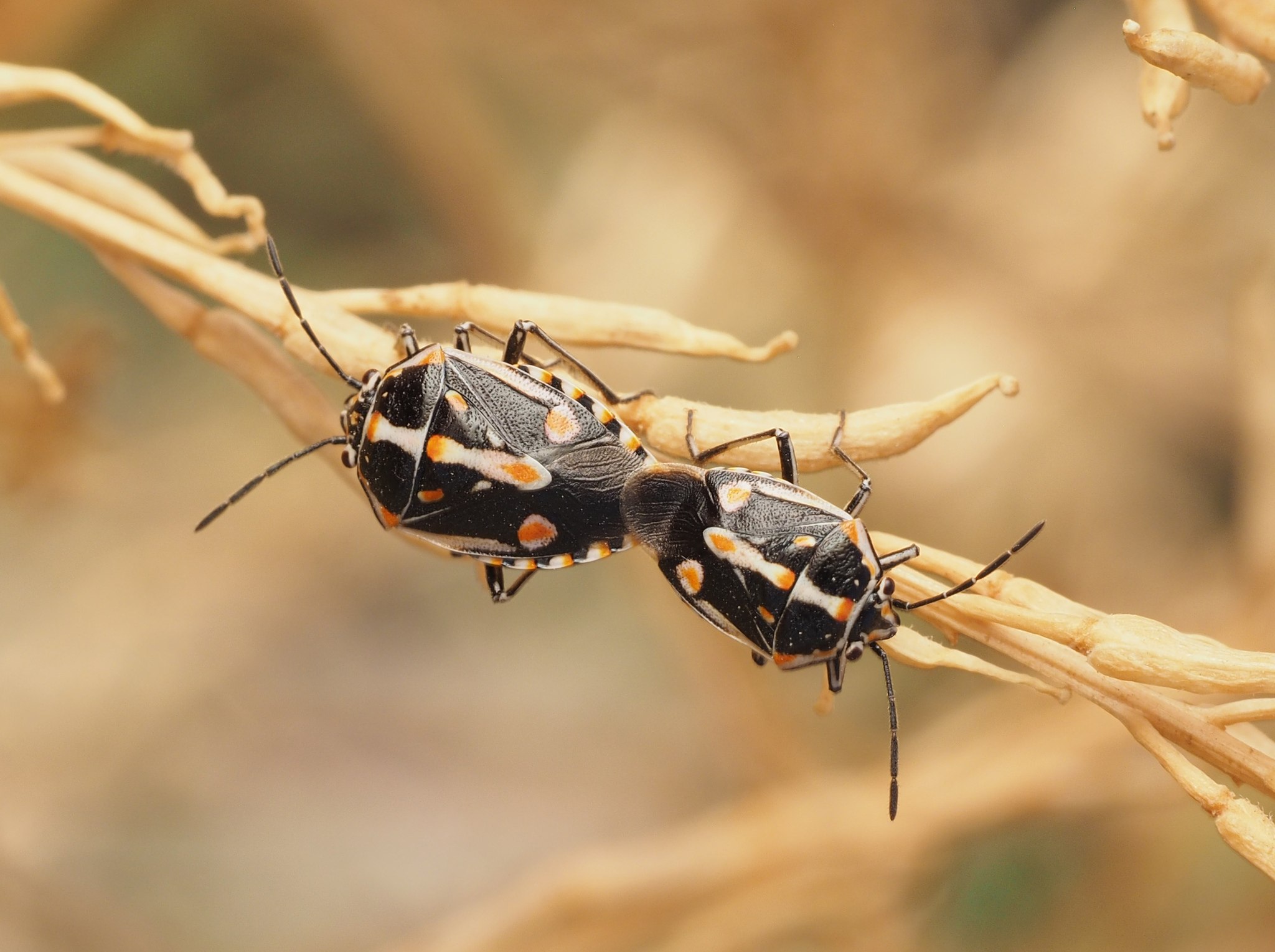
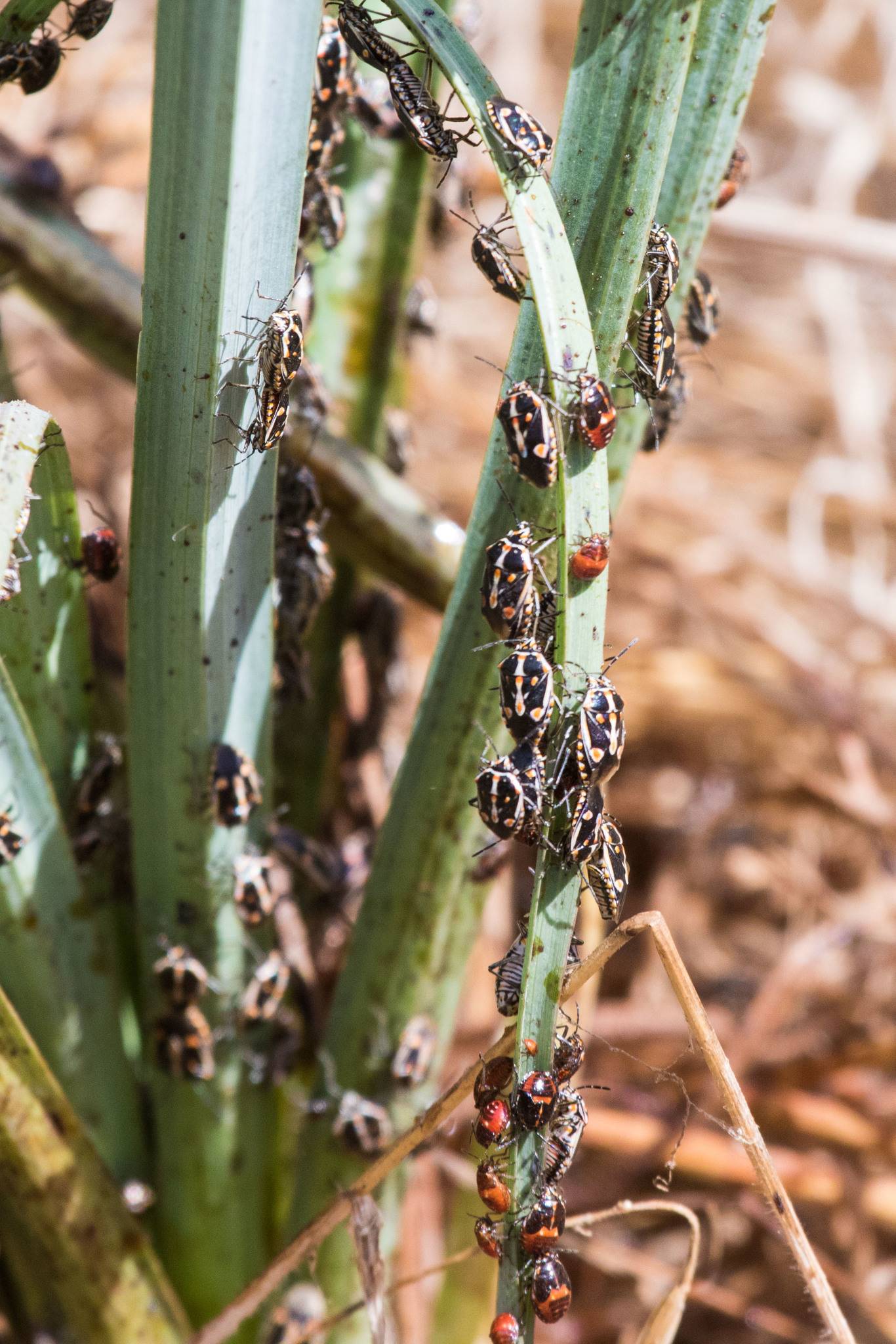
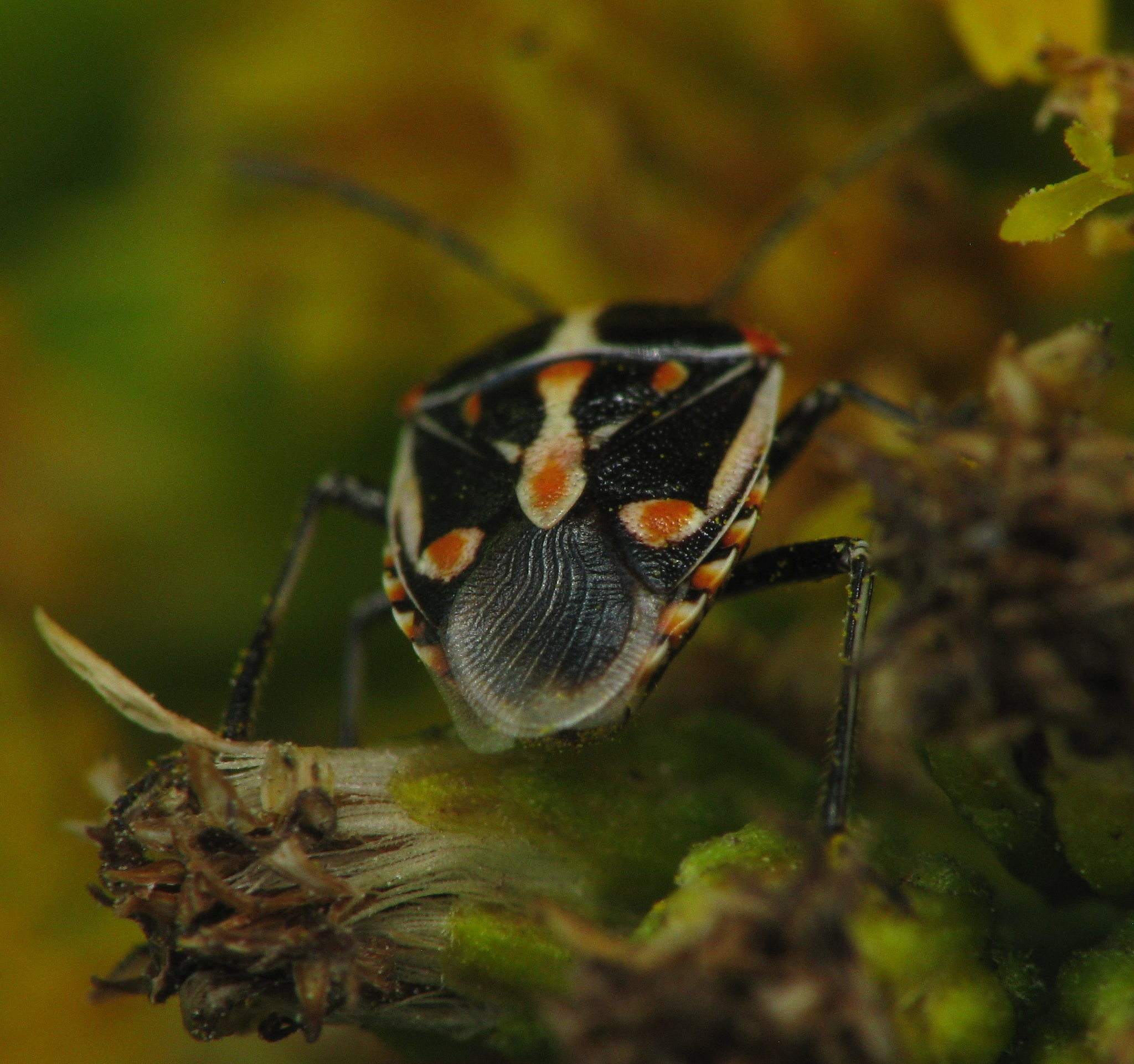
Bagrada hilaris is a species of shield bug known by the common names bagrada bug and painted bug. It could be mistaken for or erroneously referred to as harlequin bug. It is native to southeastern Africa. It is known elsewhere as an introduced species, including California and Arizona, where it was first reported in 2008. It is a major pest insect of Brassica oleracea crops (including cabbage, kale, cauliflower, Brussels sprouts, and broccoli), and related crucifers such as turnips, rape, and mustard. The adult and nymph of the species suck sap from the leaves of the plants, causing wilting, yellowing, and stunting of growth. Besides crucifers, the bugs are known on papaya, sorghum, maize, potato, cotton, caper, pearl millet, and some legumes. Large numbers of the bug congregate on the plants and cause extensive damage. The adult bug is 5 to 7 millimeters in length, shield-shaped, and black with white and orange markings. The female, which is larger than the male, lays up to 100 oval or barrel-shaped eggs on leaves or in soil beneath plants. The eggs are white when freshly deposited and turn orange over time. Within 8 days the first-instar nymph emerges. It is bright orange-red and turns darker as it develops, becoming black by the last instar. The bug made a sudden appearance in Los Angeles in June, 2008, its first sighting in the Western Hemisphere. It then moved into the cropland of the heavily agricultural Coachella and Imperial Valleys of California, doing damage to cole crops there, especially those grown organically. By September 2014 it had reached as far north as San Mateo, Santa Cruz, Merced and Inyo counties, and all California counties to the south except Tulare County. As of 2020, it was found as far north as Yolo County. Past infestations have been reported in India. It was found for the first time in Chile in 2016, where it rapidly established and began generating economic loss as well as invading homes in several Chilean localities. A 2019 study found the eggs of invasive B. hilaris in Mexico being parasitized by a new species of parasitoid wasp, Idris elba (named after the actor of the same name). I. elba has thus been identified as a potential control agent for B. hilaris, which may benefit the broccoli crops that B. hilaris infests.
from Wikipedia
Taxonomic Information
Metazoa
Arthropoda
Insecta
Hemiptera
Pentatomidae
Bagrada
hilaris
unclassified
Species
nan
k__Metazoa;p__Arthropoda;c__Insecta;o__Hemiptera;f__Pentatomidae;g__Bagrada;s__Bagrada hilaris
nan
Arthropods
Photos (5 photos)
Morphological Features
No morphological description available.
Host Plants (8 host plants)
Data sources: EPPO Global Database and relevant literature.
| Scientific Name | Status |
|---|---|
| Beta vulgaris | Host |
| Brassica | Host |
| Capparis spinosa | Host |
| Carica papaya | Host |
| Fabaceae | Host |
| Gossypium hirsutum | Host |
| Solanum tuberosum | Host |
| Zea mays | Host |
Quarantine Status (12 records)
Data sources: IPPC website and national quarantine websites; verified by human review.
| Country | Status | Year Added |
|---|---|---|
| Angola | Quarantine pests | — |
| Argentina | Absent | 2019 |
| Chile | A2 list | 2019 |
| Ecuador | Quarantine pests | — |
| Ghana | Quarantine pests | — |
| Iraq | Quarantine pests | — |
| Israel | Quarantine pest | 2009 |
| Japan | Quarantine pests | — |
| Republic of Korea | Quarantine pests | — |
| Peru | Absent | — |
Distribution (32 countries)
Data Sources: EPPO Global Database and GBIF.
| Country | Status | State |
|---|---|---|
| Argentina | Present | — |
| Bangladesh | Present | — |
| Botswana | Present | — |
| Chile | Present | — |
| Cameroon | Present | — |
| Germany | Present | — |
| Ethiopia | Present | — |
| France | Present | — |
| India | Present | — |
| Iraq | Present | — |
Distribution Map (Latitude and longitude coordinates sourced from GBIF.)
Download CSVGenomes (0 records)
Data source: NCBI.
No genome records available.
Transcriptomes (3 records)
Data source: NCBI.
| Run ID | Tissue | Developmental Stage | Sex | Read Count | Location | Actions |
|---|---|---|---|---|---|---|
| SRR19915176 | whole insect | adult | male | 50255031 | USA: Maryland, Beltsville | |
|
PRJNA854805 SRX15957789 SRP384496 insect RNA-Seq of Bagrada hilaris: adult male, biorep 2 PE150 RNA-Seq USDA-ARS IIBBL colony {'sex': 'male', 'tissue': 'whole insect', 'isolate': 'USDA-ARS IIBBL colony', 'dev_stage': 'adult', 'replicate': '2nd biorep', 'geo_loc_name': 'USA: Maryland, Beltsville', 'biosamplemodel': 'Invertebrate', 'collection_date': '2019-10', 'isolation_source': 'lab culture'} |
||||||
| SRR19915175 | whole insect | adult | male | 50168228 | USA: Maryland, Beltsville | |
|
PRJNA854805 SRX15957790 SRP384496 insect RNA-Seq of Bagrada hilaris: adult male, biorep 3 PE150 RNA-Seq USDA-ARS IIBBL colony {'sex': 'male', 'tissue': 'whole insect', 'isolate': 'USDA-ARS IIBBL colony', 'dev_stage': 'adult', 'replicate': '3rd biorep', 'geo_loc_name': 'USA: Maryland, Beltsville', 'biosamplemodel': 'Invertebrate', 'collection_date': '2019-10', 'isolation_source': 'lab culture'} |
||||||
| SRR19915174 | whole insect | adult | female | 42621118 | USA: Maryland, Beltsville | |
|
PRJNA854805 SRX15957791 SRP384496 insect RNA-Seq of Bagrada hilaris: adult female, biorep 1 PE150 RNA-Seq USDA-ARS IIBBL colony {'sex': 'female', 'tissue': 'whole insect', 'isolate': 'USDA-ARS IIBBL colony', 'dev_stage': 'adult', 'replicate': '1st biorep', 'geo_loc_name': 'USA: Maryland, Beltsville', 'biosamplemodel': 'Invertebrate', 'collection_date': '2019-10', 'isolation_source': 'lab culture'} |
||||||
Literature
Fetching literature from NCBI PubMed...
Failed to fetch literature