Frankliniella tritici
TaxID: 45061
Basic Information
Frankliniella tritici
Wheat Thrips
Frankliniella tritici, the eastern flower thrips, is a species of thrips (Order Thysanoptera) in the genus Frankliniella. F. tritici inhabits blossom, such as dandelion flowers. They can directly damage plants, grasses and trees, in addition to commercial crops, and as a vector for tospoviruses, a form of plant virus, it particularly affects small fruit production in the United States, including strawberries, grapes, blueberries and blackberries. It can also affect alfalfa, oats, beans and asparagus crops. The species features strap-like wings edged with long hairs, a design which increases aerodynamic efficiency in very small arthropods; the reduced drag means the insect uses less energy. They extract nutrients directly from individual plant cells, and may also digest cells of fungi in the leaf litter. The genus Frankliniella has 40 species, of which several others are pests - including Frankliniella occidentalis (Western flower thrips), Frankliniella vaccinii (blueberry thrips) and Frankliniella fusca (tobacco thrips). The 'eastern' part of its common name is due to its common occurrence to the east of the Rocky Mountains, whereas the habitat of western flower thrips extends through the entire United States and Canada. It is challenging to distinguish the various species of thrips, without resorting to microscopic examination. Frankliniella tritici can be subject to parasitism by the Thripinema fuscum nematode.
from Wikipedia
Taxonomic Information
Metazoa
Arthropoda
Insecta
Thysanoptera
Thripidae
Frankliniella
tritici
unclassified
Species
nan
k__Metazoa;p__Arthropoda;c__Insecta;o__Thysanoptera;f__Thripidae;g__Frankliniella;s__Frankliniella tritici
nan
Arthropods
Photos (5 photos)
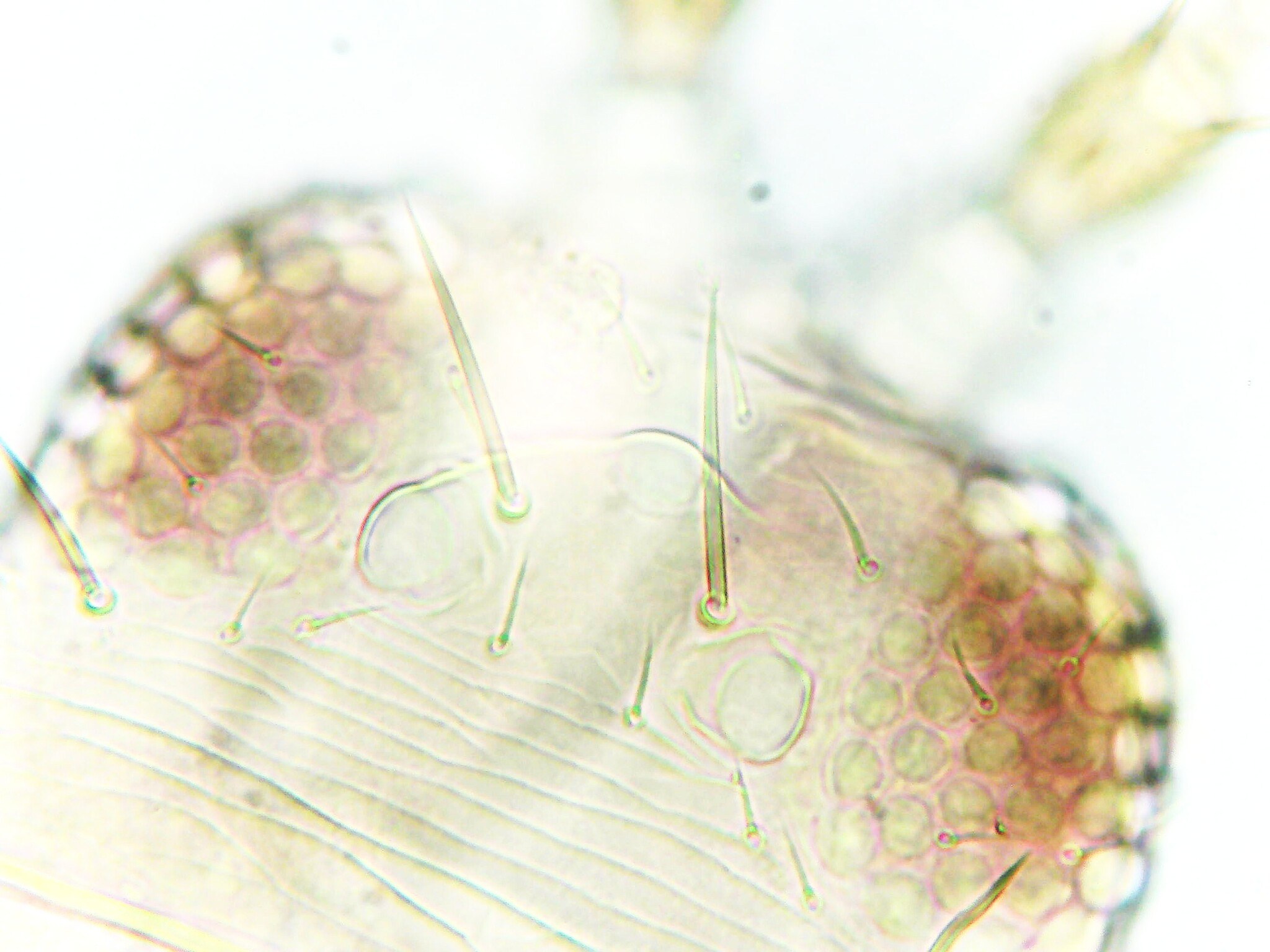
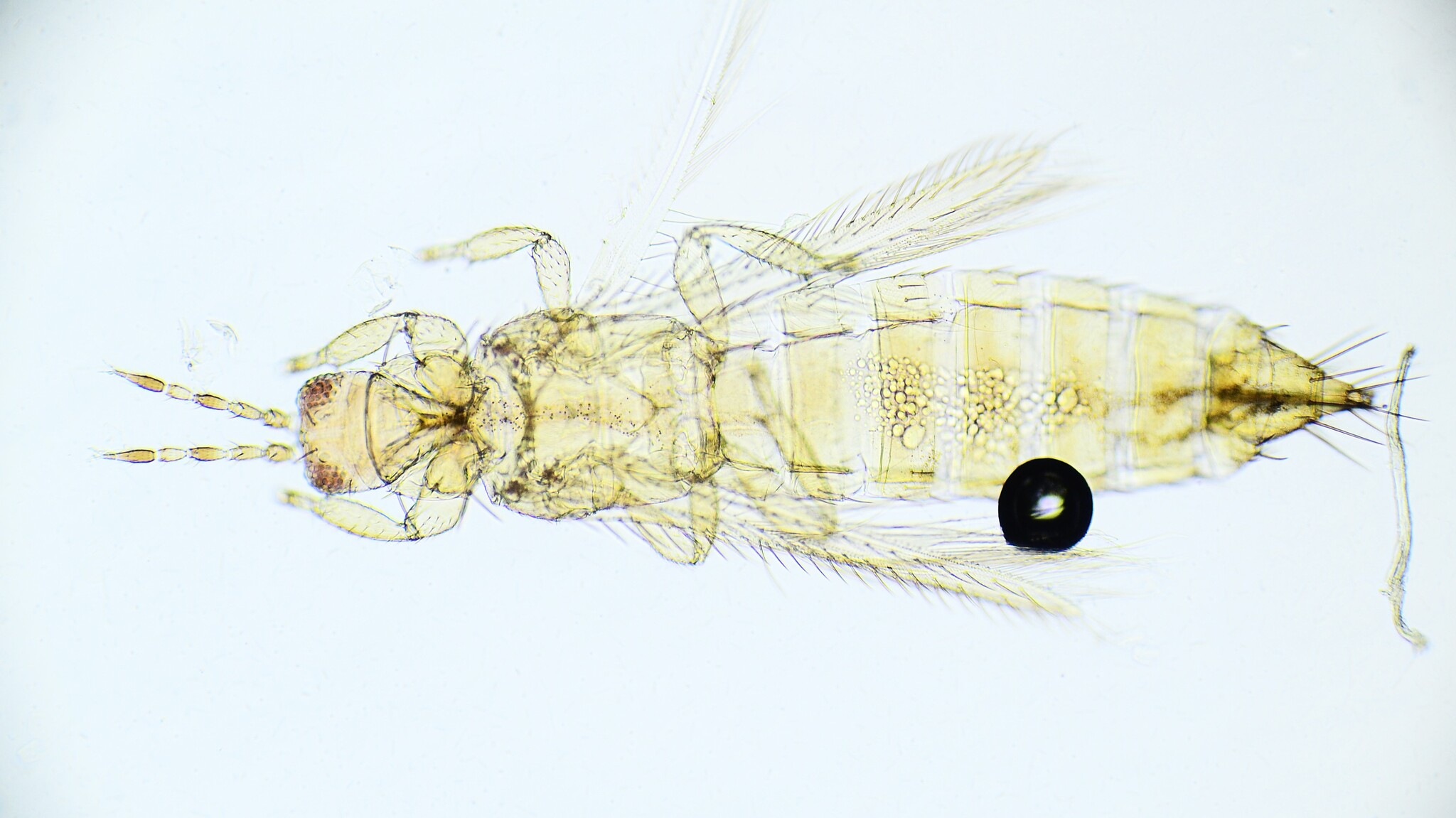
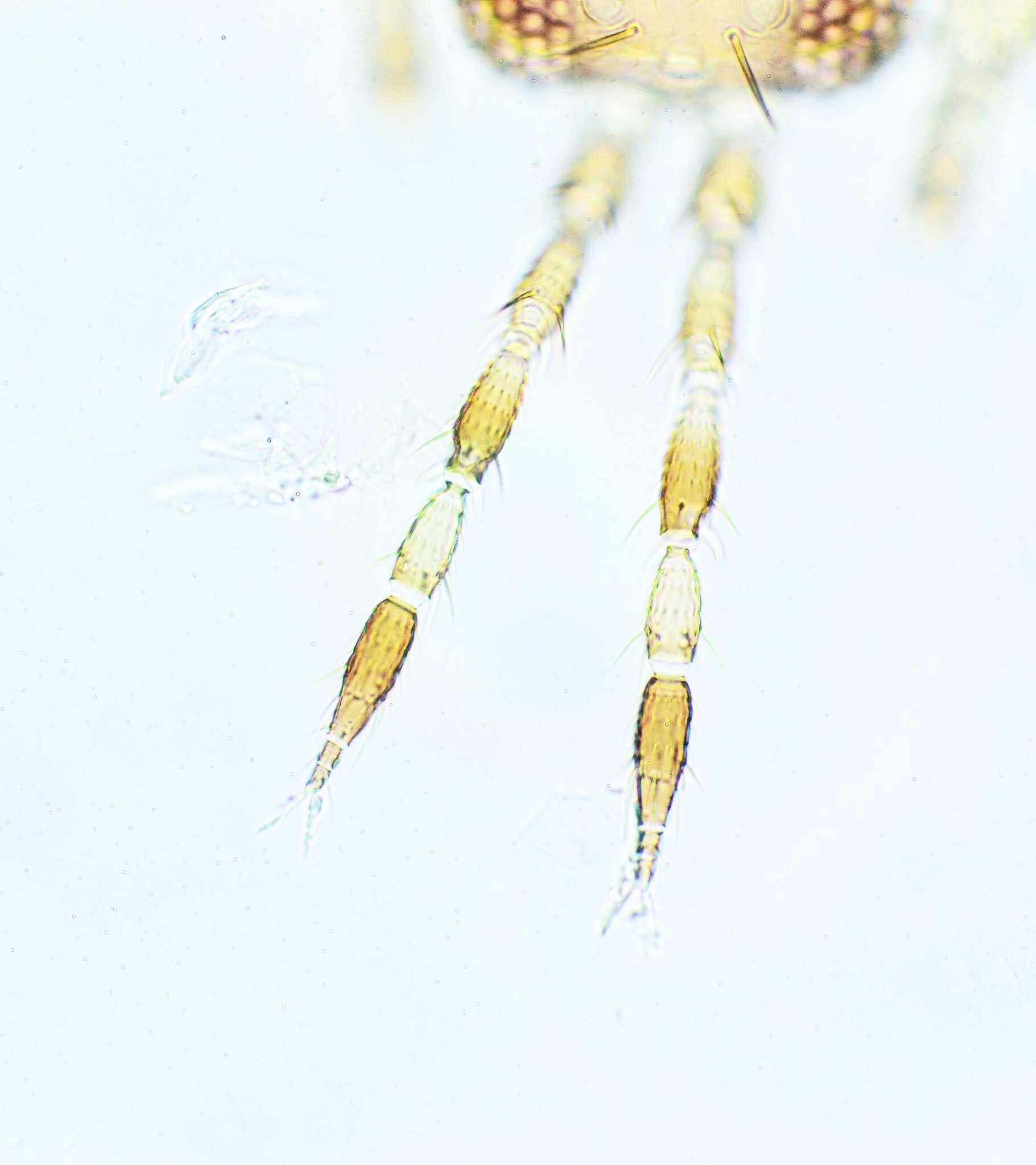
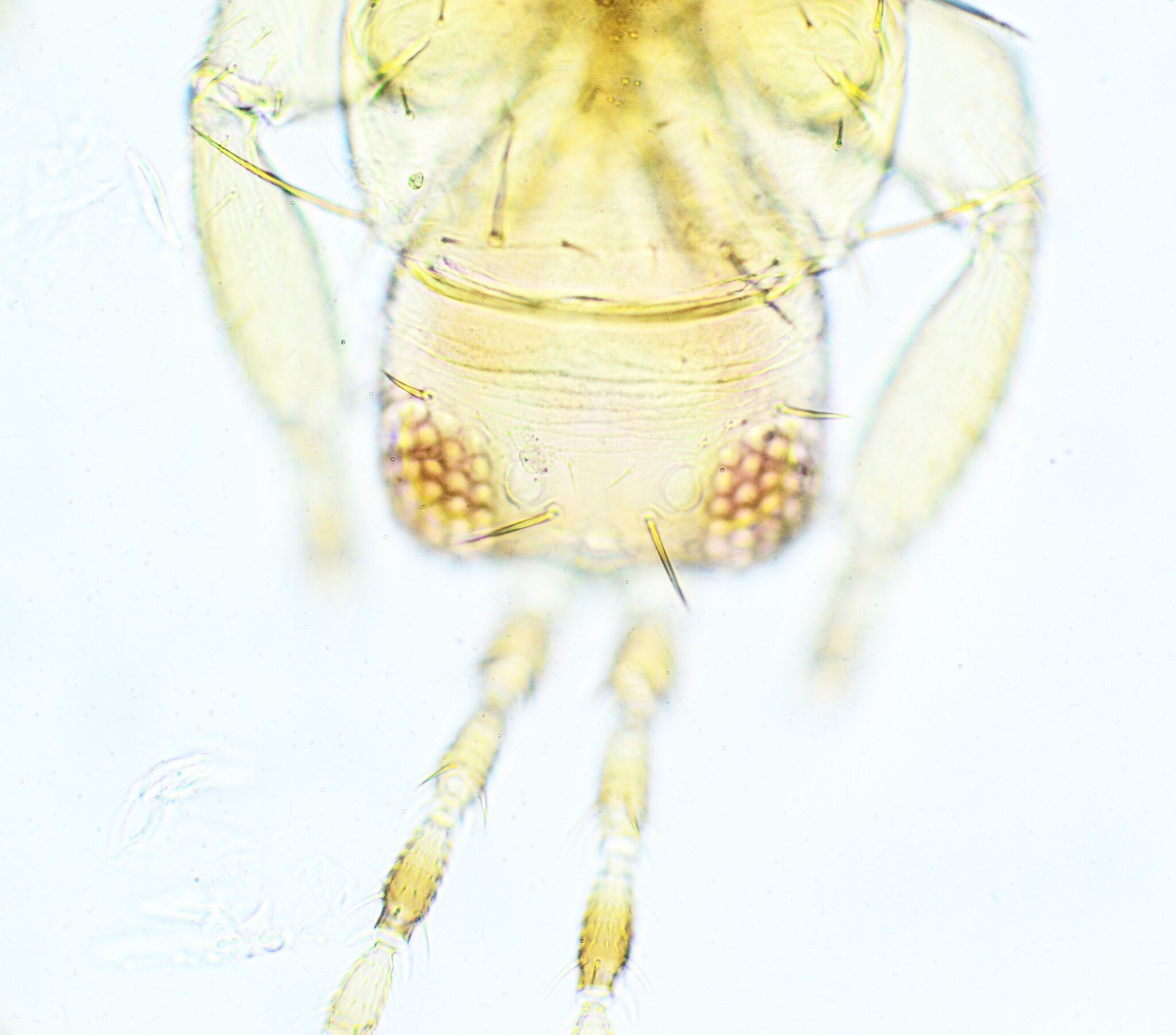
Morphological Features
Body yellow, except antennal segments VI–VIII, apical 1/4 of V, apical half of IV and apical 1/3 of III brown, and apical half of II suffused brown. Antennal segment III with pedicel slightly swollen, mushroom-shaped, with lateral margins expanded and basal collar outline indistinct. Ocellar setae III near external margins of ocellar triangle, in position 2B. Metanotum with median setae long at anterior margin of sclerite, almost reaching posterior margin, pair of campaniform sensilla present. Abdominal tergite VIII with incomplete posteromarginal comb, absent medially, with only a few slender teeth laterally (three or four teeth laterally). Vestigial ctenidia on abdominal tergite IV usually absent.
Plazi taxonomic treatment
Host Plants (0 host plants)
Data sources: EPPO Global Database and relevant literature.
No host plants available.
Quarantine Status (10 records)
Data sources: IPPC website and national quarantine websites; verified by human review.
| Country | Status | Year Added |
|---|---|---|
| Armenia | Absent | — |
| Belarus | Absent | — |
| Costa Rica | Absent | — |
| Dominican Republic | Quarantine pests | — |
| Ecuador | Quarantine pests | — |
| Japan | Quarantine pests | — |
| Kazakhstan | A1 list | 2017 |
| Republic of Korea | Quarantine pests | — |
| Myanmar | Quarantine pests | — |
| Peru | Absent | — |
Distribution (8 countries)
Data Sources: EPPO Global Database and GBIF.
| Country | Status | State |
|---|---|---|
| Canada | Present | — |
| Chile | Present | — |
| Costa Rica | Present | — |
| Indonesia | Present | — |
| Kenya | Present | — |
| Mexico | Present | — |
| Sao Tome and Principe | Present | — |
| United States of America | Present | — |
Distribution Map (Latitude and longitude coordinates sourced from GBIF.)
Download CSVGenomes (0 records)
Data source: NCBI.
No genome records available.
Transcriptomes (1 records)
Data source: NCBI.
| Run ID | Tissue | Developmental Stage | Sex | Read Count | Location | Actions |
|---|---|---|---|---|---|---|
| SRR868751 | - | - | female | 22788837 | USA: Tifton, GA | |
|
PRJNA205570 SRX286888 SRP023248 insect Frankliniella tritici transcriptome {'age': 'Upto 2 days old adult', 'sex': 'female', 'tissue_type': 'whole', 'geo_loc_name': 'USA: Tifton, GA', 'health_state': 'TSWV non-infected'} |
||||||
Literature
Fetching literature from NCBI PubMed...
Failed to fetch literature