Rotala ramosior
TaxID: 312925
Basic Information
Rotala ramosior
Lowland Toothcup, Toothcup
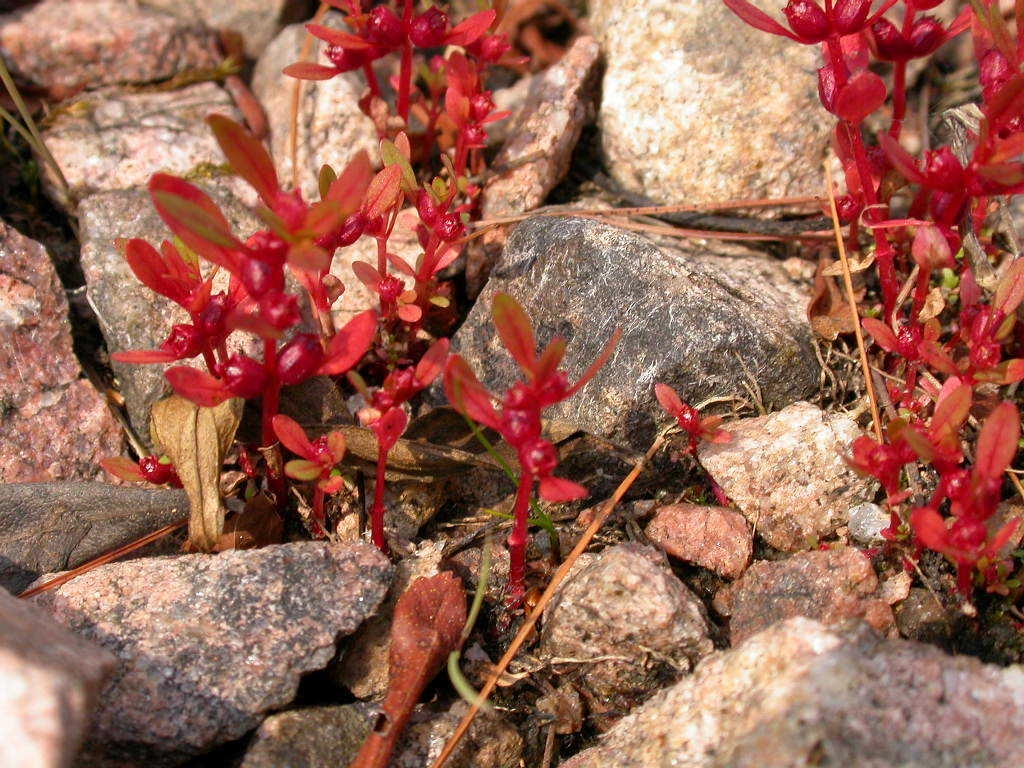
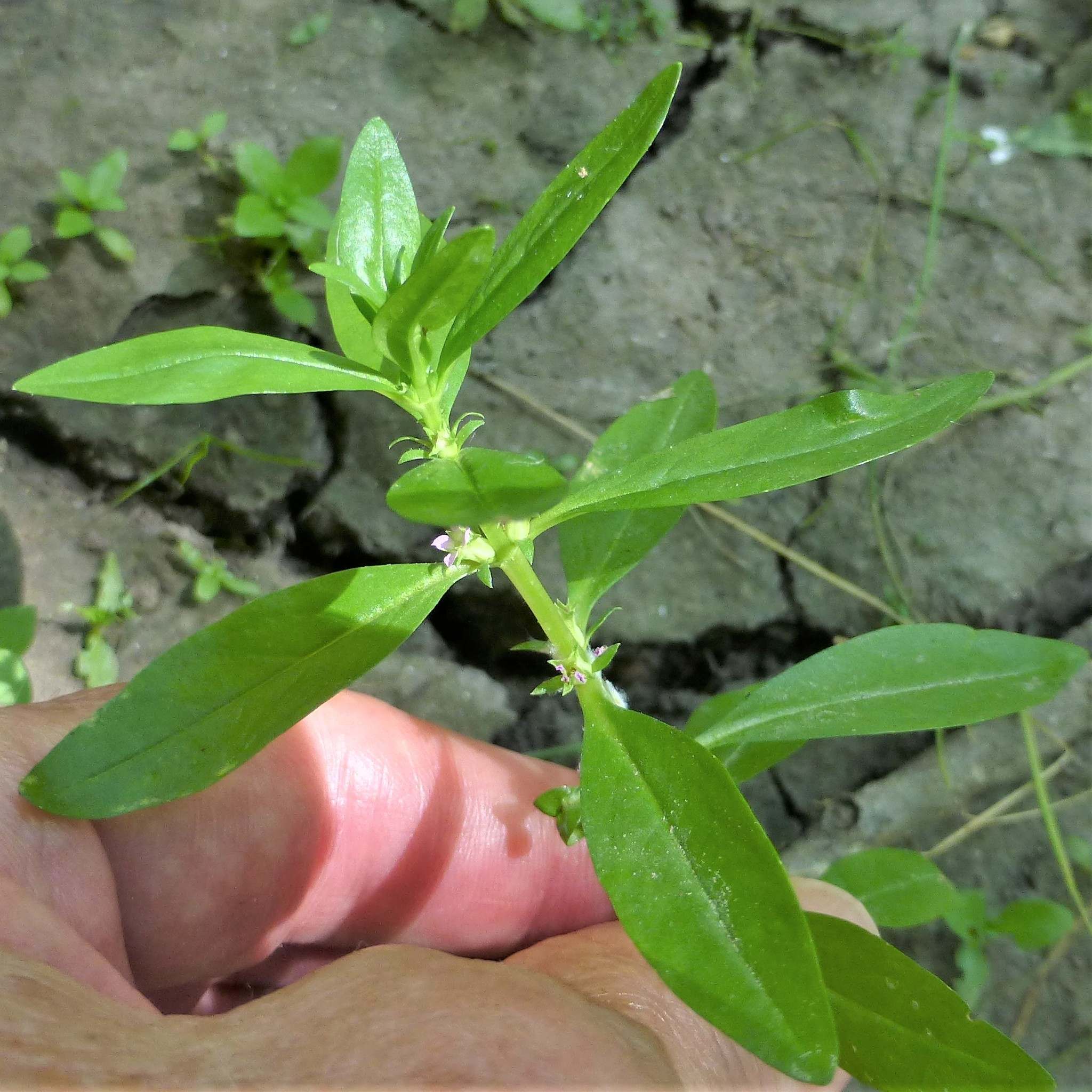
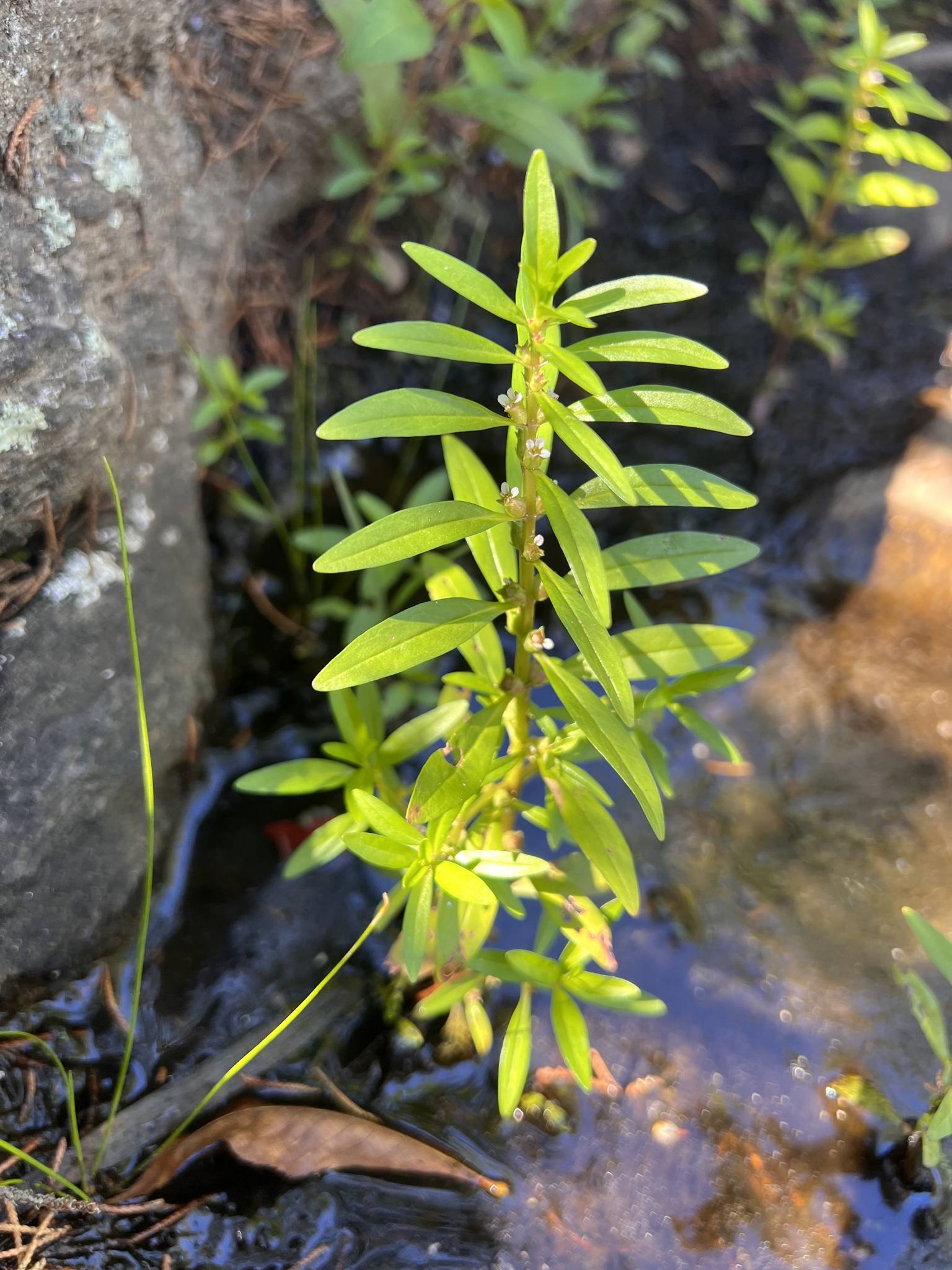
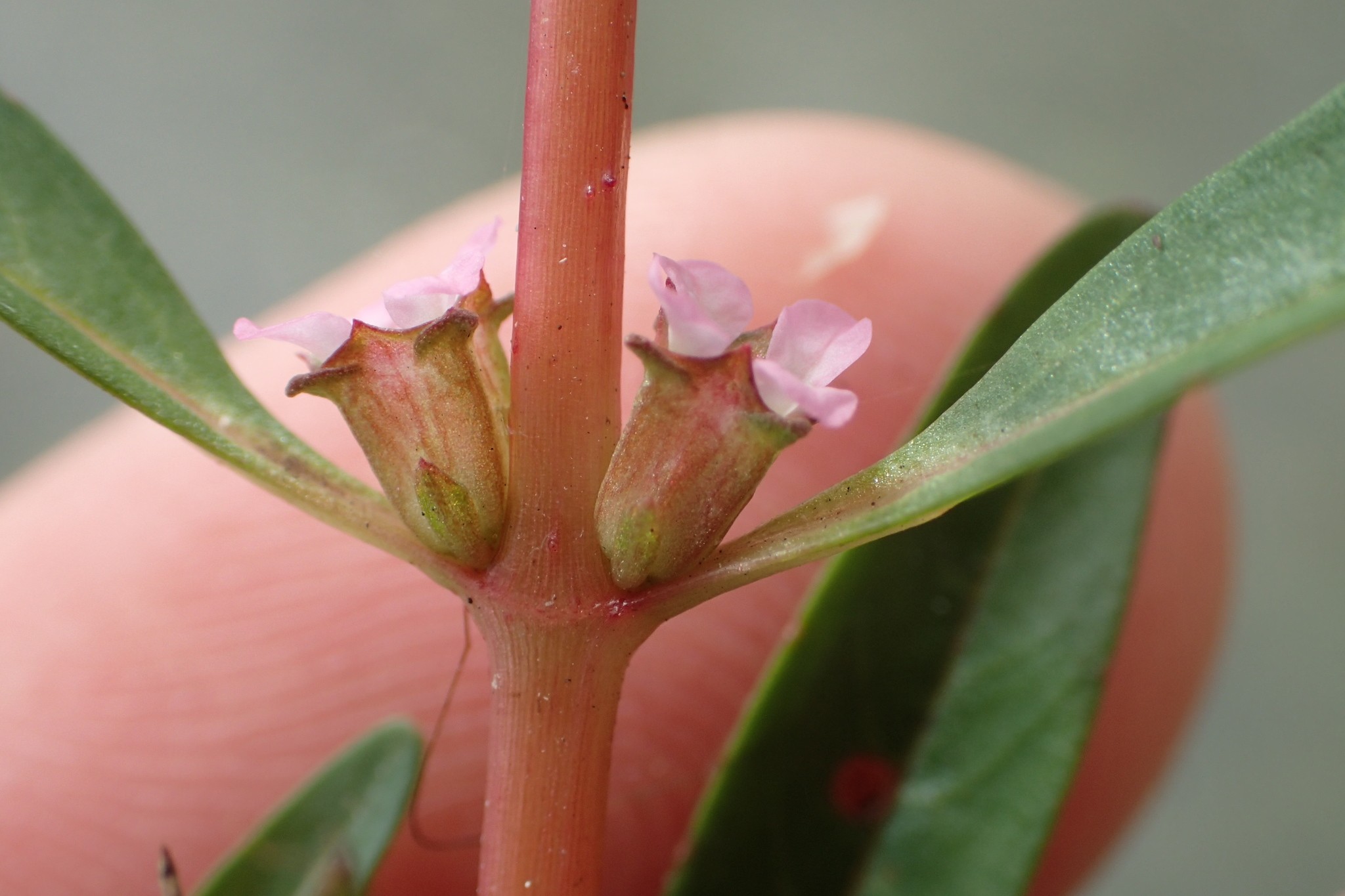
Rotala ramosior is a species of flowering plant in the loosestrife family known by the common name lowland rotala. This aquatic or semiaquatic plant is native to North America, where it grows in lakes, streams, and irrigation ditches. The branching stems of the plant grow to about 40 cm long. Leaves are decussate, arranged oppositely in perpendicular pairs along the stems. The leaves are linear to lance-shaped to oval and up to 5 cm long. Flowers occur singly in leaf axils. Each has triangular sepals with long, narrow appendages and usually four tiny white petals in shades of pink to white. This plant is sometimes grown in aquariums.
from Wikipedia
Taxonomic Information
Eukaryota
Streptophyta
Magnoliopsida
Myrtales
Lythraceae
Rotala
ramosior
-
Species
k__Eukaryota;p__Streptophyta;c__Magnoliopsida;o__Myrtales;f__Lythraceae;g__Rotala;s__Rotala ramosior
Weeds
Photos (5 photos)

Morphological Features
No morphological description available.
Host Plants (0 host plants)
Data sources: EPPO Global Database and relevant literature.
No host plants available.
Quarantine Status (0 records)
Data sources: IPPC website and national quarantine websites; verified by human review.
No quarantine status records available.
Distribution (34 countries)
Data Sources: EPPO Global Database and GBIF.
| Country | Status | State |
|---|---|---|
| Netherlands Antilles | Present | — |
| Argentina | Present | — |
| Benin | Present | — |
| Bulgaria | Present | — |
| Belize | Present | — |
| Bolivia (Plurinational State of) | Present | — |
| Brazil | Present | — |
| Canada | Present | — |
| Colombia | Present | — |
| Costa Rica | Present | — |
Distribution Map (Latitude and longitude coordinates sourced from GBIF.)
Download CSVGenomes (0 records)
Data source: NCBI.
No genome records available.
Transcriptomes (0 records)
Data source: NCBI.
No transcriptome records available.
Literature
Fetching literature from NCBI PubMed...
Failed to fetch literature