Thaumastocoris peregrinus
TaxID: 661495
Basic Information
Thaumastocoris peregrinus
Bronze Bug, Bronze bug
Thaumastocoris peregrinus, the bronze bug, is a true bug first described from Argentina, but is probably native to Australia. The species has been recorded in Africa (Kenya, Malawi, South Africa, Zimbabwe), Europe (Albania, Italy, Portugal, Spain), Middle East (Israel), North America (Mexico, California), South America (Argentina, Brazil, Chile, Paraguay, Uruguay), Caribbean, and New Zealand as a pest of eucalyptus.
from Wikipedia
Taxonomic Information
Eukaryota
Arthropoda
Insecta
Hemiptera
Thaumastocoridae
Thaumastocoris
peregrinus
-
Species
k__Eukaryota;p__Arthropoda;c__Insecta;o__Hemiptera;f__Thaumastocoridae;g__Thaumastocoris;s__Thaumastocoris peregrinus
Arthropods
Photos (5 photos)
Morphological Features
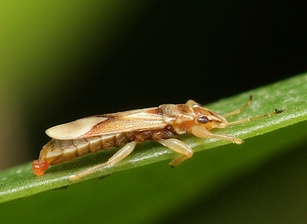
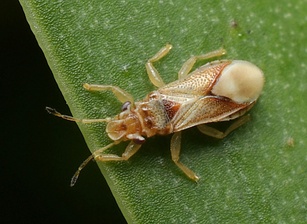
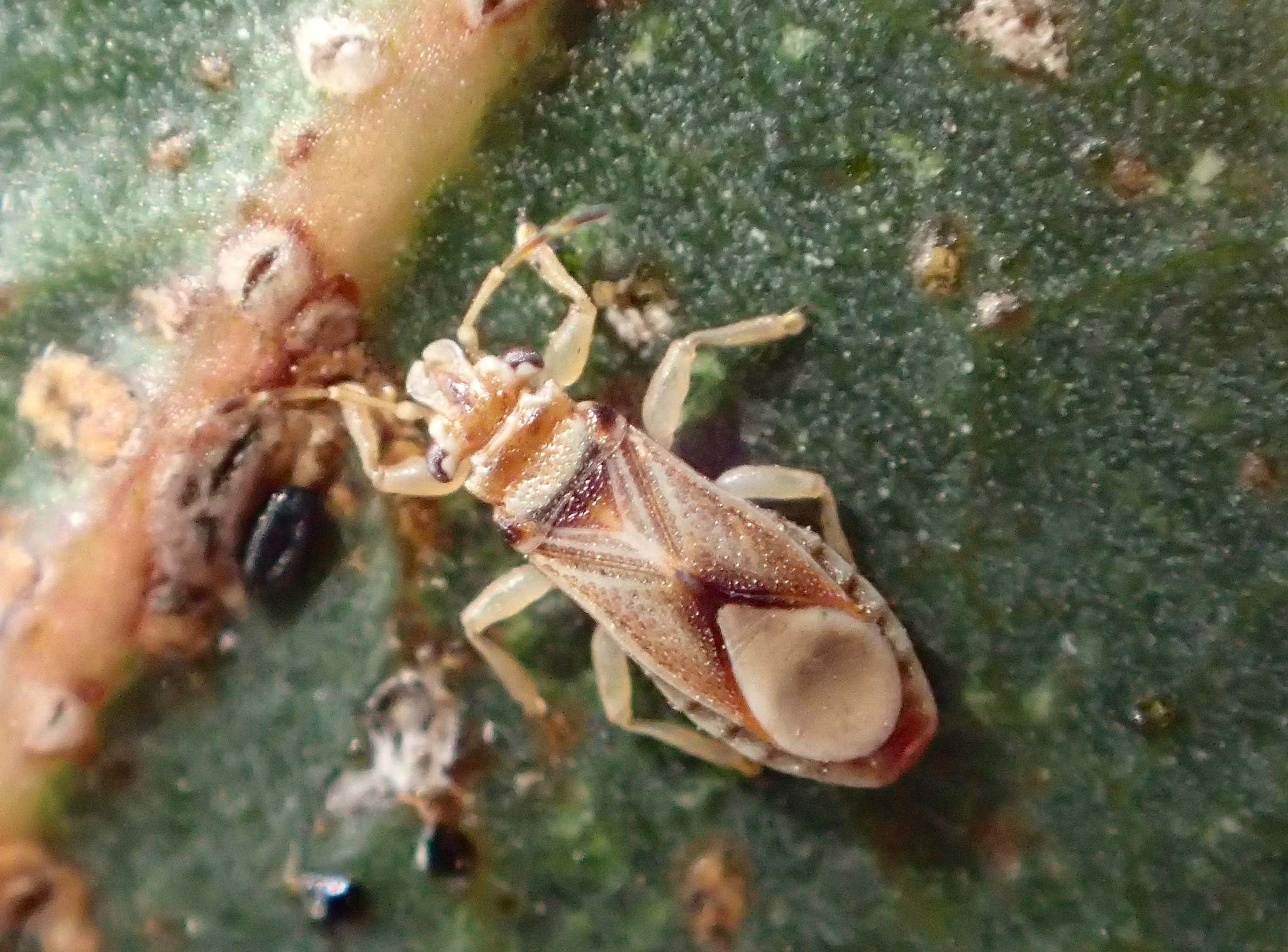
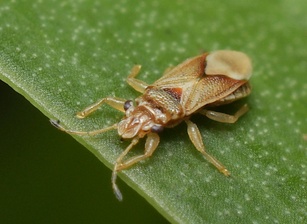
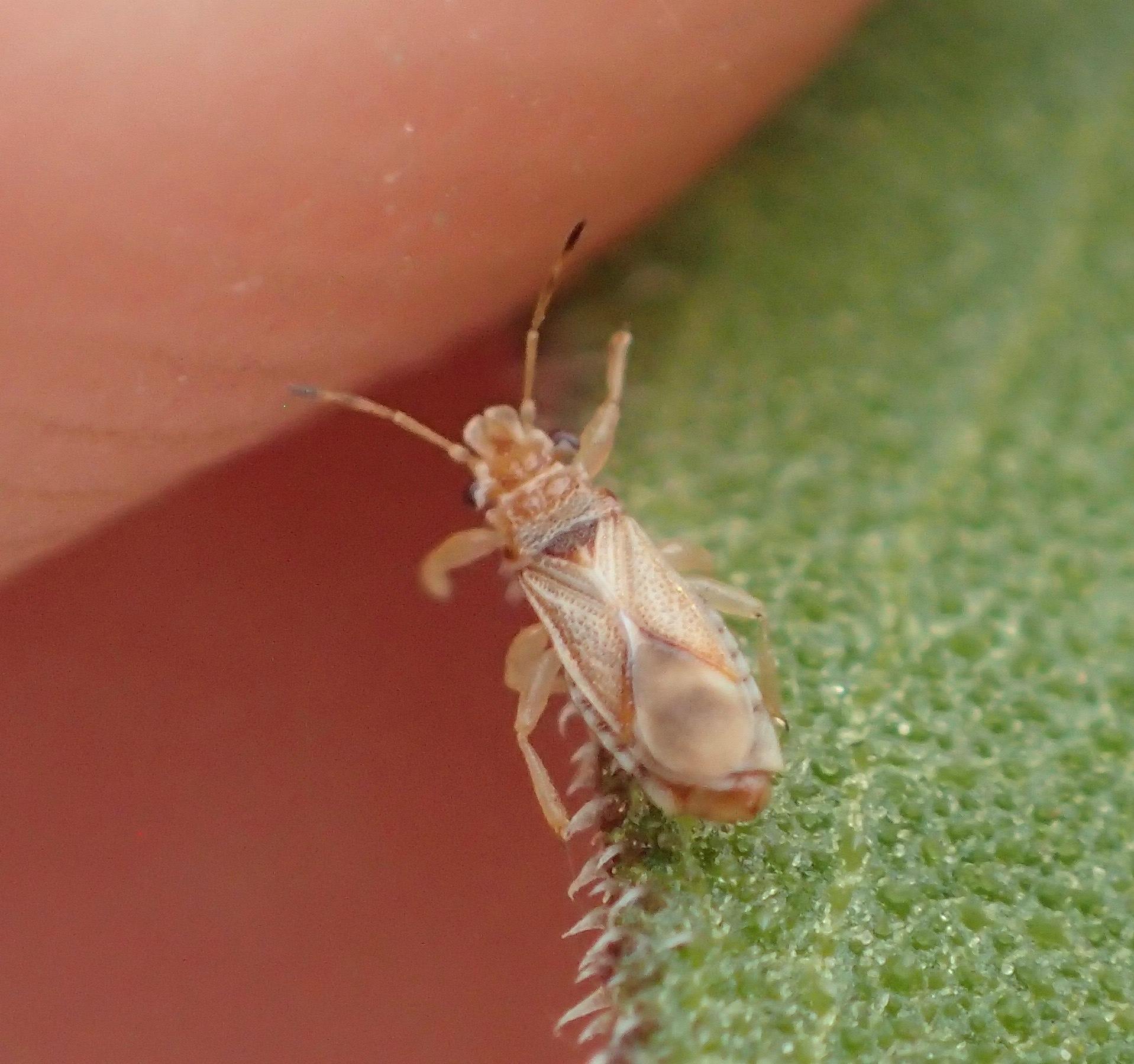
Body elongate, total length 2.82–3.02 mm in males. Head length 0.53–0.57 mm, width across eyes 0.73–0.78 mm, interocular space 0.46–0.49 mm; vertex mostly impunctate, with transverse puncticulate rows sometimes visible; mandibular plates elongate, surpassing clypeus by length of clypeus, contiguous medially, flared anteriorly, concave dorsally, anterolateral margins strongly recurved. Antennae with segments I 0.13–0.15 mm, II 0.37–0.42 mm, III 0.30–0.37 mm, IV 0.28–0.33 mm; apex of third antennal segment and apical half of fourth black; uniform distribution of decumbent setae intermixed with fine erect setae. Rostrum short, attaining anterior margin of prosternum, length 0.34 mm. Pronotum mostly yellowish brown, disc cream medially; anterior collar thick, not readily visible; calli very slightly raised; lateral margin strongly constricted medially; anterolateral angles of anterior lobe with a tubercle; callosite region irregularly punctuate, punctures shallow, denser along midline and anterolateral angles. Scutellum with median longitudinal stripe on apical half whitish; scutellar length 0.25–0.31 mm, basal width 0.35–0.40 mm. Hemelytra with inner margin of clavus and outer margin of corium whitish; medial margin of corium straight to weakly convex, apex at membrane strongly narrowed. Legs with forecoxal separation equal to slightly wider than coxal width; femora with sparse short whitish adpressed setae; tibiae with dense and longer whitish adpressed setae, thicker and longer on inner margin; fore and mid tibiae with three subapical dark teeth on inner margin; fossula spongiosa elongate, reaching distal half of second tarsomere. Dorsum with uniform distribution of setose punctures, setae short erect straw-coloured. Ventral surface with irregular distribution of fine, straw-coloured, decumbent setae. Male genital capsule opening to right side.
Plazi taxonomic treatment
Host Plants (26 host plants)
Data sources: EPPO Global Database and relevant literature.
| Scientific Name | Status |
|---|---|
| Corymbia henryi | Host |
| Eucalyptus | Host |
| Eucalyptus argophloia | Host |
| Eucalyptus benthamii | Host |
| Eucalyptus botryoides | Host |
| Eucalyptus bridgesiana | Host |
| Eucalyptus camaldulensis | Host |
| Eucalyptus dorrigoensis | Host |
| Eucalyptus dunnii | Host |
| Eucalyptus globulus | Host |
Quarantine Status (2 records)
Data sources: IPPC website and national quarantine websites; verified by human review.
Distribution (38 countries)
Data Sources: EPPO Global Database and GBIF.
| Country | Status | State |
|---|---|---|
| Albania | Present | — |
| Algeria | Present | — |
| Argentina | Present | — |
| Australia | Present | |
| Bolivia (Plurinational State of) | Present | — |
| Brazil | Present | |
| Botswana | Present | — |
| Chile | Present | — |
| Democratic Republic of the Congo | Present | — |
| Colombia | Present | — |
Distribution Map (Latitude and longitude coordinates sourced from GBIF.)
Download CSVGenomes (0 records)
Data source: NCBI.
No genome records available.
Transcriptomes (0 records)
Data source: NCBI.
No transcriptome records available.
Literature
Fetching literature from NCBI PubMed...
Failed to fetch literature