Crioceris asparagi
TaxID: 131627
Basic Information
Crioceris asparagi
Asparagus Beetle, common asparagus beetle
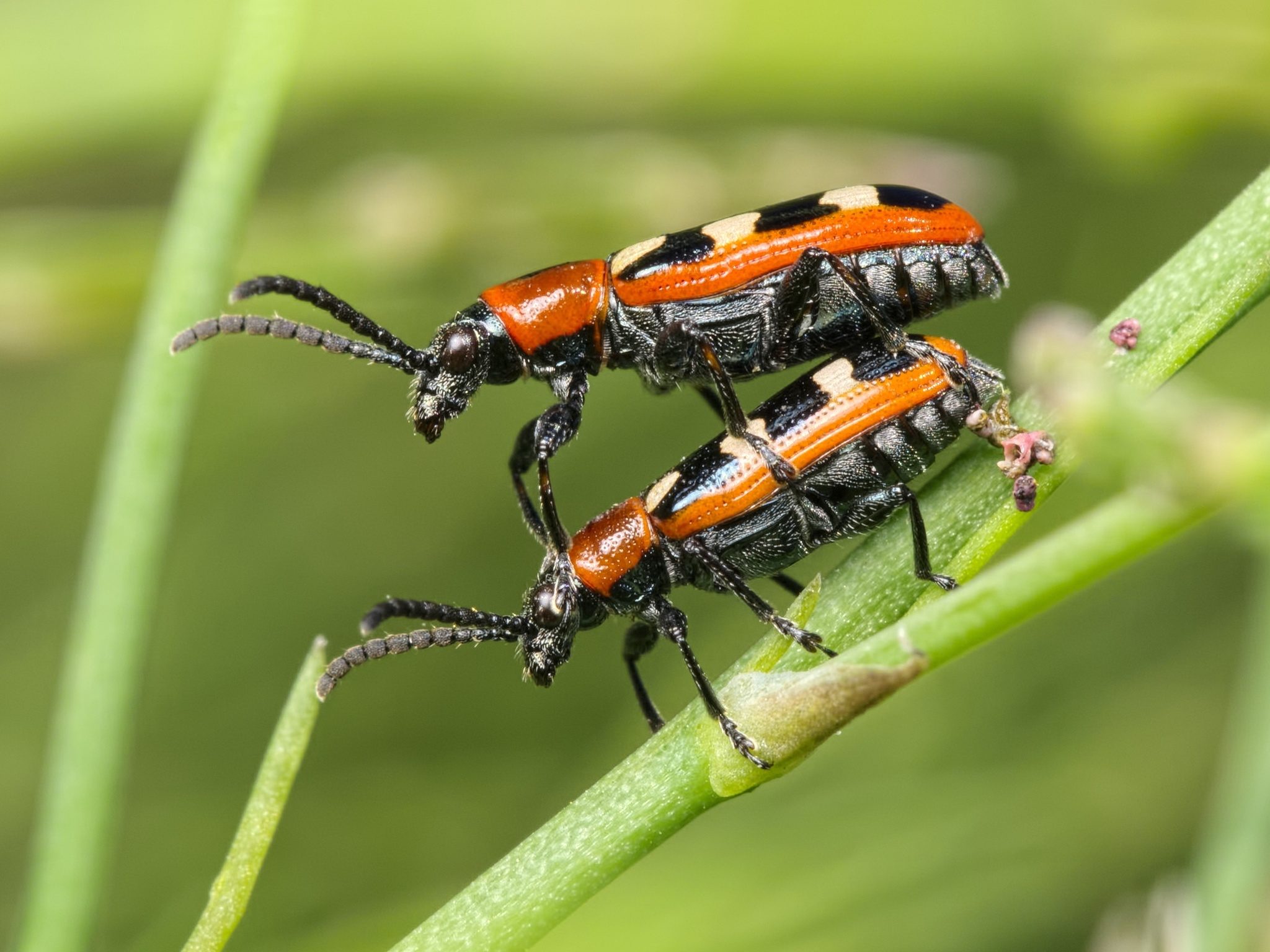
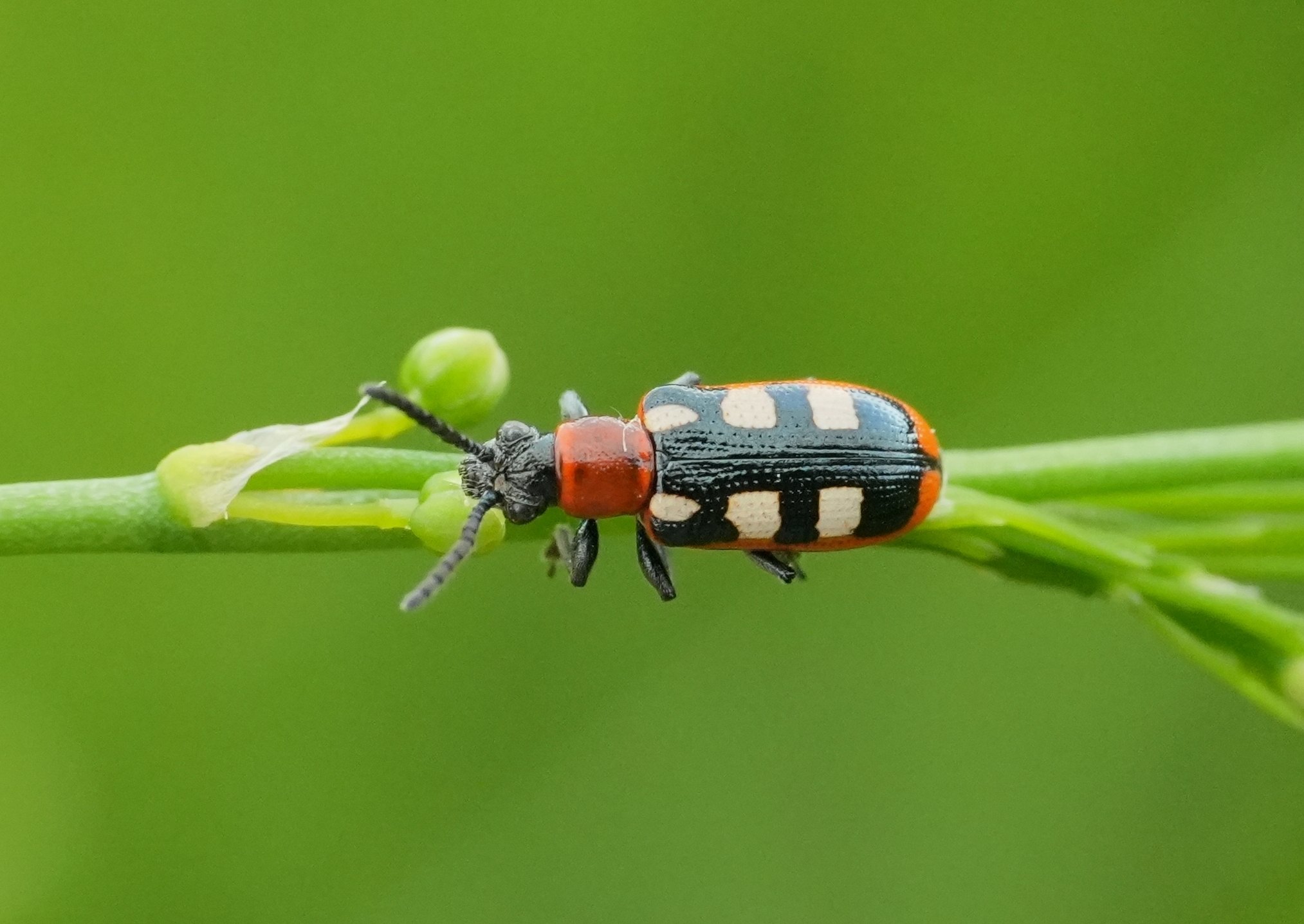
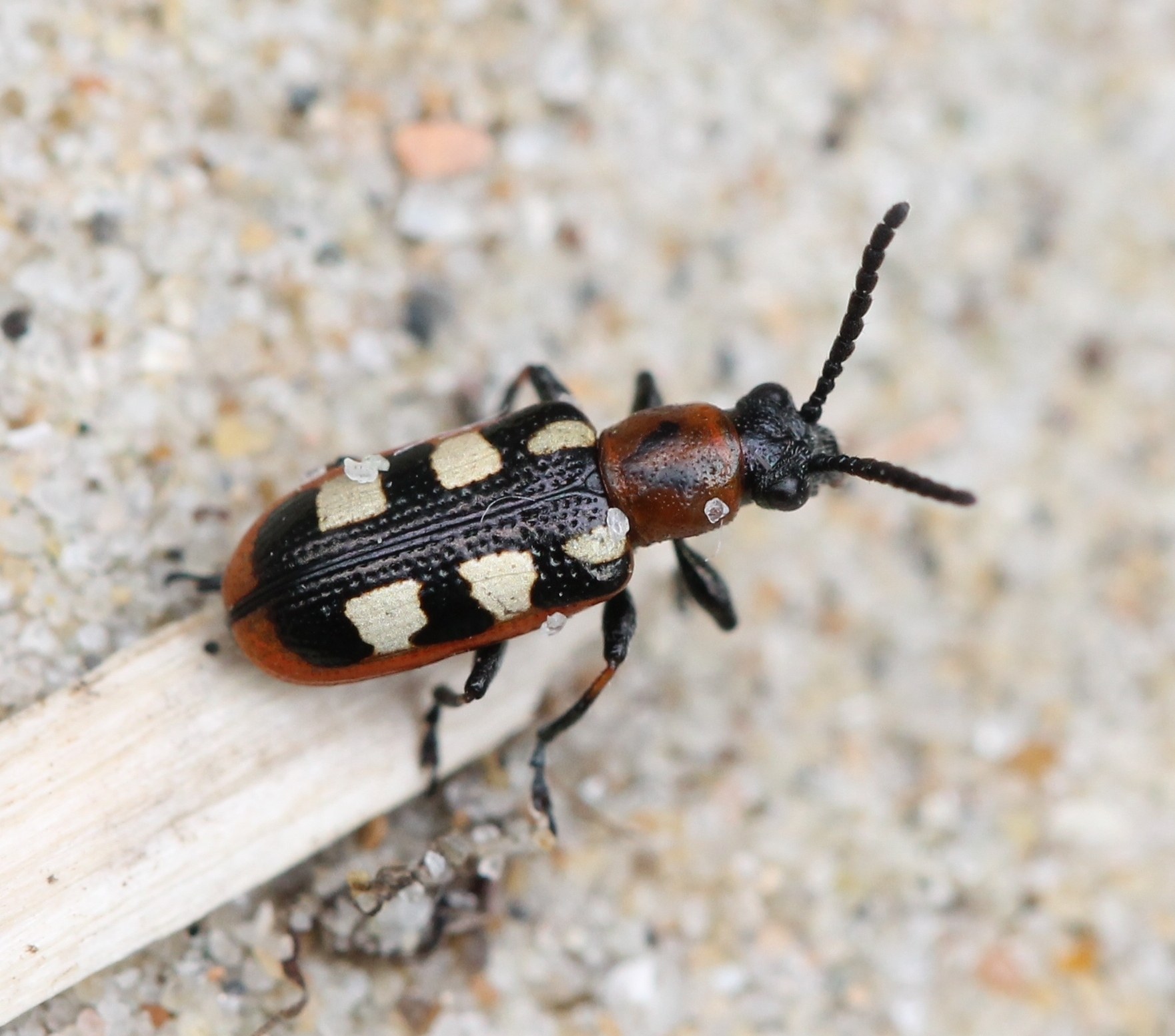
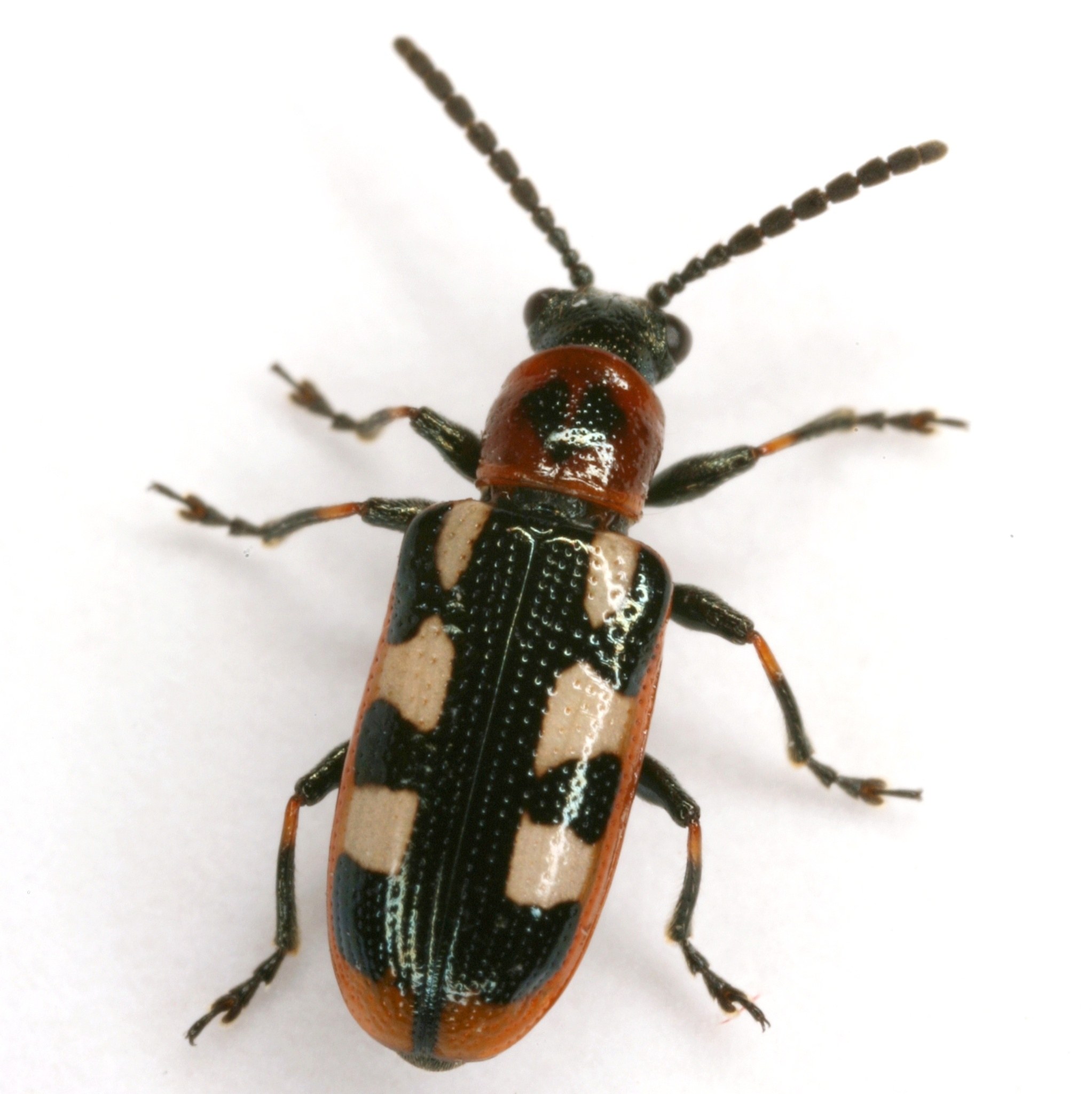
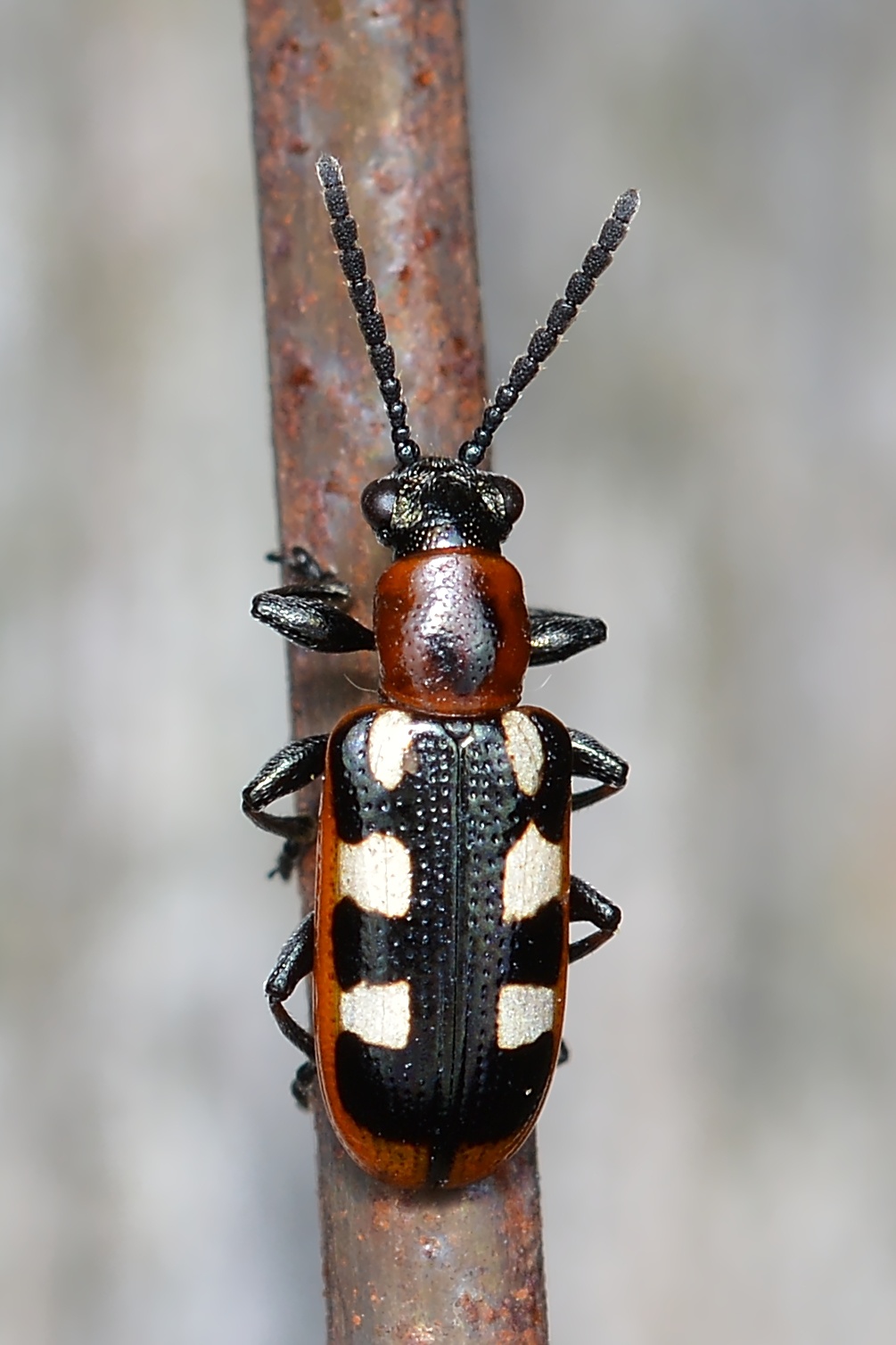
The common asparagus beetle (Crioceris asparagi) is a major pest of asparagus crops both in Europe and in North America. Asparagus is its only food plant. The beetle is 6.0 mm to 9.5 mm long and slightly elongated. It is metallic blue-black in color with cream or yellow spots on its red-bordered elytra. The larvae are fat gray grubs with dark heads. The adult beetles and the larvae strip the needle-like leaves off the asparagus fronds, depriving the plants of the ability to photosynthesize and store energy for future years. Additionally, they chew the spears and lay a lot of eggs on them, rendering the crop unusable. The larvae feed on the plants for a few weeks, then drop to the ground to pupate. One year may see two or three generations of the beetle. The adults overwinter in a dormant state underground or in nearby leaf litter. The parasitic wasp, Tetrastichus coeruleus, occurring mainly in the United States and Europe, can cause up to 71% mortality in the field and has been successfully used for biological control. Various insecticides (such as carbamates, pyrethroids, spinetoram, and spinosad) can be considered for pest control. The similar spotted asparagus beetle (Crioceris duodecimpunctata) is also a pest as an adult, feeding on tender shoots and leaves, but since the larvae feed only on the asparagus berries it is not considered to be as important.
from Wikipedia
Taxonomic Information
Metazoa
Arthropoda
Insecta
Coleoptera
Chrysomelidae
Crioceris
asparagi
unclassified
Species
nan
k__Metazoa;p__Arthropoda;c__Insecta;o__Coleoptera;f__Chrysomelidae;g__Crioceris;s__Crioceris asparagi
nan
Arthropods
Photos (5 photos)
Morphological Features
No morphological description available.
Host Plants (0 host plants)
Data sources: EPPO Global Database and relevant literature.
No host plants available.
Quarantine Status (8 records)
Data sources: IPPC website and national quarantine websites; verified by human review.
Distribution (41 countries)
Data Sources: EPPO Global Database and GBIF.
| Country | Status | State |
|---|---|---|
| Albania | Present | — |
| Algeria | Present | — |
| Armenia | Present | — |
| Austria | Present | — |
| Belgium | Present | — |
| Belarus | Present | — |
| Canada | Present | — |
| Switzerland | Present | — |
| Czechia | Present | — |
| Germany | Present | — |
Distribution Map (Latitude and longitude coordinates sourced from GBIF.)
Download CSVGenomes (1 records)
Data source: NCBI.
| Assembly Accession | Assembly Level | Genome Size(Mb) | Contig N50(Kb) | Scaffold N50(Kb) | BUSCO% | Downloads | Actions |
|---|---|---|---|---|---|---|---|
| GCA_958507055.1 | Chromosome | 639 | 5465 | 90622 | - |
|
|
|
icCriAspa1.1 |
|||||||
Transcriptomes (2 records)
Data source: NCBI.
| Run ID | Tissue | Developmental Stage | Sex | Read Count | Location | Actions |
|---|---|---|---|---|---|---|
| SRR24951573 | whole insect | - | - | 31500139 | Germany | |
|
PRJNA980084 SRX20709672 SRP444449 insect RNA-Seq of Crioceris asparagi: adult beetle Total RNA was extracted using the innuPrep DNA/RNA Mini kit (Analytik Jena, Jena, Germany) following the manufacturer's instructions. Genomic DNA contamination was removed by DNAse treatment (TURBO DNase, Invitrogen, Carlsbad, CAL, USA) for 30 min at 37 C. Total RNA samples were further purified by using the RNeasy MinElute Clean up Kit (Qiagen, Hilden, Germany) following the manufacturers protocol, except for elution to 20 l volume. The integrity and quality of the RNA samples were determined using the RNA 6000 Nano LabChip kit on an Agilent 2100 Bioanalyzer (both Agilent Technologies, Santa Clara, CAL, USA) according to the manufacturers instructions. RNA-Seq was outsourced to the Max Planck Genome center (Cologne, Germany). There, poly(A)+ enriched RNA was fragmented to an average of 300-350 nucleotides and a TruSeq compatible, directional library was prepared for each sample. Libraries were tagged using dual indexing and were multiplexed on the same sequencing lane. Sequencing was carried out on a HiSeq3000 sequencing platform (Illumina, CA, USA) using paired-end (2 x 150 bp) reads. wild type individual {'tissue': 'whole insect', 'isolate': 'wild type individual', 'geo_loc_name': 'Germany', 'biosamplemodel': 'Invertebrate', 'collection_date': '2019-05-15', 'isolation_source': 'field-caught'} |
||||||
| ERR13962505 | - | - | NOT COLLECTED | 41596305 | - | |
|
PRJEB59076 ERX13363598 ERP144150 insect Illumina NovaSeq X paired end sequencing Illumina sequencing of sample accession SAMEA114806089 for study accession PRJEB59076. This submission includes reads tagged with the sequence CCTCTGCC. {'gal': 'Natural History Museum', 'sex': 'NOT COLLECTED', 'tolid': 'icCriAspa2', 'habitat': 'NOT COLLECTED', 'lifestage': 'adult', 'broker name': 'COPO', 'common name': 'common asparagus beetle', 'external id': 'SAMEA114806089', 'sample name': '6560d2288a276eabc6e4d310', 'specimen_id': 'NHMUK014551787', 'collected_by': 'MICHAEL GEISER', 'insdc status': 'public', 'project name': 'DTOL', 'submitter id': '6560d2288a276eabc6e4d310', 'gal_sample_id': 'NHMUK014551787', 'identified_by': 'MICHAEL GEISER', 'organism part': 'WHOLE ORGANISM', 'sample same as': 'SAMEA114805916', 'collection date': '2021-07-03', 'ena-last-update': '2023-12-06T13:23:17Z', 'scientific_name': 'Crioceris asparagi', 'barcoding center': 'NATURAL HISTORY MUSEUM', 'ena-first-public': '2023-12-06T13:23:17Z', 'insdc center name': 'EarlhamInstitute', 'insdc last update': '2023-12-06T13:23:17Z', 'insdc first public': '2023-12-06T13:23:17Z', 'collecting institution': 'NATURAL HISTORY MUSEUM', 'identifier_affiliation': 'NATURAL HISTORY MUSEUM', 'geographic location (latitude)': '51.41', 'geographic location (longitude)': '-0.06', 'sample collection device or method': 'Hand Picked', 'geographic location (country and/or sea)': 'United Kingdom', 'geographic location (region and locality)': 'England|Penge|Winsford Gardens'} |
||||||
Literature
Fetching literature from NCBI PubMed...
Failed to fetch literature