Cydia saltitans
TaxID: 3049319
Basic Information
Cydia saltitans
Jumping Bean Moth
Cydia saltitans or jumping bean moth is a moth from Mexico that is most widely known as its larva, where it inhabits the carpels of seeds from several related shrubby trees, mainly Sebastiania pavoniana or Sapium biloculare (syn. Pleradenophora bilocularis). These seeds are commonly known as Mexican jumping beans. The moth lays the egg on the young capsule. The hatched larva gnaws into the fruit, which closes the minute hole during its growth. The larva attaches itself to the capsule with many silken threads by hooks on its anal and four hind abdominal prolegs. When the fruit is warmed, for instance by being held in the palm of the hand, the larva twitches, pulling on the threads and causing the characteristic hop. "Jump" is often an exaggeration, but the beans nonetheless do move around quite a bit. The larva may live for months inside the fruit with periods of inactivity. It eats away the seed inside the capsule, making a hollow for itself. If the fruit is cut, the larva will repair the hole with silk. If the larva has suitable conditions such as moisture, it will live long enough to go into a pupal stage. In preparation for this, it eats a circular hole through the shell and closes it again with a silken plug. This is to enable the jawless adult moth to escape from the fruit. After completion of the exit hole, it spins a cocoon within the fruit, with a passageway leading to the opening. During the following pupal stage, the larva will not move any more. Normally in the spring, the moth will force its way out of what remains of the fruit, through the round "trapdoor", leaving behind the pupal casing. The small, jawless silver and gray-colored moth will live for only a few days.
from Wikipedia
Taxonomic Information
Eukaryota
Arthropoda
Insecta
Lepidoptera
Tortricidae
Cydia
saltitans
nan
Species
nan
k__Eukaryota;p__Arthropoda;c__Insecta;o__Lepidoptera;f__Tortricidae;g__Cydia;s__Cydia saltitans
nan
Arthropods
Photos (5 photos)
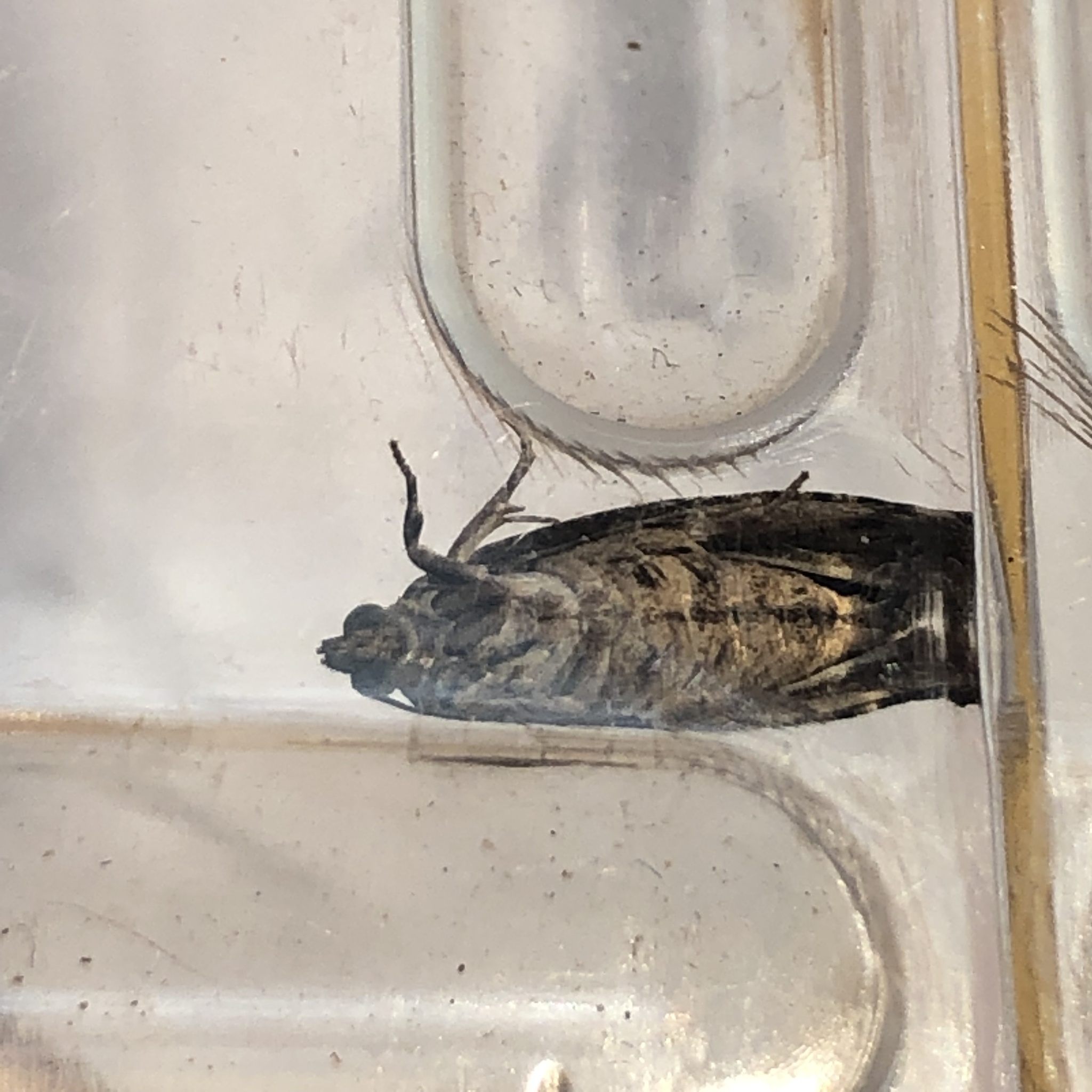
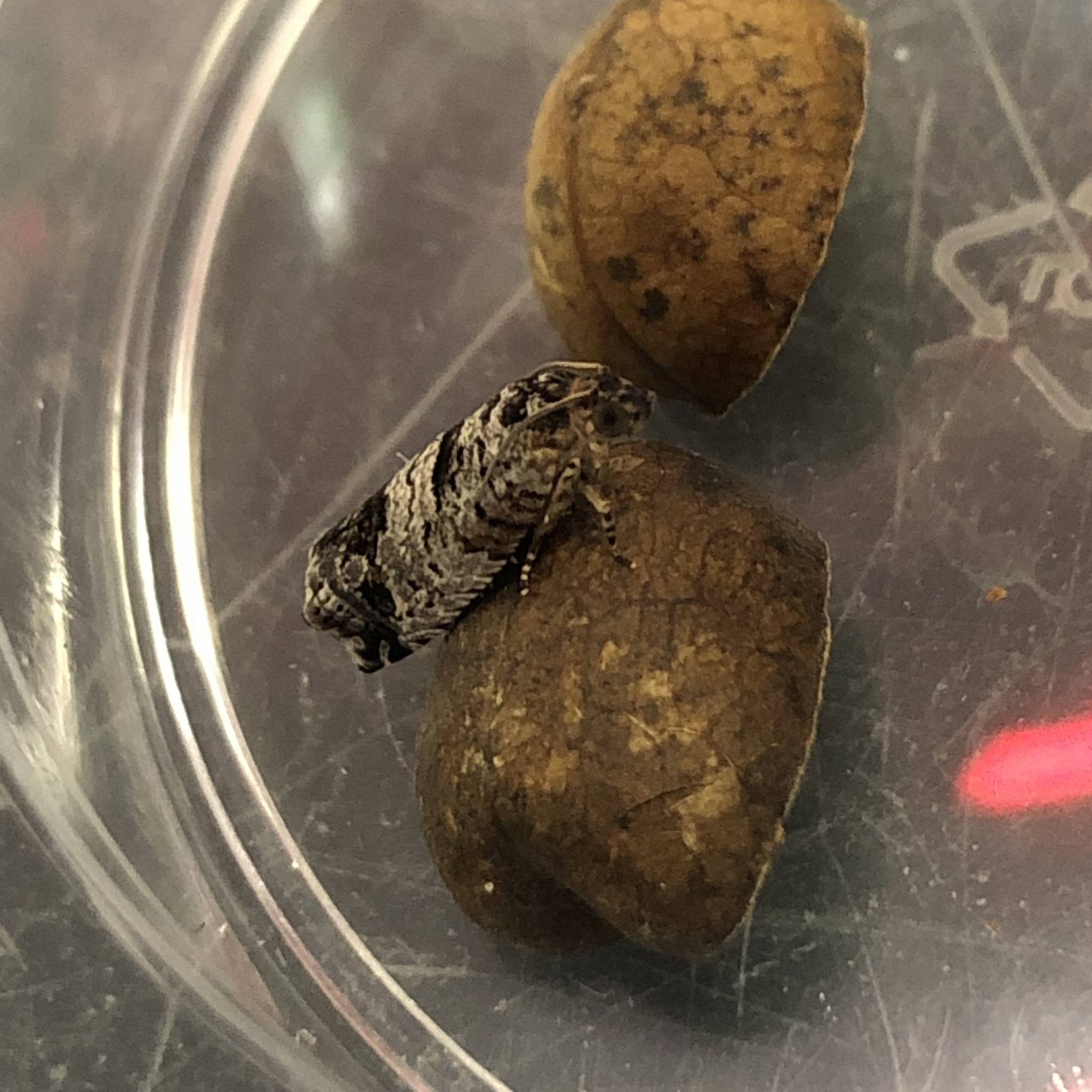
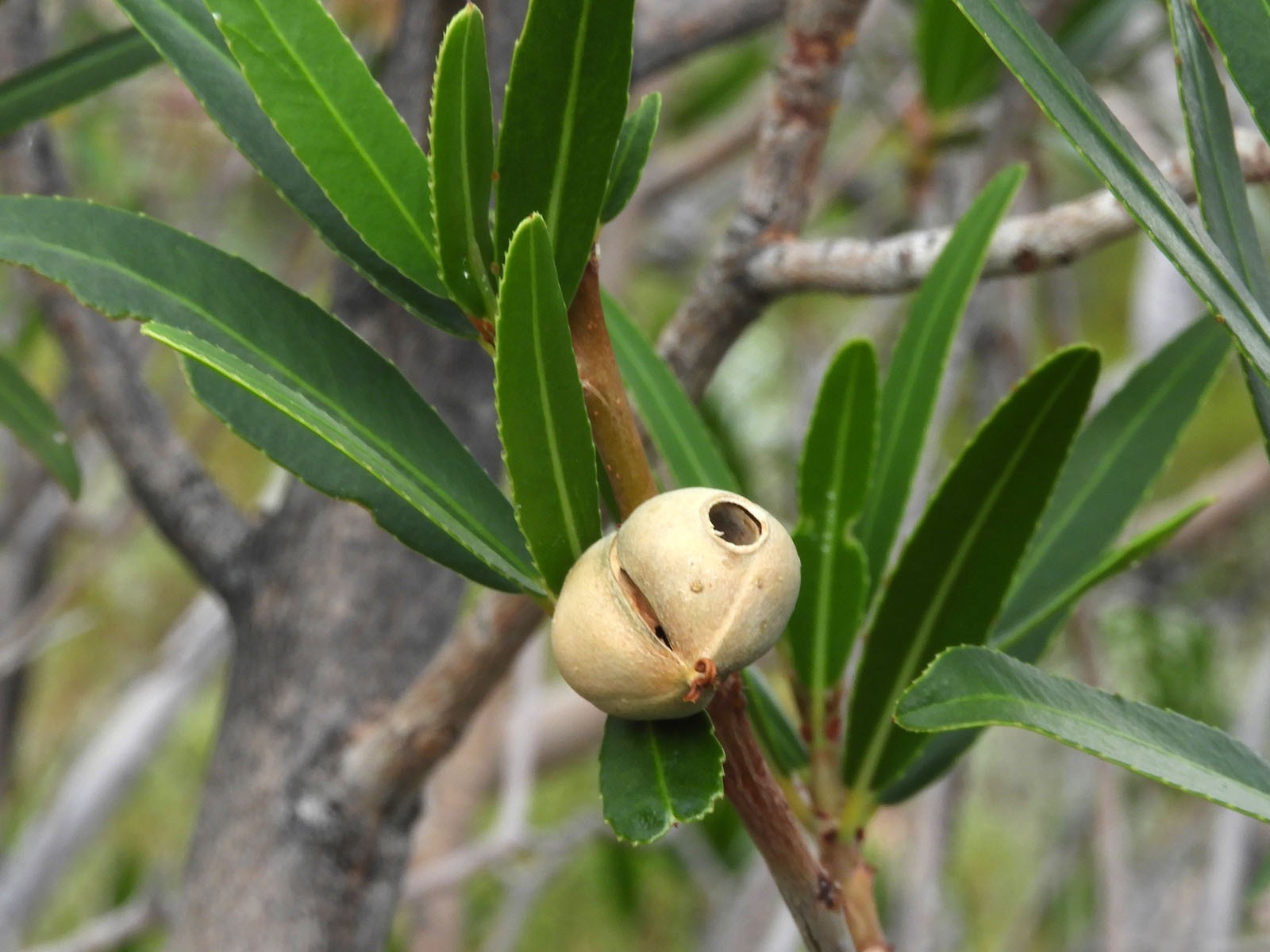
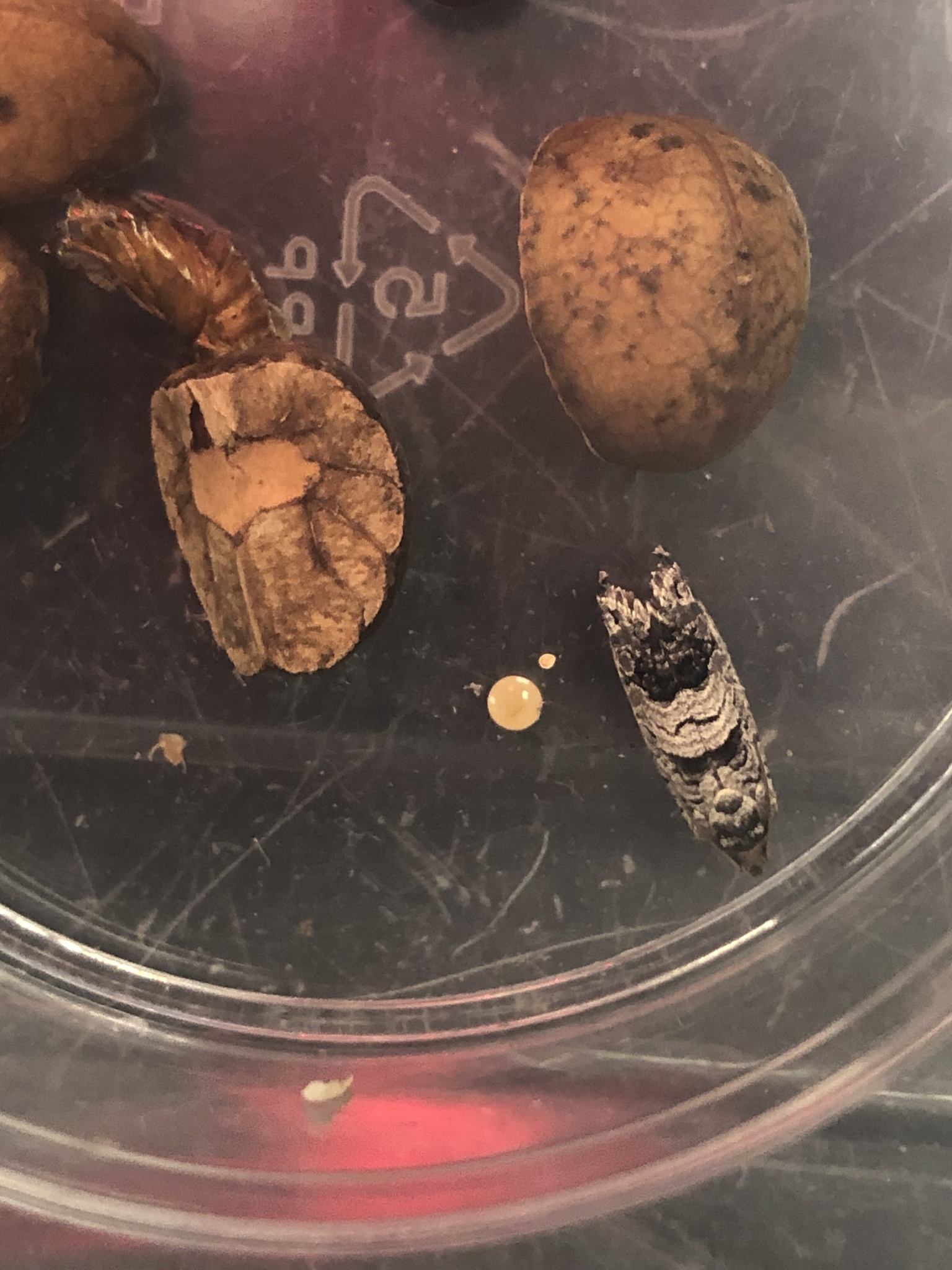
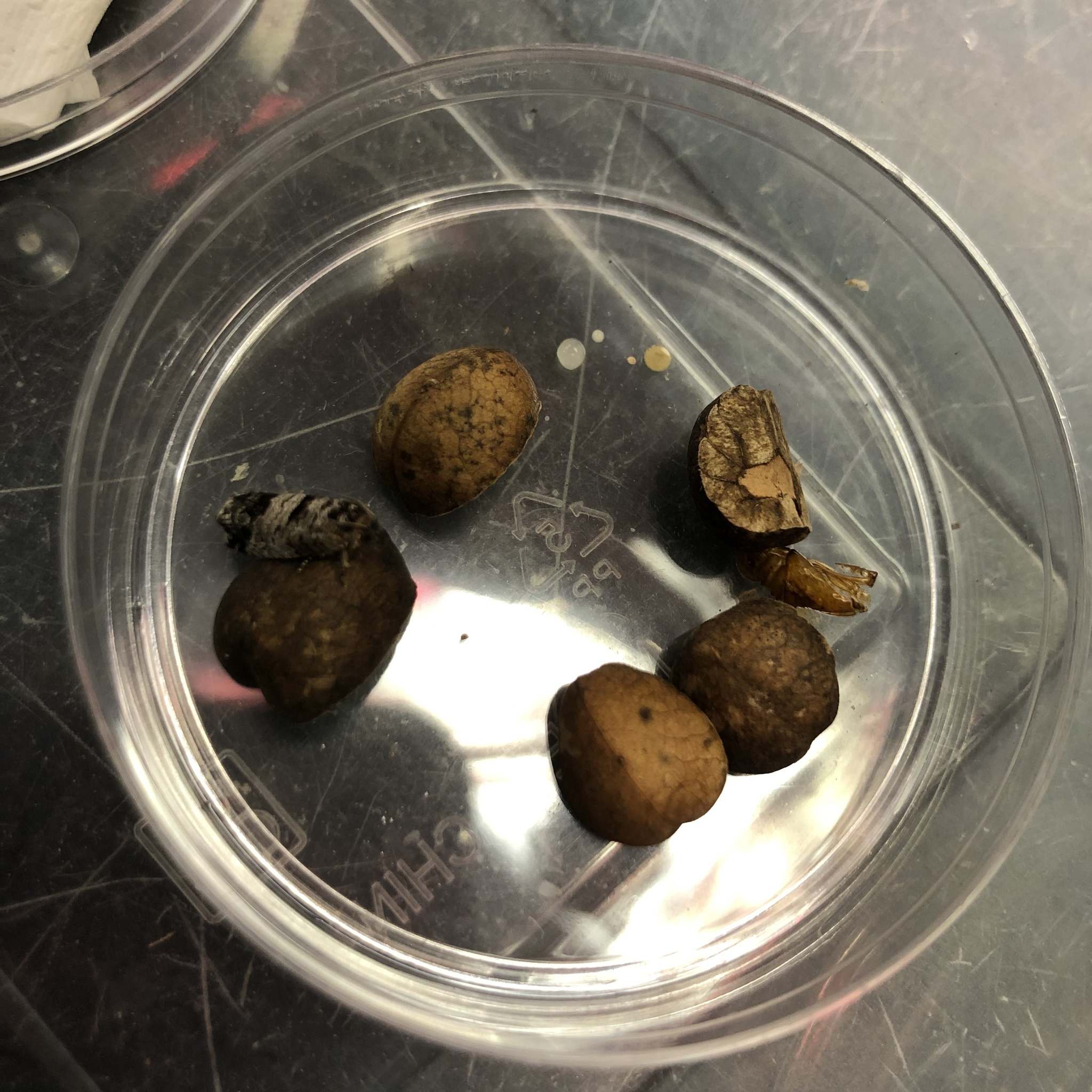
Morphological Features
Larva: soft-bodied, vulnerable to predation and desiccation. Body mass recorded to nearest 0.001 g. Larvae are seed-encased and perform temperature-dependent 'jumping' or 'rolling' behaviors to escape extreme heat. They are connected to the inside of the host seed by interior silk threads and walk along the inner walls of the seed to produce rolling movements or strike the inside wall with appendages to jump. Larvae are capable of repairing damaged host seeds by covering holes with silk.
Anna Purtell, Jesse Anderson, Rebecca Ferguson, Konrad Juskiewicz. 2024. Altered Heat-Avoidance Behavior Following Damage to the Extended Architecture of Mexican Jumping Bean Moth Larvae (Cydia saltitans). Journal of Insect Behavior
Host Plants (0 host plants)
Data sources: EPPO Global Database and relevant literature.
No host plants available.
Quarantine Status (1 records)
Data sources: IPPC website and national quarantine websites; verified by human review.
| Country | Status | Year Added |
|---|---|---|
| Republic of Korea | Quarantine pests | — |
Distribution (3 countries)
Data Sources: EPPO Global Database and GBIF.
| Country | Status | State |
|---|---|---|
| Costa Rica | Present | — |
| Mexico | Present | — |
| United States of America | Present | — |
Distribution Map (Latitude and longitude coordinates sourced from GBIF.)
Download CSVGenomes (0 records)
Data source: NCBI.
No genome records available.
Transcriptomes (0 records)
Data source: NCBI.
No transcriptome records available.
DNA Barcodes (1 records)
View allData source: BOLD.
| Process ID | BIN | Marker | Length | Country | Date | Lat/Lon | Sequence |
|---|---|---|---|---|---|---|---|
| GRPHY080-22 | BOLD:AAA0992 | COI-5P | 658 | United States | - | - |
Literature
Fetching literature from NCBI PubMed...
Failed to fetch literature