Hylamorpha elegans
TaxID: 1336371
Basic Information
Hylamorpha elegans
White Worm Beetle
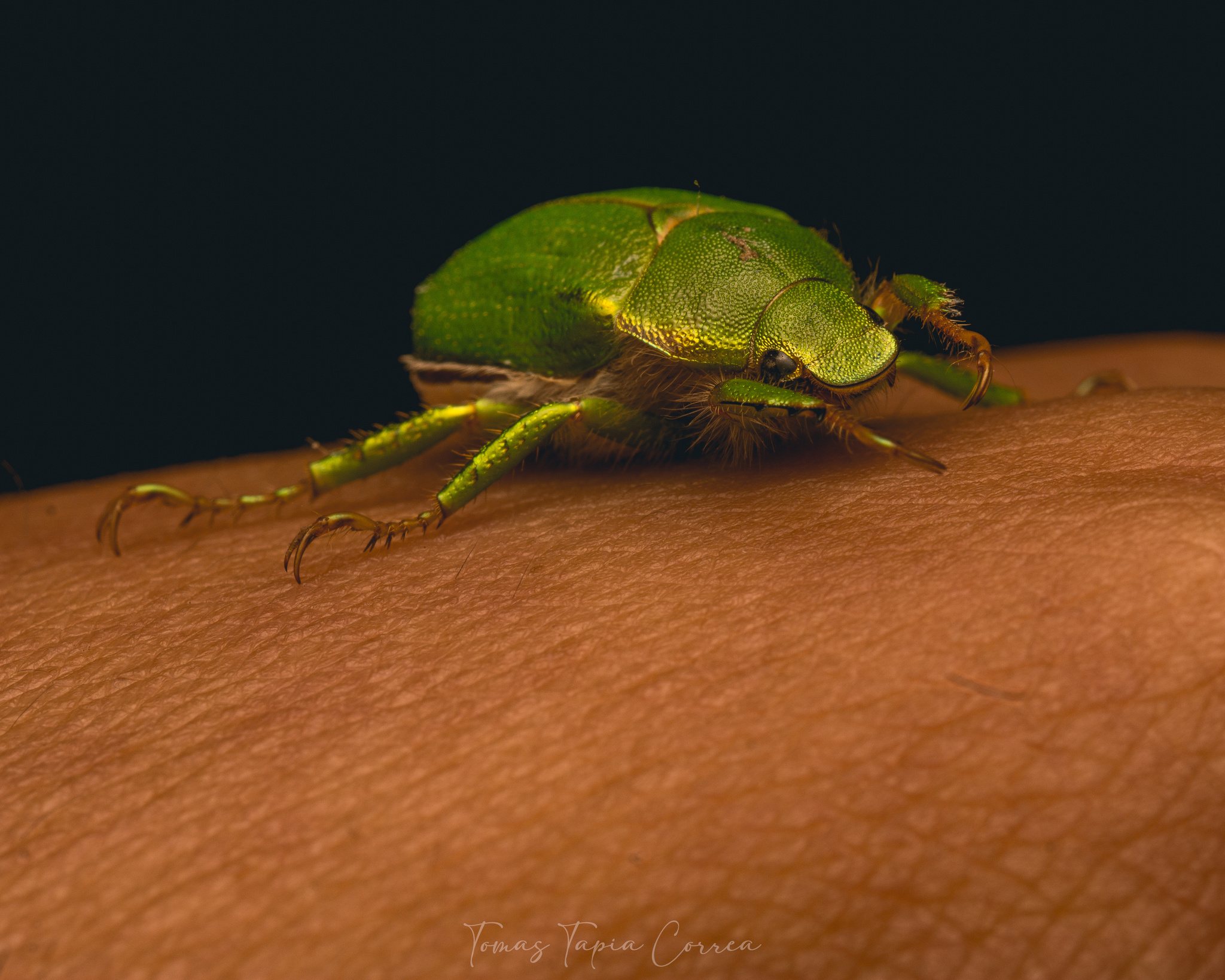
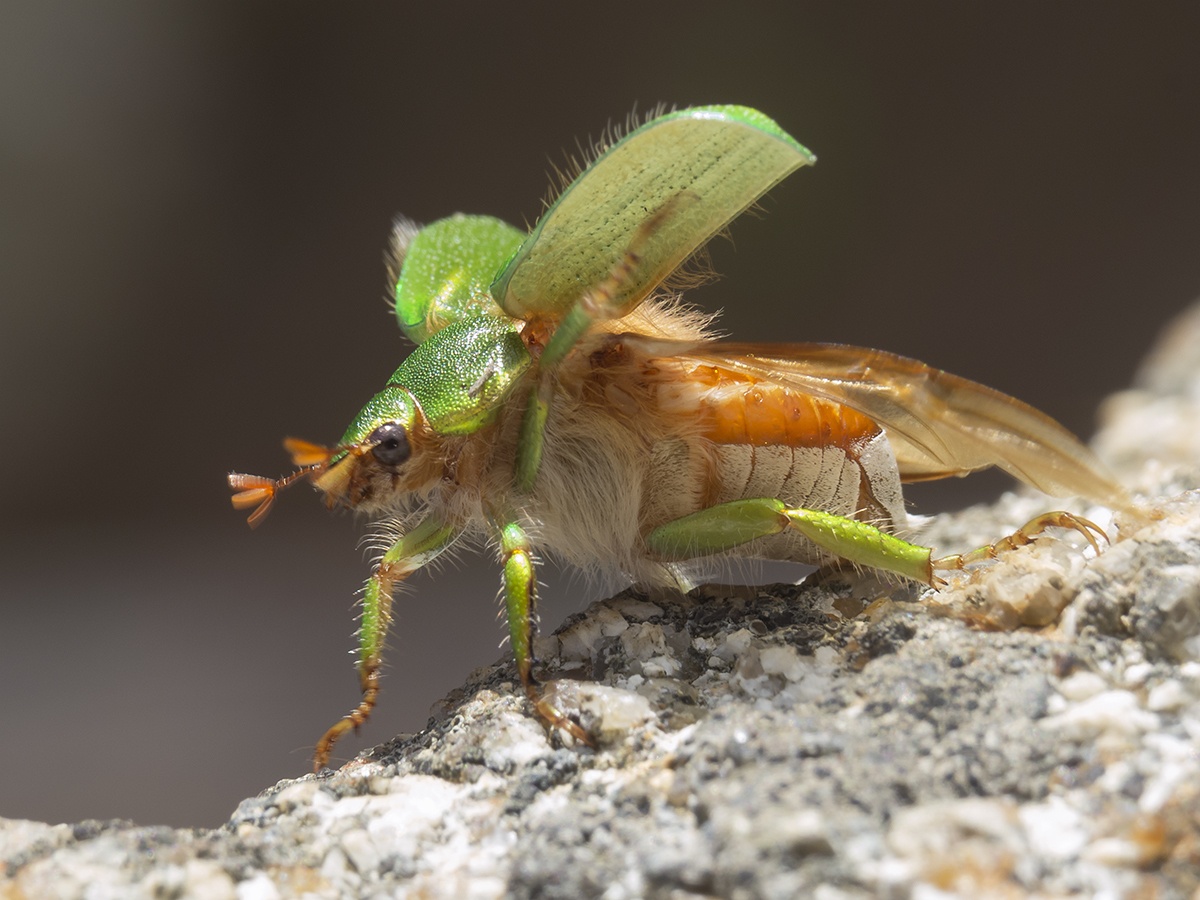
Hylamorpha elegans is a species of beetle in the family Scarabaeidae. It is the only species in the genus Hylamorpha. This beetle is native to South America, particularly in Chile and Argentina. This beetle is recognized for its appearance and ecological role within its habitat as a decomposer. Its glossy green exoskeleton, with variations in color across its head, pronotum, and elytra, make it. This species is primarily nocturnal, so is often observed foraging for food at night. Their mating behavior is influenced by host-plant volatiles, with males being attracted to females emitting specific pheromones while feeding on leaves. Once mating occurs, females lay eggs on preferred host plants, such as red clover. These beetles are agricultural pests, causing damage to crops by feeding on grass and cereal roots in their larval stage. Additionally, they defoliate trees like Nothofagus species during adulthood, impacting forest ecosystems. Predators such as the black-faced ibis and rainbow trout contribute to controlling their population. Understanding their genetics, including chemoreception mechanisms mediated by odorant-binding proteins and chemoreceptors, provides insights into their behavior and potential management strategies. Their interactions with humans and livestock create problems in agriculture and forestry, driving the exploration of alternative pest management approaches like disrupting mating behavior or enhancing soil organic matter to reduce larval damage.
from Wikipedia
Taxonomic Information
Eukaryota
Arthropoda
Insecta
Coleoptera
Scarabaeidae
Hylamorpha
elegans
nan
Species
nan
k__Eukaryota;p__Arthropoda;c__Insecta;o__Coleoptera;f__Scarabaeidae;g__Hylamorpha;s__Hylamorpha elegans
nan
Arthropods
Photos (4 photos)
Morphological Features
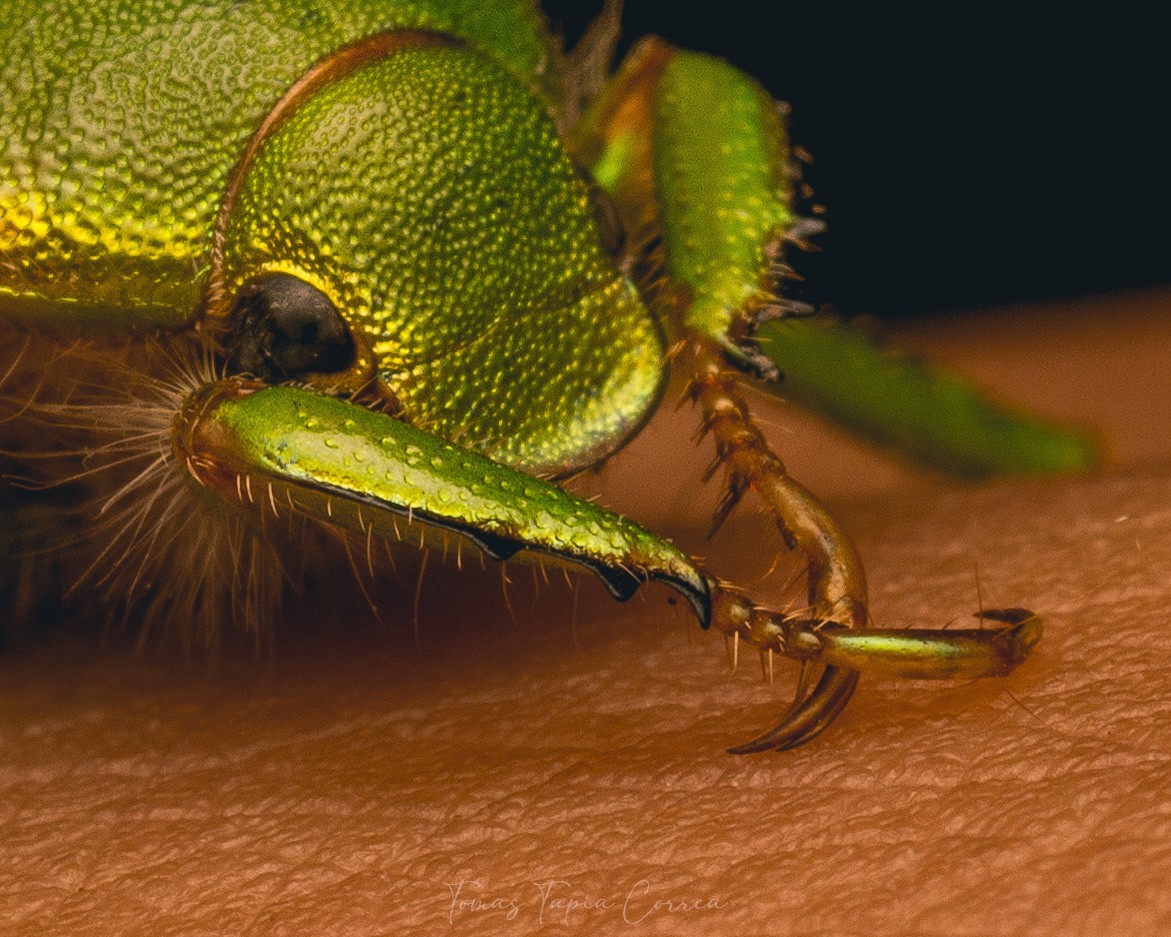
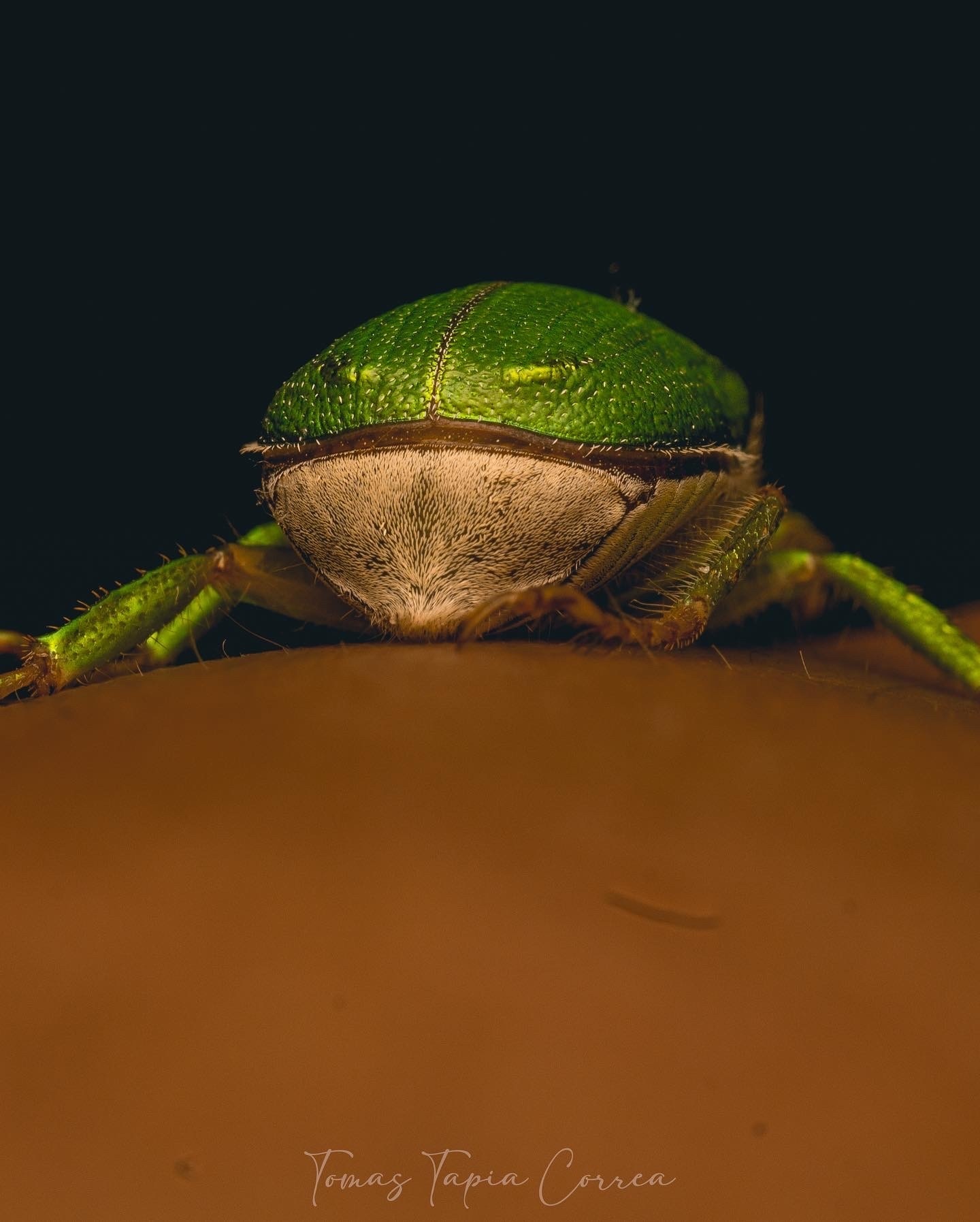
Adult. Body length variable, shape somewhat flattened to highly vaulted. Color of head, pronotum, and elytra light to dark apple green with metallic silver, bronze, or orange reflection usually present at apex of clypeus, mesad of each eye, on lateral margin of pronotum, and on humeral and apical elytral umbones; occasionally color varies to light brown or pale greenish yellow. Head surface entirely, densely rugopunctate (in smaller, darker specimens) or densely punctate (in larger, lighter specimens). Interocular width equals 5.0–5.7 transverse eye diameters. Antenna with 10 segments; club slender, slightly longer than segments 2–7 in male, subequal to segments 2–7 in female. Pronotum surface densely punctate to rugopunctate, punctures larger than on head. Elytra with intervals bearing sparse, small punctures, some with setae; epimeron broad below humerus, gradually narrowing posteriorly, with sparse, long, white setae. Pygidium surface densely and finely rugopunctate, usually obscured by dense setae (often less so in females), with small tuft of longer setae at apex in center. Thoracic sternites with dense, long, creamy white setae. Abdominal sternites with dense, elongated, scale-like setae. Legs with posterior edges of femora bearing moderately dense, long setae; protarsal segment 5 with small, median tooth on ventral side in basal half, segment subequal in length to segments 1–4 in male, slightly shorter in female.
Plazi taxonomic treatment
Host Plants (0 host plants)
Data sources: EPPO Global Database and relevant literature.
No host plants available.
Quarantine Status (1 records)
Data sources: IPPC website and national quarantine websites; verified by human review.
| Country | Status | Year Added |
|---|---|---|
| United States of America | Quarantine pests | — |
Distribution (2 countries)
Data Sources: EPPO Global Database and GBIF.
Distribution Map (Latitude and longitude coordinates sourced from GBIF.)
Download CSVGenomes (0 records)
Data source: NCBI.
No genome records available.
Transcriptomes (3 records)
Data source: NCBI.
| Run ID | Tissue | Developmental Stage | Sex | Read Count | Location | Actions |
|---|---|---|---|---|---|---|
| SRR6955758 | Palpi | - | female | 27846353 | Chile: Freire | |
|
PRJNA448778 SRX3898806 SRP137879 insect RNAseq of Hylamorpha elegans, female palpi Total RNA extracted from tissue Adults, females {'sex': 'female', 'tissue': 'Palpi', 'isolate': 'Adults, females', 'geo_loc_name': 'Chile: Freire', 'biosamplemodel': 'Invertebrate', 'collection_date': '2016', 'isolation_source': 'Maquehue experimental station field'} |
||||||
| SRR6955757 | Antenna | - | male | 47048639 | Chile: Freire | |
|
PRJNA448778 SRX3898807 SRP137879 insect RNAseq of Hylamorpha elegans, male antenna Total RNA extracted from tissue Adults, males {'sex': 'male', 'tissue': 'Antenna', 'isolate': 'Adults, males', 'geo_loc_name': 'Chile: Freire', 'biosamplemodel': 'Invertebrate', 'collection_date': '2016', 'isolation_source': 'Maquehue experimental station field'} |
||||||
| SRR6955756 | Antenna | - | female | 45896912 | Chile: Freire | |
|
PRJNA448778 SRX3898808 SRP137879 insect RNAseq of Hylamorpha elegans, female antenna Total RNA extracted from tissue Adults, females {'sex': 'female', 'tissue': 'Antenna', 'isolate': 'Adults, females', 'geo_loc_name': 'Chile: Freire', 'biosamplemodel': 'Invertebrate', 'collection_date': '2016', 'isolation_source': 'Maquehue experimental station field'} |
||||||
DNA Barcodes (23 records)
View allData source: BOLD.
| Process ID | BIN | Marker | Length | Country | Date | Lat/Lon | Sequence |
|---|---|---|---|---|---|---|---|
| CNCCC366-11 | BOLD:ADL2747 | COI-5P | 407 | Chile | 1967-12-29 | -35.733593, -71.54775 | |
| CNCCC364-11 | BOLD:ADL2747 | COI-5P | 407 | Chile | 1976-12-26 | -35.733593, -71.54775 | |
| ASBTL861-18 | - | COI-5P | 266 | Chile | 2005-09-11 | - | |
| ASBTL768-18 | - | COI-5P | 216 | Chile | 2006-01-22 | -35.83364, -72.51028 | |
| ASBTL477-05 | BOLD:ADL2747 | COI-5P | 656 | Chile | 2004-12-09 | -35.733593, -71.54775 | |
| ASBTL476-05 | BOLD:ADL2747 | COI-5P | 656 | Chile | 2004-12-08 | - | |
| ASBTL475-05 | BOLD:ADL3142 | COI-5P | 657 | Chile | 2004-12-04 | -35.733593, -71.54775 | |
| ASBTL474-05 | BOLD:ADL2749 | COI-5P | 657 | Chile | 2004-11-27 | -35.733593, -71.54775 | |
| ASBTL436-05 | BOLD:ADL3142 | COI-5P | 657 | Chile | 2004-03-07 | - | |
| ASBTL049-05 | BOLD:ADL2553 | COI-5P | 658 | Chile | 2001-12-17 | -35.733593, -71.54775 |
Literature
Fetching literature from NCBI PubMed...
Failed to fetch literature