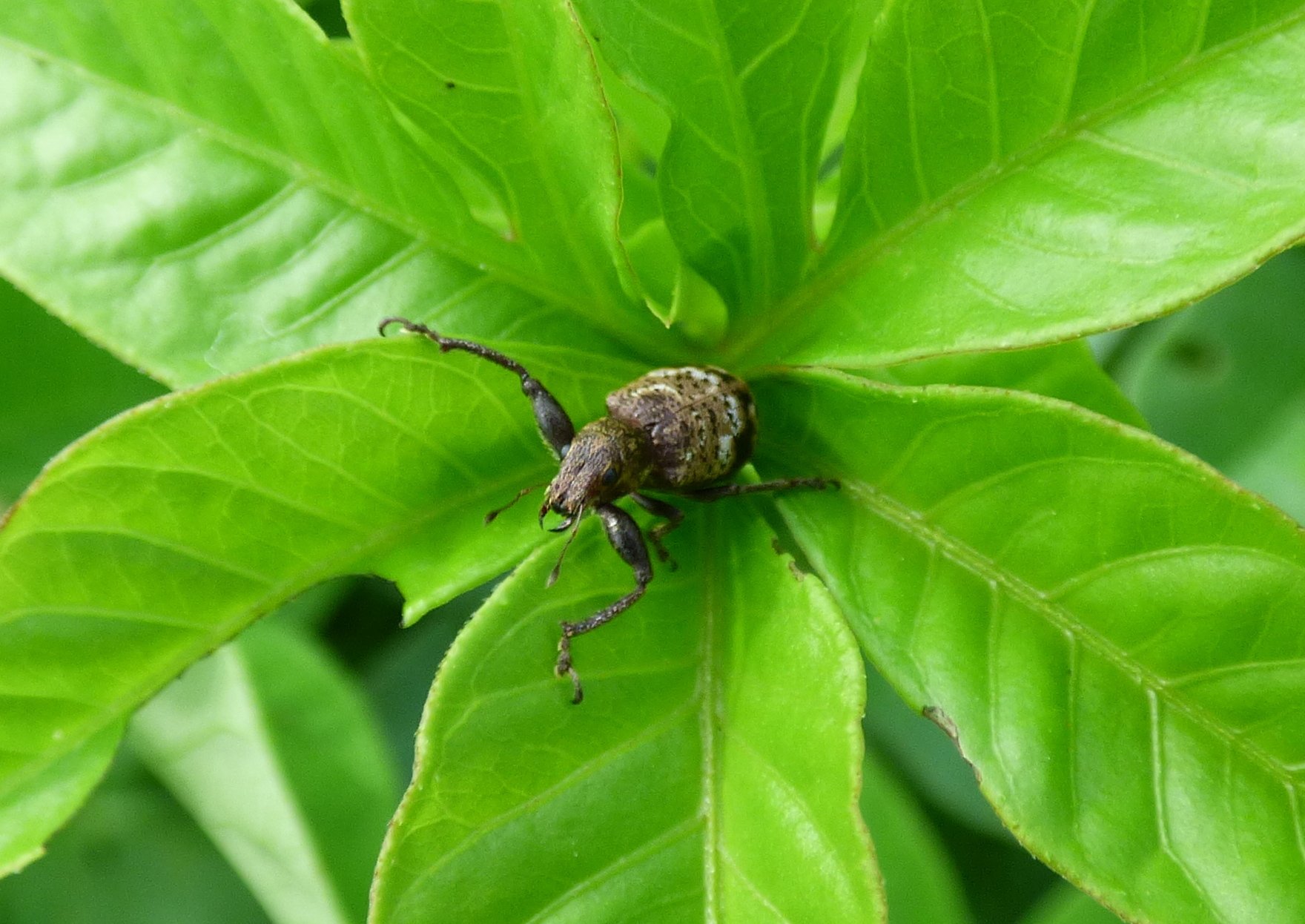
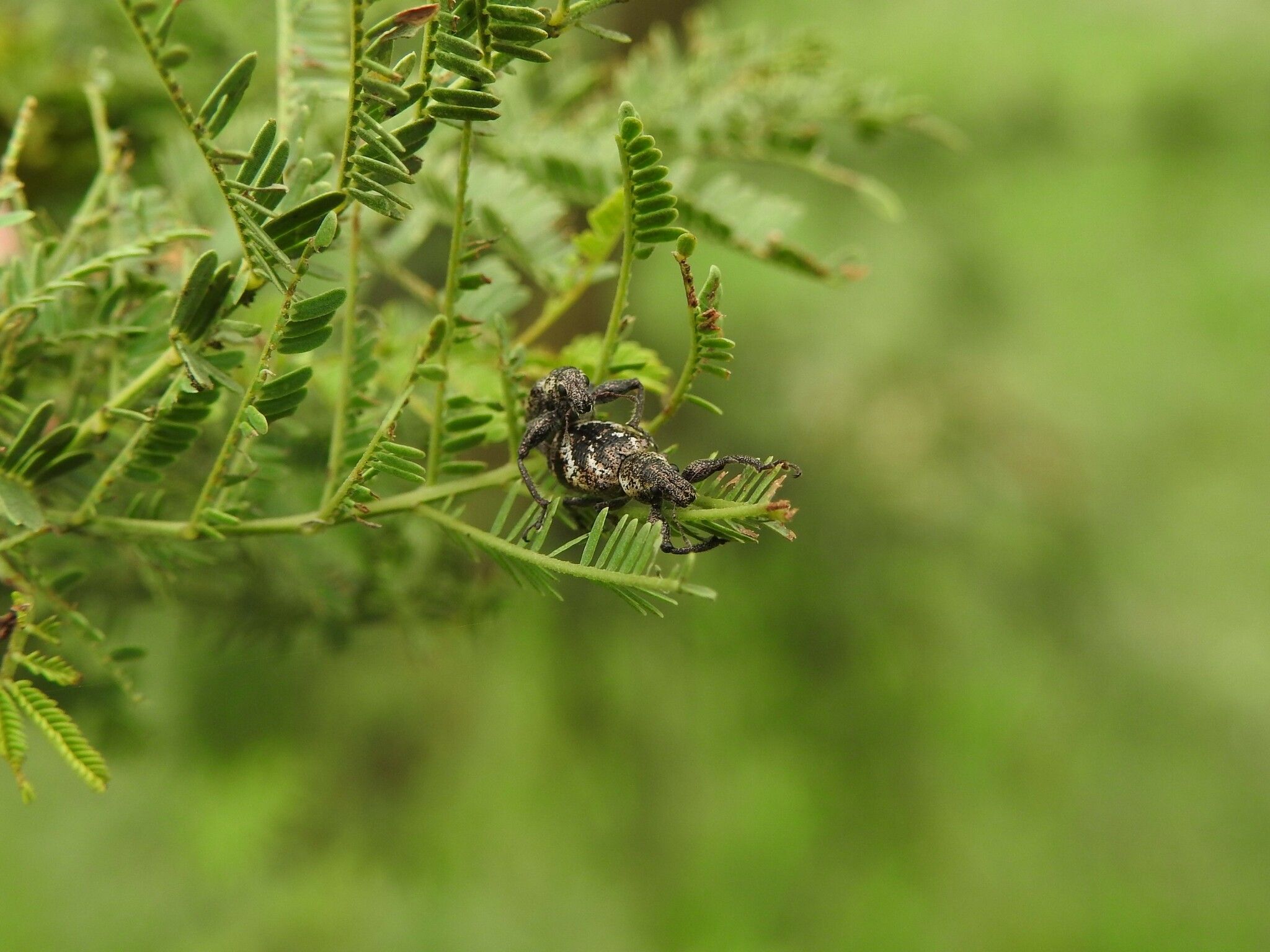
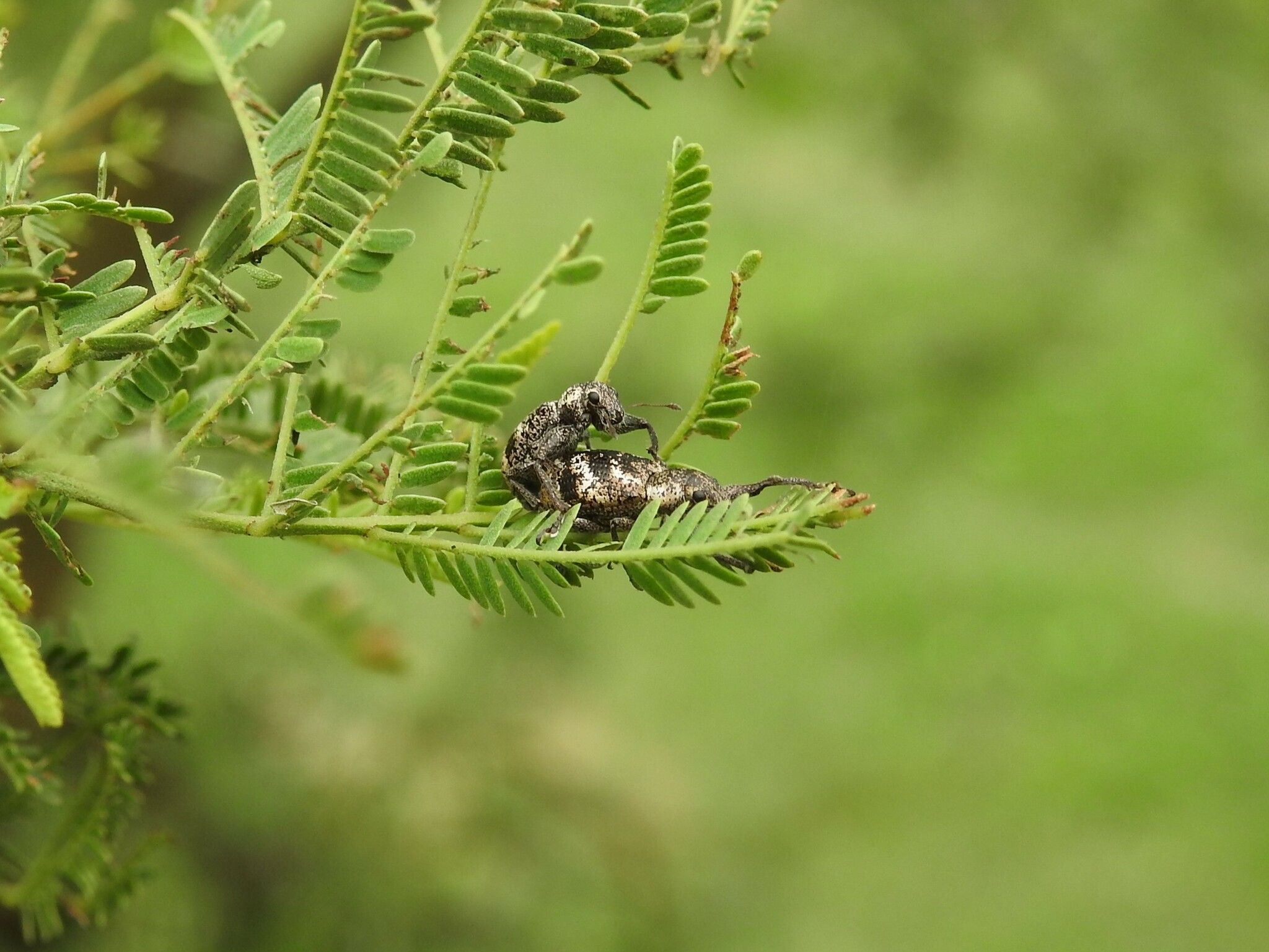
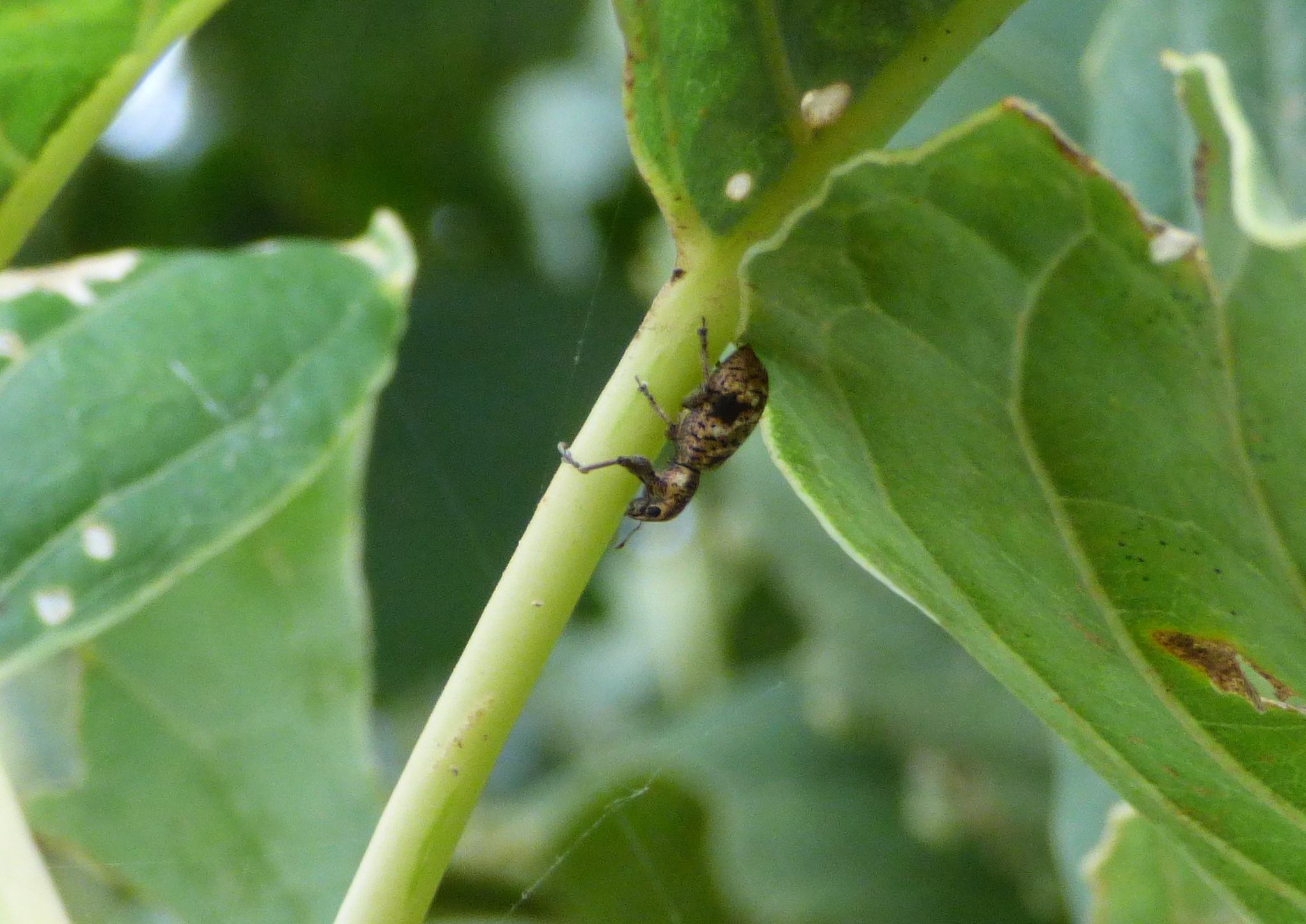
Body length 4–5 mm; color black, except antennae and tarsi reddish brown. Frons flat, broadly, shallowly foveate at middle just anterior to eyes. Eye separated from anterior margin of pronotum by about 2/3 its own diameter. Antennal scape in resting position reaching posterior margin of eye; funicle with article 1 subequal in length to article 2. Side of head below eye with small patch of small, fine white-blue scales of various sizes and shapes. Pronotum approximately as wide as long, sides in dorsal view almost straight, constricted apically and basally. Elytra elongate and slender, about 3× longer than width across humeri, slightly more than 3× longer than pronotum; across humeri only slightly wider than across base of pronotum; striae represented by linearly arranged punctures, not impressed; edges smooth, with scattered, moderately long, wispy setae in apical 1/3 and across truncate apex; ventral surface at apex without raised carina but with oblique line extended from sutural apex to lateral margin at apical 1/5 of elytral length, demarcating inner microsculptured area and outer glabrous, shiny area. Fore femur distinctly enlarged, wider than middle or hind femur, smooth basally, becoming longitudinally striate distally, without punctures; inner edge with moderately large, subapical acuminate tooth. Middle tibia on inner edge with very small, indistinct teeth; middle and hind femora lacking tooth, inner edge smooth. Wings about one-half length of elytra in female, about one-fifth in male. Ventrites 1 and 2 slightly longer than 3 and 4, 5 slightly longer than 3 and 4 combined; all with moderately dense, suberect, moderately long setae directed posteriad; ventrite 5 slightly longer than wide, setae slightly denser at apical margin at middle, apex truncate to very slightly broadly emarginate in male. Aedeagal apodemes very short, approximately 1/6 total length of aedeagus; tegminal strut slightly more than twice length of aedeagal apodeme. Spermatheca slender, nodulus and ramus proximal, cornu elongate slender, strongly curved.
Source: GBIF
Life Stage: Adult
Source Type: Taxonomic treatment