Iridomyrmex purpureus
TaxID: 561532
Basic Information
Iridomyrmex purpureus
Meat Ant
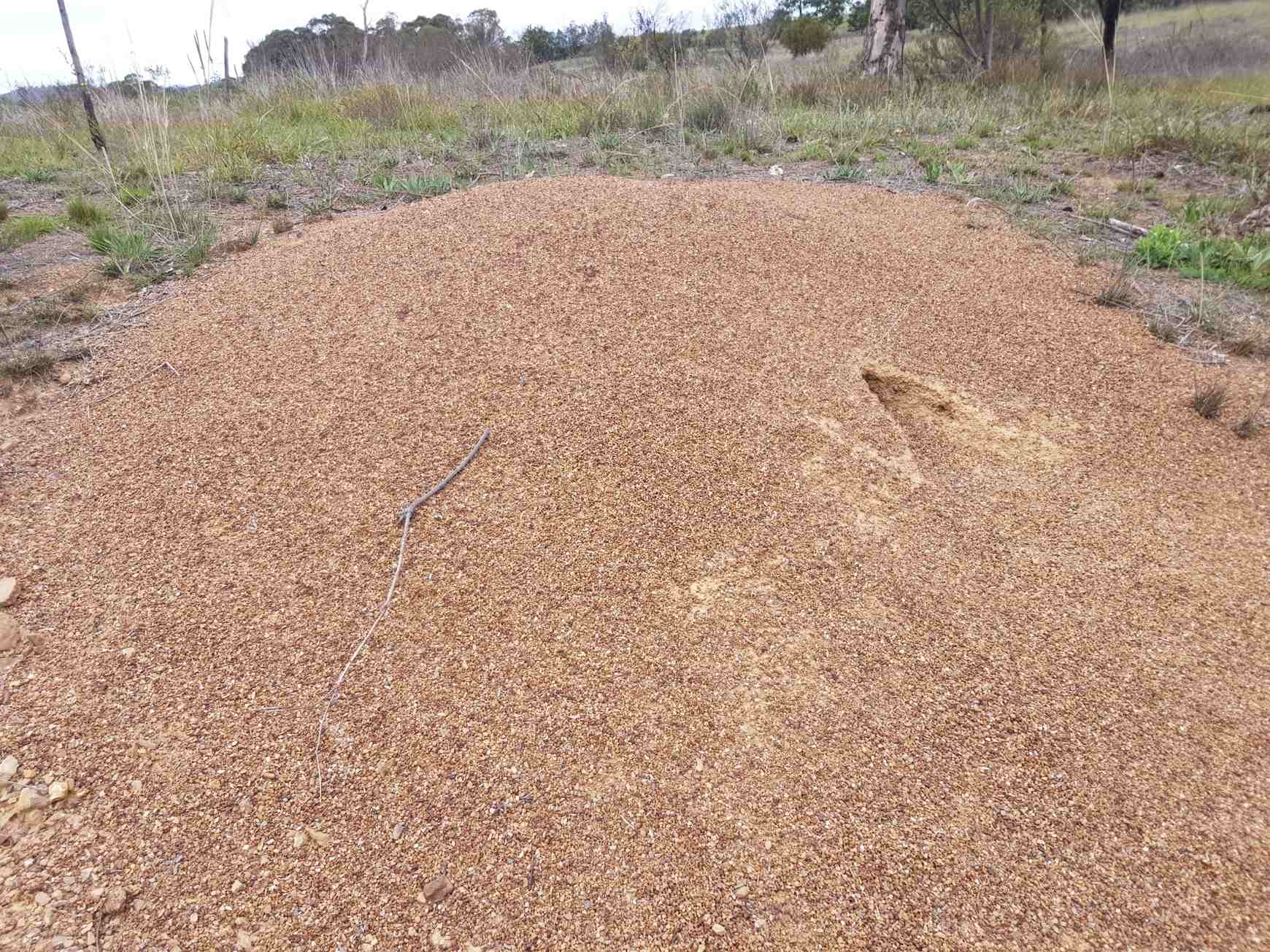
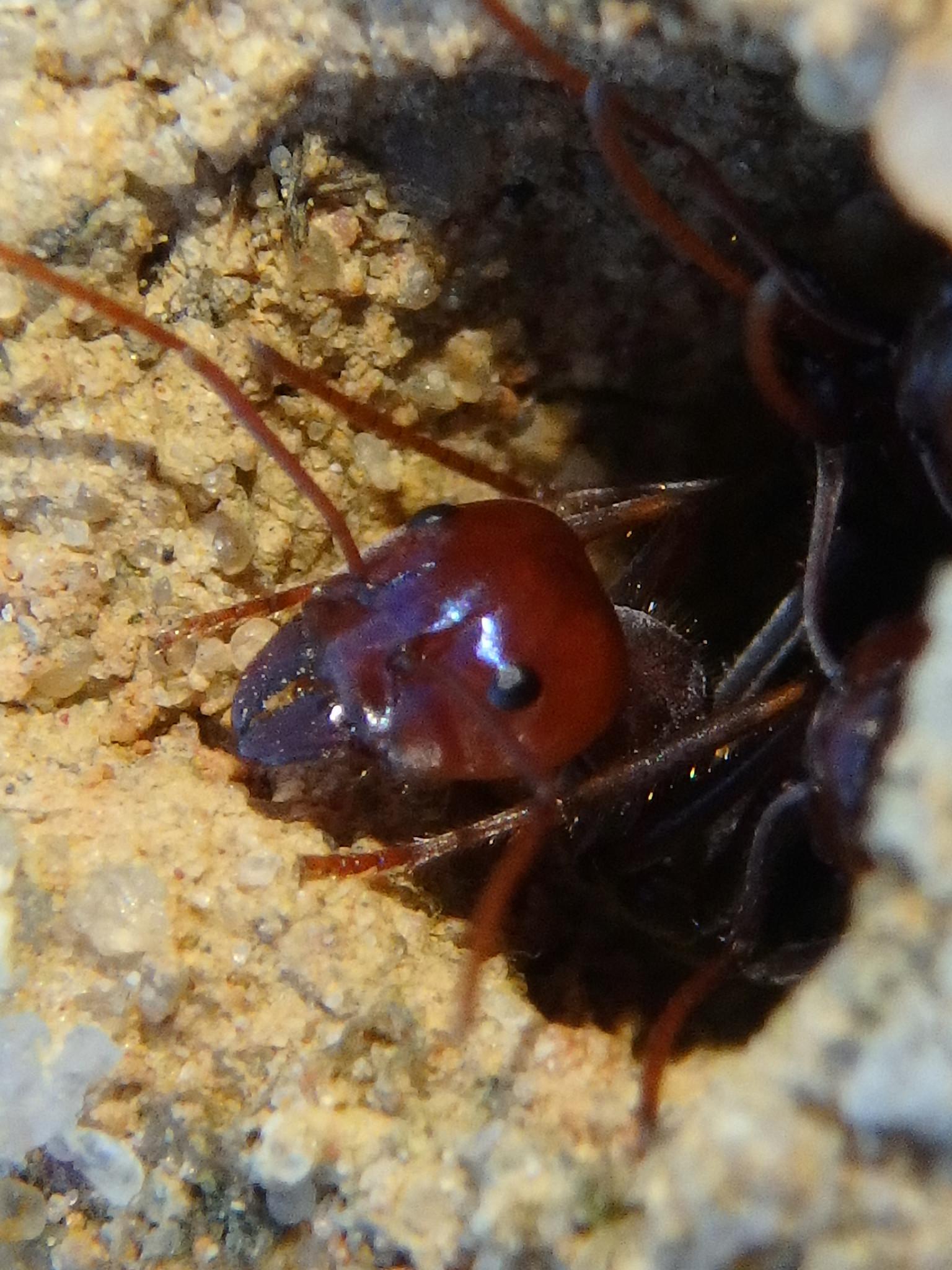
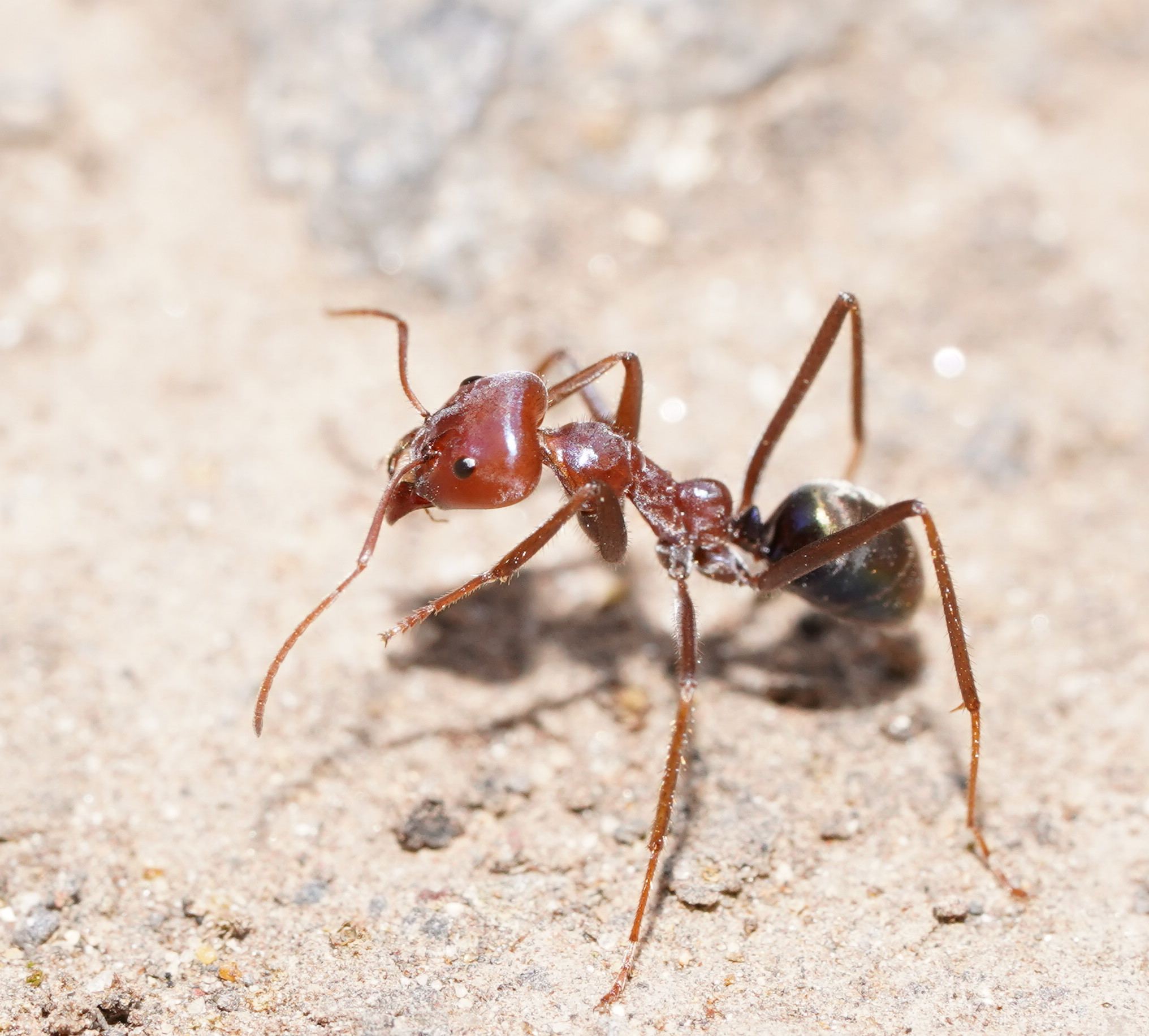
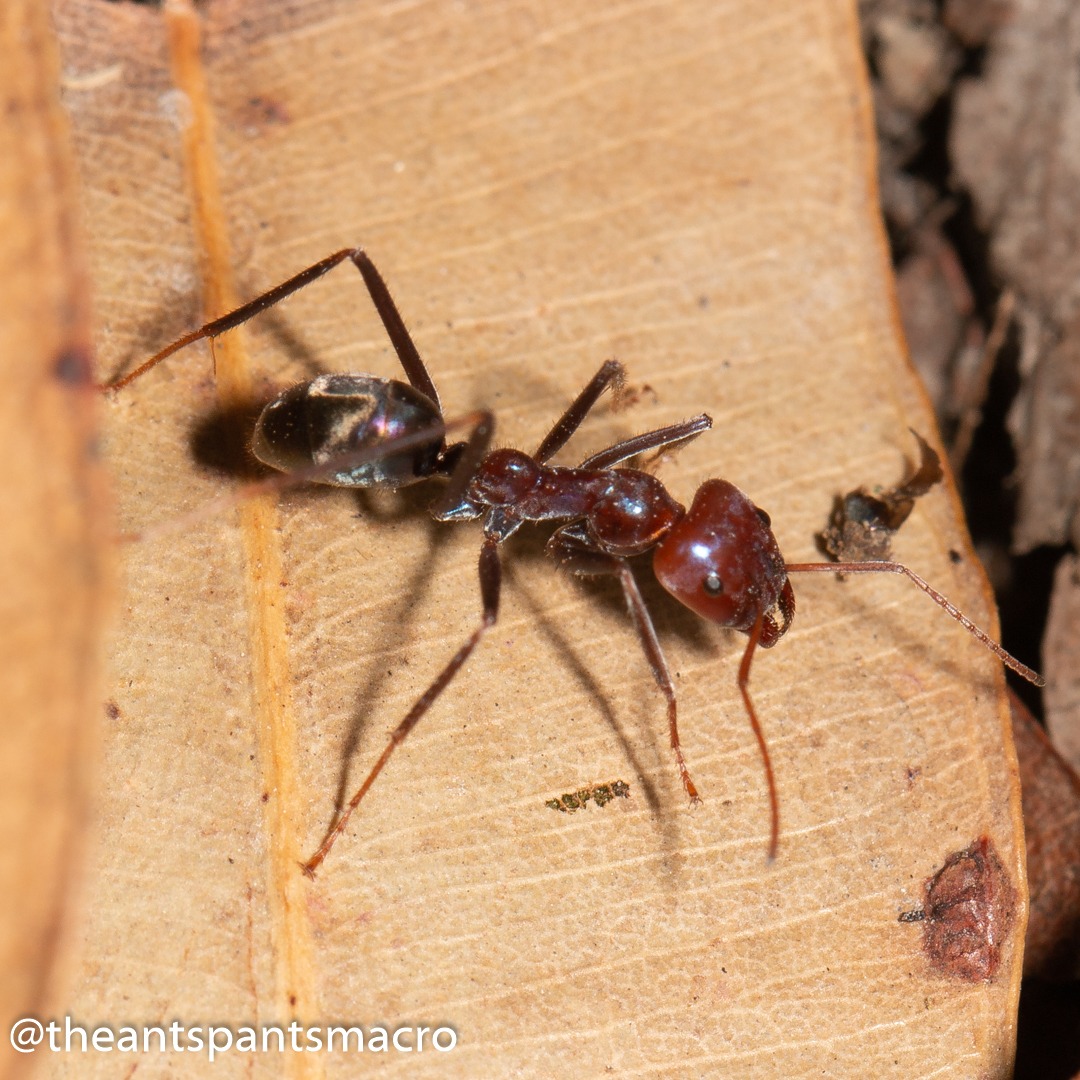
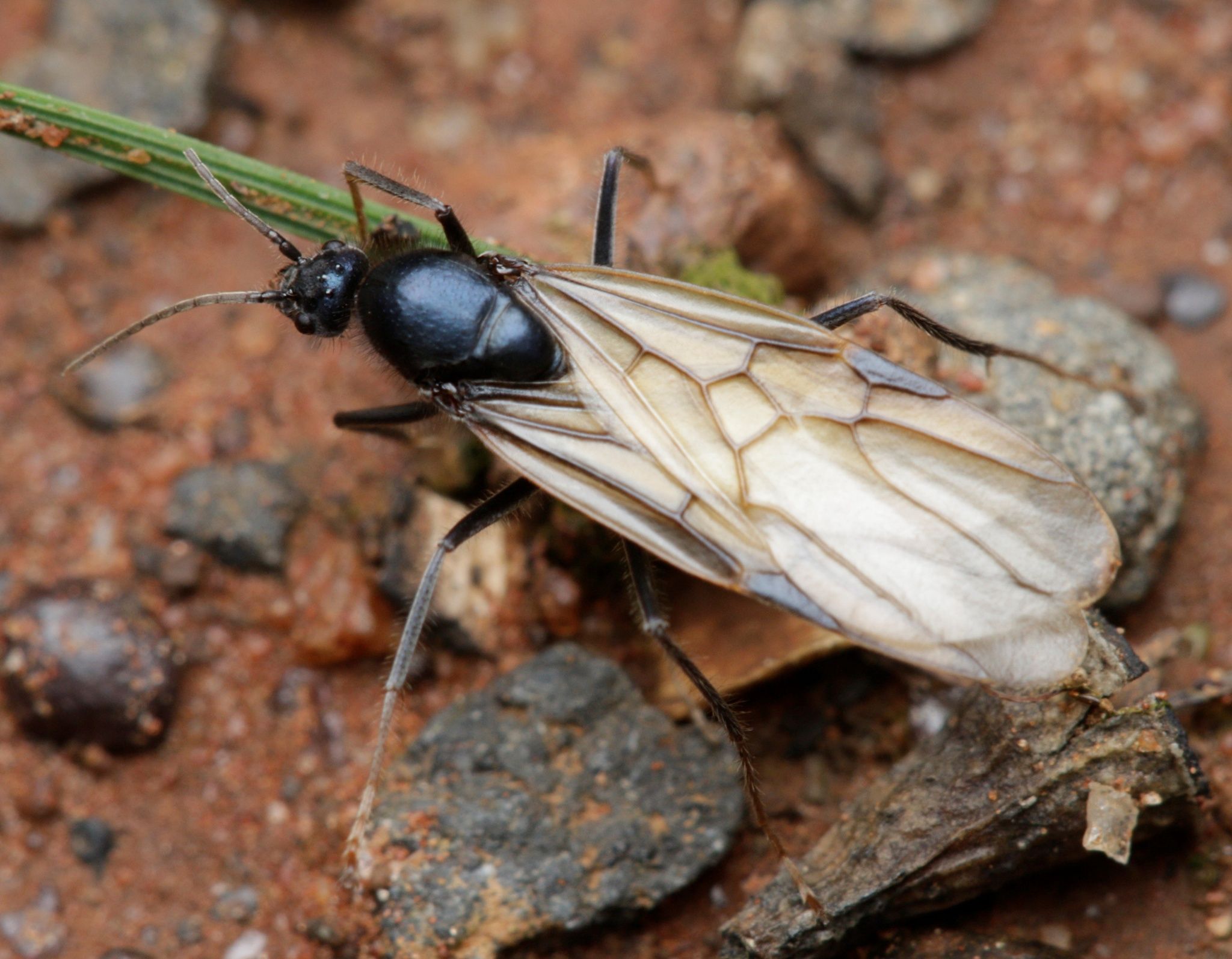
The meat ant (Iridomyrmex purpureus), also known as the gravel ant or southern meat ant, is a species of ant endemic to Australia. A member of the genus Iridomyrmex in the subfamily Dolichoderinae, it was described by British entomologist Frederick Smith in 1858. The meat ant is associated with many common names due to its appearance, nest-building behaviour and abundance, of which its specific name, purpureus, refers to its coloured appearance. It is among the best-known species of ant found throughout Australia; it occurs in almost all states and territories except for Tasmania. Its enormous distribution, aggression and ecological importance have made this ant a dominant species. The meat ant is monomorphic (occurs in a particular form), although there is evidence that certain populations can be polymorphic. It is characterised by its dark-bluish body and red head. It is a medium to large species, measuring 6 C12 mm (0.24 C0.47 in). The workers and males are approximately the same sizes at 6 C7 mm (0.24 C0.28 in) and 8 mm (0.31 in), respectively. The queens are the largest and appear mostly black, measuring 12.7 mm (0.50 in). The iridescence in workers ranges from green or blue to plain green and purple, varying in different body parts and castes. Meat ants inhabit open and warm areas in large, oval-shaped mounds that are accompanied by many entrance holes. The nest area is always cleared of vegetation and covered with materials including gravel, pebbles and dead vegetation. They are also polydomous, where a colony may be established in a series of satellite nests connected by well-defined paths and trails. Satellite nests are constructed away from the main nest and nearby areas with valuable food sources so workers can exploit them. Queens mate with a single male and colonies may have more than one queen until the workers arrive, where they both exhibit antagonism. It takes around one or two months for an individual egg to develop into an adult. Colonies range in size, varying between 11,000 individuals to over 300,000. The meat ant is a diurnal species (active throughout most of the day), especially when it is warm. It forages on trees and collects sweet substances such as honeydew and nectar, and also captures insects or collects the remains of animals. A number of predators eat these ants, including the short-beaked echidna (Tachyglossus aculeatus), numerous species of birds, blind snakes and spiders. This species is also a competitor of the banded sugar ant (Camponotus consobrinus). Meat ants establish territorial borders with neighbouring colonies and solve disputes through ritualised fighting. Meat ants play an important role in both the environment and for humans. A single nest is capable of dispersing over 300,000 plant seeds; moreover, meat ants have formed symbiotic relationships with many insects. This ant may be used as a form of pest control to kill the cane toad, an invasive species. They can also help farmers to remove animal carcasses by consuming and reducing them to bones in a matter of weeks. Despite this, meat ants are sometimes pests around urban areas and eradicating them is difficult.
from Wikipedia
Taxonomic Information
Eukaryota
Arthropoda
Insecta
Hymenoptera
Formicidae
Iridomyrmex
purpureus
nan
Species
nan
k__Eukaryota;p__Arthropoda;c__Insecta;o__Hymenoptera;f__Formicidae;g__Iridomyrmex;s__Iridomyrmex purpureus
nan
Arthropods
Photos (5 photos)
Morphological Features
Worker. Head and often pronotum orange to brick-red; mesonotum and propodeum lighter than, concolorous with, or darker than head; gaster brown to black; legs orange to brown. Foreparts with bluish, pink, pale greenish-yellow or purple iridescence; gaster with greenish, bluish or purple iridescence. Mandible elongate triangular with oblique basal margin. Antennal scape surpassing posterior margin of head by approximately 2–3× its diameter. In full-face view, eyes set above midpoint of head capsule; erect genal setae present or absent on sides of head (one to a few small setae may be present near mandibular insertion). Erect setae on posterior margin in full-face view set in a row. Erect pronotal, mesonotal, and propodeal setae numerous (12 or more), short and bristly. Propodeal dorsum protuberant or smoothly and evenly convex. Non-marginal and marginal erect setae of gaster present on first gastral tergite.
Plazi taxonomic treatment
Host Plants (0 host plants)
Data sources: EPPO Global Database and relevant literature.
No host plants available.
Quarantine Status (1 records)
Data sources: IPPC website and national quarantine websites; verified by human review.
| Country | Status | Year Added |
|---|---|---|
| Republic of Korea | Quarantine pests | — |
Distribution (2 countries)
Data Sources: EPPO Global Database and GBIF.
| Country | Status | State |
|---|---|---|
| Australia | Present | — |
| United States of America | Present | — |
Distribution Map (Latitude and longitude coordinates sourced from GBIF.)
Download CSVGenomes (0 records)
Data source: NCBI.
No genome records available.
Transcriptomes (0 records)
Data source: NCBI.
No transcriptome records available.
DNA Barcodes (35 records)
View allData source: BOLD.
| Process ID | BIN | Marker | Length | Country | Date | Lat/Lon | Sequence |
|---|---|---|---|---|---|---|---|
| MCCAA8382-20 | BOLD:AAW8829 | COI-5P | 654 | Australia | 2011-04-10 | -35.275, 149.111 | |
| IELFK272-20 | BOLD:AAW8829 | COI-5P | 658 | Australia | 2018-03-12 | -35.062, 139.123 | |
| IELFK226-20 | BOLD:ACD4399 | COI-5P | 658 | Australia | 2019-04-30 | -12.25, 130.554 | |
| IELFK215-20 | BOLD:ACD4399 | COI-5P | 658 | Australia | 2018-04-09 | -14.496, 132.182 | |
| IELFK205-20 | BOLD:ACD4399 | COI-5P | 658 | Australia | 2018-08-01 | -14.295, 132.161 | |
| IELFK204-20 | BOLD:ABX8531 | COI-5P | 658 | Australia | 2018-03-15 | -34.212, 139.291 | |
| IELFK181-19 | BOLD:AAW8829 | COI-5P | 658 | Australia | 2018-11-15 | -32.46676, 137.74265 | |
| IELFK178-19 | BOLD:AAW8829 | COI-5P | 637 | Australia | 2018-11-16 | -30.311472, 139.33719 | |
| IELFK175-19 | BOLD:AAW8829 | COI-5P | 658 | Australia | 2018-11-16 | -30.311472, 139.33719 | |
| IELFK168-19 | BOLD:AAW8829 | COI-5P | 658 | Australia | 2018-12-07 | -30.4477, 151.825 |
Literature
Fetching literature from NCBI PubMed...
Failed to fetch literature