Exophthalmus quadrivittatus
TaxID: 1069502
Basic Information
Exophthalmus quadrivittatus
Broad-nosed Weevil
nan
from Wikipedia
Taxonomic Information
Eukaryota
Arthropoda
Insecta
Coleoptera
Curculionidae
Exophthalmus
quadrivittatus
nan
Species
nan
k__Eukaryota;p__Arthropoda;c__Insecta;o__Coleoptera;f__Curculionidae;g__Exophthalmus;s__Exophthalmus quadrivittatus
nan
Arthropods
Photos (5 photos)
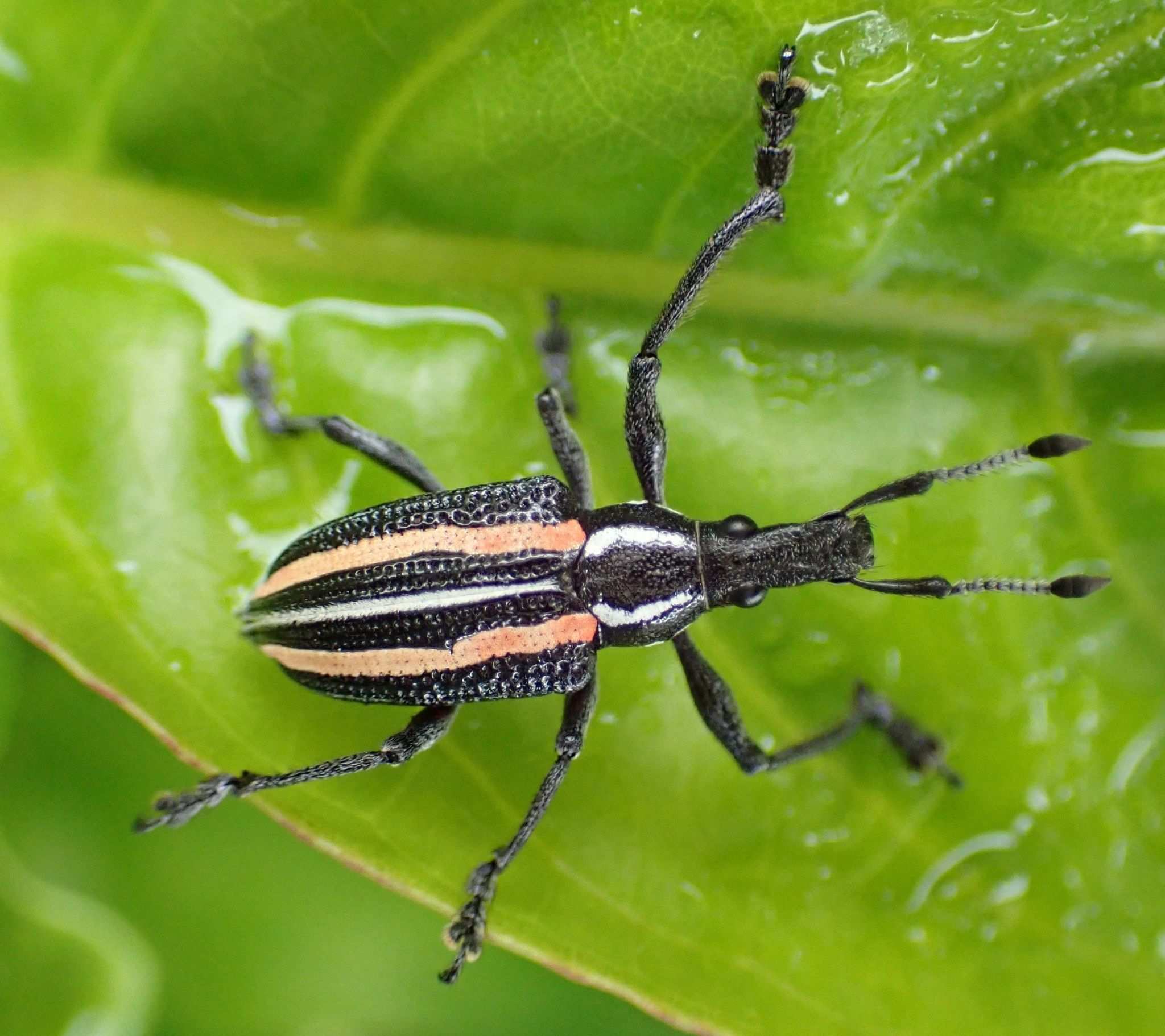
Morphological Features
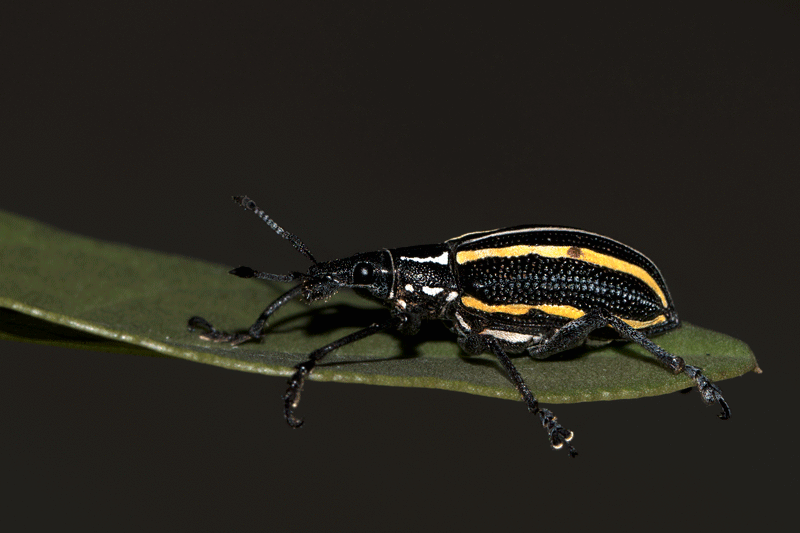
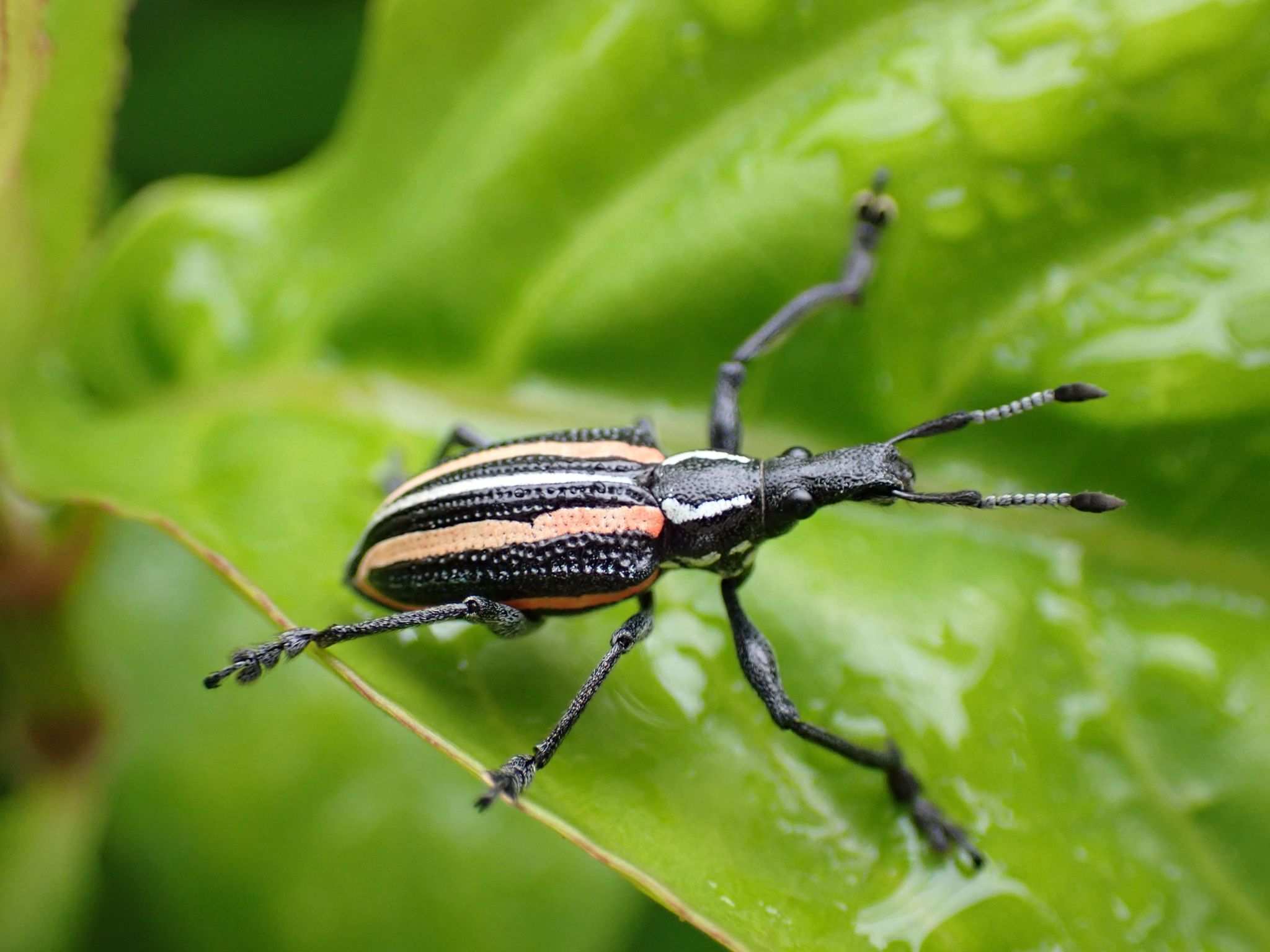
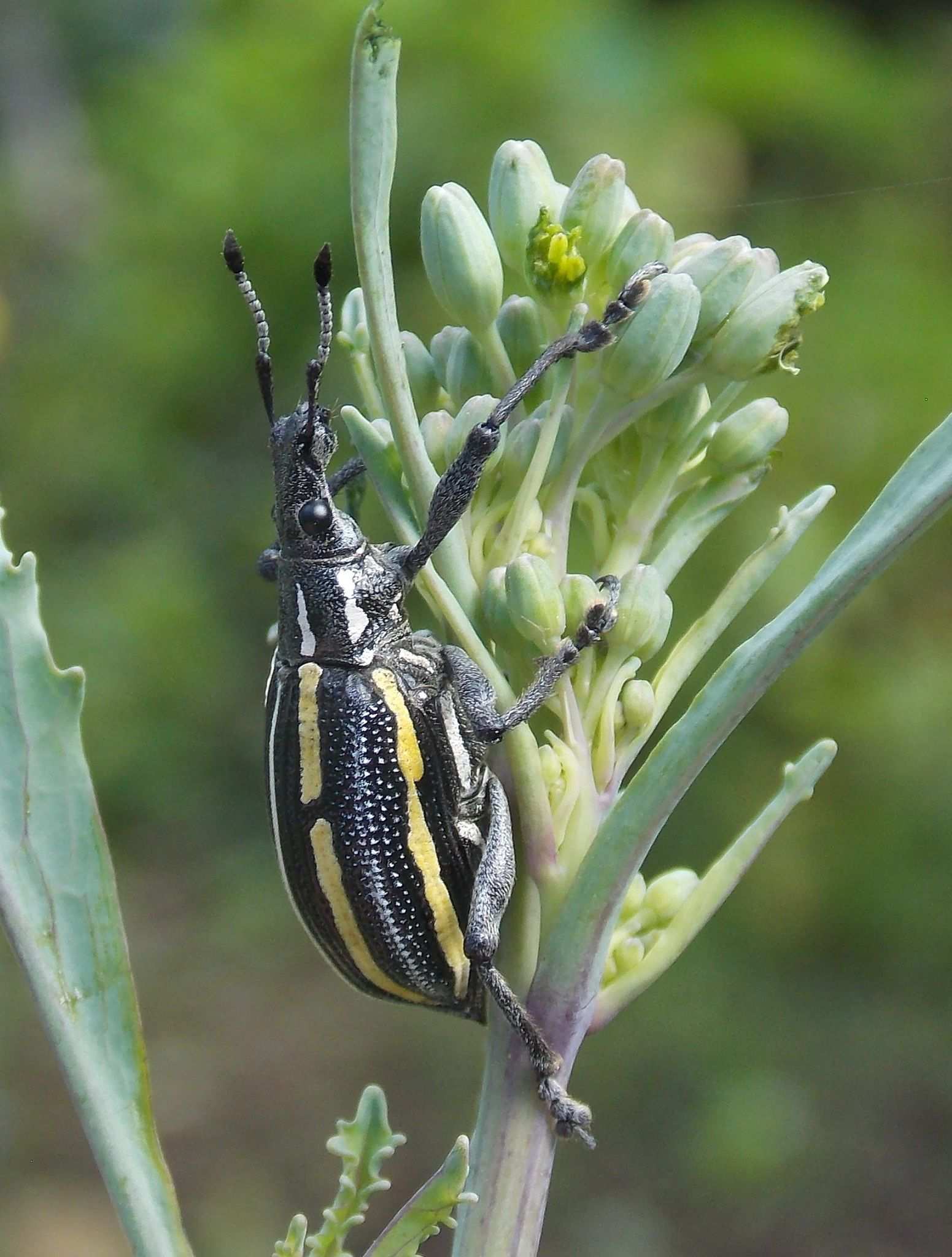
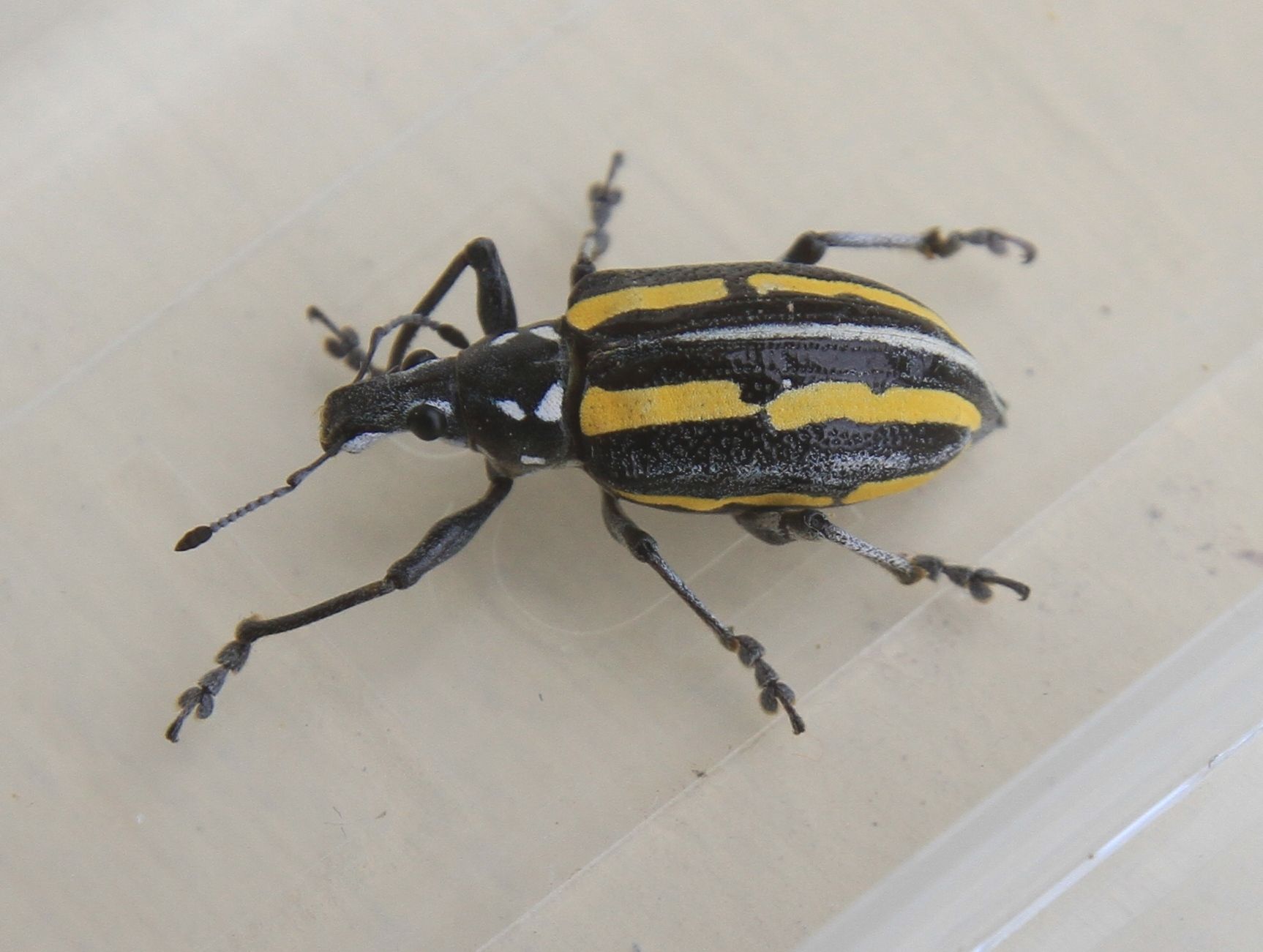
Male. Length 1.52–3.54 mm. Body oval to elongate, length/width ratio 2.52–2.67. Scales with multiple colours variously interspersed, forming distinct patterns; typically darker (brownish) dorsally on head, pronotum, and elytra, lighter (white to reddish brown) laterally, ventrally, and on legs. Rostrum rectangular in dorsal outline, dorsolateral margins subparallel, slightly widened at antennal insertion, anteriorly carinate, posteriorly convex; dorsal surface subplane, rugulose, with two obscure, anteriorly diverging carinae, median sulcus extending from antennal insertion to midpoint between eyes. Scrobe arcuate, extending to anterior margin of eye, glabrous. Antennae with scape extending to posterior margin of eye, covered exclusively with setae; funicular antennomeres progressing from elongate to equilateral, from clavate to cylindrical; club similar in length to funicular antennomeres IV–VII, nearly three times longer than width, dark brown. Eyes separated from anterolateral margin of pronotum by distance similar to horizontal diameter of eye, interocular distance similar to maximum width of eye. Pronotum equilateral to transverse, length/width ratio 0.79–0.89; in lateral view subquadrate to conical; scales evenly appressed, with two subparallel, slightly irregular stripes of white scales on each side along posterior two-thirds, slightly interrupted near midpoint. Elytra with greatest width at humeri or near central region; punctures narrowly separated; intervals subplane, intervals III/IV and VIII/IX covered with white scales interspersed with erect, longitudinally plicate, yellow scales forming characteristic yellow stripes, stripes merging at declivity, stripe of interval III/IV partially or entirely interrupted near anterior third. Wings with wing/body length ratio 1.14–1.22. Legs with protibial apex mucro shorter than tarsal claw, surpassed by 2–3 groups of reddish brown setae.
Plazi taxonomic treatment
Host Plants (0 host plants)
Data sources: EPPO Global Database and relevant literature.
No host plants available.
Quarantine Status (1 records)
Data sources: IPPC website and national quarantine websites; verified by human review.
| Country | Status | Year Added |
|---|---|---|
| United States of America | Quarantine pests | — |
Distribution (3 countries)
Data Sources: EPPO Global Database and GBIF.
| Country | Status | State |
|---|---|---|
| Dominican Republic | Present | — |
| Haiti | Present | — |
| United States of America | Present | — |
Distribution Map (Latitude and longitude coordinates sourced from GBIF.)
Download CSVGenomes (0 records)
Data source: NCBI.
No genome records available.
Transcriptomes (0 records)
Data source: NCBI.
No transcriptome records available.
DNA Barcodes (2 records)
View allData source: BOLD.
| Process ID | BIN | Marker | Length | Country | Date | Lat/Lon | Sequence |
|---|---|---|---|---|---|---|---|
| SICOA1093-18 | BOLD:ABA0256 | COI-5P | 658 | Dominican Republic | 1980-12-26 | - | |
| GBCL7217-11 | BOLD:ABA0256 | COI-5P | 1000 | Dominican Republic | 2008-06-12 | 18.5, -71.36 |
Literature
Fetching literature from NCBI PubMed...
Failed to fetch literature