Tetramorium tonganum
TaxID: 628929
Basic Information
Tetramorium tonganum
Ant
Tetramorium tonganum is a species of ant in the subfamily Myrmicinae. It is found in Australasian, Indo-Australian, Oriental, and Palaearctic regional countries.
from Wikipedia
Taxonomic Information
Eukaryota
Arthropoda
Insecta
Hymenoptera
Formicidae
Tetramorium
tonganum
nan
Species
nan
k__Eukaryota;p__Arthropoda;c__Insecta;o__Hymenoptera;f__Formicidae;g__Tetramorium;s__Tetramorium tonganum
nan
Arthropods
Photos (5 photos)
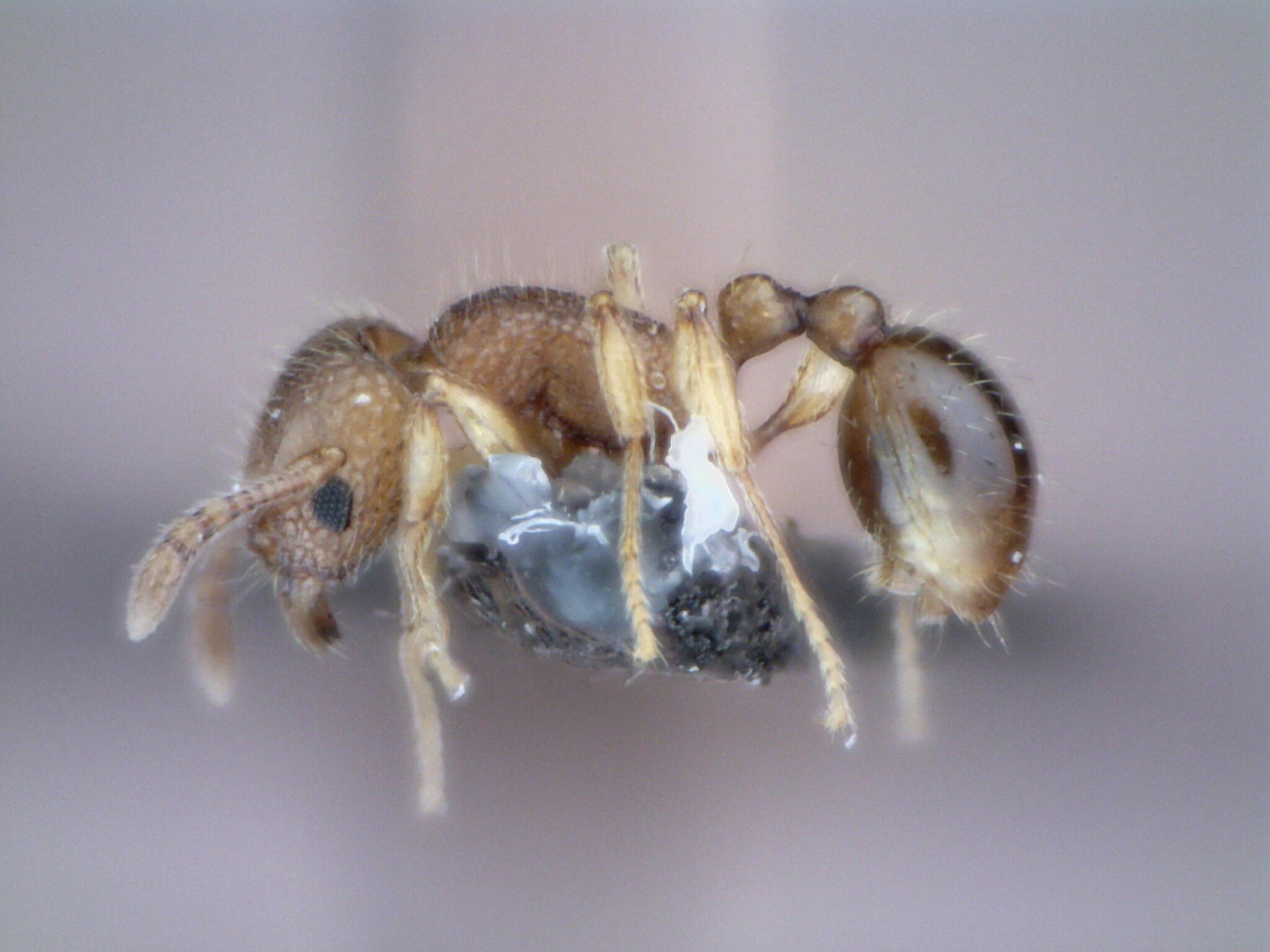
Morphological Features
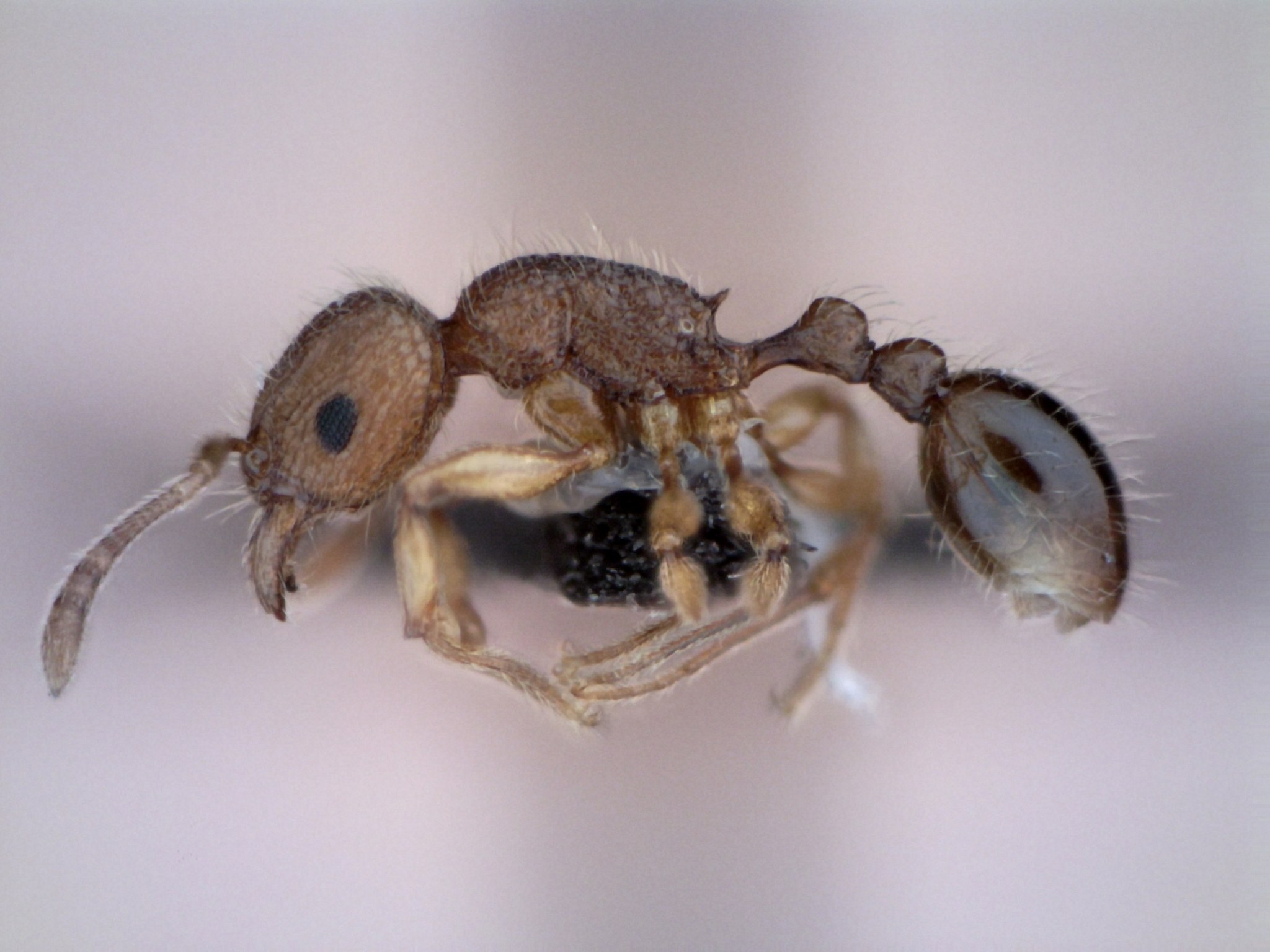
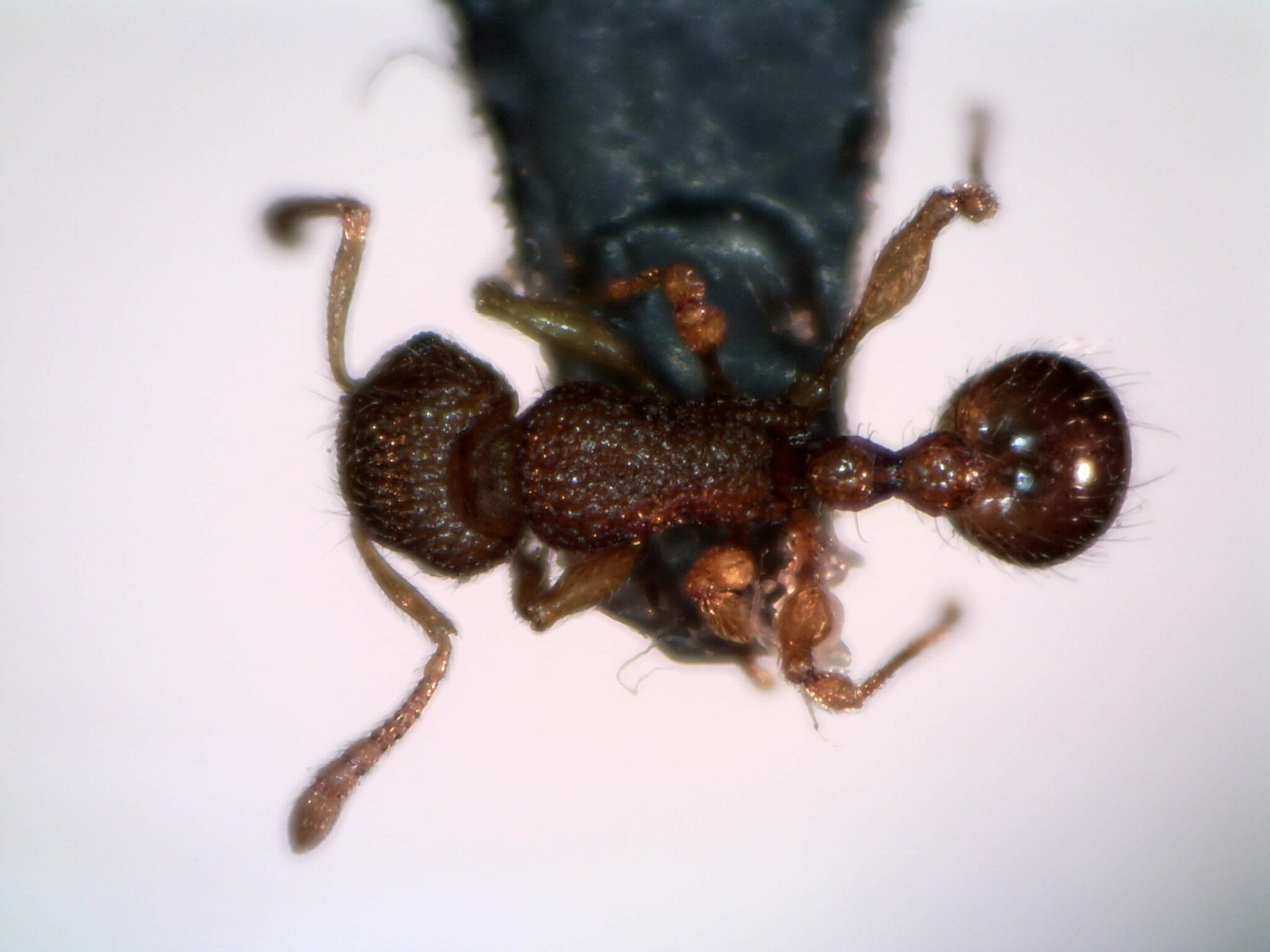
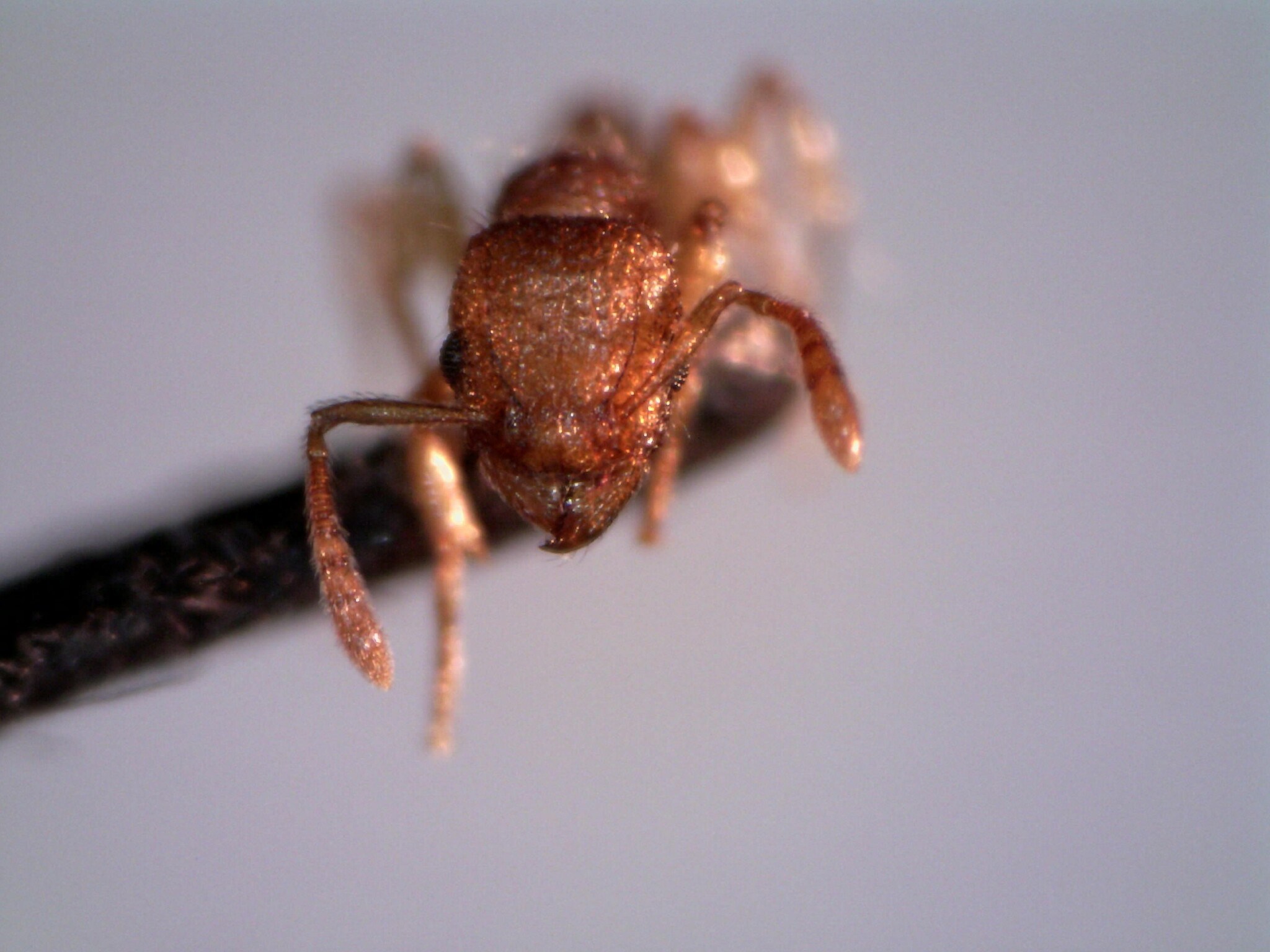
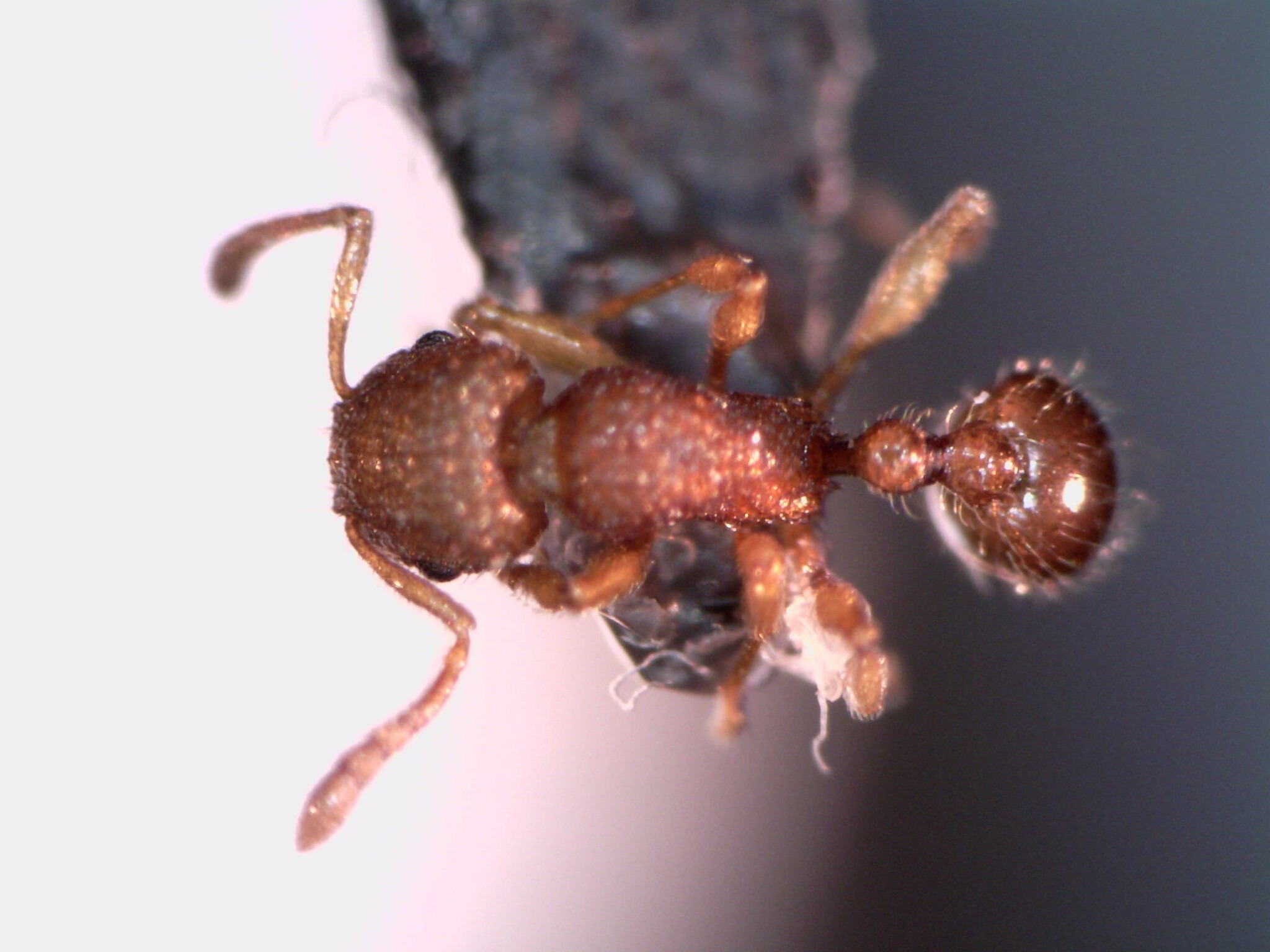
Worker: Head slightly longer than broad, sides convex, posterior head margin straight or weakly convex. Head longitudinally rugose with few cross-meshes up to vertex, posteriorly reticulate, interrugal space punctured and shiny. Clypeus convex, anterior margin entire, convex with a narrow transverse plate-like fringe, not impressed medially. Scape short, not reaching posterior head margin, about 0.5× head length. Eyes moderate, located laterally at about mid-length of head, composed of ca. 10–12 ommatidia in a series along maximum length. Mesosoma longer than head, broader anteriorly than posteriorly, dorsum convex. Propodeal spines present. Petiolar node transverse, broad. Propodeal declivity and gaster smooth and shiny; legs smooth except coxae with punctures. Body yellowish brown; first gastral tergite brownish. Queen: Head slightly longer than broad, sides almost straight with rounded posterolateral corners, slightly broader posteriorly than anteriorly; posterior head margin straight with shallow median notch. Anterior margin of clypeus entire without median notch. Scape long, just failing to reach posterior head margin. Eyes large, convex, situated laterally and more towards lower half of head. Dorsum of mesosoma flat; propodeal spines slightly longer than in worker. Petiolar node subglobular, medially sulcate shallowly; petiole longer, almost 1.4× its width. Dorsum and sides of mesosoma mostly smooth with traces of sculpture, shiny except propodeum; katepisternum smooth; base of propodeum transversally rugulose; postpetiole smooth with traces of sculpture on sides. Body yellowish brown except first gastral tergite brownish and area between ocelli blackish. Male: Head with three ocelli; eyes large, with ca. 10–12 ommatidia in a series along maximum length; dorsum of mesosoma flat; propodeal spines slightly longer; petiolar node transverse, broad; pronotum reticulate.
Plazi taxonomic treatment
Host Plants (0 host plants)
Data sources: EPPO Global Database and relevant literature.
No host plants available.
Quarantine Status (1 records)
Data sources: IPPC website and national quarantine websites; verified by human review.
| Country | Status | Year Added |
|---|---|---|
| Republic of Korea | Quarantine pests | — |
Distribution (15 countries)
Data Sources: EPPO Global Database and GBIF.
| Country | Status | State |
|---|---|---|
| Brunei Darussalam | Present | — |
| China | Present | — |
| Cook Islands | Present | — |
| Fiji | Present | — |
| Guam | Present | — |
| Sri Lanka | Present | — |
| Madagascar | Present | — |
| Northern Mariana Islands | Present | — |
| Malaysia | Present | — |
| Palau | Present | — |
Distribution Map (Latitude and longitude coordinates sourced from GBIF.)
Download CSVGenomes (0 records)
Data source: NCBI.
No genome records available.
Transcriptomes (0 records)
Data source: NCBI.
No transcriptome records available.
DNA Barcodes (4 records)
View allData source: BOLD.
| Process ID | BIN | Marker | Length | Country | Date | Lat/Lon | Sequence |
|---|---|---|---|---|---|---|---|
| GBAHF11272-19 | BOLD:AAO0492 | COI-5P | 312 | - | - | - | |
| GBAHF11271-19 | BOLD:AAO0492 | COI-5P | 312 | - | - | - | |
| GBAHF11270-19 | BOLD:AAO0492 | COI-5P | 312 | - | - | - | |
| ASPNA916-10 | BOLD:AAO0492 | COI-5P | 658 | Fiji | 2005-03-16 | -16.533, 179.018 |
Literature
Fetching literature from NCBI PubMed...
Failed to fetch literature