Junonia coenia
TaxID: 39708
Basic Information
Junonia coenia
Common Buckeye, buckeye
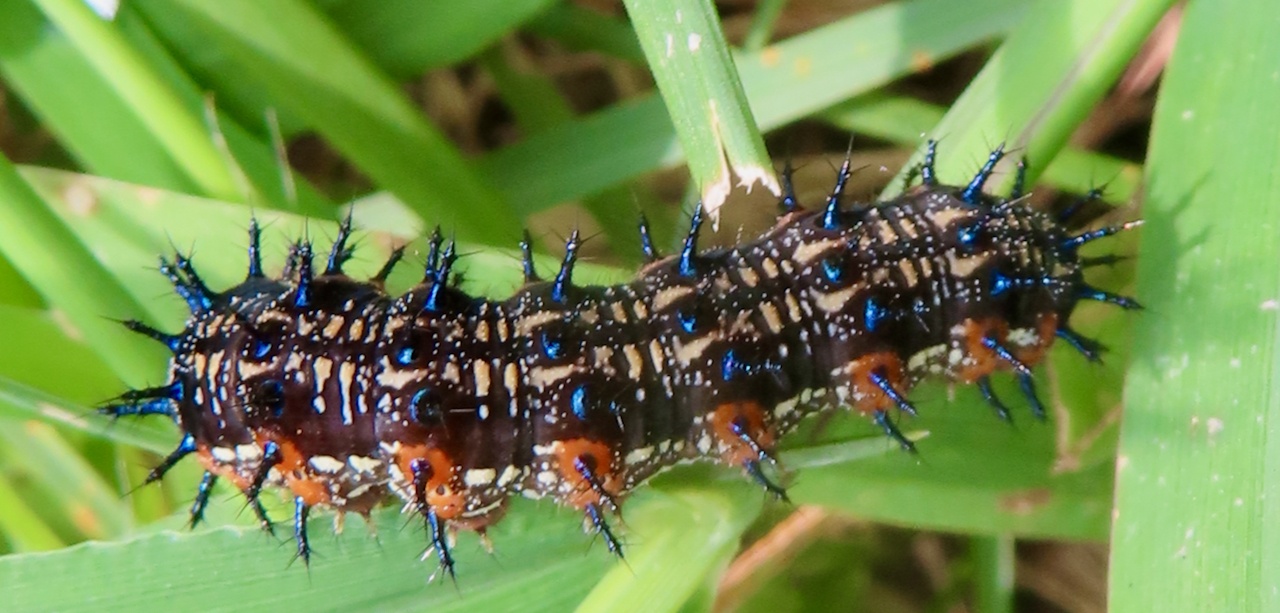
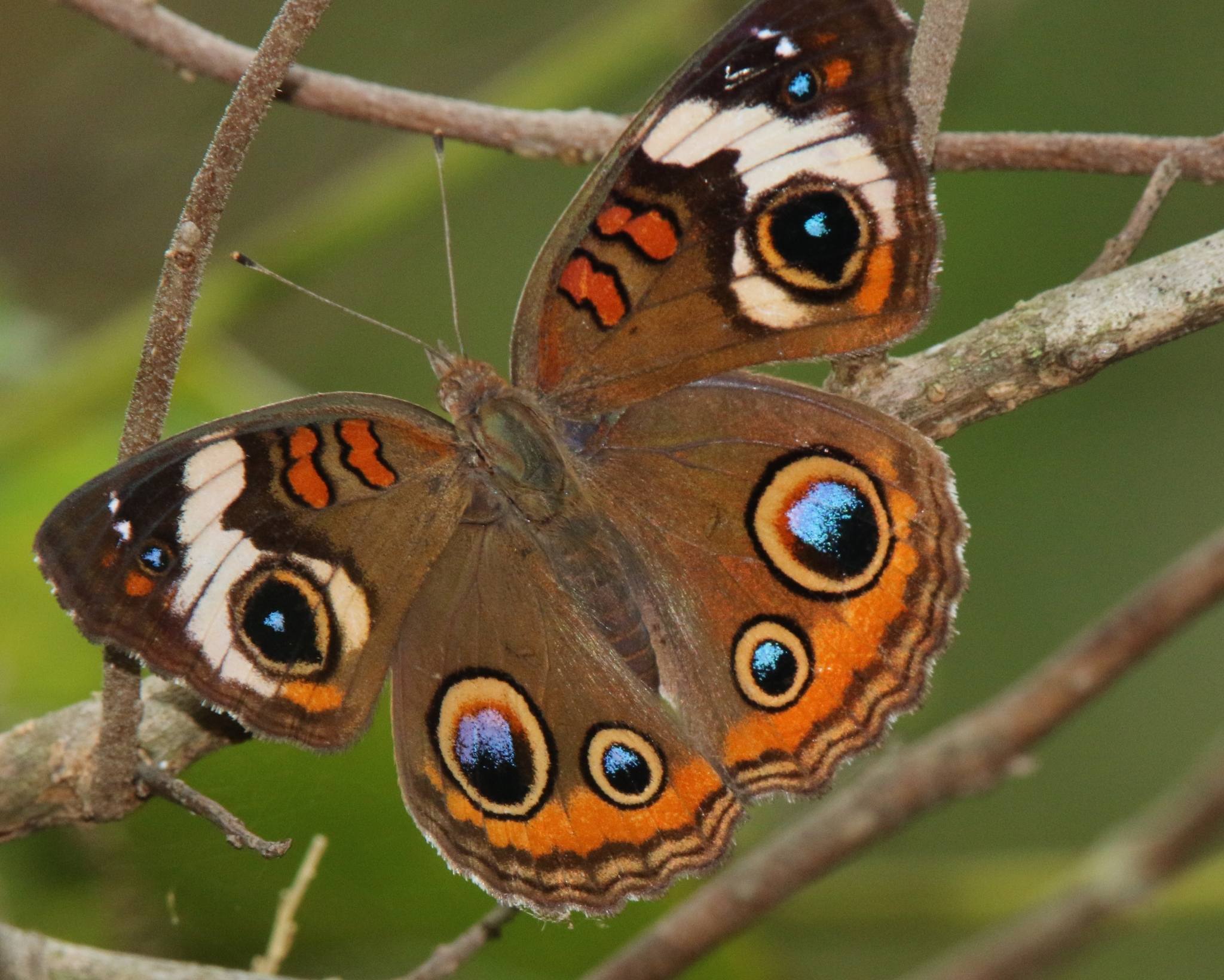
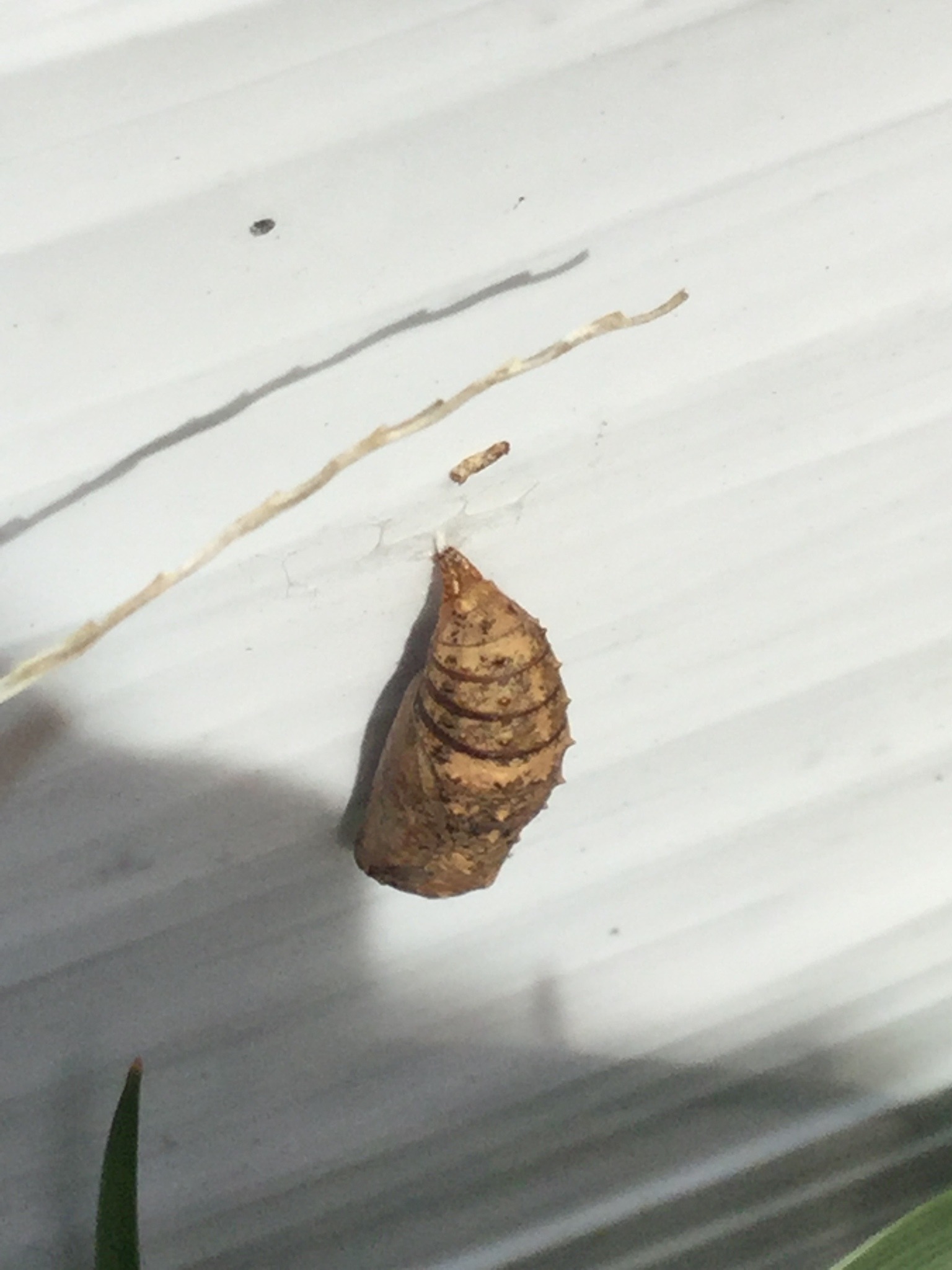
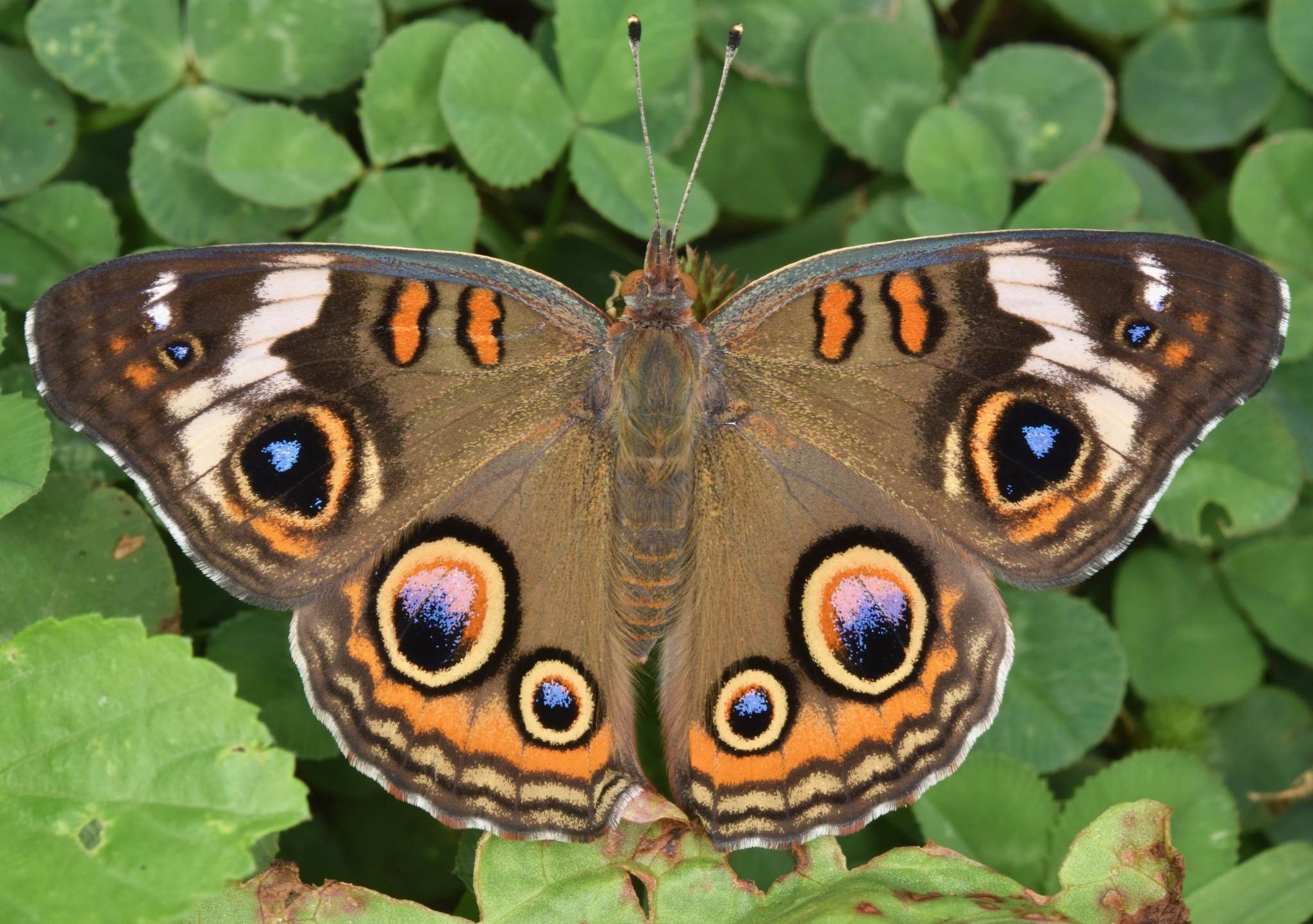
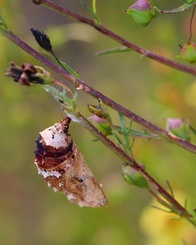
Junonia coenia, known as the common buckeye or buckeye, is a butterfly in the family Nymphalidae. It is found as a resident or vagrant across much of North America and Central America, as well as in parts of northern South America. This includes most of the eastern half of the US, the lower to middle Midwest, the Southwest (including most of California), southern Canada, and Mexico. Its habitat includes fields, dunes and scrub, typically in sunny environments up to 1,300 metres (4,300 ft) in altitude. It can be found in open areas with low vegetation and some bare ground. Its original ancestry has been traced to Africa, which then experienced divergence in Asia. The species Junonia grisea, the gray buckeye, is found west of the Rocky Mountains and was formerly a subspecies of Junonia coenia. Caterpillars of these butterflies appear to prefer plants that produce iridoid glycosides, which are bitter compounds that release a hormone called gastrin that activates the digestive system (i.e. hunger); therefore, iridoid glycoside producing plants stimulate and attract their appetites particularly when found in plants like Plantago lanceolata. In fact, the presence of these metabolites may trigger oviposition behaviors in female butterflies so that descendant larval bodies may better incorporate iridoid glycosides. Iridoid glycolyside metabolites appear to have a growth-stimulating effect on caterpillars but a growth-reducing effect on predators. Predators like ants, wasps, birds, and small animals prefer to feed on iridoid glycoside poor caterpillars rather than iridoid glycoside rich larvae, potentially due to these effects. Therefore, immunity of J. coenia larvae to predators like ants appears to be strongly related to the concentration of iridoid glycosides sequestered in their bodies. However, too much iridoid glycosides in the diet can negatively affect the immune response of these larvae and lead to increased susceptibility to parasitism. Adult butterflies feed on flowers with certain pollinator cues: yellow flowers that are "pre-change", or flowers whose color has not been changed due to insect visitation or other factors. Common buckeye caterpillars feed in isolation rather than relying upon grouping behaviors. Vulnerability to the Junonia coenia densovirus is another concern for survivorship of common buckeye larvae.
from Wikipedia
Taxonomic Information
Metazoa
Arthropoda
Insecta
Lepidoptera
Nymphalidae
Junonia
coenia
unclassified
Species
nan
k__Metazoa;p__Arthropoda;c__Insecta;o__Lepidoptera;f__Nymphalidae;g__Junonia;s__Junonia coenia
nan
Arthropods
Photos (5 photos)
Morphological Features
No morphological description available.
Host Plants (0 host plants)
Data sources: EPPO Global Database and relevant literature.
No host plants available.
Quarantine Status (1 records)
Data sources: IPPC website and national quarantine websites; verified by human review.
| Country | Status | Year Added |
|---|---|---|
| Panama | Quarantine pests | — |
Distribution (9 countries)
Data Sources: EPPO Global Database and GBIF.
| Country | Status | State |
|---|---|---|
| Bermuda | Present | — |
| Canada | Present | — |
| Colombia | Present | — |
| Cuba | Present | — |
| Ecuador | Present | — |
| Mexico | Present | — |
| Netherlands | Present | — |
| Panama | Present | — |
| United States of America | Present | — |
Distribution Map (Latitude and longitude coordinates sourced from GBIF.)
Download CSVGenomes (0 records)
Data source: NCBI.
No genome records available.
Transcriptomes (3 records)
Data source: NCBI.
| Run ID | Tissue | Developmental Stage | Sex | Read Count | Location | Actions |
|---|---|---|---|---|---|---|
| ERR15764471 | - | - | male | 29745919 | - | |
|
PRJEB101597 ERX15168361 ERP183000 insect RNA-Seq of eye tissue from a seasonally plastic temperate butterfly RNA-Seq of eye tissue from a seasonally plastic temperate butterfly {'sex': 'male', 'genotype': 'wild type genotype', 'individual': 'Jc42', 'broker name': 'ArrayExpress', 'common name': 'buckeye', 'sample name': 'E-MTAB-15925:Fall Male Eye Tissue Jc42', 'insdc status': 'public', 'submitter id': 'E-MTAB-15925:Fall Male Eye Tissue Jc42', 'organism part': 'retina', 'date collected': '05-October-2019', 'seasonal morph': 'Fall', 'collection date': 'not collected', 'scientific_name': 'Junonia coenia', 'ena first public': '2025-10-30', 'insdc center name': '1) University of Arkansas 2) North Dakota State University', 'developmental stage': 'adult', 'field collection site': 'Fayetteville, AR, USA', 'collection coordinates (decimal degrees)': '36.067623, -94.234343', 'geographic location (country and/or sea)': 'not collected'} |
||||||
| ERR15764474 | - | - | female | 27577644 | - | |
|
PRJEB101597 ERX15168364 ERP183000 insect RNA-Seq of eye tissue from a seasonally plastic temperate butterfly RNA-Seq of eye tissue from a seasonally plastic temperate butterfly {'sex': 'female', 'genotype': 'wild type genotype', 'individual': 'Jc59', 'broker name': 'ArrayExpress', 'common name': 'buckeye', 'sample name': 'E-MTAB-15925:Summer Female Eye Tissue Jc59', 'insdc status': 'public', 'submitter id': 'E-MTAB-15925:Summer Female Eye Tissue Jc59', 'organism part': 'retina', 'date collected': '22-June-2020', 'seasonal morph': 'Summer', 'collection date': 'not collected', 'scientific_name': 'Junonia coenia', 'ena first public': '2025-10-30', 'insdc center name': '1) University of Arkansas 2) North Dakota State University', 'developmental stage': 'adult', 'field collection site': 'Fayetteville, AR, USA', 'collection coordinates (decimal degrees)': '36.06875, -94.234167', 'geographic location (country and/or sea)': 'not collected'} |
||||||
| ERR15764475 | - | - | male | 25355685 | - | |
|
PRJEB101597 ERX15168365 ERP183000 insect RNA-Seq of eye tissue from a seasonally plastic temperate butterfly RNA-Seq of eye tissue from a seasonally plastic temperate butterfly {'sex': 'male', 'genotype': 'wild type genotype', 'individual': 'Jc13', 'broker name': 'ArrayExpress', 'common name': 'buckeye', 'sample name': 'E-MTAB-15925:Summer Male Eye Tissue Jc13', 'insdc status': 'public', 'submitter id': 'E-MTAB-15925:Summer Male Eye Tissue Jc13', 'organism part': 'retina', 'date collected': '07-July-2019', 'seasonal morph': 'Summer', 'collection date': 'not collected', 'scientific_name': 'Junonia coenia', 'ena first public': '2025-10-30', 'insdc center name': '1) University of Arkansas 2) North Dakota State University', 'developmental stage': 'adult', 'field collection site': 'Fayetteville, AR, USA', 'collection coordinates (decimal degrees)': '36.066734, -94.234025', 'geographic location (country and/or sea)': 'not collected'} |
||||||
Literature
Fetching literature from NCBI PubMed...
Failed to fetch literature