Paratachardina pseudolobata
TaxID: 1715811
Basic Information
Paratachardina pseudolobata
Lobate Lac Scale, Lobate lac scale
Paratachardina pseudolobata, the lobate lac scale, is a polyphagous and pestiferous lac scale insect, which damages trees and woody shrubs in Cuba, Florida, the Bahamas and the Australian territory of Christmas Island. It was mistakenly identified as Paratachardina lobata (Chamberlin), an insect native to India and Sri Lanka, but was in 2007 recognized and named as a distinct species based on material from Florida; its native distribution is as yet unknown. The new lac insect was described based on all stages of the female (adult, second-instar nymph and first-instar nymph), during the revision of the genus Paratachardina, wherein all its known species were redescribed.
from Wikipedia
Taxonomic Information
Metazoa
Arthropoda
Insecta
Hemiptera
Tachardiidae
Paratachardina
pseudolobata
unclassified
Species
nan
k__Metazoa;p__Arthropoda;c__Insecta;o__Hemiptera;f__Tachardiidae;g__Paratachardina;s__Paratachardina pseudolobata
nan
Arthropods
Photos (5 photos)
Morphological Features
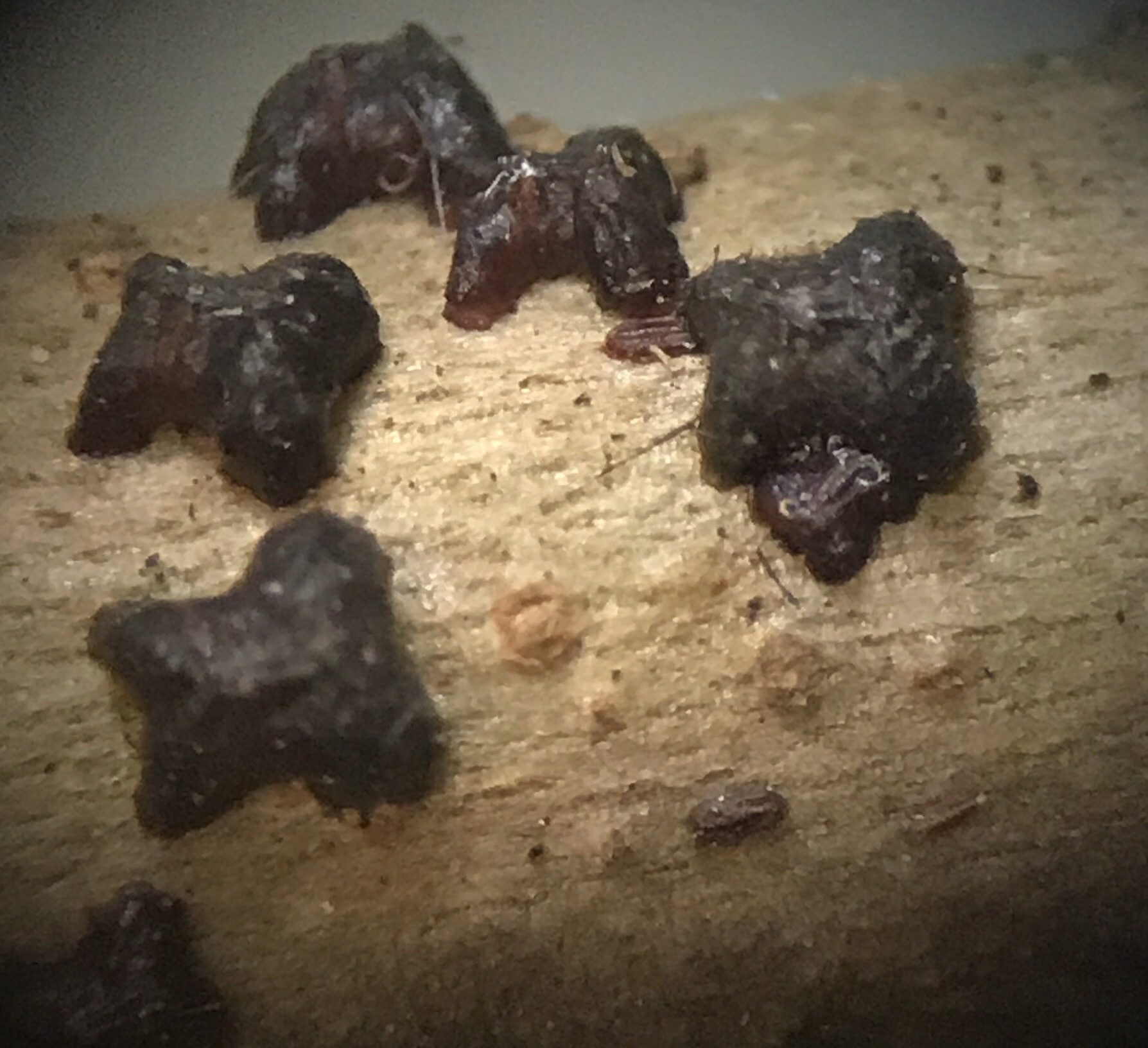
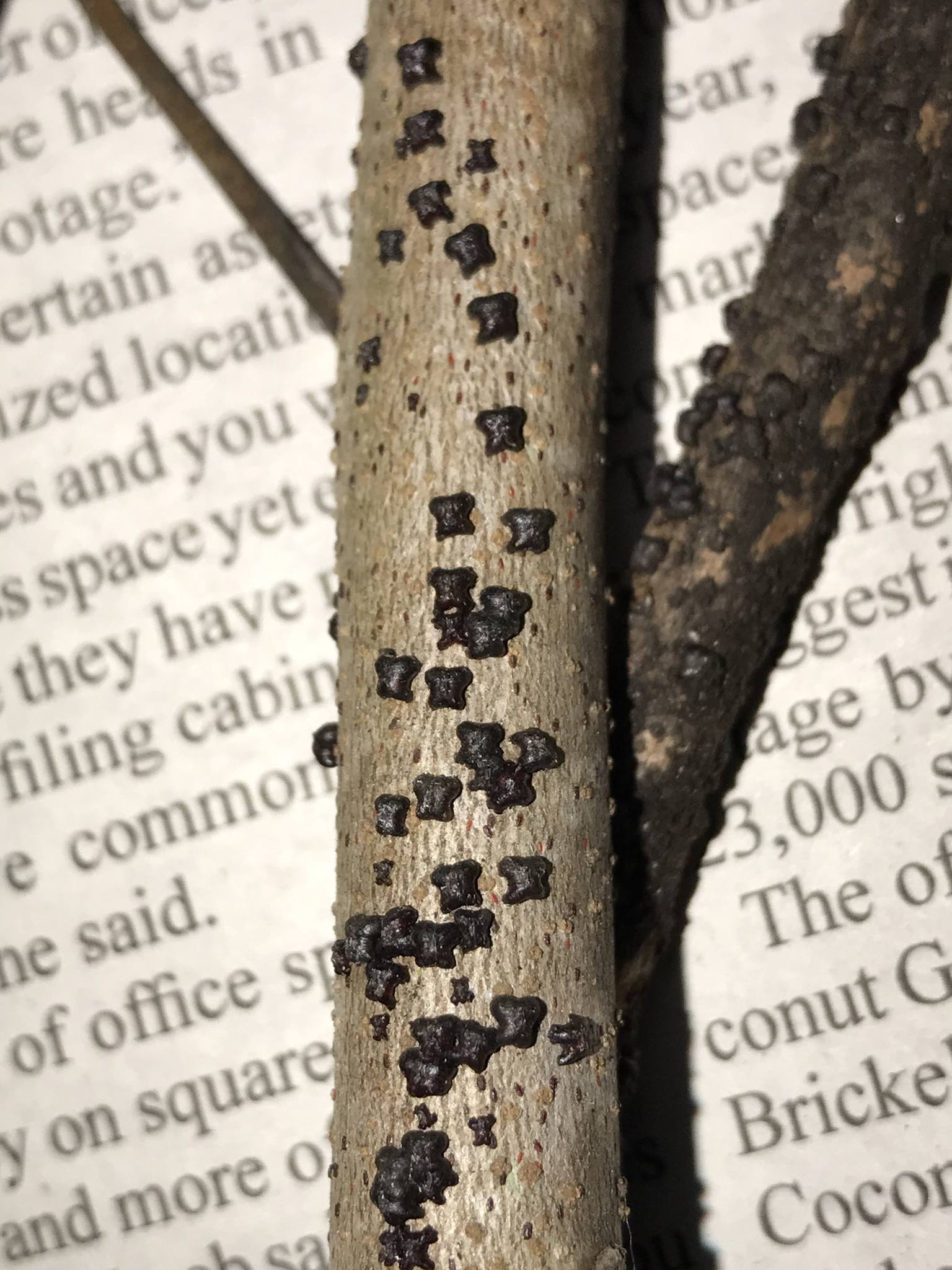
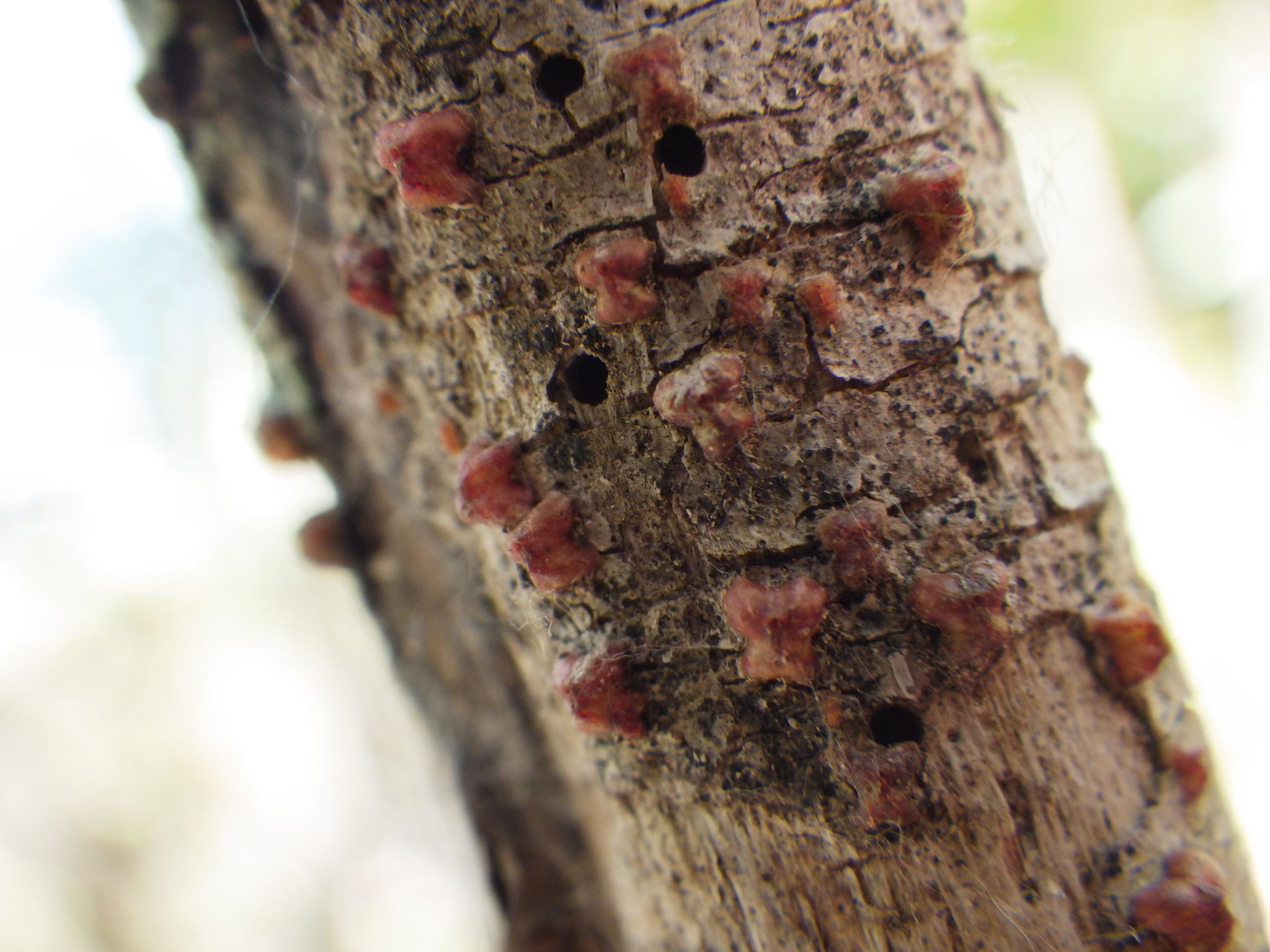
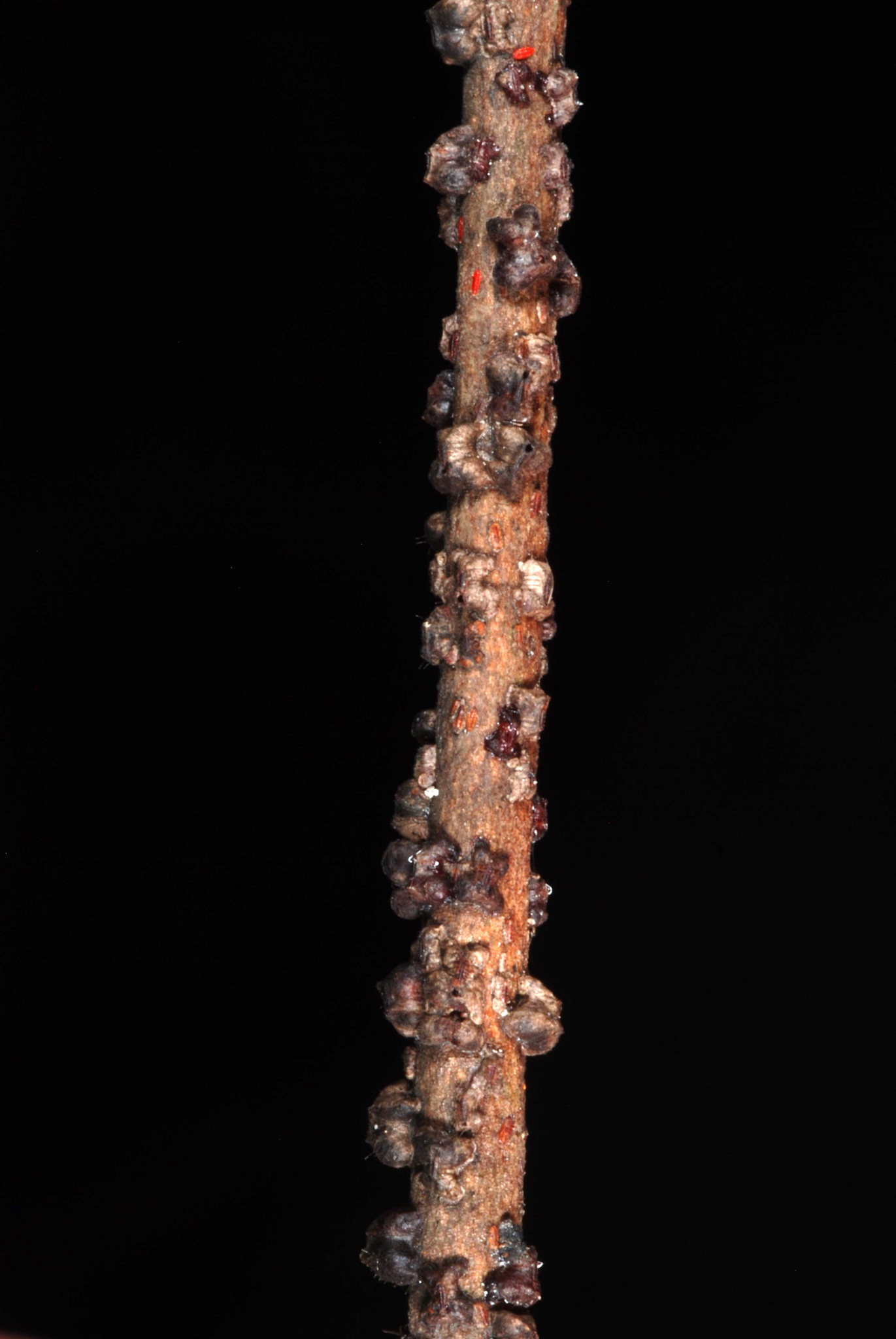
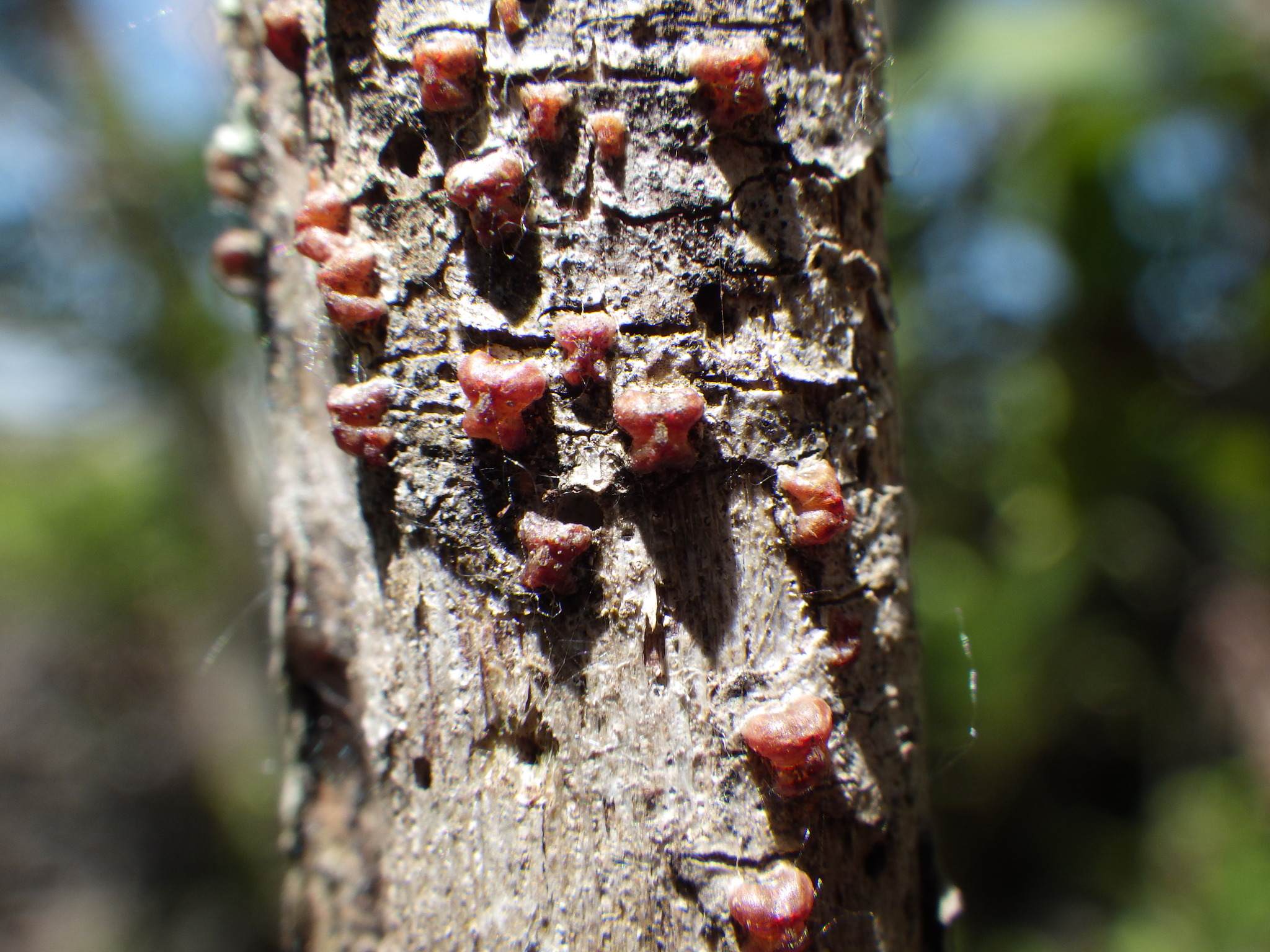
Adult female test X-letter or bowtie-shaped, 1.2–2.0 mm long, 0.7–1.5 mm wide at anterior lobes, 1.0–2.0 mm wide at posterior lobes, 1.0–1.5 mm high, purplish red to dark reddish brown, often black due to sooty mould. Body elongate oval, posterior end slightly broader than anterior end. Eyes located on margin lateral to each antennal scape. Antennae 48–75 µm long, 2-segmented, segmentation poorly defined, with 2 longer setae and 2 or 3 shorter setae on sclerotized area at apex of terminal segment. Ventral setae slender, scarce, each 3–5 µm long, with 2 pairs anterior to tentorial bridge, a row on each side of abdomen from behind posterior spiracle to near body apex, and a few on submargin of posterior apex. Marginal duct clusters distinct, oval to elongate oval, 8 pairs in total. Anal ring 23–25 µm wide, with 10 setae and an irregular row of simple pores. Dorsal setae slender, 3–5 µm long, present marginally, with 2 parallel rows of about 4 setae extending from area lateral to anal tubercle towards body apex.
Plazi taxonomic treatment
Host Plants (0 host plants)
Data sources: EPPO Global Database and relevant literature.
No host plants available.
Quarantine Status (2 records)
Data sources: IPPC website and national quarantine websites; verified by human review.
| Country | Status | Year Added |
|---|---|---|
| Peru | Absent | — |
| United States of America | Quarantine pests | — |
Distribution (2 countries)
Data Sources: EPPO Global Database and GBIF.
| Country | Status | State |
|---|---|---|
| Guam | Present | — |
| United States of America | Present | — |
Distribution Map (Latitude and longitude coordinates sourced from GBIF.)
Download CSVGenomes (0 records)
Data source: NCBI.
No genome records available.
Transcriptomes (3 records)
Data source: NCBI.
| Run ID | Tissue | Developmental Stage | Sex | Read Count | Location | Actions |
|---|---|---|---|---|---|---|
| SRR5320109 | Whole-Body | Adult | - | 117499295 | USA: Florida, Institute of Food and Agricultural Sciences | |
|
PRJNA378459 SRX2619517 SRP101538 insect RNA-seq of Paratachardina pseudolobata found on Psychotria nervosa P. pseudolobata samples were collected from four locations in southern Florida. Each sample was made up of about twenty specimens. Samples were taken from Psychotria nervosa (Rubiaceae). Specimens were plucked from their host plants and immediately homogenized in tubes filled with Trizol reagent. The ~20 specimens in each tube were pooled. {'host': 'Psychotria nervosa', 'tissue': 'Whole-Body', 'dev_stage': 'Adult', 'replicate': '3_1', 'geo_loc_name': 'USA: Florida, Institute of Food and Agricultural Sciences', 'biosamplemodel': 'Invertebrate', 'collection_date': '2015-02'} |
||||||
| SRR5320110 | Whole-Body | Adult | - | 99146012 | USA: Florida, Institute of Food and Agricultural Sciences | |
|
PRJNA378459 SRX2619518 SRP101538 insect RNA-seq of Paratachardina pseudolobata found on Tetrazygia bicolor P. pseudolobata samples were collected from four locations in southern Florida. Each sample was made up of about twenty specimens. Samples were taken from Tetrazygia bicolor (Melastomataceae). Specimens were plucked from their host plants and immediately homogenized in tubes filled with Trizol reagent. The ~20 specimens in each tube were pooled. {'host': 'Miconia bicolor', 'tissue': 'Whole-Body', 'dev_stage': 'Adult', 'replicate': '2_1', 'geo_loc_name': 'USA: Florida, Institute of Food and Agricultural Sciences', 'biosamplemodel': 'Invertebrate', 'collection_date': '2015-02'} |
||||||
| SRR5320111 | Whole-Body | Adult | - | 130978761 | USA: Florida, Navy Wells Pineland Preserve | |
|
PRJNA378459 SRX2619519 SRP101538 insect RNA-seq of Paratachardina pseudolobata found on Tetrazygia bicolor P. pseudolobata samples were collected from four locations in southern Florida. Each sample was made up of about twenty specimens. Samples were taken from Tetrazygia bicolor (Melastomataceae). Specimens were plucked from their host plants and immediately homogenized in tubes filled with Trizol reagent. The ~20 specimens in each tube were pooled. {'host': 'Miconia bicolor', 'tissue': 'Whole-Body', 'dev_stage': 'Adult', 'replicate': '1_1', 'geo_loc_name': 'USA: Florida, Navy Wells Pineland Preserve', 'biosamplemodel': 'Invertebrate', 'collection_date': '2015-02'} |
||||||
Literature
Fetching literature from NCBI PubMed...
Failed to fetch literature