Calligrapha diversa
TaxID: 1525261
Basic Information
Calligrapha diversa
Calligraphic Leaf Beetle
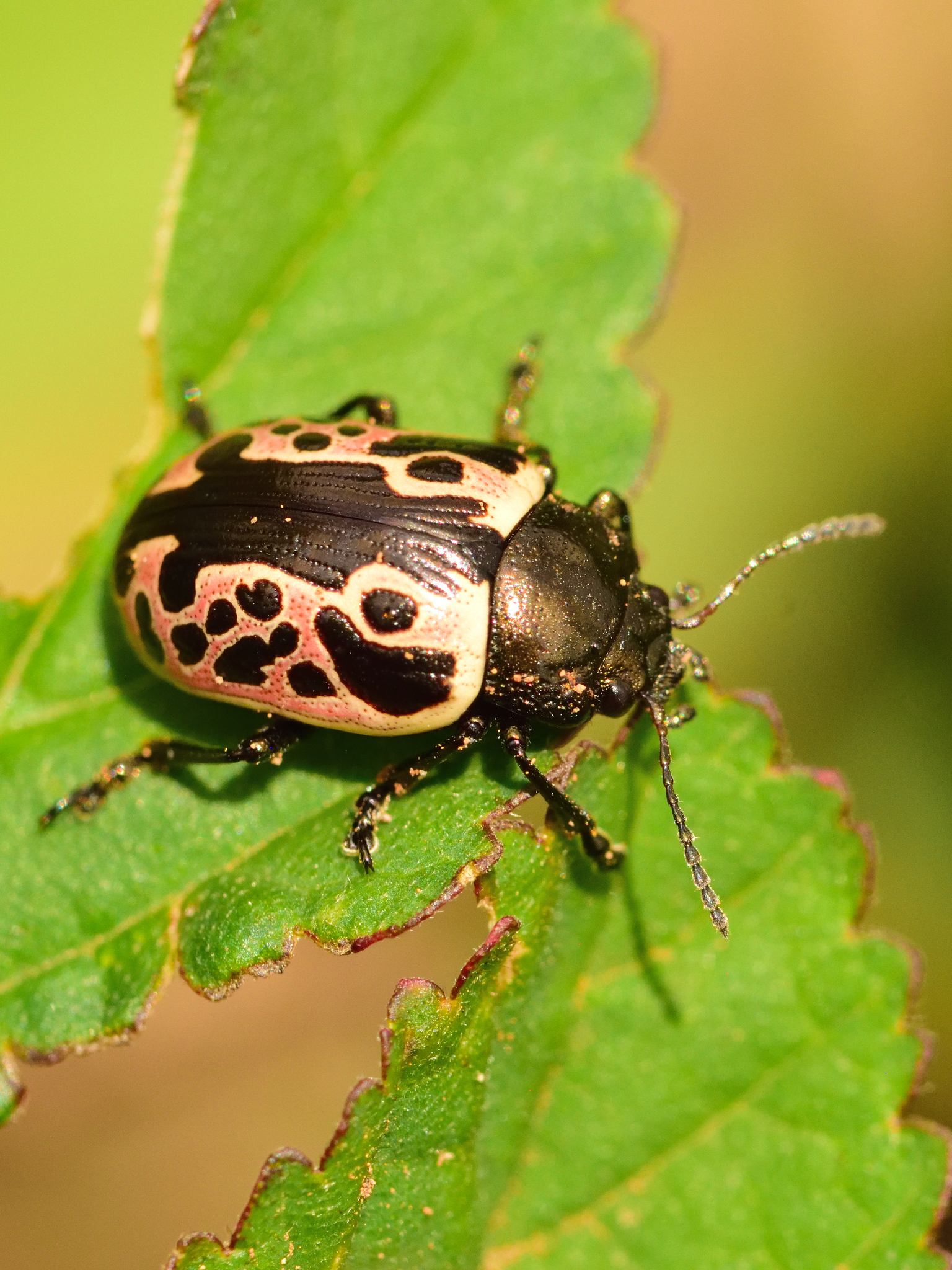
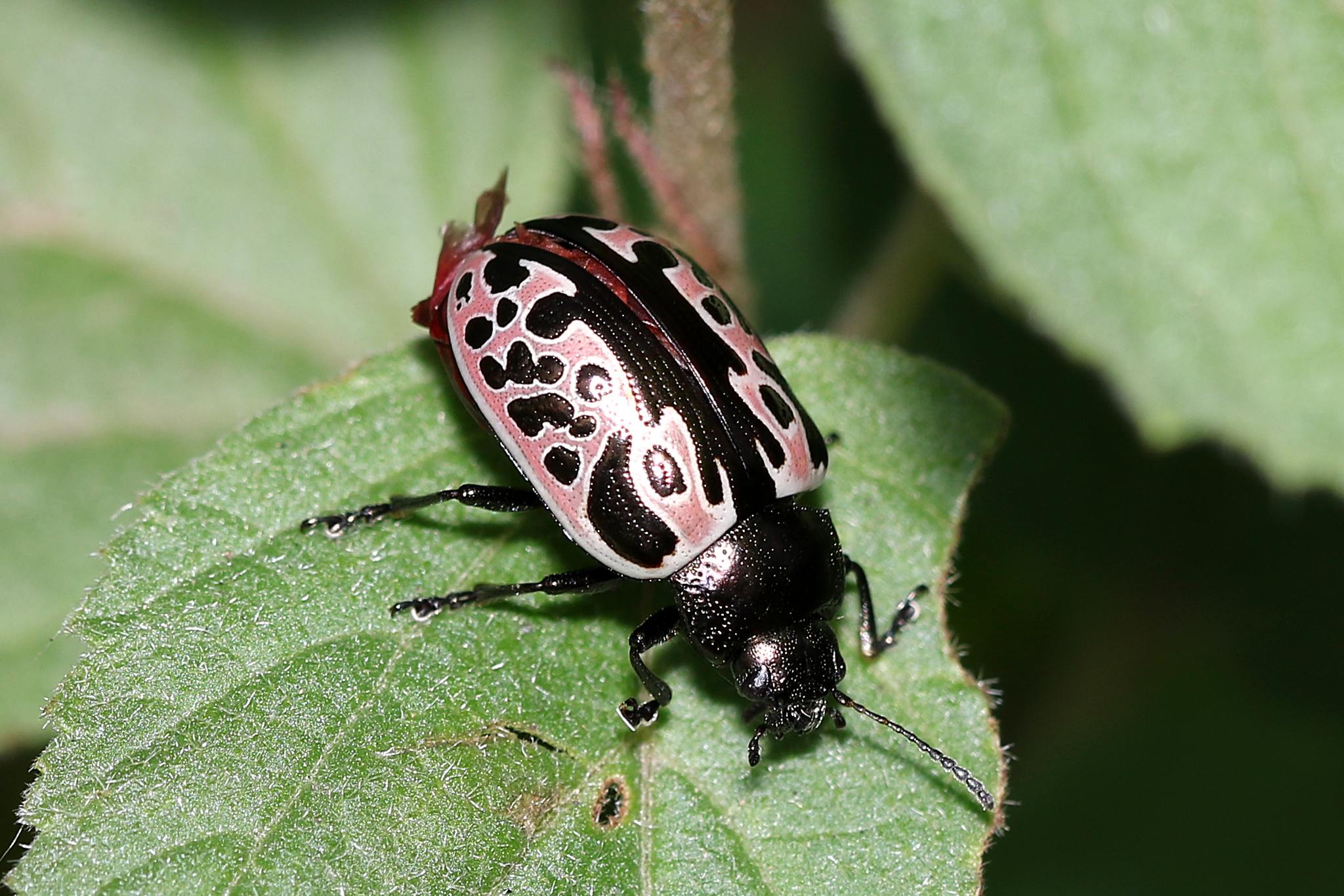
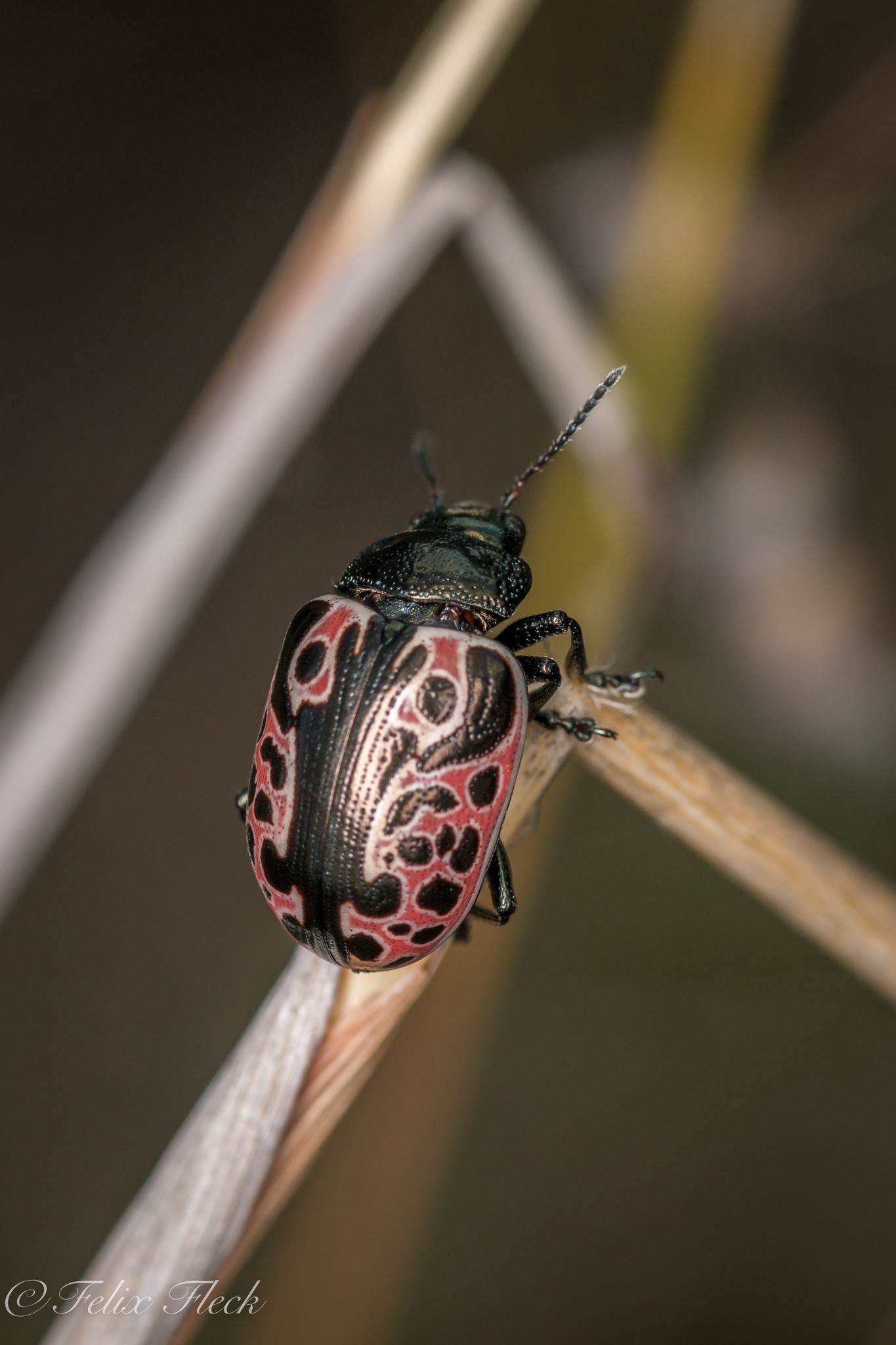
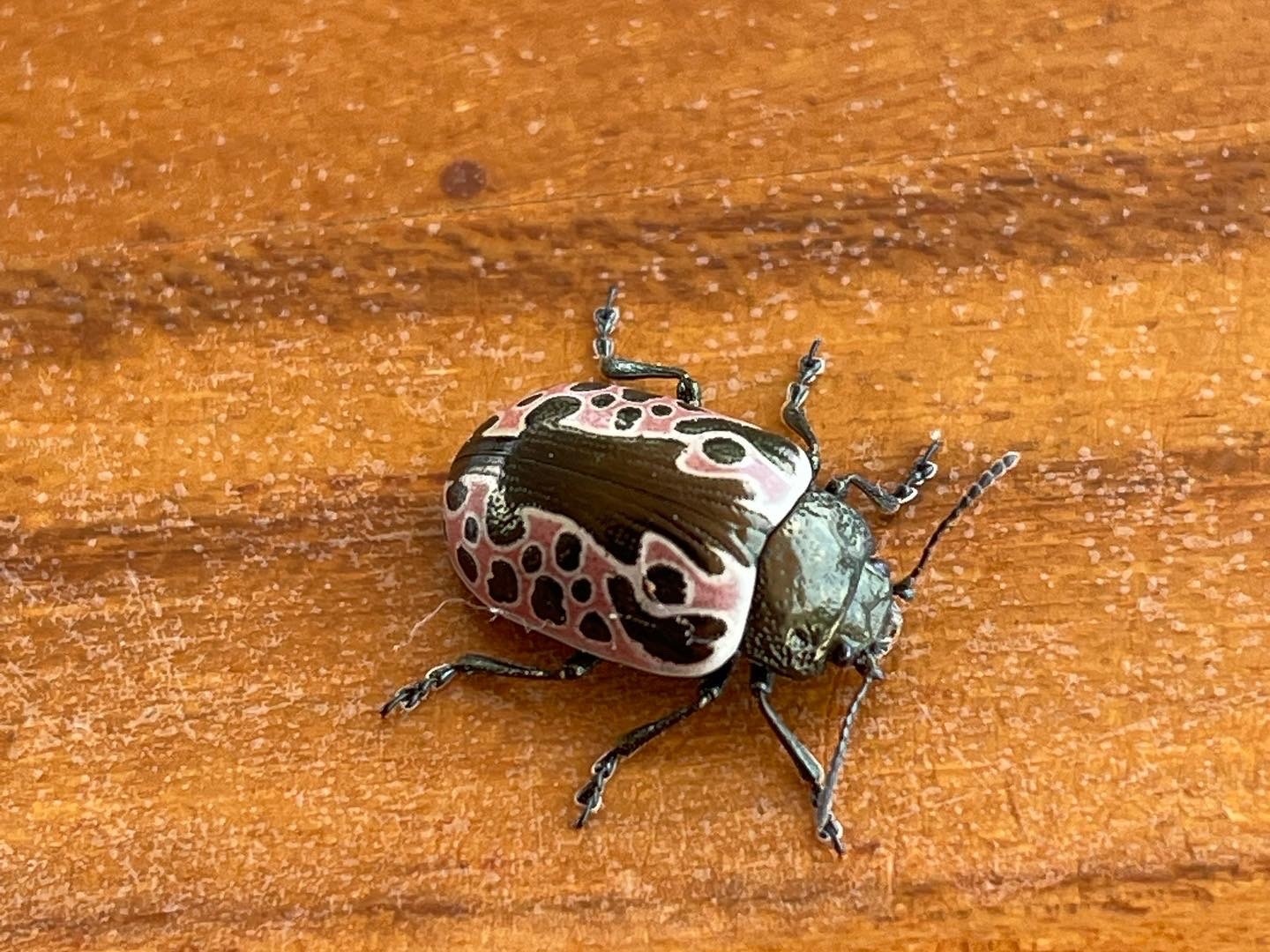
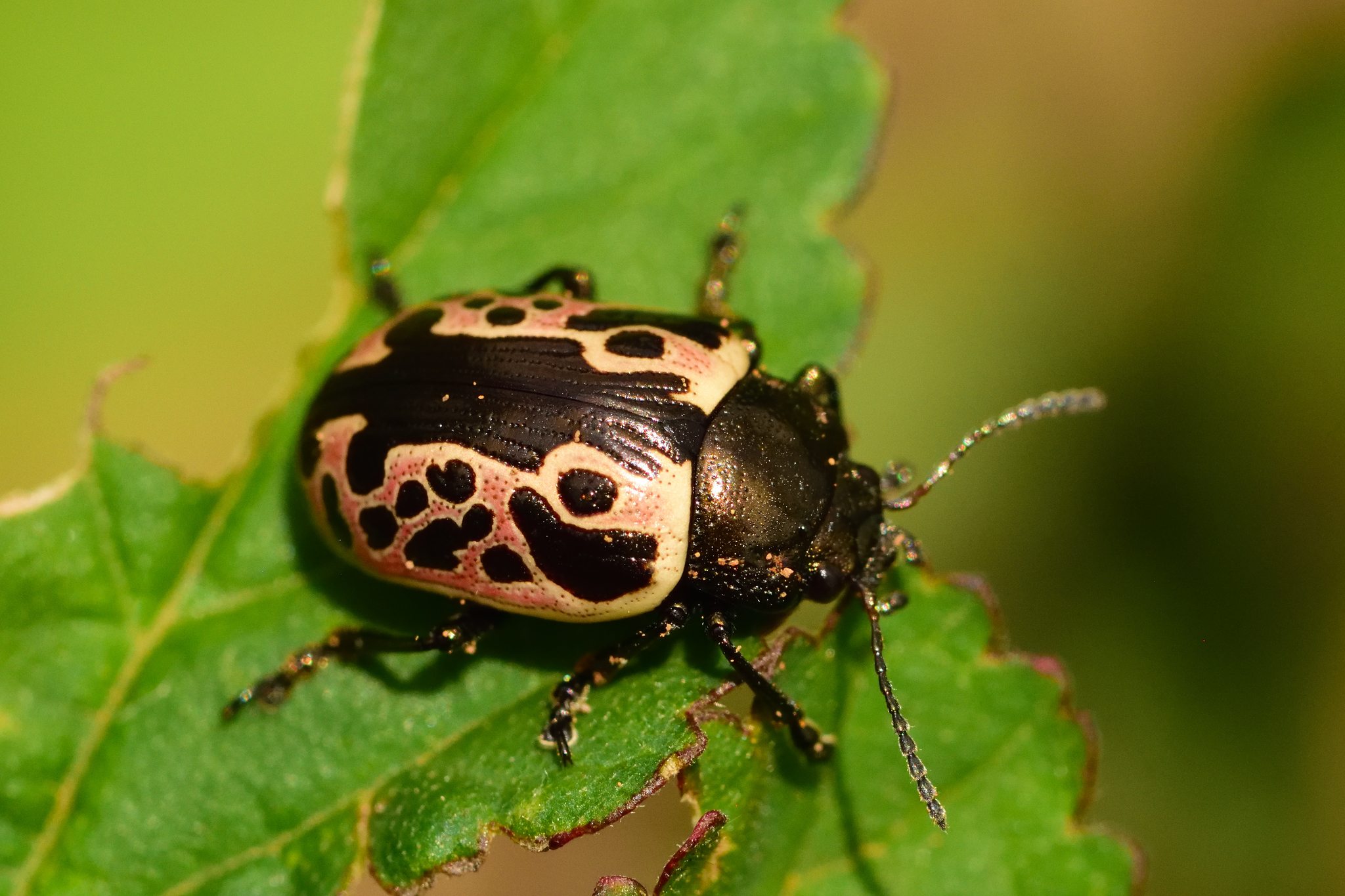
Calligrapha diversa is a species of leaf beetle in the family Chrysomelidae. It was first described by Carl St?l in 1859. It is found across Central America and North America. It feeds on plants in the family Malvaceae, such as Malva parviflora and Sphaeralcae angustifolia, and Solanaceae like Solanum nigrescens.
from Wikipedia
Taxonomic Information
Eukaryota
Arthropoda
Insecta
Coleoptera
Chrysomelidae
Calligrapha
diversa
nan
Species
nan
k__Eukaryota;p__Arthropoda;c__Insecta;o__Coleoptera;f__Chrysomelidae;g__Calligrapha;s__Calligrapha diversa
nan
Arthropods
Photos (5 photos)
Morphological Features
Body slender, not strongly convex. Head, labrum, mandibles, antennae, pronotum, scutellum, epipleura, elytral markings, ventral surfaces and legs black with feeble bronzy metallic reflection. Antennomeres 2–5 elongated, thin, relatively smooth and almost glabrous; antennomeres 8–11 thicker, widening from base to apex, rugose and pubescent; first antennomere relatively long and thick, straight at posterior border, convex at anterior border, narrow basally. Mandibles large, sturdy, largely protruding beyond labrum, strongly punctured except at molar area, punctures with long translucent whitish thick setae. Clypeus with finer punctures, delimited by a broad U-shaped clypeal suture. Pronotum microreticulate, sparsely and irregularly punctured on disc with relatively strong punctures, punctures disappearing or becoming finer laterally on disc, and stronger, confluent at sides; anterior border nearly straight behind head, finely margined, moderately produced anteriorly at angles, with slightly broader margin. Hypomeral suture deep, nearly reaching base of pronotum. Prosternal process narrow between coxae, rather convex. Elytral markings: subsutural stripe nearly entirely confluent with sutural stripe except in basal 1/10, free divergent basal ends for length of five punctures; humeral spot elongate, totally confluent laterally with humeral lunule; apical spot round, as big as previous marking, free; seven additional medium sized roundish spots diagonally arranged in a 3-2-1-1 pattern.
Plazi taxonomic treatment
Host Plants (0 host plants)
Data sources: EPPO Global Database and relevant literature.
No host plants available.
Quarantine Status (1 records)
Data sources: IPPC website and national quarantine websites; verified by human review.
| Country | Status | Year Added |
|---|---|---|
| United States of America | Quarantine pests | — |
Distribution (8 countries)
Data Sources: EPPO Global Database and GBIF.
| Country | Status | State |
|---|---|---|
| Colombia | Present | — |
| Costa Rica | Present | — |
| Guatemala | Present | — |
| Honduras | Present | — |
| Mexico | Present | — |
| Nicaragua | Present | — |
| United States of America | Present | — |
| Venezuela (Bolivarian Republic of) | Present | — |
Distribution Map (Latitude and longitude coordinates sourced from GBIF.)
Download CSVGenomes (0 records)
Data source: NCBI.
No genome records available.
Transcriptomes (0 records)
Data source: NCBI.
No transcriptome records available.
Literature
Fetching literature from NCBI PubMed...
Failed to fetch literature