Viscum
TaxID: 3971
Basic Information
Viscum
Christmas mistletoe, Mistletoe
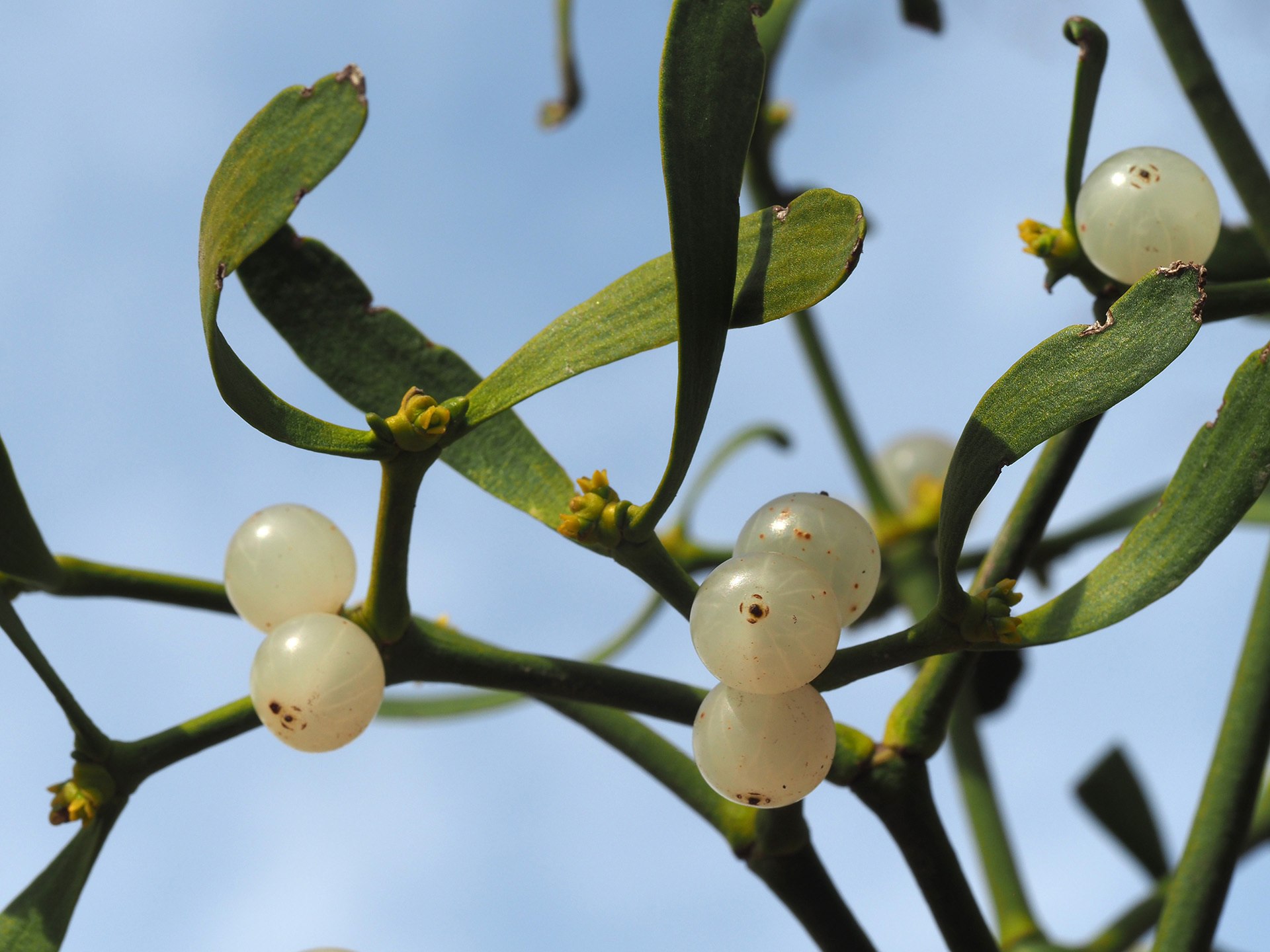
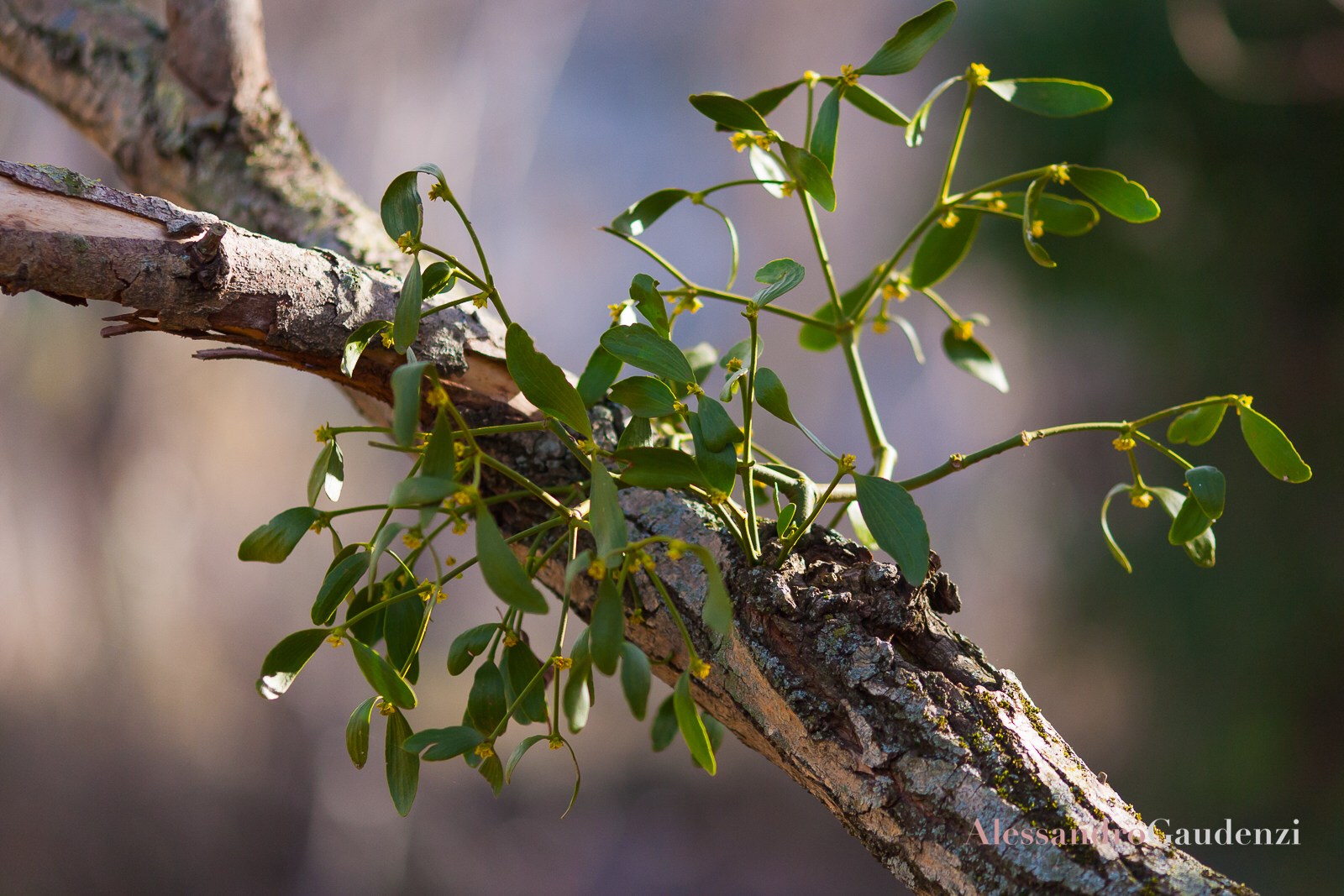
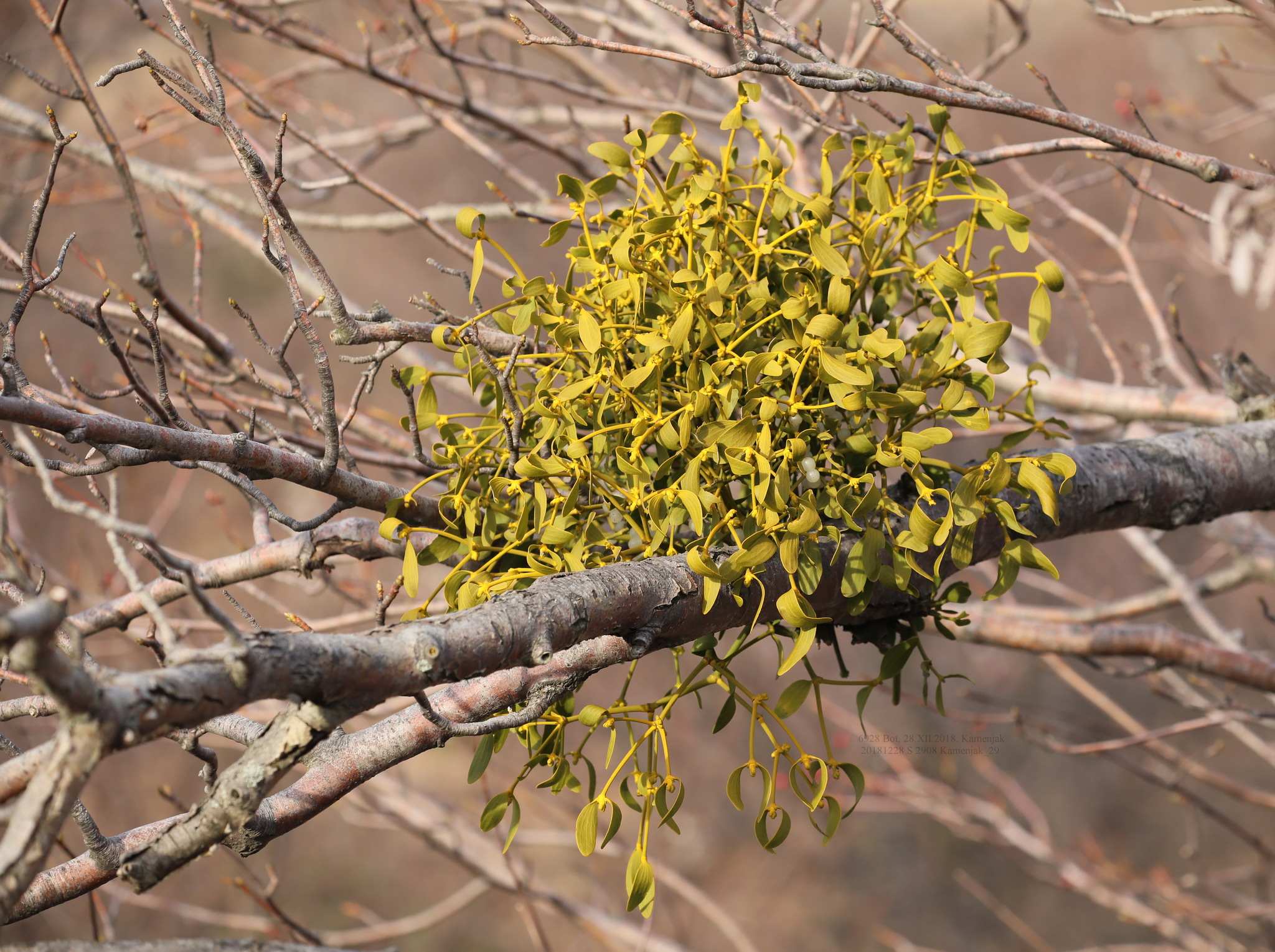
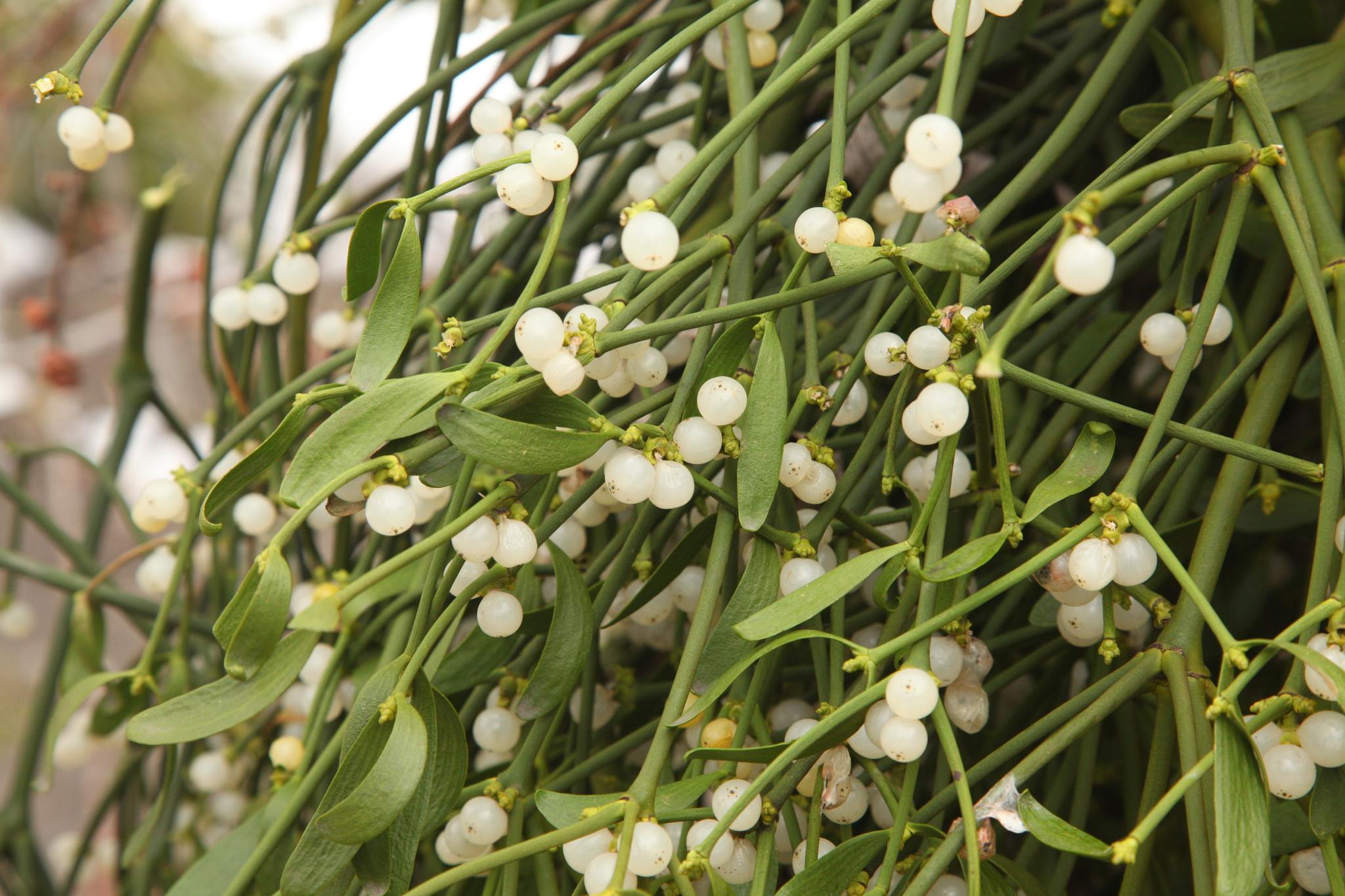
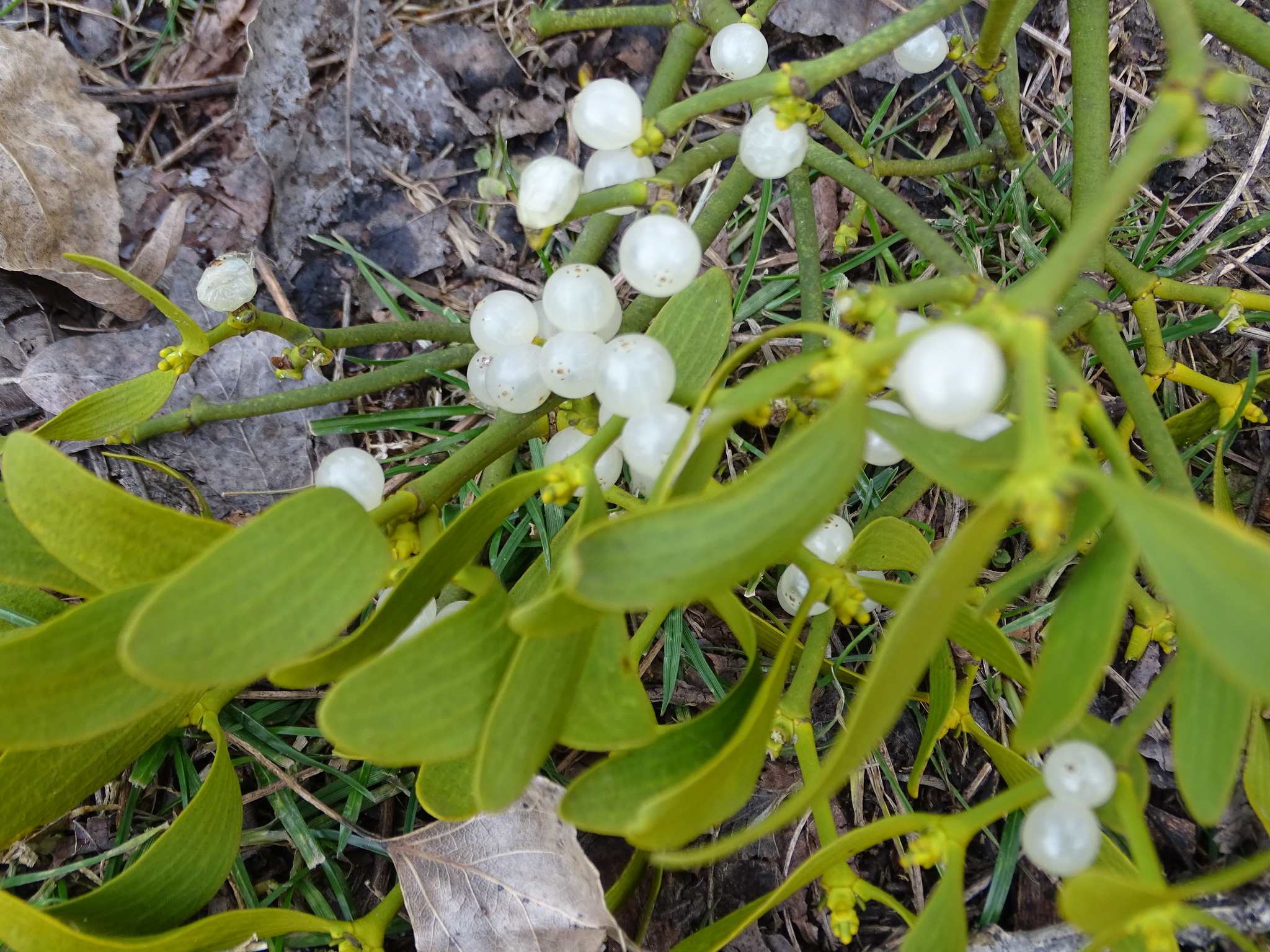
Viscum is a genus of over 100 species of mistletoes, native to temperate and tropical regions of Europe, Africa, Asia and Australasia. Traditionally, the genus has been placed in its own family Viscaceae, but recent genetic research by the Angiosperm Phylogeny Group shows this family to be correctly placed within a larger circumscription of the sandalwood family, Santalaceae. Its name is the origin of the English word viscous, after the Latin viscum, a sticky bird lime made from the plants' berries. They are woody, obligate hemiparasitic shrubs with branches 15 C80 centimetres (5.9 C31.5 in) long. Their hosts are woody shrubs and trees. The foliage is dichotomously or verticillately branching, with opposite pairs or whorls of green leaves which perform some photosynthesis (minimal in some species, notably V. nudum), but with the plant drawing its mineral and water needs from the host tree. Different species of Viscum tend to use different host species; most species are able to use several different host species. The flowers are inconspicuous, greenish-yellow, 1 C3 millimetres (0.039 C0.118 in) diameter. The fruit is a berry, white, yellow, orange, or red when mature, containing one or more seeds embedded in very sticky juice; the seeds are dispersed when birds (notably the mistle thrush) eat the fruit, and remove the sticky seeds from the bill by wiping them on tree branches where they can germinate.
from Wikipedia
Taxonomic Information
Eukaryota
Streptophyta
Magnoliopsida
Santalales
Viscaceae
Viscum
nan
nan
Genus
nan
k__Eukaryota;p__Streptophyta;c__Magnoliopsida;o__Santalales;f__Viscaceae;g__Viscum;s__unclassified
nan
Weeds
Photos (5 photos)
Morphological Features
No morphological description available.
Host Plants (0 host plants)
Data sources: EPPO Global Database and relevant literature.
No host plants available.
Quarantine Status (1 records)
Data sources: IPPC website and national quarantine websites; verified by human review.
| Country | Status | Year Added |
|---|---|---|
| United States of America | Quarantine pests | — |
Distribution (0 countries)
Data Sources: EPPO Global Database and GBIF.
No distribution records available.
Genomes (0 records)
Data source: NCBI.
No genome records available.
Transcriptomes (3 records)
Data source: NCBI.
| Run ID | Tissue | Developmental Stage | Sex | Read Count | Location | Actions |
|---|---|---|---|---|---|---|
| SRR35525962 | Young shoots | Mature plants | - | 26946146 | not provided | |
|
PRJNA1331930 SRX30601261 SRP623058 general RNASeq-Viscum album-Hypoxia polyA capture (or rRNA removal) and reverse transcription of cDNA M5 {'tissue': 'Young shoots', 'isolate': 'M5', 'dev_stage': 'Mature plants', 'treatment': 'Hypoxia', 'geo_loc_name': 'not provided', 'biosamplemodel': 'Plant', 'collection_date': '2024-02-05'} |
||||||
| SRR35525961 | Young shoots | Mature plants | - | 26910423 | not provided | |
|
PRJNA1331930 SRX30601262 SRP623058 general RNASeq-Viscum album-Hypoxia polyA capture (or rRNA removal) and reverse transcription of cDNA M6 {'tissue': 'Young shoots', 'isolate': 'M6', 'dev_stage': 'Mature plants', 'treatment': 'Hypoxia', 'geo_loc_name': 'not provided', 'biosamplemodel': 'Plant', 'collection_date': '2024-02-05'} |
||||||
| SRR35525960 | Young shoots | Mature plants | - | 22025518 | not provided | |
|
PRJNA1331930 SRX30601263 SRP623058 general RNASeq-Viscum album-Hypoxia polyA capture (or rRNA removal) and reverse transcription of cDNA M8 {'tissue': 'Young shoots', 'isolate': 'M8', 'dev_stage': 'Mature plants', 'treatment': 'Hypoxia', 'geo_loc_name': 'not provided', 'biosamplemodel': 'Plant', 'collection_date': '2024-02-05'} |
||||||
Literature
Fetching literature from NCBI PubMed...
Failed to fetch literature