Lycorma delicatula
TaxID: 130591
Basic Information
Lycorma delicatula
Chinese Blistering Cicada, Spotted Lanternfly, spotted lanternfly
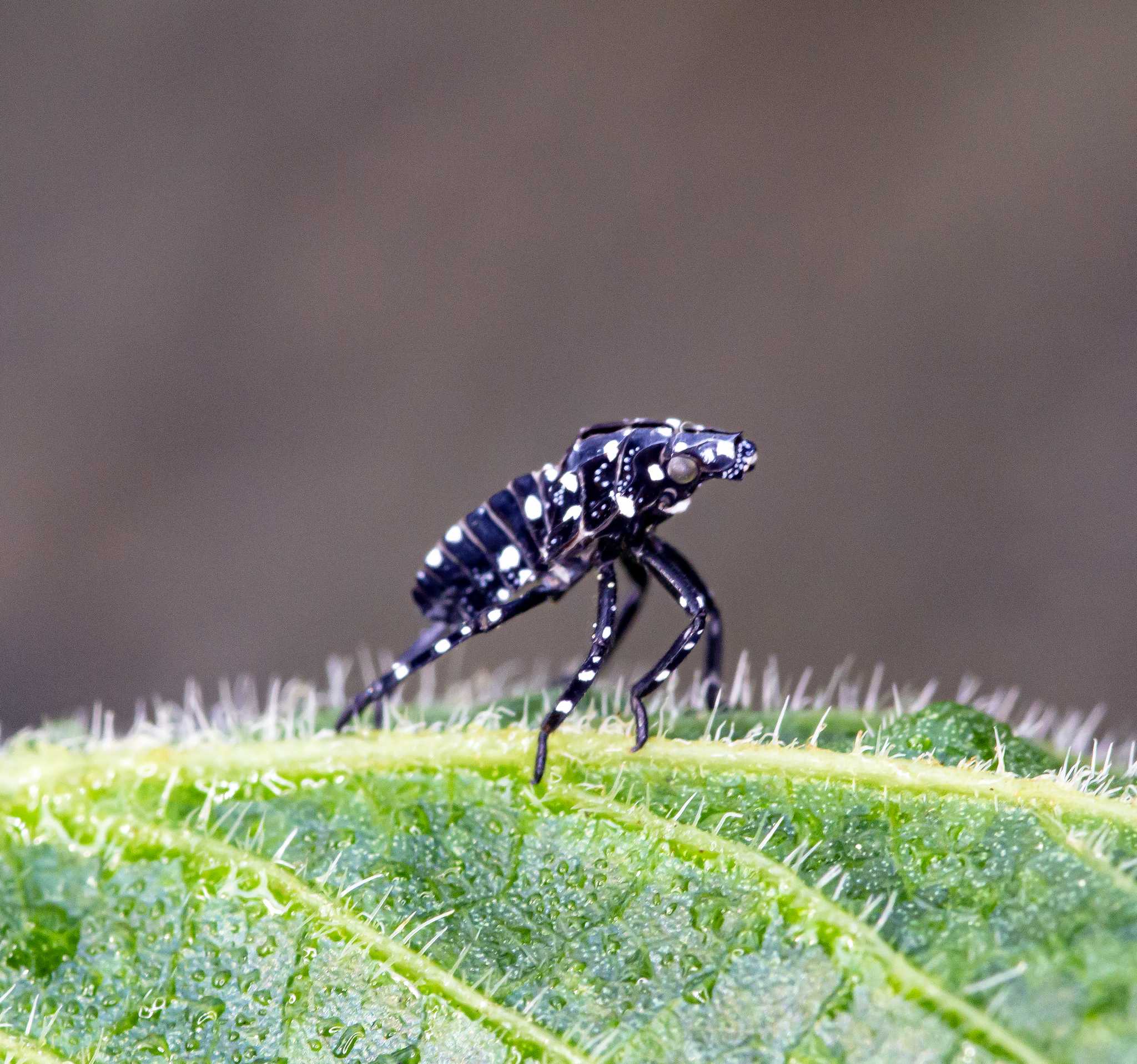
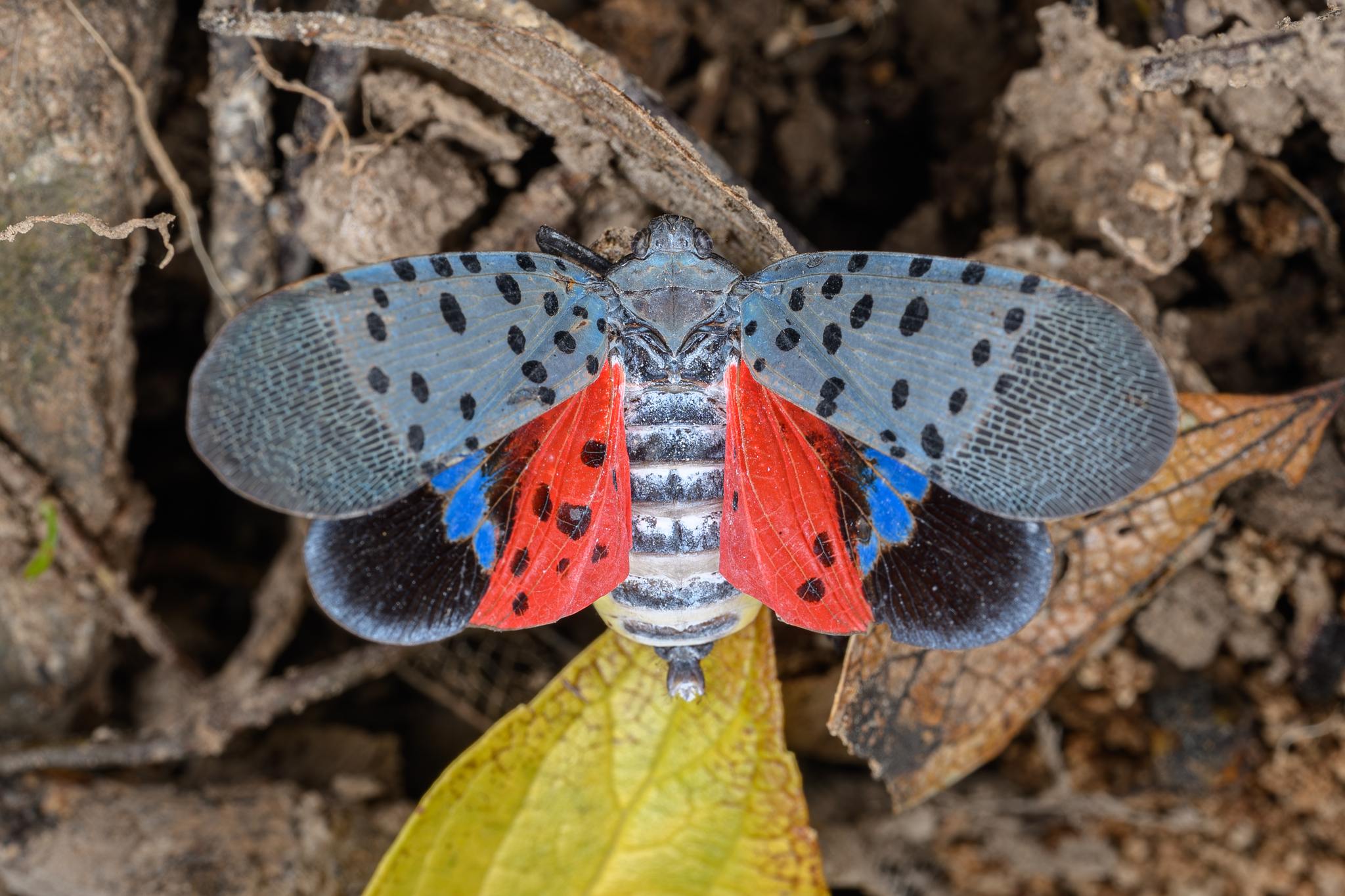
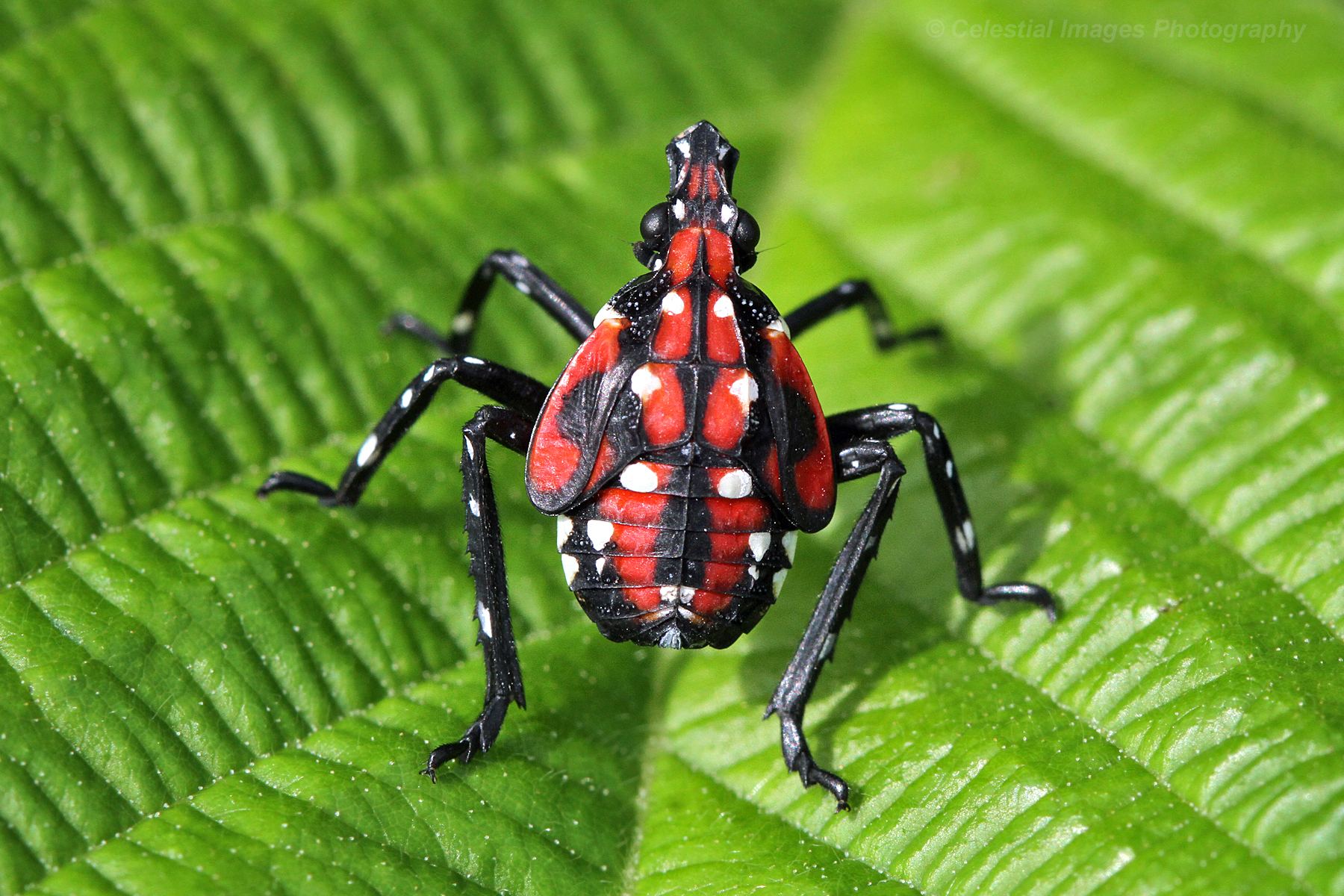
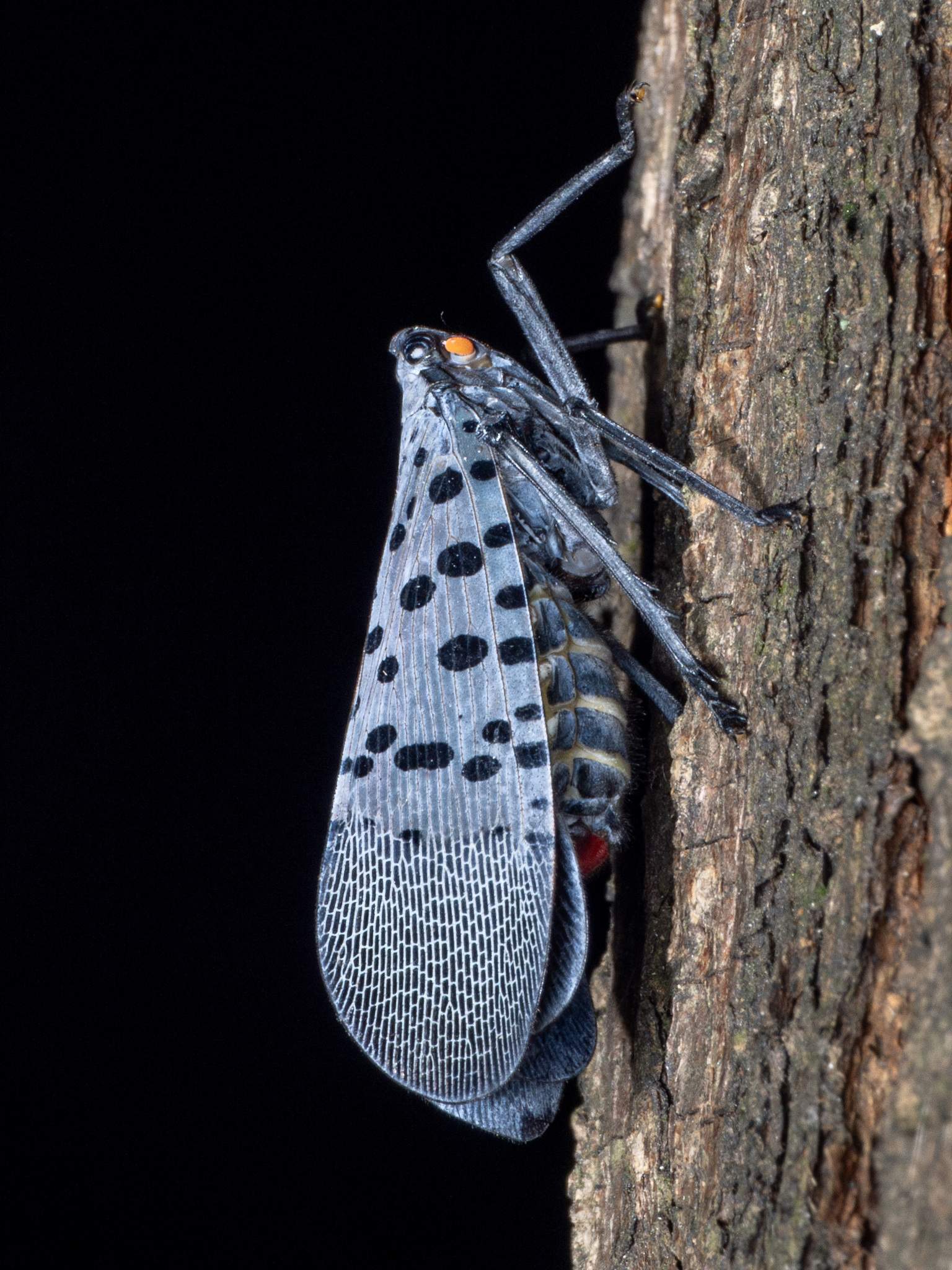
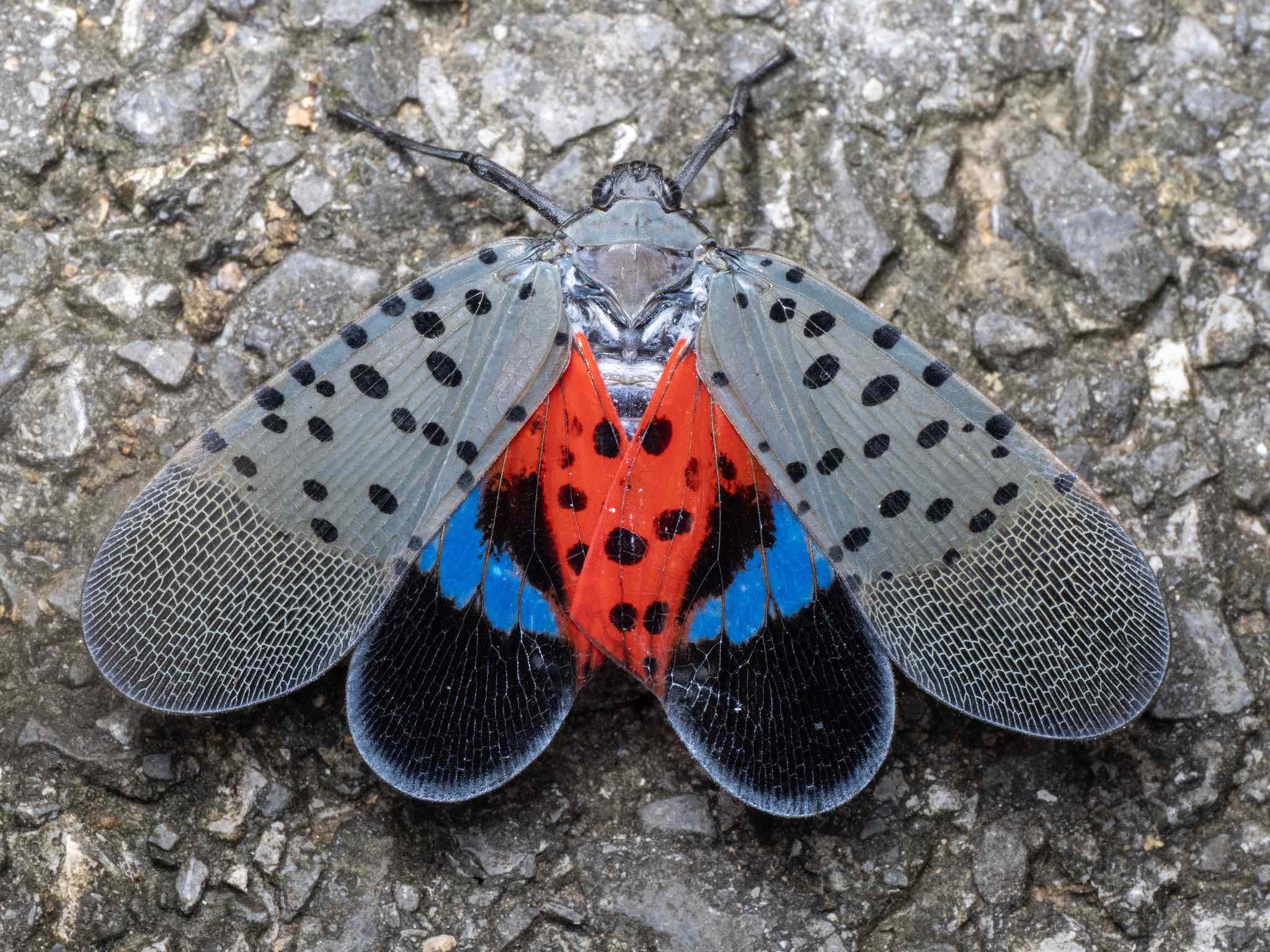
The spotted lanternfly (Lycorma delicatula) is a species of planthopper indigenous to parts of China and Vietnam. It was accidentally introduced into South Korea and has spread invasively to Japan and the United States, where it is often referred to by the acronym "SLF". Its preferred host is the also invasive tree of heaven (Ailanthus altissima), but it also feeds on other trees, and on crops including soybean, grapes, stone fruits, and Malus species. In its native habitat, L. delicatula populations are regulated by parasitic wasps. The spotted lanternfly's life cycle is often centered on its preferred host, Ailanthus altissima, but L. delicatula can associate with more than 173 plants. Early life stages (instars) of the spotted lanternfly are characterized by spotted black and white nymphs that develop a red pigmentation and wings as they mature. Early life instars have a large host range that narrows with maturation. Adult spotted lanternflies have a black head, grey wings, and red hind wings. Adults do not have any specialized feeding associations with herbaceous plants but cause extensive damage to crops and ornamental plants. The piercing wounds caused by their mouthparts and the honeydew waste they excrete are harmful to the health of host plants. They feed on the sap of host plants, including the tree of heaven, which is also invasive in the United States. Unlike some invasive insects, the spotted lanternfly does not pose direct danger to humans through biting or stinging. Spotted lanternflies lay egg masses containing 30 C50 eggs, often covered with a grayish mud-like coating. The species was introduced into South Korea in 2006 and Japan in 2009, where it has since been considered a pest. L. delicatula is also referred to as the spot clothing wax cicada ("chu-ki" or "banyi-la-chan" in Chinese) and the Chinese blistering cicada ("ggot-mae-mi" ??? in Korean). It is also referred to as the red-bellied flycatcher ( ??? in Japanese), spotted fulgora (fulgore tachet in French), and the spotted lantern (chinche linterna manchada in Spanish). In September 2014, L. delicatula was first recorded in the United States, and as of 2022, it is considered an invasive species in much of the Northeastern United States and is rapidly spreading south and west. L. delicatula's egg masses are the primary vector of spread, with Ailanthus altissima populations seen as a risk factor for further infestation globally. Ongoing pest control efforts have sought to limit population growth, due to the threat L. delicatula poses to global agricultural industries. Parts of the United States are undergoing massive pest control efforts to cull the spotted lanternfly's population. However, this process indirectly harms other species.
from Wikipedia
Taxonomic Information
Metazoa
Arthropoda
Insecta
Hemiptera
Fulgoridae
Lycorma
delicatula
unclassified
Species
nan
k__Metazoa;p__Arthropoda;c__Insecta;o__Hemiptera;f__Fulgoridae;g__Lycorma;s__Lycorma delicatula
nan
Arthropods
Photos (5 photos)
Morphological Features
No morphological description available.
Host Plants (165 host plants)
Data sources: EPPO Global Database and relevant literature.
| Scientific Name | Status |
|---|---|
| Acacia sp. | Host |
| Acer buergerianum | Host |
| Acer negundo | Host |
| Acer palmatum | Host |
| Acer platanoides | Host |
| Acer pseudoplatanus | Host |
| Acer rubrum | Host |
| Acer saccharinum | Host |
| Acer saccharum | Host |
| Actinidia chinensis | Host |
Quarantine Status (37 records)
Data sources: IPPC website and national quarantine websites; verified by human review.
| Country | Status | Year Added |
|---|---|---|
| Australia | Quarantine pests | — |
| Austria | Quarantine pest ((EU) 2019/2072 Annex II A) | 2021 |
| Belgium | Unknow | 2021 |
| Bulgaria | Quarantine pest ((EU) 2019/2072 Annex II A) | 2021 |
| Canada | Quarantine pests | 2019 |
| Switzerland | A1 list | 2022 |
| Chile | A1 list | 2024 |
| Cyprus | Quarantine pest ((EU) 2019/2072 Annex II A) | 2021 |
| Czechia | Quarantine pests | 2021 |
| Germany | Quarantine pest ((EU) 2019/2072 Annex II A) | 2021 |
Distribution (15 countries)
Data Sources: EPPO Global Database and GBIF.
| Country | Status | State |
|---|---|---|
| Bangladesh | Absent | — |
| Cambodia | Absent | — |
| Canada | Present | — |
| China | Present | |
| India | Absent | — |
| Japan | Present | |
| Republic of Korea | Present | — |
| Lao People's Democratic Republic | Absent | — |
| Mexico | Present | — |
| Netherlands | Absent | — |
Distribution Map (Latitude and longitude coordinates sourced from GBIF.)
Download CSVGenomes (3 records)
Data source: NCBI.
| Assembly Accession | Assembly Level | Genome Size(Mb) | Contig N50(Kb) | Scaffold N50(Kb) | BUSCO% | Downloads | Actions |
|---|---|---|---|---|---|---|---|
| GCF_047948215.1 | Chromosome | - | - | - | - | - |
|
|
ASM4794821v1 |
|||||||
| GCA_047948205.1 | Chromosome | - | - | - | - | - |
|
|
ASM4794820v1 |
|||||||
| GCA_040954635.1 | Chromosome | - | - | - | - | - |
|
|
ihLycDeli1 |
|||||||
Transcriptomes (3 records)
Data source: NCBI.
| Run ID | Tissue | Developmental Stage | Sex | Read Count | Location | Actions |
|---|---|---|---|---|---|---|
| SRR31411875 | Head | Adult | - | 45191995 | USA:Queens | |
|
PRJNA1151129 SRX26780963 SRP546249 insect RNA-seq of Lycorma delicatula exposed to 45C for 2 hours: Adult Head otal RNA was extracted from RNA shield-preserved insects using Qiagens RNeasy Fibrous Tissue Mini Kit following the manufacturer's protocol. RNA purity and concentration were assessed using a Nanodrop (Thermo Fisher Scientific, Waltham, MA), Qubit 2.0 Fluorometer (Life Technologies, Carlsbad, CA, USA), and an Agilent 4200 TapeStation System (Agilent, Santa Clara, CA). All samples had an RIN number above 8 to limit prepping samples with polyA tail degradation. Libraries were constructed with the NEBNext Ultra II Directional RNA Library Prep Kit for Illumina (E7760S) with the NEBNext Poly(A) mRNA Magnetic Isolation Module (E7490S) for mRNA enrichment and NEBNext Multiplex Oligos for Illumina (96 Unique Dual Index Primer Pairs Set 1). Libraries were pooled and sequenced on an SP cell on a Illumina NovaSeq6000. Adult female collected from Queens, NY and acclimated to 45C for two hours. (H01_Head) {'tissue': 'Head', 'isolate': 'Adult female collected from Queens, NY and acclimated to 45C for two hours. (H01_Head)', 'lat_lon': '40.748200 N 73.920500 W', 'dev_stage': 'Adult', 'collected_by': 'Fallon Meng', 'geo_loc_name': 'USA:Queens', 'biosamplemodel': 'Invertebrate', 'collection_date': '2023-08-22', 'isolation_source': 'Park in Queens'} |
||||||
| SRR31411874 | Legs | Adult | - | 38026193 | USA:Queens | |
|
PRJNA1151129 SRX26780964 SRP546249 insect RNA-seq of Lycorma delicatula exposed to 45C for 2 hours: Adult Legs otal RNA was extracted from RNA shield-preserved insects using Qiagens RNeasy Fibrous Tissue Mini Kit following the manufacturer's protocol. RNA purity and concentration were assessed using a Nanodrop (Thermo Fisher Scientific, Waltham, MA), Qubit 2.0 Fluorometer (Life Technologies, Carlsbad, CA, USA), and an Agilent 4200 TapeStation System (Agilent, Santa Clara, CA). All samples had an RIN number above 8 to limit prepping samples with polyA tail degradation. Libraries were constructed with the NEBNext Ultra II Directional RNA Library Prep Kit for Illumina (E7760S) with the NEBNext Poly(A) mRNA Magnetic Isolation Module (E7490S) for mRNA enrichment and NEBNext Multiplex Oligos for Illumina (96 Unique Dual Index Primer Pairs Set 1). Libraries were pooled and sequenced on an SP cell on a Illumina NovaSeq6000. Adult female collected from Queens, NY and acclimated to 45C for two hours. (H01_Legs) {'tissue': 'Legs', 'isolate': 'Adult female collected from Queens, NY and acclimated to 45C for two hours. (H01_Legs)', 'lat_lon': '40.748200 N 73.920500 W', 'dev_stage': 'Adult', 'collected_by': 'Fallon Meng', 'geo_loc_name': 'USA:Queens', 'biosamplemodel': 'Invertebrate', 'collection_date': '2023-08-22', 'isolation_source': 'Park in Queens'} |
||||||
| SRR31411873 | Head | Adult | - | 37254334 | USA:Queens | |
|
PRJNA1151129 SRX26780965 SRP546249 insect RNA-seq of Lycorma delicatula exposed to 45C for 2 hours: Adult Head otal RNA was extracted from RNA shield-preserved insects using Qiagens RNeasy Fibrous Tissue Mini Kit following the manufacturer's protocol. RNA purity and concentration were assessed using a Nanodrop (Thermo Fisher Scientific, Waltham, MA), Qubit 2.0 Fluorometer (Life Technologies, Carlsbad, CA, USA), and an Agilent 4200 TapeStation System (Agilent, Santa Clara, CA). All samples had an RIN number above 8 to limit prepping samples with polyA tail degradation. Libraries were constructed with the NEBNext Ultra II Directional RNA Library Prep Kit for Illumina (E7760S) with the NEBNext Poly(A) mRNA Magnetic Isolation Module (E7490S) for mRNA enrichment and NEBNext Multiplex Oligos for Illumina (96 Unique Dual Index Primer Pairs Set 1). Libraries were pooled and sequenced on an SP cell on a Illumina NovaSeq6000. Adult female collected from Queens, NY and acclimated to 45C for two hours. (H02_Head) {'tissue': 'Head', 'isolate': 'Adult female collected from Queens, NY and acclimated to 45C for two hours. (H02_Head)', 'lat_lon': '40.748200 N 73.920500 W', 'dev_stage': 'Adult', 'collected_by': 'Fallon Meng', 'geo_loc_name': 'USA:Queens', 'biosamplemodel': 'Invertebrate', 'collection_date': '2023-08-22', 'isolation_source': 'Park in Queens'} |
||||||
Literature
Fetching literature from NCBI PubMed...
Failed to fetch literature