Dactylopius coccus
TaxID: 765876
Basic Information
Dactylopius coccus
True Cochineal Bug, cochineal
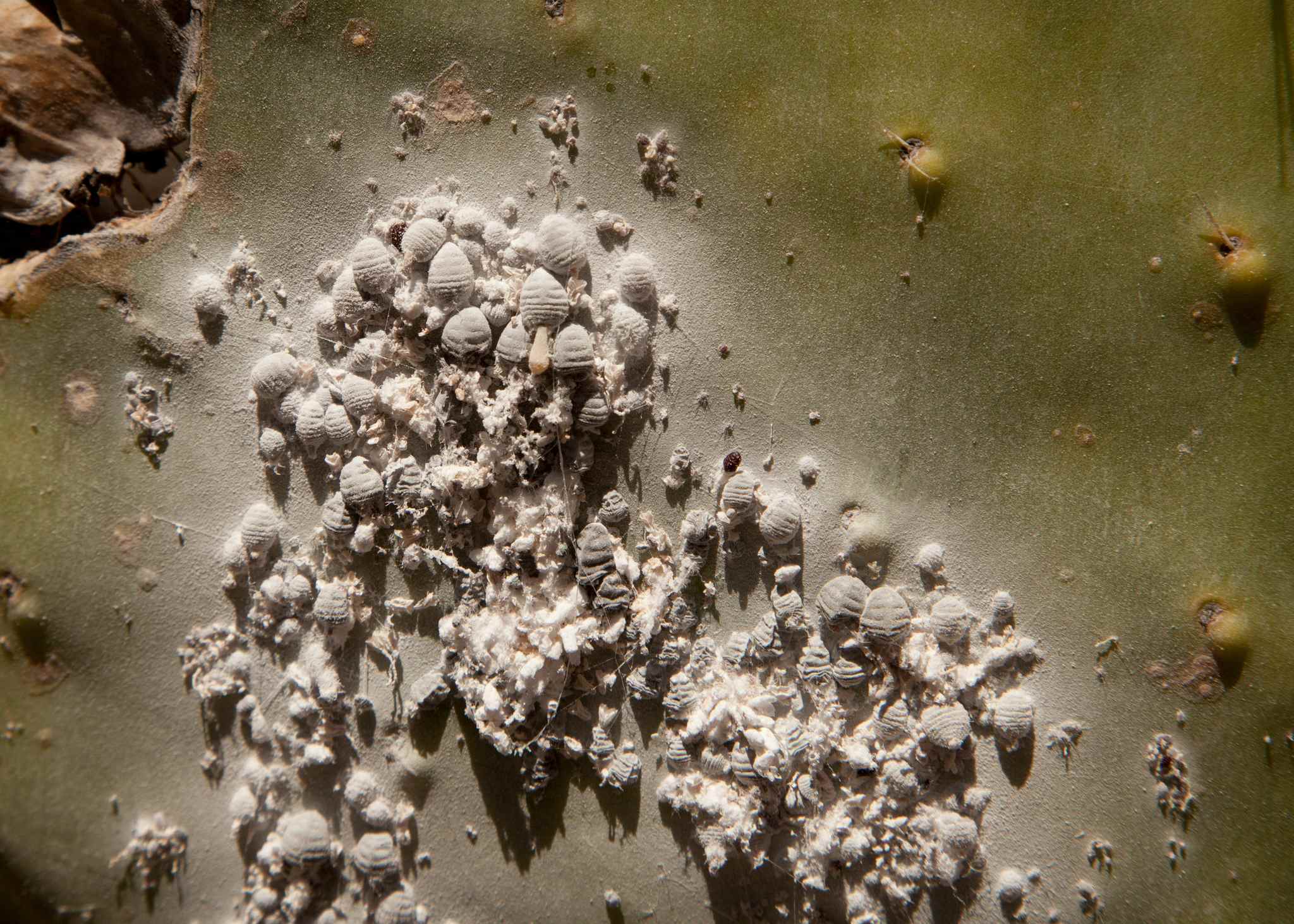
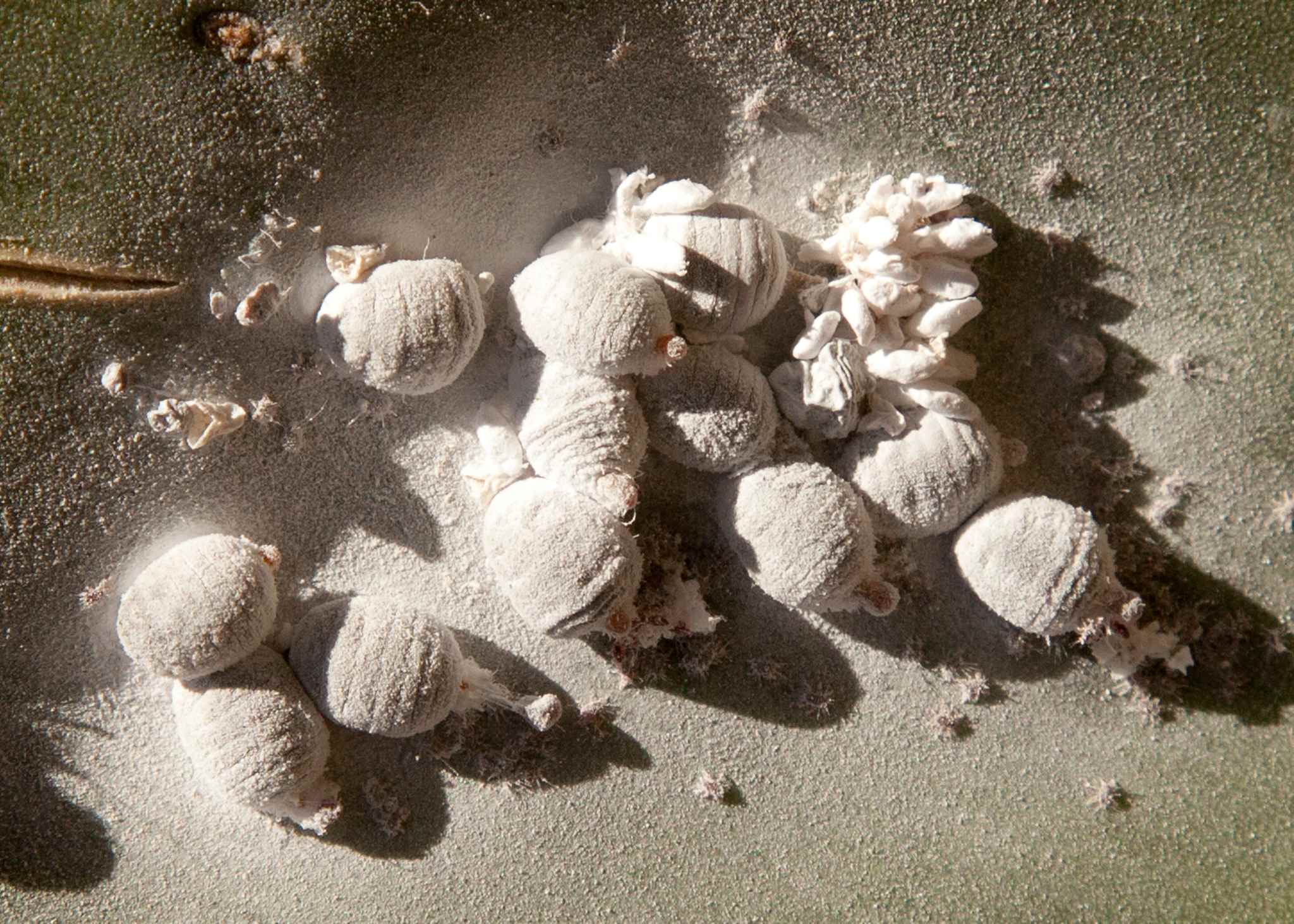
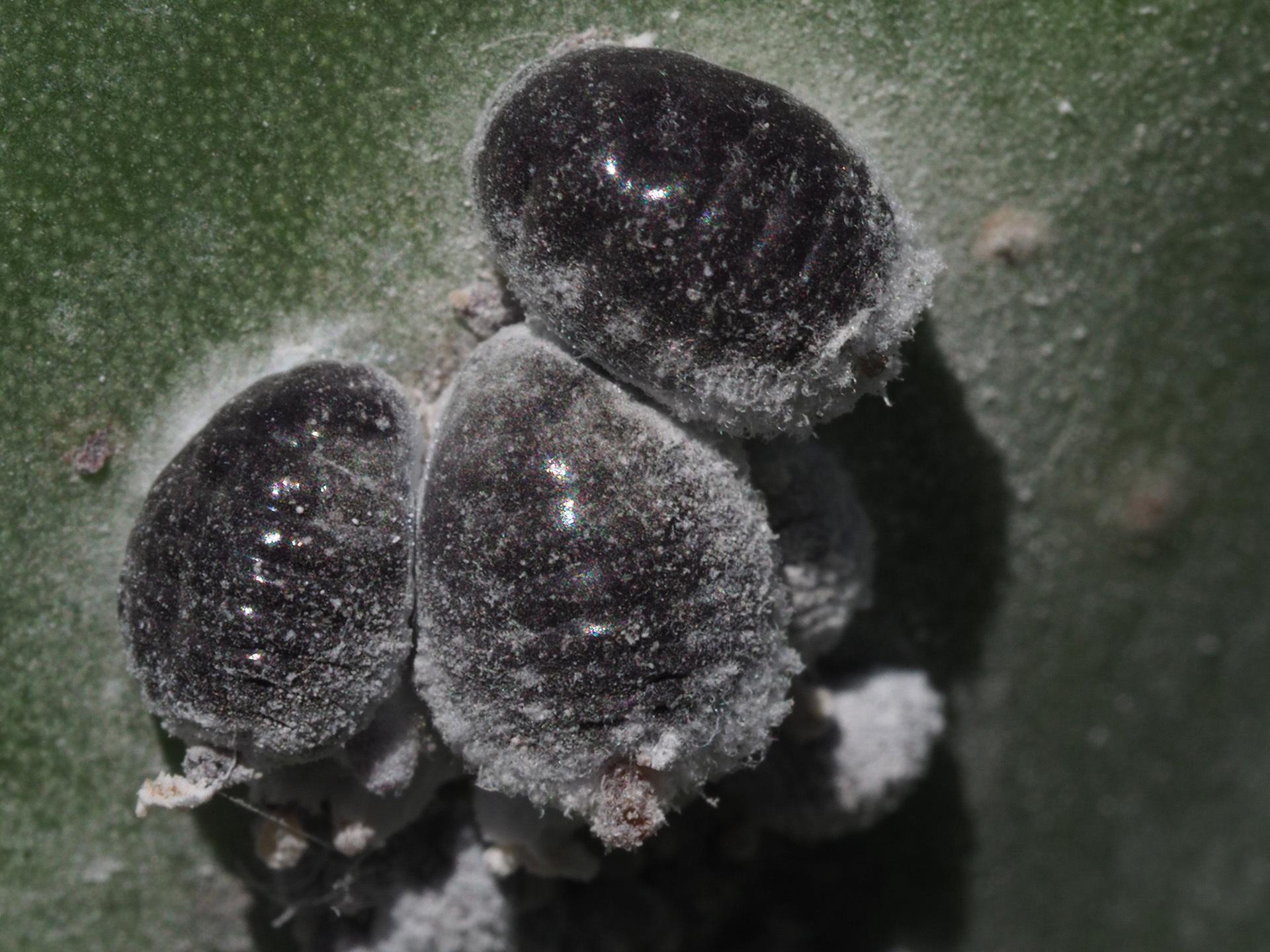
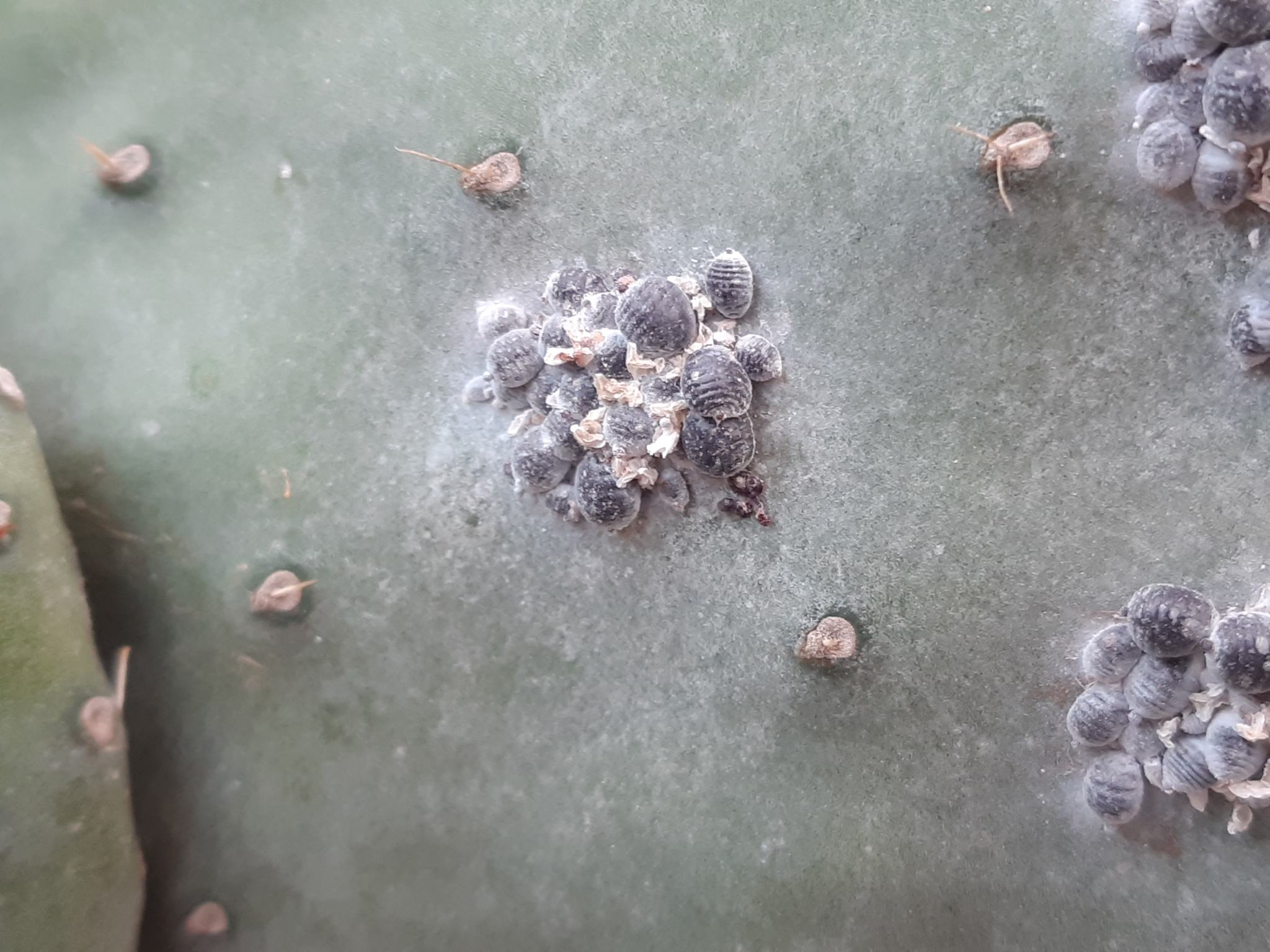
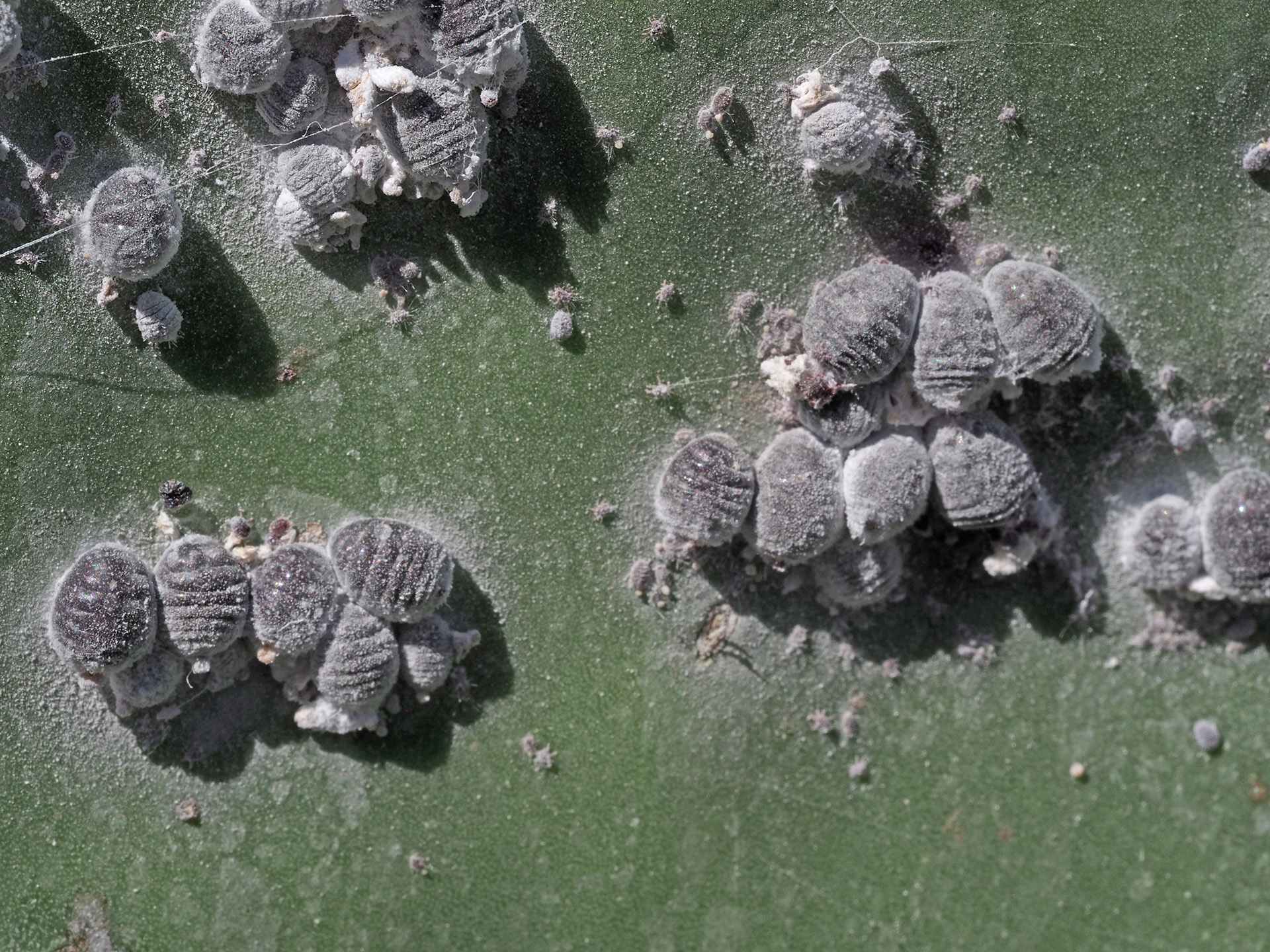
The cochineal ( KOTCH-in-EEL, -?eel, US also KOH-chin-EEL, -?eel; Dactylopius coccus) is a scale insect in the suborder Sternorrhyncha, from which the natural dye carmine is derived. A primarily sessile parasite native to tropical and subtropical South America through North America (Mexico and the Southwest United States), this insect lives on cacti in the genus Opuntia, feeding on plant moisture and nutrients. The insects are found on the pads of prickly pear cacti, collected by brushing them off the plants, and dried. The insect produces carminic acid that deters predation by other insects. Carminic acid, typically 17 C24% of dried insects' weight, can be extracted from the body and eggs, then mixed with aluminium or calcium salts to make carmine dye, also known as cochineal. Today, carmine is primarily used as a colorant in food and in lipstick (E120 or Natural Red 4). Carmine dye was used in the Americas for coloring fabrics and became an important export good in the 16th century during the colonial period. Production of cochineal is depicted in the Codex Osuna (1565). After synthetic pigments and dyes such as alizarin were invented in the late 19th century, use of natural-dye products gradually diminished. Fears over the safety of artificial food additives renewed the popularity of cochineal dyes, and the increased demand has made cultivation of the insect profitable again, with Peru being the largest producer, followed by Mexico, Chile, Argentina and the Canary Islands. Other species in the genus Dactylopius can be used to produce "cochineal extract", and are extremely difficult to distinguish from D. coccus, even for expert taxonomists; the scientific term D. coccus and the vernacular "cochineal insect" are sometimes used, intentionally or casually, and possibly with misleading effect, to refer to other species.
from Wikipedia
Taxonomic Information
Eukaryota
Arthropoda
Insecta
Hemiptera
Dactylopiidae
Dactylopius
coccus
nan
Species
nan
k__Eukaryota;p__Arthropoda;c__Insecta;o__Hemiptera;f__Dactylopiidae;g__Dactylopius;s__Dactylopius coccus
nan
Arthropods
Photos (5 photos)
Morphological Features
Adult male. Body length 2.0–2.2 mm (mounted); total body length to antennal length ratio 1:0.57. Head rather pointed anteriorly; ventral eyes approximately level with dorsal simple eyes; median crest with 10–15 hs dorsal head setae on each side extending full length; ventral mid-cranial ridge with 3 or 4 setae on each side; genal setae 3 or 4 hs on each side. Antennae 1100–1175 μm long; flagellar segments with short stout fleshy setae and long capitate setae; segment III with 13–27 fs + 10 or 11 hs; segment VIII with 16–19 fs, 0 hs, 4 or 5 caps + 1 antennal bristle. Pronotal sclerite extending laterally, without lateral pronotal setae. Mesothorax: prescutum oval, 175 μm long, 230–260 μm wide; scutal setae about 6 or 7 hs on each side; scutellar setae 2 or 3 hs on each side. Wings hyaline, about 2075 μm long, 875 μm wide (length:width 1:0.42); subequal to total body length, width less than half length. Legs: tibia III 180–190 μm (ratio of tibia III to tarsus III 1:0.59); tarsal digitules subequal to claw length with small capitate apices; claws long and thin, nearly twice width of tarsus, almost straight, without denticle; claw digitules subequal to claw length with small capitate apices. Abdomen: segments I–VII tergites and sternites unsclerotised except narrow sclerotisations on anterior margins of I and II; dorsal setae 3–7 hs on each side; ventropleural setae 1 hs on each side; caudal extension rounded with about 5 or 6 hs pleural setae; each pouch with 2 very short truncated glandular pouch setae 40–75 μm long. Genital segments: penial sheath short, narrowly triangular and blunt; segment IX with anal opening about 50 μm wide, with 4–6 setae medially; aedeagus parallel-sided, 100 μm long, about 25 μm wide at apex; basal rod about 85 μm long.
Plazi taxonomic treatment
Host Plants (0 host plants)
Data sources: EPPO Global Database and relevant literature.
No host plants available.
Quarantine Status (3 records)
Data sources: IPPC website and national quarantine websites; verified by human review.
| Country | Status | Year Added |
|---|---|---|
| Chile | A2 list | 2019 |
| Republic of Korea | Quarantine pests | — |
| United States of America | Quarantine pests | — |
Distribution (9 countries)
Data Sources: EPPO Global Database and GBIF.
| Country | Status | State |
|---|---|---|
| Bolivia (Plurinational State of) | Present | — |
| Germany | Present | — |
| Ecuador | Present | — |
| Spain | Present | — |
| India | Present | — |
| Mexico | Present | — |
| Peru | Present | — |
| Portugal | Present | — |
| United States of America | Present | — |
Distribution Map (Latitude and longitude coordinates sourced from GBIF.)
Download CSVGenomes (1 records)
Data source: NCBI.
| Assembly Accession | Assembly Level | Genome Size(Mb) | Contig N50(Kb) | Scaffold N50(Kb) | BUSCO% | Downloads | Actions |
|---|---|---|---|---|---|---|---|
| GCA_000833685.1 | Contig | 18 | 379 | 379 | - |
|
|
|
ASM83368v1 |
|||||||
Transcriptomes (2 records)
Data source: NCBI.
| Run ID | Tissue | Developmental Stage | Sex | Read Count | Location | Actions |
|---|---|---|---|---|---|---|
| SRR5462326 | Whole insect | Adult | female | 26989233 | - | |
|
PRJNA383742 SRX2750223 SRP104495 insect Dactylopius transcriptome Half a milligram of frozen adult female Dactylopius coccus, obtained from Lanzarote Spain, were ground into a fine powder with a mortar and pestle under liquid nitrogen. Total RNA was subsequently extracted using the RNeasy mini kit (Qiagen) according to manufacturers instructions. Polyadenylated RNA was converted into cDNA with an oligo-dT primer and a reverse transcriptase (RT˛ Easy First Strand Kit, Qiagen). The cDNA samples were sequenced with a total yield of 5GB/sample (corresponding to 55 million 90-bp reads) by BGI-Shenzhen, China using 90-bp paired-end Illumina sequencing technology {'sex': 'female', 'tissue': 'Whole insect', 'dev_stage': 'Adult', 'biosamplemodel': 'Model organism or animal'} |
||||||
| ERR16768490,ERR16768491 | - | - | female | 61882475 | - | |
|
PRJEB90601 ERX16161575 ERP173603 insect Dactylopius coccus Illumina RNA-Seq data {'gal': 'SciLifeLab', 'sex': 'female', 'tolid': 'ihDacCocc7', 'habitat': 'Exotic forest', 'lifestage': 'adult', 'broker name': 'COPO', 'sample name': '670b67ec91c50845d5ed1306', 'specimen_id': 'ERGA PR 7524 0894', 'collected_by': 'Paula Riccardi | Dora Aguín-Pombo | Hugo Miguel Silva | Gonçalo Gomes | Luena Marques | Emily Hartop', 'project name': 'ERGA', 'submitter id': '670b67ec91c50845d5ed1306', 'gal_sample_id': 'NOT PROVIDED', 'identified_by': 'DORA AGUIN-POMBO', 'organism part': 'WHOLE ORGANISM', 'proxy voucher': 'UMACI 7524 0907', 'sample same as': 'SAMEA116283125', 'collection date': '2024-08-27', 'scientific_name': 'Dactylopius coccus', 'specimen_voucher': 'NOT PROVIDED', 'insdc center name': 'EarlhamInstitute', 'proxy biomaterial': 'MNCN-ADN 204306', 'collector orcid id': '0000-0003-4850-7524 | 0000-0002-4471-7105 | 0009-0005-7396-6273 | 0009-0002-7388-7864 | 0009-0009-4235-6033 | 0000-0002-8598-9844', 'sample coordinator': 'PAULA RICCARDI', 'collecting institution': 'Museum für Naturkunde Berlin | University of Madeira | University of Madeira | University of Madeira | University of Madeira | Norwegian University of Science and Technology', 'identifier_affiliation': 'University of Madeira', 'voucher institution url': 'https://ror.org/0442zbe52', 'sample collection method': 'Sweeping', 'sample coordinator orcid id': '0000-0003-4850-7524', 'geographic location (latitude)': '32.646775', 'sample coordinator affiliation': 'Museum für Naturkunde Berlin', 'geographic location (longitude)': '-16.862051', 'geographic location (country and/or sea)': 'Portugal', 'geographic location (region and locality)': 'Madeira Island | Santa Cruz | Cancela'} |
||||||
DNA Barcodes (82 records)
View allData source: BOLD.
| Process ID | BIN | Marker | Length | Country | Date | Lat/Lon | Sequence |
|---|---|---|---|---|---|---|---|
| MUSBA1972-25 | - | COI-5P | 658 | Portugal | 2024-08-27 | 32.646774, -16.862051 | |
| MUSBA1960-25 | - | COI-5P | 658 | Portugal | 2024-08-27 | 32.646774, -16.862051 | |
| GBMHH7288-15 | BOLD:ACV6372 | COI-5P | 556 | - | - | - | |
| GBMHH7287-15 | BOLD:ACV6372 | COI-5P | 556 | - | - | - | |
| GBMHH7286-15 | BOLD:ACV6372 | COI-5P | 556 | - | - | - | |
| GBMHH7285-15 | BOLD:ACV6372 | COI-5P | 556 | - | - | - | |
| GBMHH7284-15 | BOLD:ACV6372 | COI-5P | 556 | - | - | - | |
| GBMHH7283-15 | BOLD:ACV6372 | COI-5P | 556 | - | - | - | |
| GBMHH7282-15 | BOLD:ACV6372 | COI-5P | 556 | - | - | - | |
| GBMHH7281-15 | BOLD:ACV6372 | COI-5P | 556 | - | - | - |
Literature
Fetching literature from NCBI PubMed...
Failed to fetch literature