Coridromius
TaxID: 236641
Basic Information
Coridromius
Plant Bug
nan
from Wikipedia
Taxonomic Information
Eukaryota
Arthropoda
Insecta
Hemiptera
Miridae
Coridromius
nan
nan
Genus
nan
k__Eukaryota;p__Arthropoda;c__Insecta;o__Hemiptera;f__Miridae;g__Coridromius;s__unclassified
nan
Arthropods
Photos (5 photos)
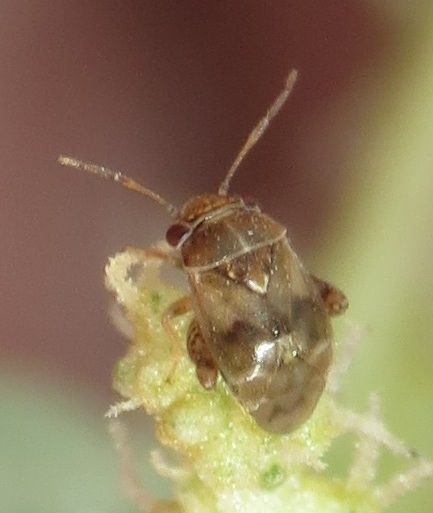
Morphological Features
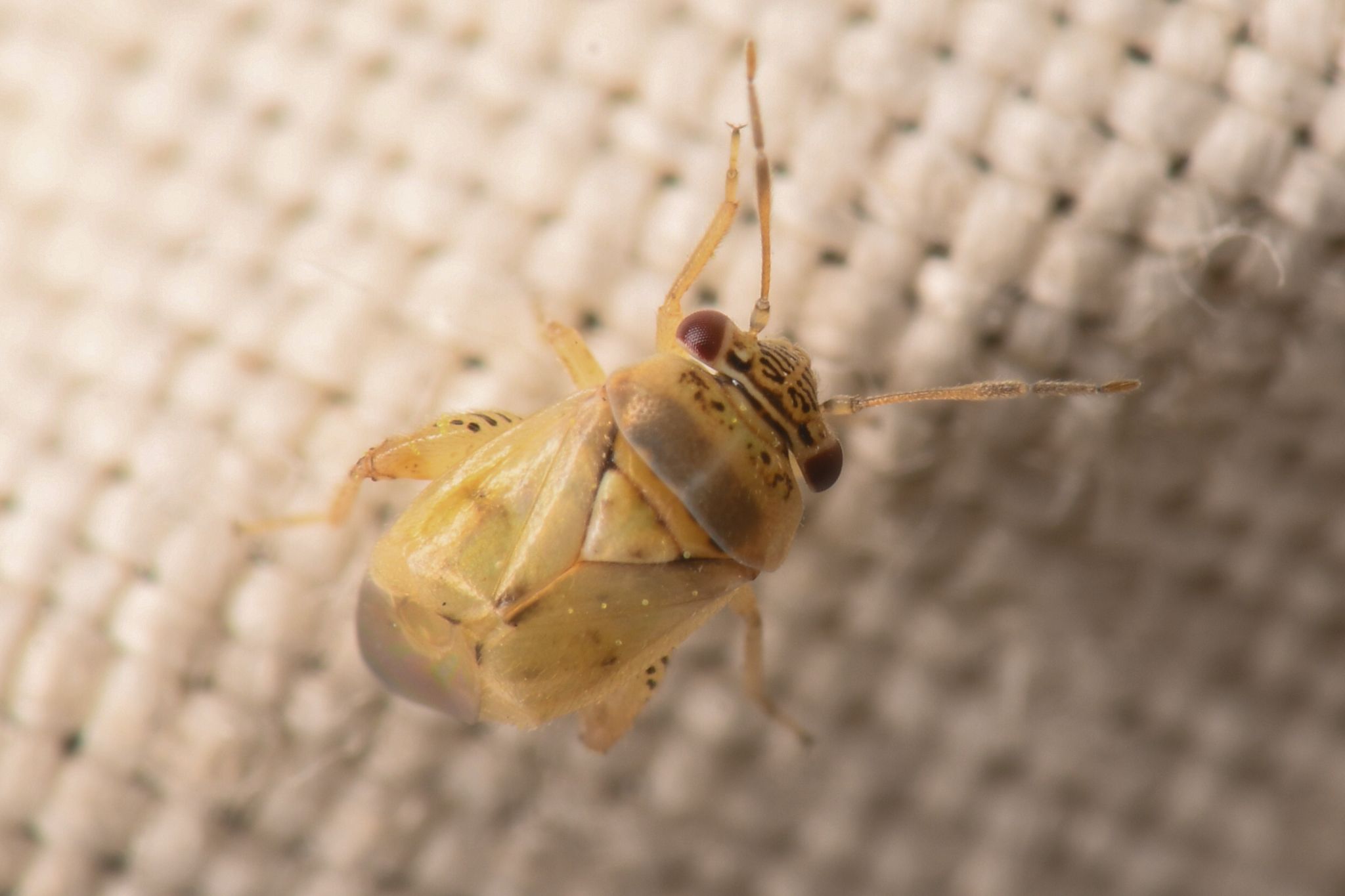
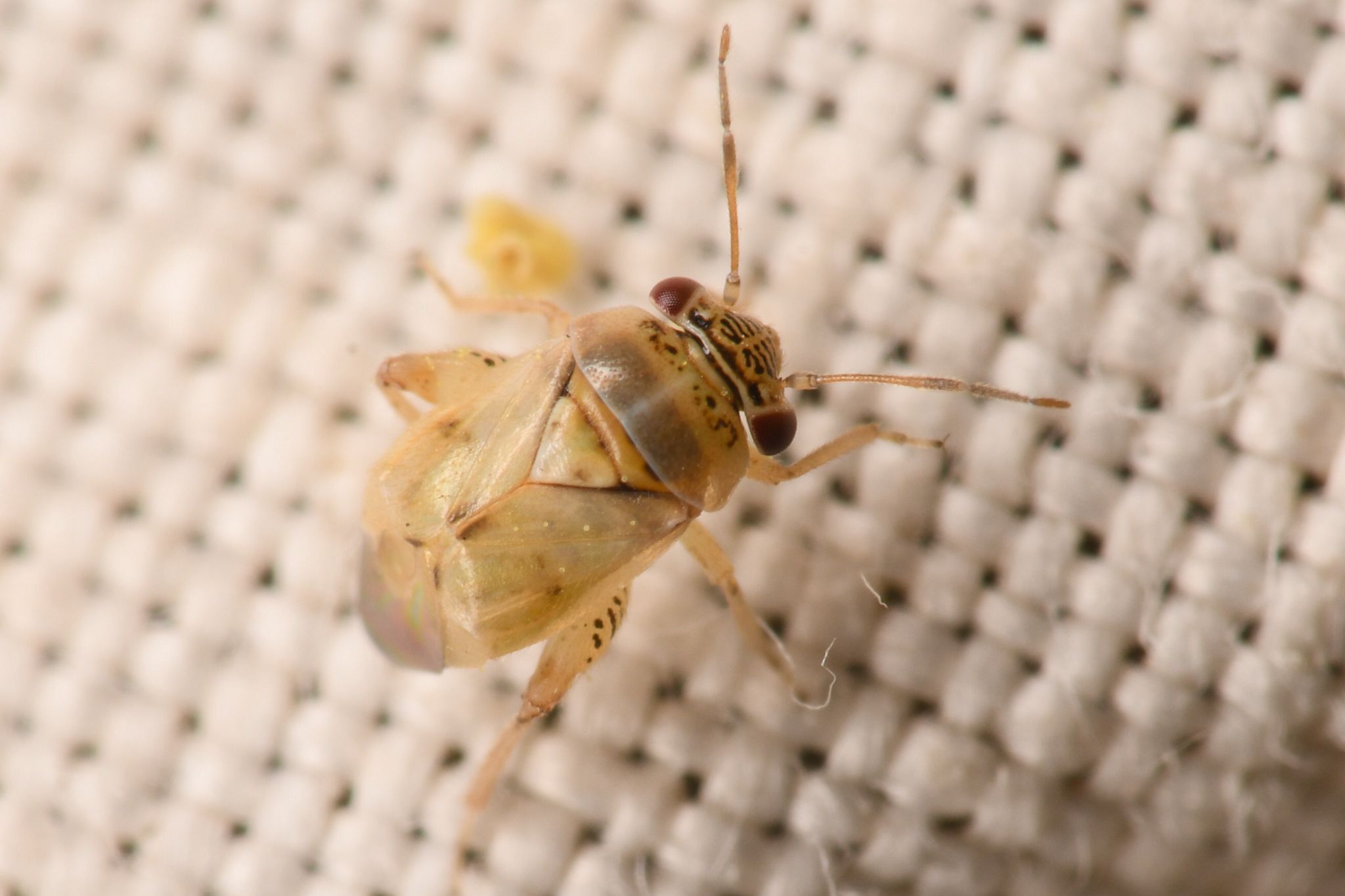
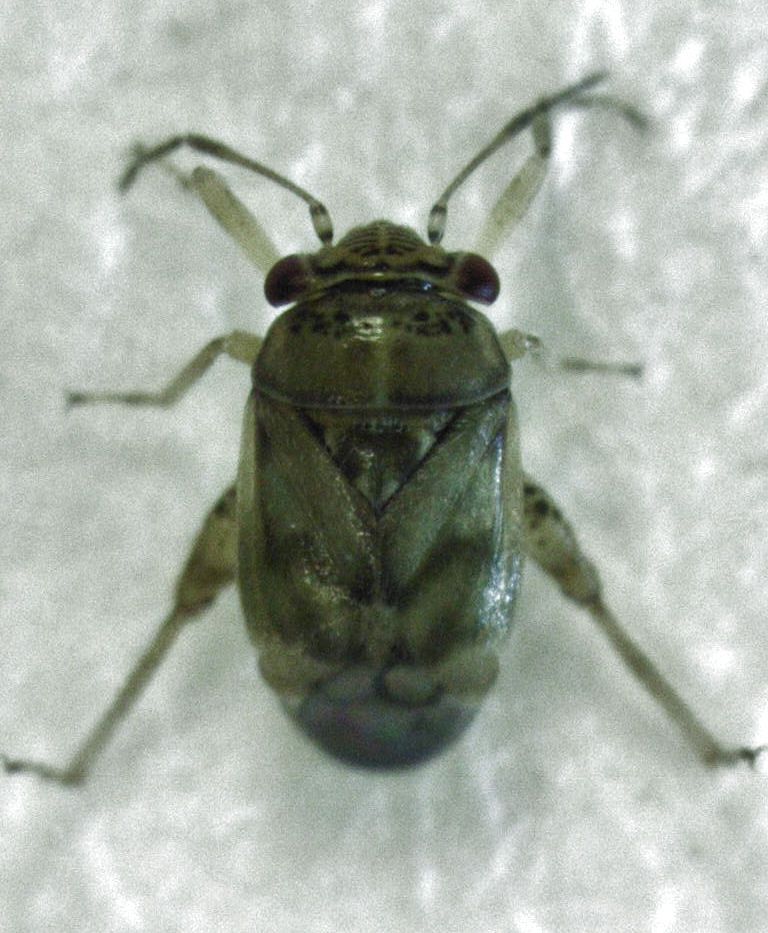
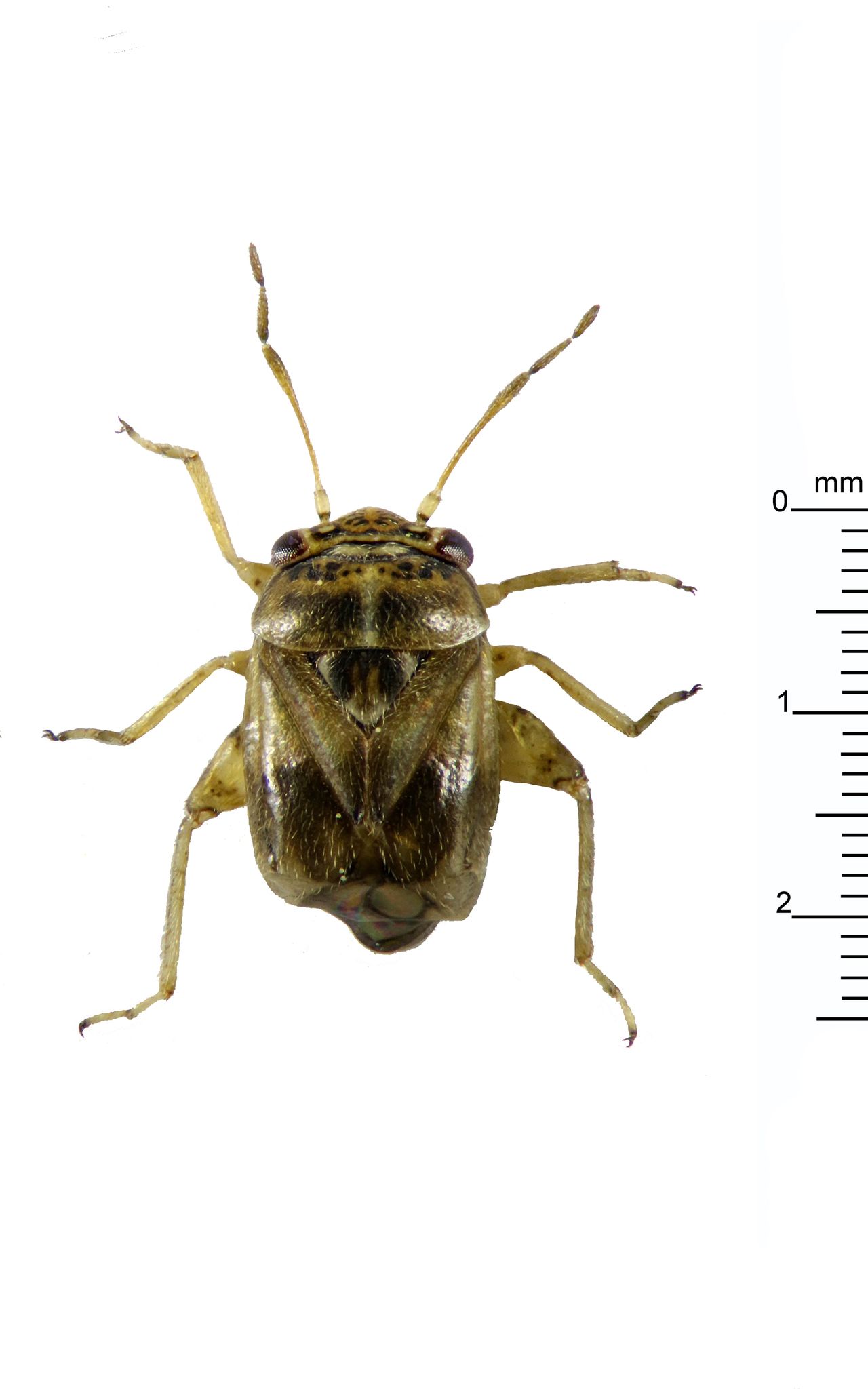
Body compact and stout, small, most species between 2–3 mm in length. Coloration variable, typically brown with various brown, yellow, and cream-colored markings; head often with contrasting dark brown or black above and yellow below, sometimes with irregular dark brown band on clypeus and a single dark brown spot on middle of vertex; frons tumescent medially, shallowly depressed adjacent to eyes; vertex usually with a pair of slightly raised tubercles adjacent to eyes, bordered posteriorly by shallow foveae; posterior margin of head weakly to strongly medially rounded. Antenna: first segment very short and cylindrical, approximately five times shorter than width of vertex. Pronotum broad and convex, anterolateral margins usually somewhat upturned, submarginal region of humeral angles shallowly excavate, collar present and rounded, visible from above, callar region either undifferentiated or weakly defined, lateral margins sometimes carinate. Scutellum sometimes with paired dark brown spots. Hemelytra often with brown transverse chevron pattern; costal margin thin and platelike in some species. Metathoracic gland external efferent system reduced, peritreme elongate, fingerlike. Legs: caudal margin of hind tibia with two rows of minute spines interspersed with longer spines. Abdomen sometimes with visible external paragenital modifications on right side. Surface and vestiture: head, pronotum, scutellum, propleuron, metepimeron, and hemelytra impunctate to punctate; broadly covered with short or long simple, white, decumbent setae. Male genitalia: left paramere larger than right, generally scythe-shaped, with gutter running from base to apex; right paramere smaller, triangular and somewhat elongate, apically acuminate; aedeagus simple, membranous, without sclerotizations.
Plazi taxonomic treatment
Host Plants (0 host plants)
Data sources: EPPO Global Database and relevant literature.
No host plants available.
Quarantine Status (1 records)
Data sources: IPPC website and national quarantine websites; verified by human review.
| Country | Status | Year Added |
|---|---|---|
| United States of America | Quarantine pests | — |
Distribution (0 countries)
Data Sources: EPPO Global Database and GBIF.
No distribution records available.
Genomes (0 records)
Data source: NCBI.
No genome records available.
Transcriptomes (0 records)
Data source: NCBI.
No transcriptome records available.
DNA Barcodes (196 records)
View allData source: BOLD.
| Process ID | BIN | Marker | Length | Country | Date | Lat/Lon | Sequence |
|---|---|---|---|---|---|---|---|
| SYC8415-14 | BOLD:ACN3646 | COI-5P | 657 | French Polynesia | 2007-06-17 | -17.607, -149.544 | |
| SYC8414-14 | BOLD:ACN3646 | COI-5P | 658 | French Polynesia | 2007-06-17 | -17.607, -149.544 | |
| SYC4628-14 | BOLD:ACN3646 | COI-5P | 632 | French Polynesia | 2007-06-13 | -17.631, -149.352 | |
| SYC4230-14 | BOLD:ACN3646 | COI-5P | 606 | French Polynesia | 2007-03-31 | -17.602, -149.562 | |
| SYC2737-14 | BOLD:ACN3646 | COI-5P | 654 | French Polynesia | 2007-12-06 | -17.631, -149.352 | |
| SMTPP704-15 | BOLD:AAZ3329 | COI-5P | 576 | United States | 2015-09-21 | 32.911, -117.105 | |
| SMTPP696-15 | BOLD:AAZ3329 | COI-5P | 591 | United States | 2015-09-21 | 32.911, -117.105 | |
| SDRVP018-14 | BOLD:AAZ3329 | COI-5P | 551 | United States | 2013-11-15 | 33.064, -117.083 | |
| SDRVN661-14 | BOLD:AAZ3329 | COI-5P | 582 | United States | 2013-11-15 | 33.115, -116.601 | |
| SDRVN660-14 | BOLD:AAZ3329 | COI-5P | 582 | United States | 2013-11-15 | 33.115, -116.601 |
Literature
Fetching literature from NCBI PubMed...
Failed to fetch literature