Daktulosphaira vitifoliae
TaxID: 58002
Basic Information
Daktulosphaira vitifoliae
Grape Phylloxera, grape phylloxera
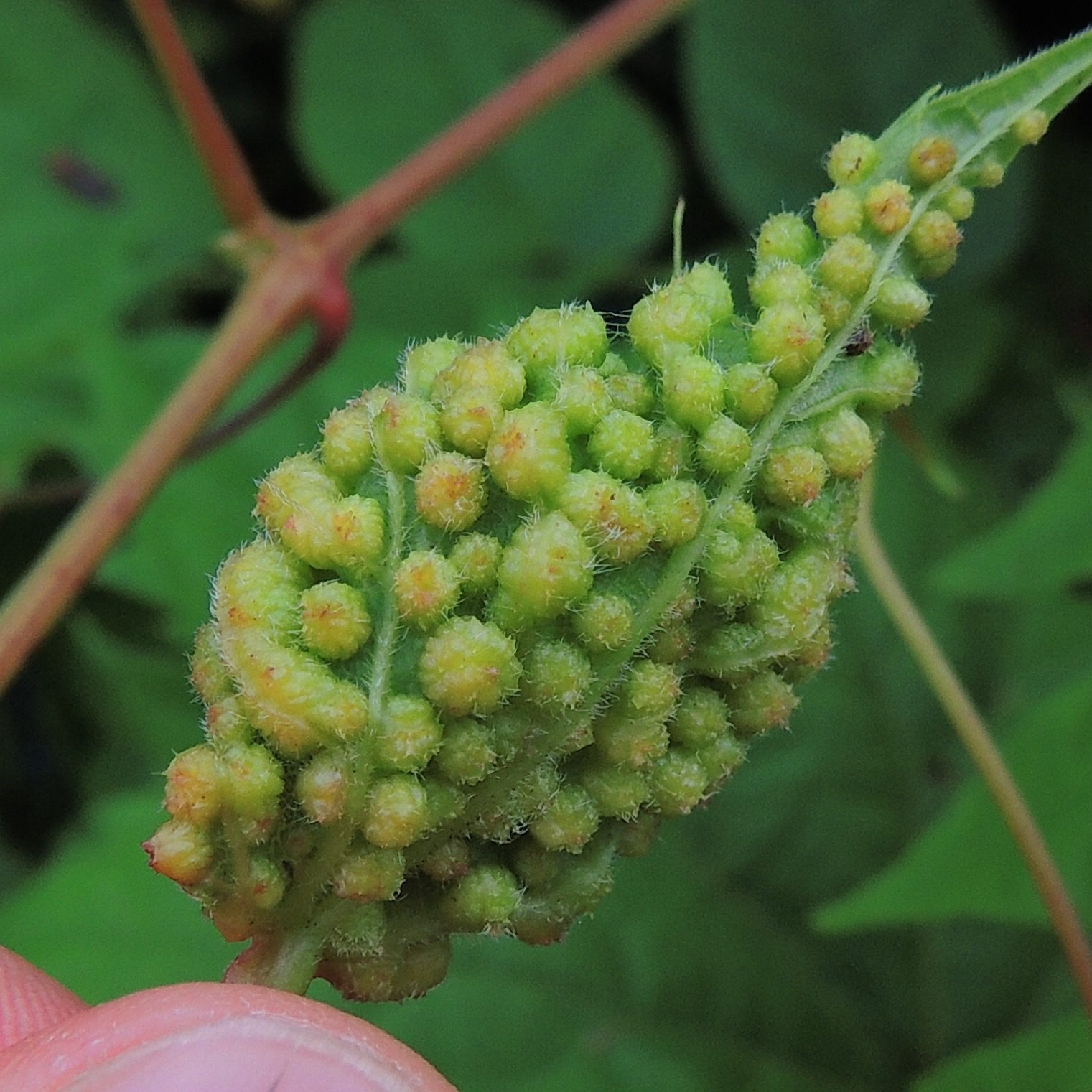
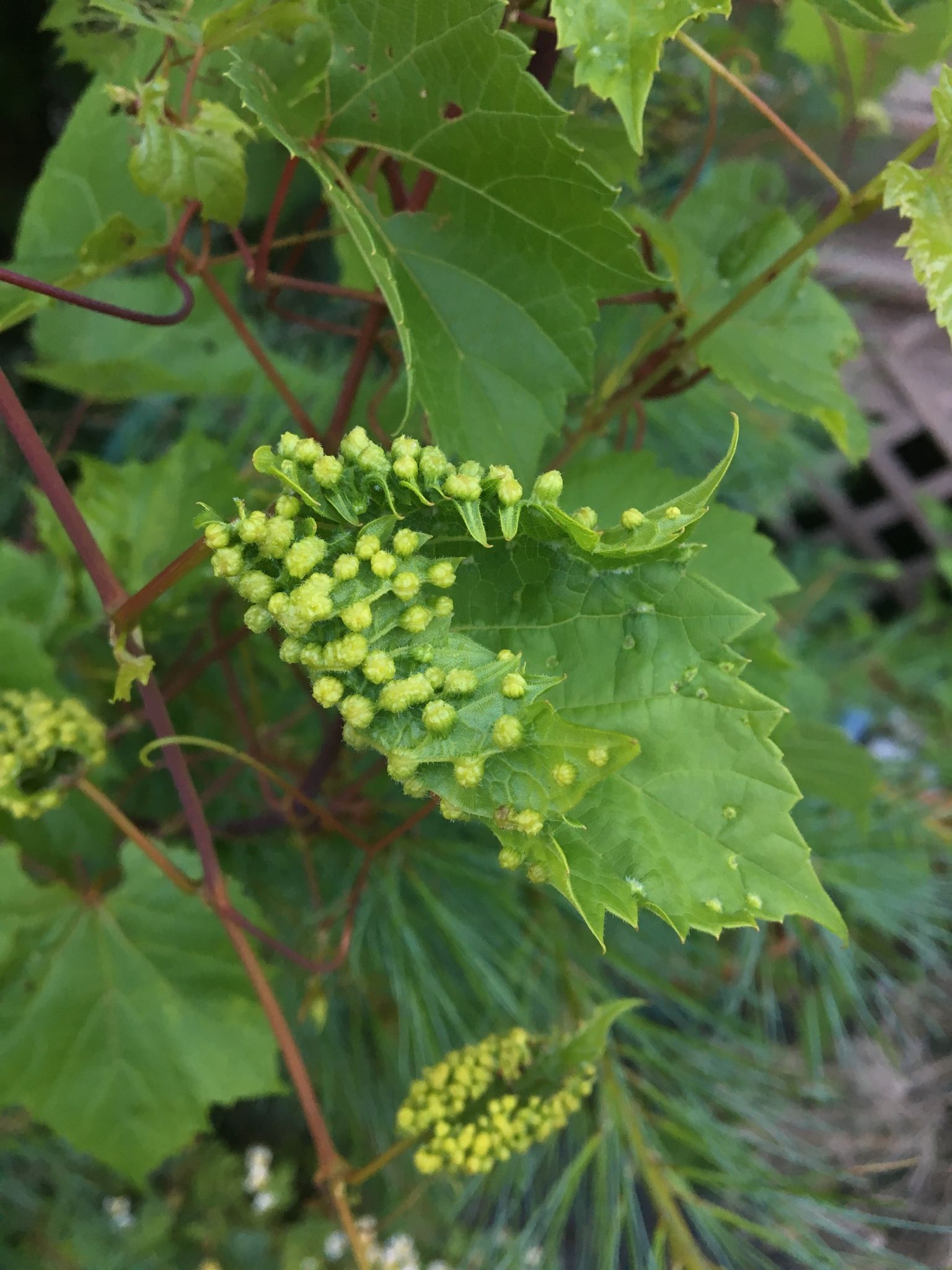
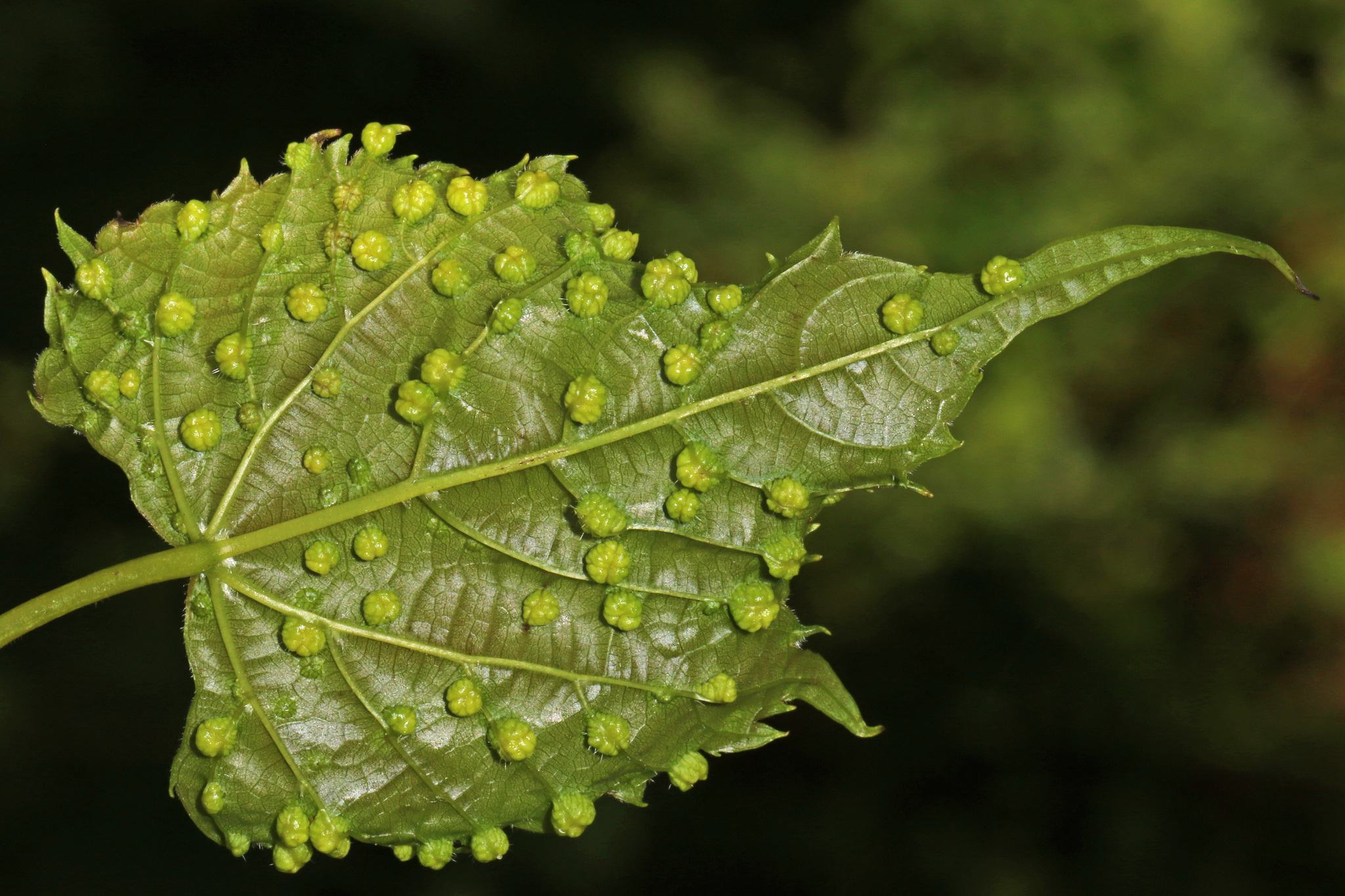
Grape phylloxera is an insect pest of grapevines worldwide, originally native to eastern North America. Grape phylloxera (Daktulosphaira vitifoliae Fitch 1855) belongs to the family Phylloxeridae, within the order Hemiptera, bugs); originally described in France as Phylloxera vastatrix; it is equated to the previously described Daktulosphaera vitifoliae and Phylloxera vitifoliae. The insect is commonly just called phylloxera (; from Ancient Greek: ? ??? , leaf, and ¦µ? ??, dry). These almost microscopic, pale yellow, sap-sucking insects, related to aphids, feed on the roots and leaves of grapevines (depending on the phylloxera genetic strain). On Vitis vinifera, the resulting deformations on roots ("nodosities" and "tuberosities") and secondary fungal infections can girdle roots, gradually cutting off the flow of nutrients and water to the vine. Nymphs also form protective galls on the undersides of grapevine leaves of some Vitis species and overwinter under the bark or on the vine roots; these leaf galls are typically only found on the leaves of American vines. American vine species (such as Vitis labrusca) have evolved to have several natural defenses against phylloxera. The roots of the American vines exude a sticky sap that repels the nymph form by clogging its mouth when it tries to feed from the vine. If the nymph is successful in creating a feeding wound on the root, American vines respond by forming a protective layer of tissue to cover the wound and protect it from secondary bacterial or fungal infections. Currently, no cure for phylloxera is known, and unlike other grape diseases such as powdery or downy mildew, no chemical control or response is available. The only successful means of controlling phylloxera has been the grafting of phylloxera-resistant American rootstock (usually hybrid varieties created from the Vitis berlandieri, V. riparia, and V. ruprestris species) to more susceptible European V. vinifera vines.
from Wikipedia
Taxonomic Information
Eukaryota
Arthropoda
Insecta
Hemiptera
Phylloxeridae
Daktulosphaira
vitifoliae
nan
Species
nan
k__Eukaryota;p__Arthropoda;c__Insecta;o__Hemiptera;f__Phylloxeridae;g__Daktulosphaira;s__Daktulosphaira vitifoliae
nan
Arthropods
Photos (5 photos)
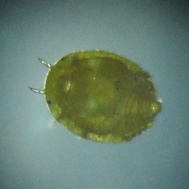
Morphological Features
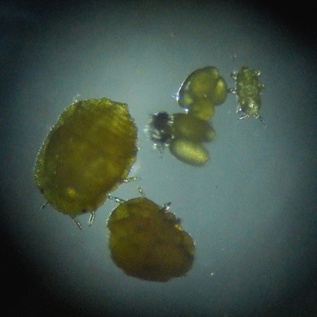
Adults are 1.6–1.8 mm long and 1–1.2 mm wide, with 3-segmented antennae, the third segment being the largest and bearing large sensoria. Two forms exist based on feeding site: the leaf-gall form (without dorsal tubercles) and the root form (with dorsal tubercles: 12 on head, 28 on thorax, 30 on abdomen); the root form is about 1 mm long. Eggs are oval, 300–330 × 160–170 µm, yellow to deep yellow or brown. Larvae have four instars, with morphology similar to adults; as instars progress, body width increases more rapidly than body length, giving a more rounded body outline; dorsal tubercles become more distinct from the second instar onward.
EPPO Global Database. Daktulosphaira vitifoliae datasheet.
Host Plants (17 host plants)
Data sources: EPPO Global Database and relevant literature.
| Scientific Name | Status |
|---|---|
| Vitis aestivalis | Host |
| Vitis amurensis | Host |
| Vitis arizonica | Host |
| Vitis berlandieri | Host |
| Vitis californica | Host |
| Vitis cinerea | Host |
| Vitis davidii | Host |
| Vitis flexuosa | Host |
| Vitis girdiana | Host |
| Vitis heyneana | Host |
Quarantine Status (61 records)
Data sources: IPPC website and national quarantine websites; verified by human review.
| Country | Status | Year Added |
|---|---|---|
| Armenia | Present | — |
| Australia | Quarantine pests | — |
| Austria | RNQP ((EU) 2019/2072 Annex IV) | 2019 |
| Azerbaijan | Present | 2024 |
| Belgium | RNQP ((EU) 2019/2072 Annex IV) | 2019 |
| Bulgaria | RNQP ((EU) 2019/2072 Annex IV) | 2019 |
| Bahrain | Quarantine pests | 2003 |
| Belarus | Present | 1994 |
| Canada | Quarantine pests | 2019 |
| Switzerland | Regulated non-quarantine pest | 2019 |
Distribution (74 countries)
Data Sources: EPPO Global Database and GBIF.
| Country | Status | State |
|---|---|---|
| Algeria | Present | — |
| Argentina | Present | — |
| Armenia | Present | — |
| Australia | Present | |
| Australia | Absent | |
| Austria | Present | — |
| Azerbaijan | Present | — |
| Belgium | Absent | — |
| Bulgaria | Present | — |
| Bosnia and Herzegovina | Present | — |
Distribution Map (Latitude and longitude coordinates sourced from GBIF.)
Download CSVGenomes (1 records)
Data source: NCBI.
| Assembly Accession | Assembly Level | Genome Size(Mb) | Contig N50(Kb) | Scaffold N50(Kb) | BUSCO% | Downloads | Actions |
|---|---|---|---|---|---|---|---|
| GCF_025091365.1 | Scaffold | 282 | 72 | 45892 | 0.99083668% |
|
|
|
ASM2509136v1 |
|||||||
Transcriptomes (3 records)
Data source: NCBI.
| Run ID | Tissue | Developmental Stage | Sex | Read Count | Location | Actions |
|---|---|---|---|---|---|---|
| SRR10538963 | whole insect | L1 | female | 47539773 | - | |
|
PRJNA592030 SRX7222769 SRP233350 insect RNA-Seq of grape phylloxera, biotype A, larva L1 TruSeq RNA Sample Prep Kit v2 biotype A {'sex': 'female', 'strain': 'biotype A', 'tissue': 'whole insect', 'dev_stage': 'L1', 'replicate': '2', 'biosamplemodel': 'Model organism or animal'} |
||||||
| SRR10538962 | whole insect | L2-3 | female | 40591061 | - | |
|
PRJNA592030 SRX7222770 SRP233350 insect RNA-Seq of grape phylloxera, biotype A, larva L2-3 TruSeq RNA Sample Prep Kit v2 biotype A {'sex': 'female', 'strain': 'biotype A', 'tissue': 'whole insect', 'dev_stage': 'L2-3', 'replicate': '1', 'biosamplemodel': 'Model organism or animal'} |
||||||
| SRR10538961 | whole insect | L2-3 | female | 44719663 | - | |
|
PRJNA592030 SRX7222771 SRP233350 insect RNA-Seq of grape phylloxera, biotype A, larva L2-3 TruSeq RNA Sample Prep Kit v2 biotype A {'sex': 'female', 'strain': 'biotype A', 'tissue': 'whole insect', 'dev_stage': 'L2-3', 'replicate': '2', 'biosamplemodel': 'Model organism or animal'} |
||||||
DNA Barcodes (301 records)
View allData source: BOLD.
| Process ID | BIN | Marker | Length | Country | Date | Lat/Lon | Sequence |
|---|---|---|---|---|---|---|---|
| TZBCA216-06 | BOLD:AAC3947 | COI-5P | 649 | Canada | 2006-08-16 | - | |
| RFBAF079-11 | BOLD:AAC3947 | COI-5P | 658 | Canada | 1993-07-11 | 45.0331, -75.9023 | |
| RFBAE908-09 | BOLD:AAC3947 | COI-5P | 654 | Canada | 2008-06-25 | 43.101, -79.2814 | |
| RFBAC442-07 | BOLD:AAC3947 | COI-5P | 658 | United States | 2007-06-22 | 42.3565, -85.6585 | |
| RDBA332-05 | BOLD:AAC3948 | COI-5P | 658 | United States | 2004-09-07 | 38.54, -121.76 | |
| RDBA216-05 | BOLD:AAC3947 | COI-5P | 656 | Canada | 1993-07-11 | 45.3757, -75.6686 | |
| NLHMM2064-15 | BOLD:AAC3947 | COI-5P | 658 | Netherlands | 2011-09-21 | 51.97, 5.71 | |
| NLHMM2063-15 | BOLD:AAC3947 | COI-5P | 658 | Netherlands | 2011-09-21 | 51.97, 5.71 | |
| NLHMM2062-15 | - | COI-5P | 658 | Netherlands | 2011-09-21 | 51.97, 5.71 | |
| NLHMM2061-15 | BOLD:AAC3947 | COI-5P | 658 | Netherlands | 2011-09-21 | 51.97, 5.71 |
Literature
Fetching literature from NCBI PubMed...
Failed to fetch literature