Euproctis chrysorrhoea
TaxID: 987934
Basic Information
Euproctis chrysorrhoea
Brown-tail, Brown-tail Moth
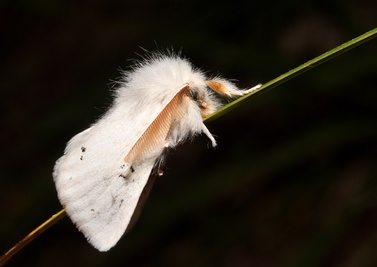
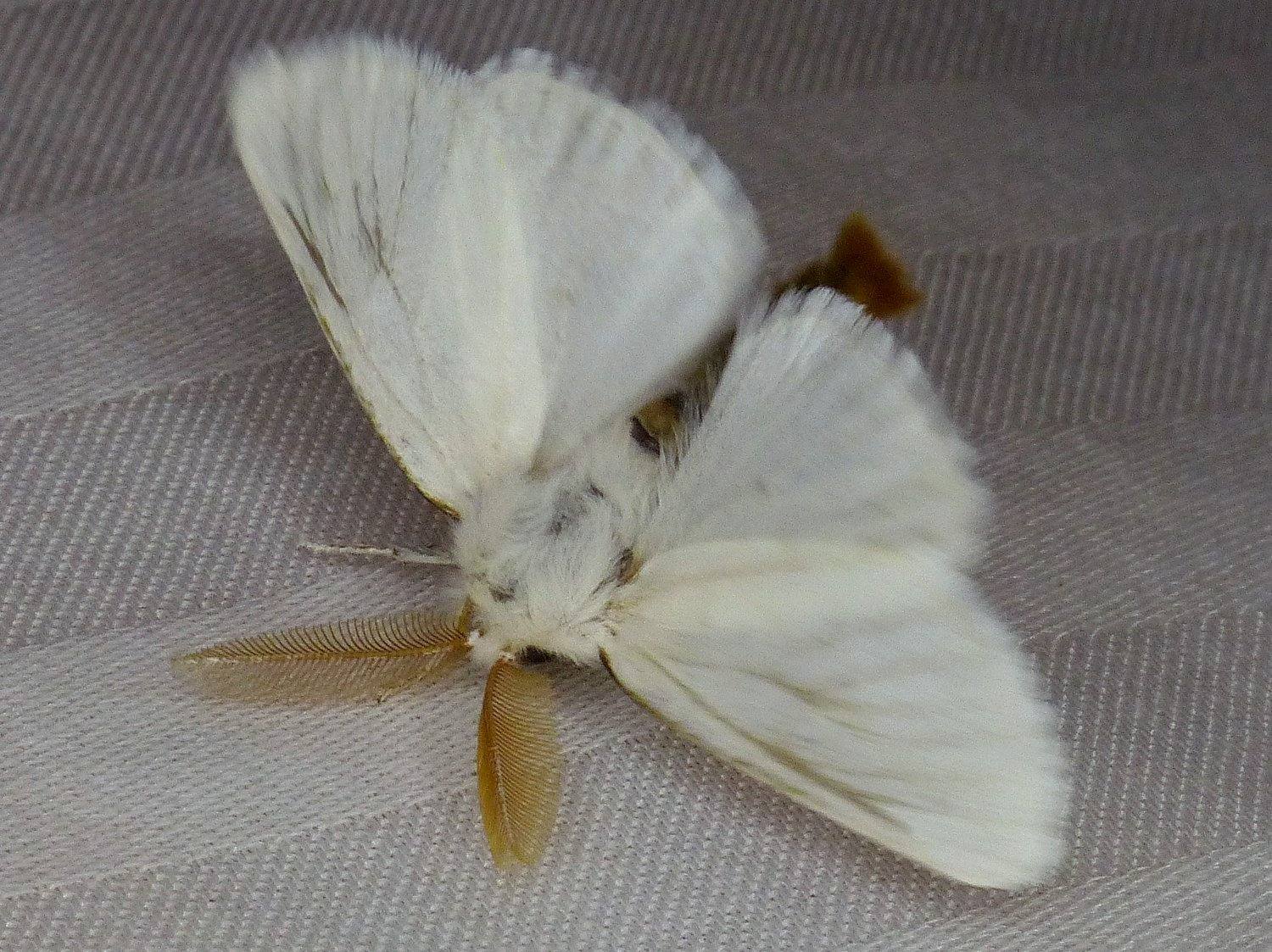
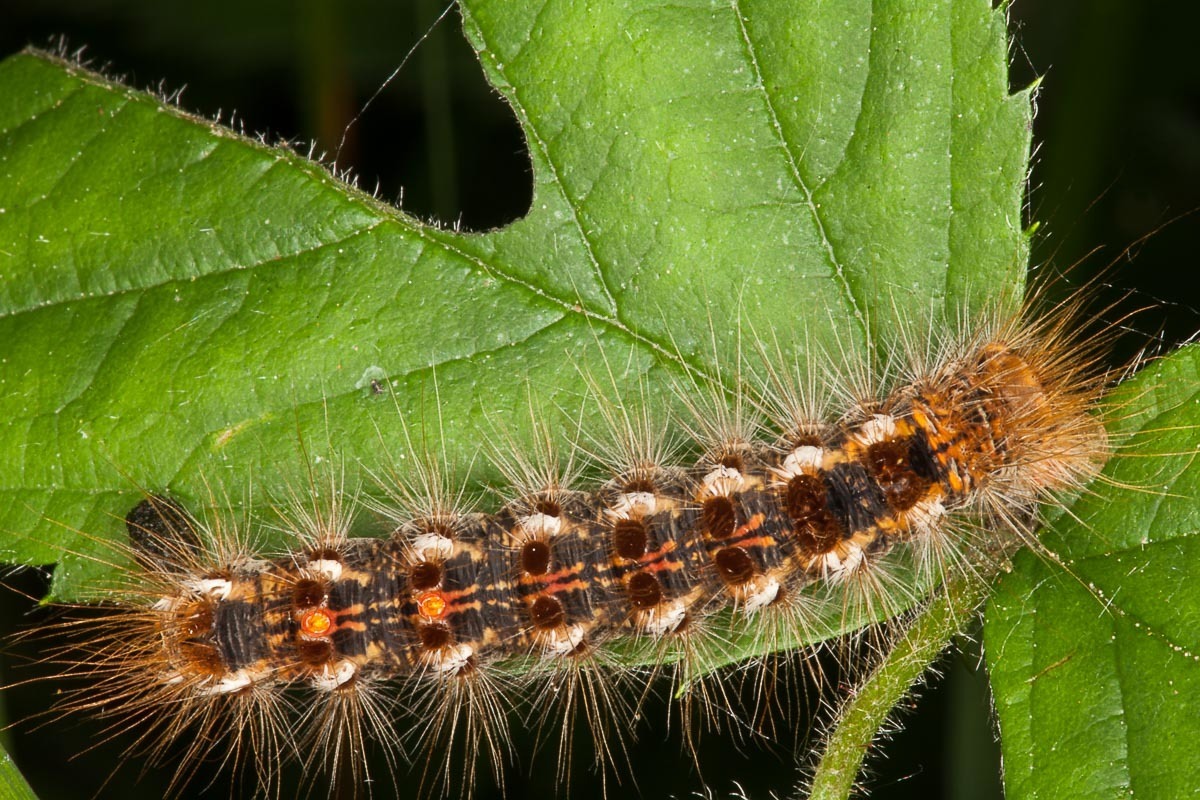
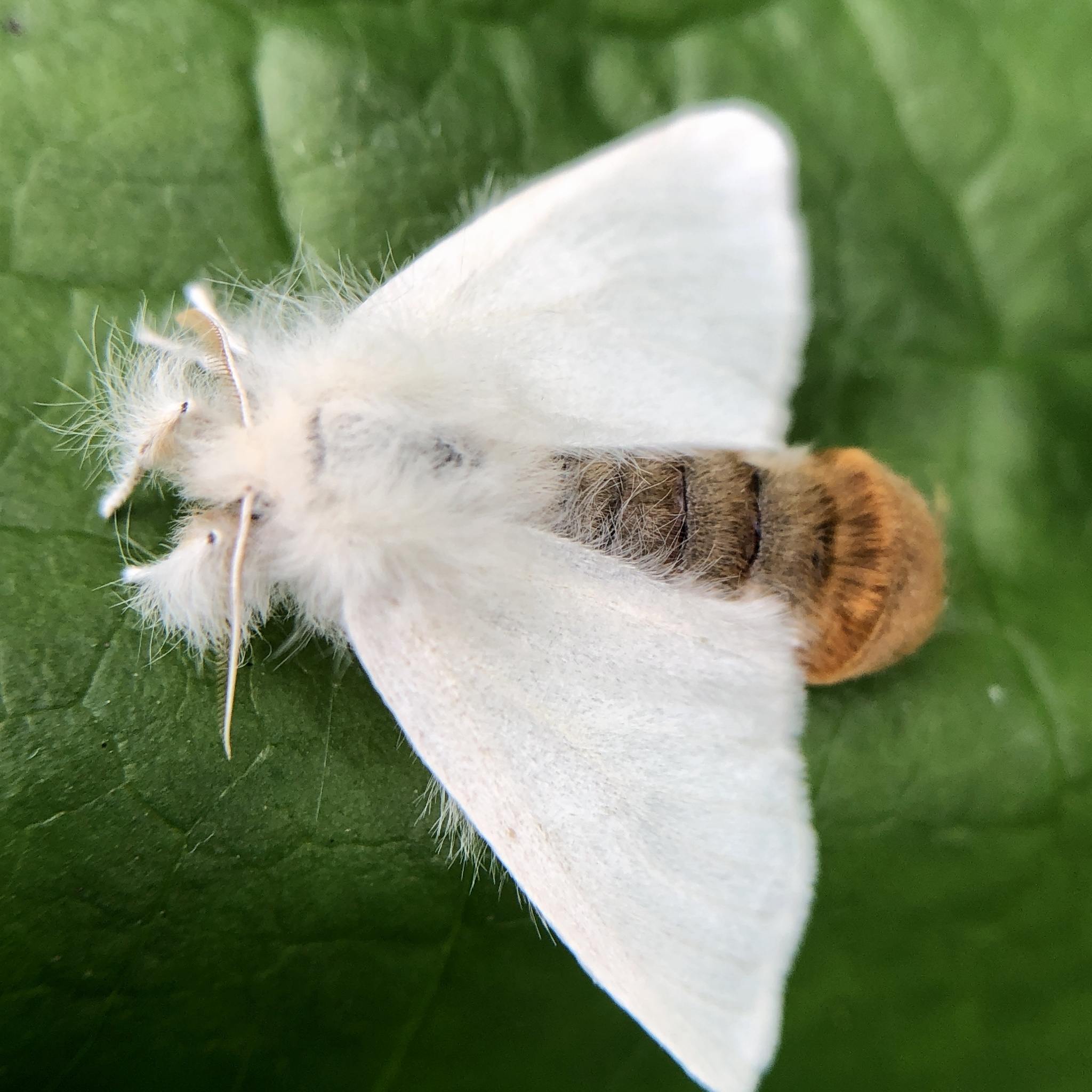
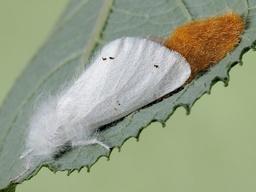
The brown-tail moth (Euproctis chrysorrhoea) is a moth of the family Erebidae. It is native to Europe, neighboring countries in Asia, and the north coast of Africa. Descriptions of outbreaks, i.e., large population increases of several years duration, have been reported as far back as the 1500s. The life cycle of the moth is atypical, in that it spends approximately nine months (August to April) as larvae (caterpillars), leaving about one month each for pupae, imagos and eggs. Larvae (caterpillars) are covered in hairs. Two red spots on the back, toward the tail, distinguish these species from other similarly hairy moth larvae. The winged adults have white wings and a hairy white body with a tuft of brown hair at the tip of the abdomen. Females lay one egg cluster, usually on the underside of a leaf of a host plant. The species is polyphagous, meaning that it feeds on many different species of trees, including pear, apple, maple and oak. This species was accidentally introduced to the United States in the 1890s. During the early 20th century it was present from eastern Connecticut northward into New Brunswick, Canada, but a subsequent severe population collapse reduced the territory to parts of coastal Maine and Cape Cod, Massachusetts, by the late 20th century. One theory for the decline appeared to be parasitism by a fly introduced to combat spongy moths. Starting in 2015 there has been a population spike and territory expansion in coastal Maine. In Europe, there are multiple parasitic and predator species, yet there is still a history of population outbreaks. Hairs from the caterpillars are toxic for humans, causing a poison ivy-like itchy rash of up to sometimes weeks-long duration due to mechanical and chemical irritation. Direct contact with larvae is not necessary, as the hairs are shed and can become windblown. Toxins in the hairs remain potent for up to three years. Outdoor activities such as mowing a lawn or raking leaves in the fall can cause exposure.
from Wikipedia
Taxonomic Information
Metazoa
Arthropoda
Insecta
Lepidoptera
Erebidae
Euproctis
chrysorrhoea
unclassified
Species
nan
k__Metazoa;p__Arthropoda;c__Insecta;o__Lepidoptera;f__Erebidae;g__Euproctis;s__Euproctis chrysorrhoea
nan
Arthropods
Photos (5 photos)
Morphological Features
No morphological description available.
Host Plants (7 host plants)
Data sources: EPPO Global Database and relevant literature.
| Scientific Name | Status |
|---|---|
| Crataegus | Host |
| Populus | Host |
| Prunus | Host |
| Prunus domestica | Host |
| Prunus persica | Host |
| Quercus | Host |
| Ulmus | Host |
Quarantine Status (12 records)
Data sources: IPPC website and national quarantine websites; verified by human review.
| Country | Status | Year Added |
|---|---|---|
| Argentina | Absent | 2019 |
| Canada | Quarantine pests | 2019 |
| Chile | Quarantine pests | — |
| Ecuador | Quarantine pests | — |
| Greece | Quarantine pests | — |
| India | Quarantine pests | — |
| Japan | Quarantine pests | — |
| Republic of Korea | Quarantine pests | — |
| Moldova | Quarantine pests | — |
| Mexico | Quarantine pests | 2018 |
Distribution (51 countries)
Data Sources: EPPO Global Database and GBIF.
| Country | Status | State |
|---|---|---|
| Albania | Absent | — |
| Algeria | Present | — |
| Andorra | Present | — |
| Armenia | Present | — |
| Austria | Present | — |
| Azerbaijan | Present | — |
| Belgium | Present | — |
| Bulgaria | Present | — |
| Bosnia and Herzegovina | Present | — |
| Belarus | Present | — |
Distribution Map (Latitude and longitude coordinates sourced from GBIF.)
Download CSVGenomes (2 records)
Data source: NCBI.
| Assembly Accession | Assembly Level | Genome Size(Mb) | Contig N50(Kb) | Scaffold N50(Kb) | BUSCO% | Downloads | Actions |
|---|---|---|---|---|---|---|---|
| GCA_965178235.1 | Chromosome | 492 | 9349 | 39121 | - |
|
|
|
ilEupChry1.hap1.1 |
|||||||
| GCA_965178075.1 | Scaffold | - | - | - | - | - |
|
|
ilEupChry1.hap2.1 |
|||||||
Transcriptomes (1 records)
Data source: NCBI.
| Run ID | Tissue | Developmental Stage | Sex | Read Count | Location | Actions |
|---|---|---|---|---|---|---|
| SRR1040486 | - | 4th instar | - | 12282016 | Spain | |
|
PRJNA229935 SRX385220 SRP033383 insect De novo transcriptome analysis of BTM1 Samples for transcriptome analysis were prepared using the mRNA-seq Library Preparation Kit (IlluminaTM): mRNA was isolated from total RNA using Oligo(dT) magnetic beads, fragmented into short fragments (about 200 bp) using divalent cations under elevated temperatures. Using these cleaved RNA fragments as templates, cDNA synthesis was performed using reverse transcriptase and random hexamer-primers. Short cDNA fragments were purified, washed with EB buffer for end repair and poly(A) addition, ligated to sequencing adapters and subjected to PCR amplification. BTM1 {'label': 'BTM1', 'isolate': 'BTM1', 'authority': 'Linnaeus 1758', 'dev_stage': '4th instar', 'sample_type': 'whole organism', 'geo_loc_name': 'Spain', 'collection_date': '2013-02'} |
||||||
Literature
Fetching literature from NCBI PubMed...
Failed to fetch literature