Amamiclytus
TaxID: 583401
Basic Information
Amamiclytus
Longhorn Beetle
nan
from Wikipedia
Taxonomic Information
Eukaryota
Arthropoda
Insecta
Coleoptera
Cerambycidae
Amamiclytus
nan
nan
Genus
nan
k__Eukaryota;p__Arthropoda;c__Insecta;o__Coleoptera;f__Cerambycidae;g__Amamiclytus;s__unclassified
nan
Arthropods
Photos (5 photos)
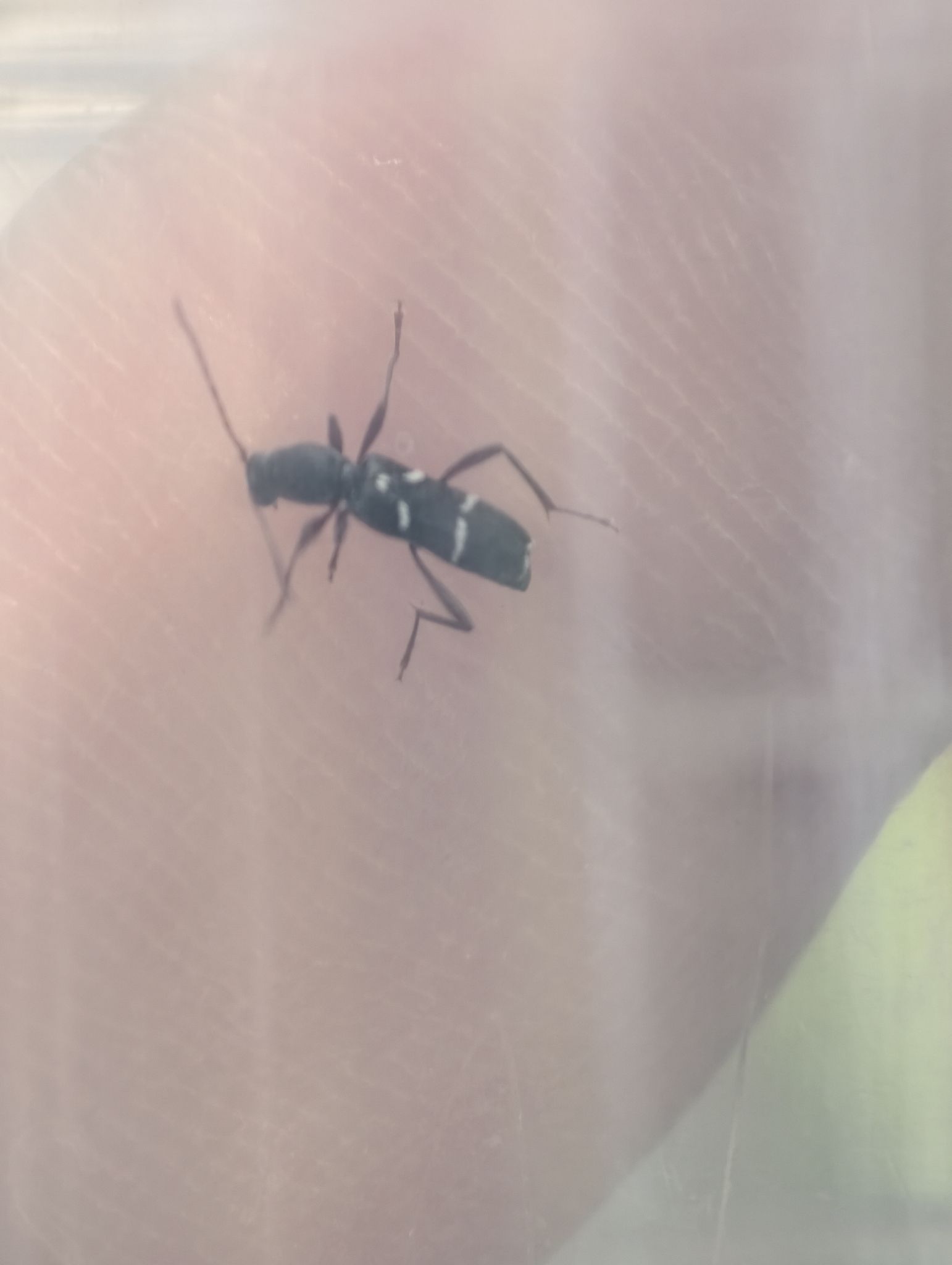
Morphological Features
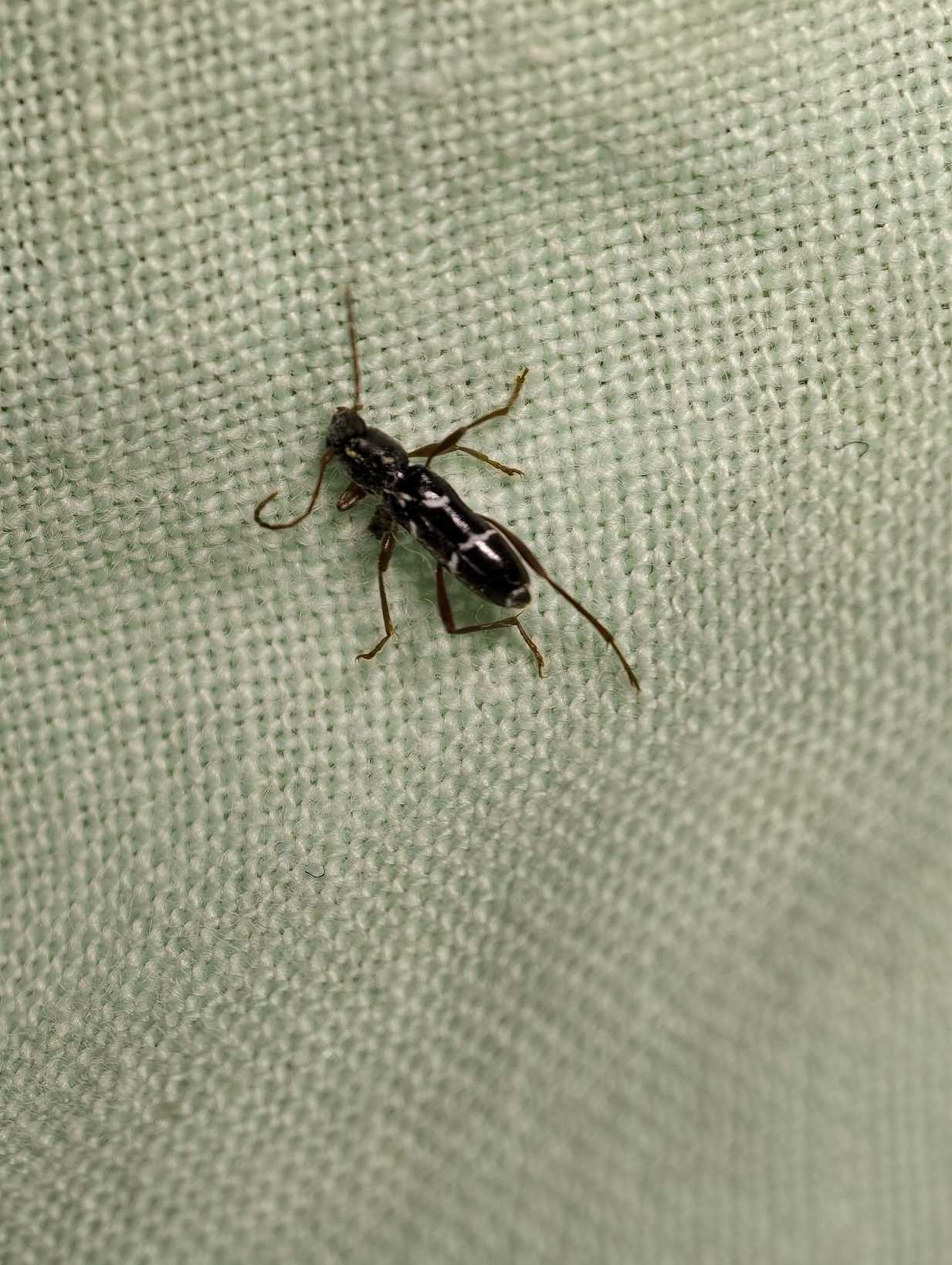
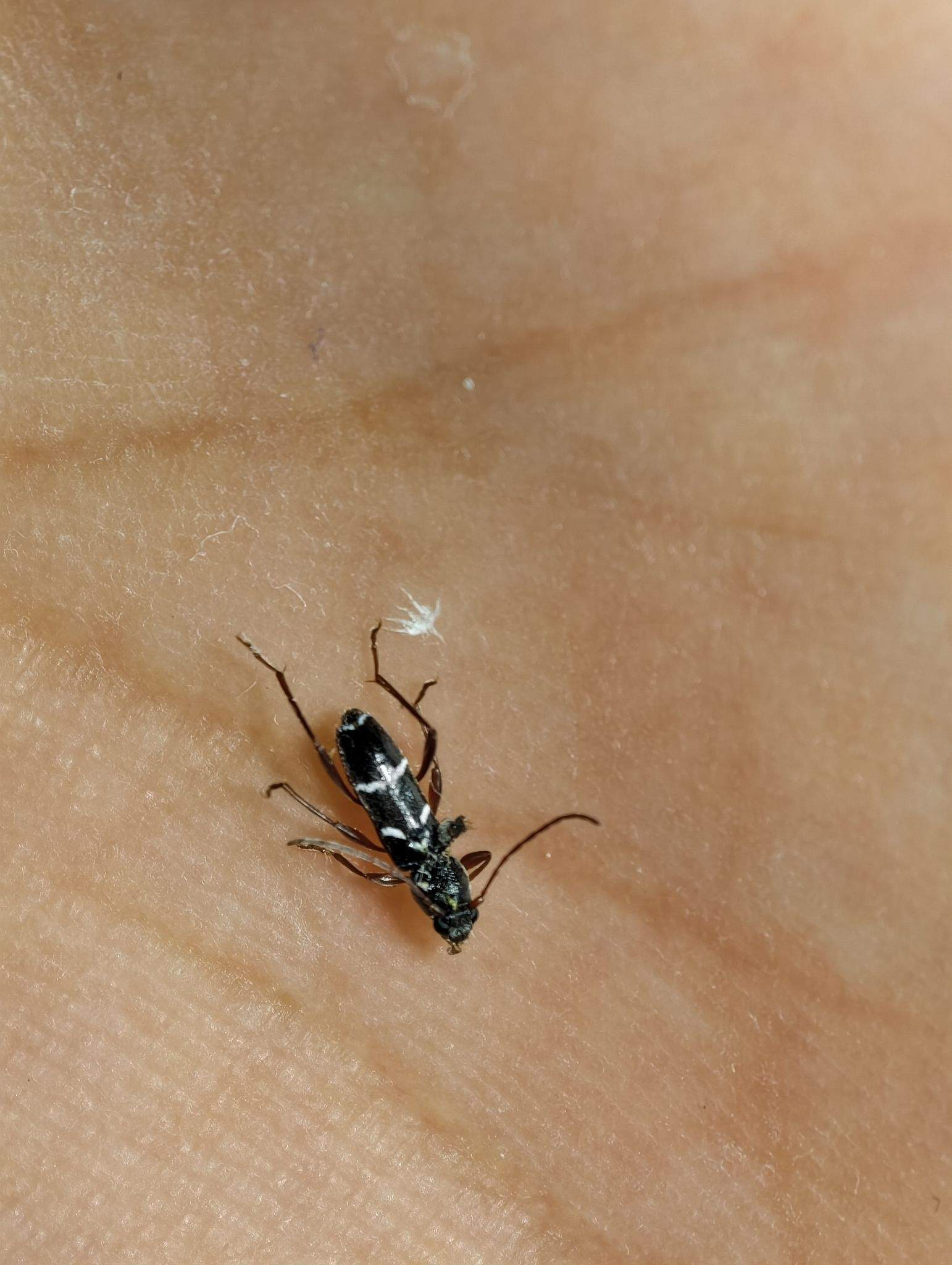
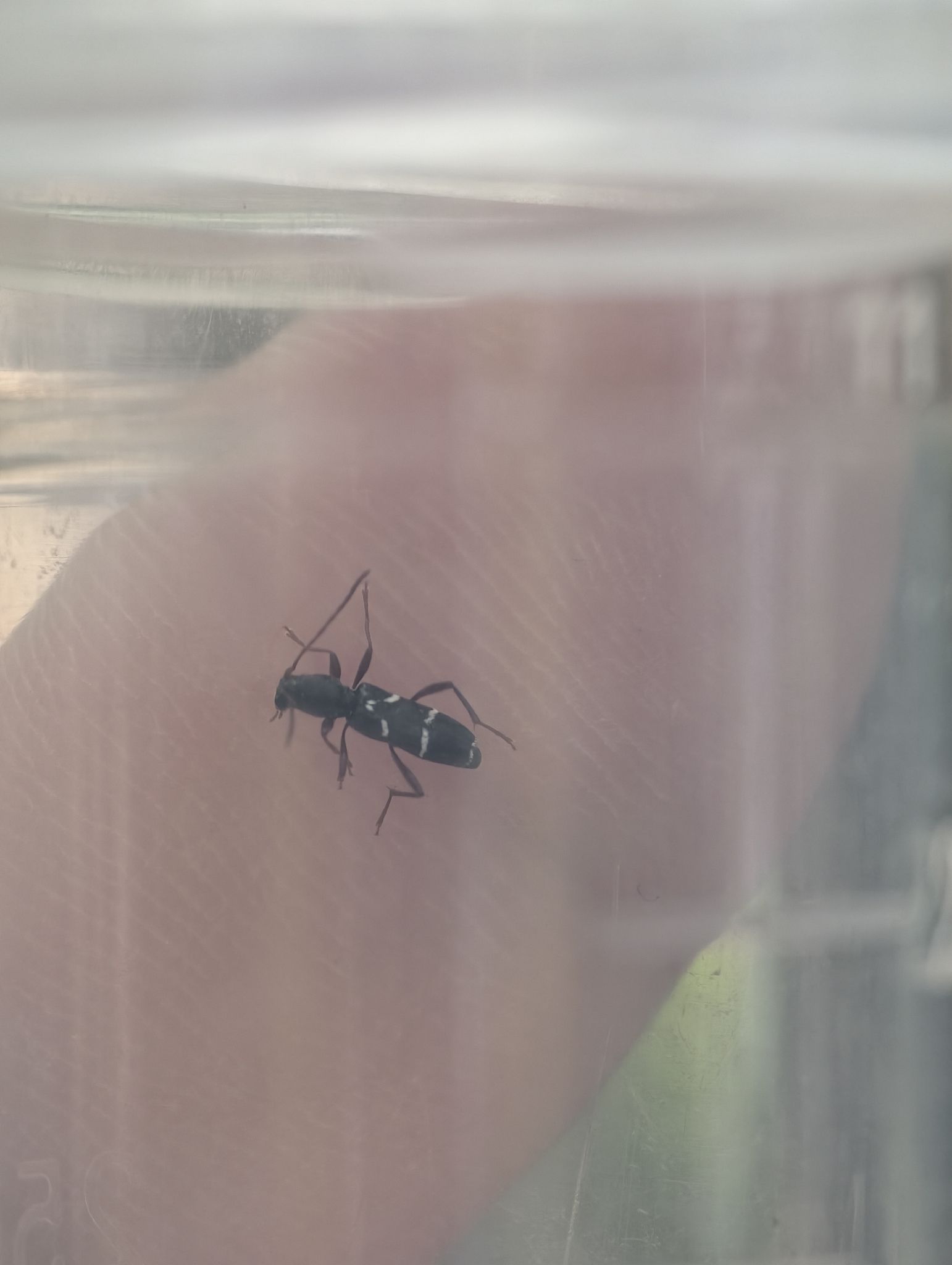
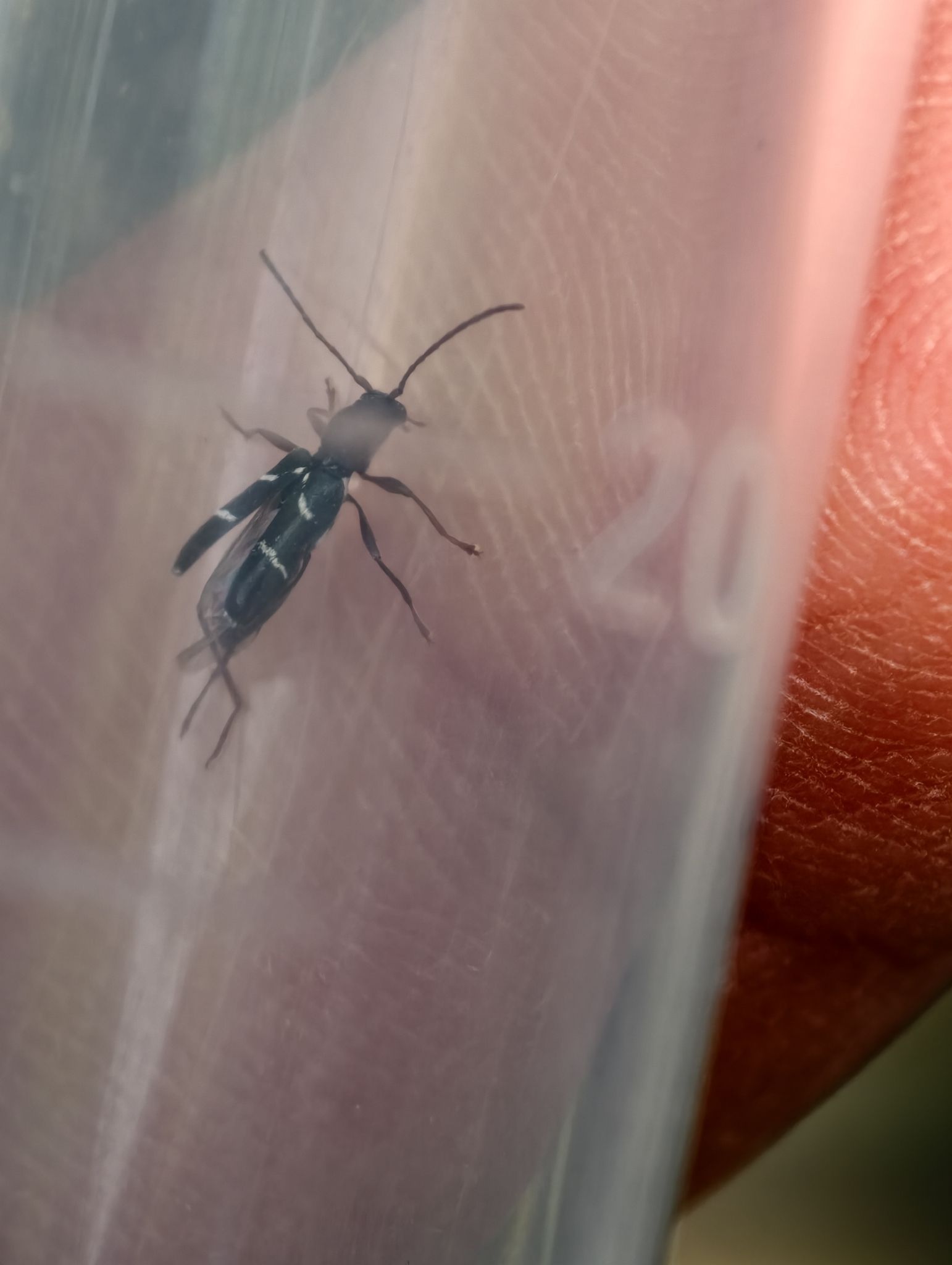
Small to very small clytine with black, glossy body, sometimes more or less matted, usually with brownish antennae and legs, and sometimes also on meso- and metathoraces, and abdomen. Body relatively elongate, especially in elytra, meso- and metasterna, and legs. Head across eyes almost equal to width of pronotum; vertex raised towards antennal cavities which are usually separated by half to 2/5 the width of occiput; frons almost quadrate, flattened, with a fine smooth median line, usually closely or coarsely punctured. Eyes moderately large, almost semicircular, a little narrower than frons in frontal view. Antennae thin, moderate in length or relatively long, slightly thickened apicad; scape almost cylindrical, 3rd segment 1.5–2.0 times as long as 4th segment, terminal segment usually obtusely pointed. Pronotum globose or slightly elongate, slightly narrower than elytra, simply arcuate at sides; disc distinctly convex though slightly depressed above, with large shallow punctures. Elytra with three arcuate or transverse white pubescent bands, sometimes supplemented with vague basal band and a longitudinal spot near suture behind scutellum. Hind legs 1.5–2.0 times as long as elytra, with femur gradually swollen apicad, slightly compressed, usually exceeding elytral apex at apical fifth; 1st tarsal segment 1.5–2.5 times as long as following two segments combined. Abdomen with white pubescence at sides of ventrites 1–2. White scaly pubescence forms maculations on elytra, ventral surface, and sometimes on base of pronotum.
Plazi taxonomic treatment
Host Plants (0 host plants)
Data sources: EPPO Global Database and relevant literature.
No host plants available.
Quarantine Status (1 records)
Data sources: IPPC website and national quarantine websites; verified by human review.
| Country | Status | Year Added |
|---|---|---|
| United States of America | Quarantine pests | — |
Distribution (0 countries)
Data Sources: EPPO Global Database and GBIF.
No distribution records available.
Genomes (0 records)
Data source: NCBI.
No genome records available.
Transcriptomes (0 records)
Data source: NCBI.
No transcriptome records available.
Literature
Fetching literature from NCBI PubMed...
Failed to fetch literature