Cinara pilicornis
TaxID: 506607
Basic Information
Cinara pilicornis
Aphid, Spruce Shoot Aphid
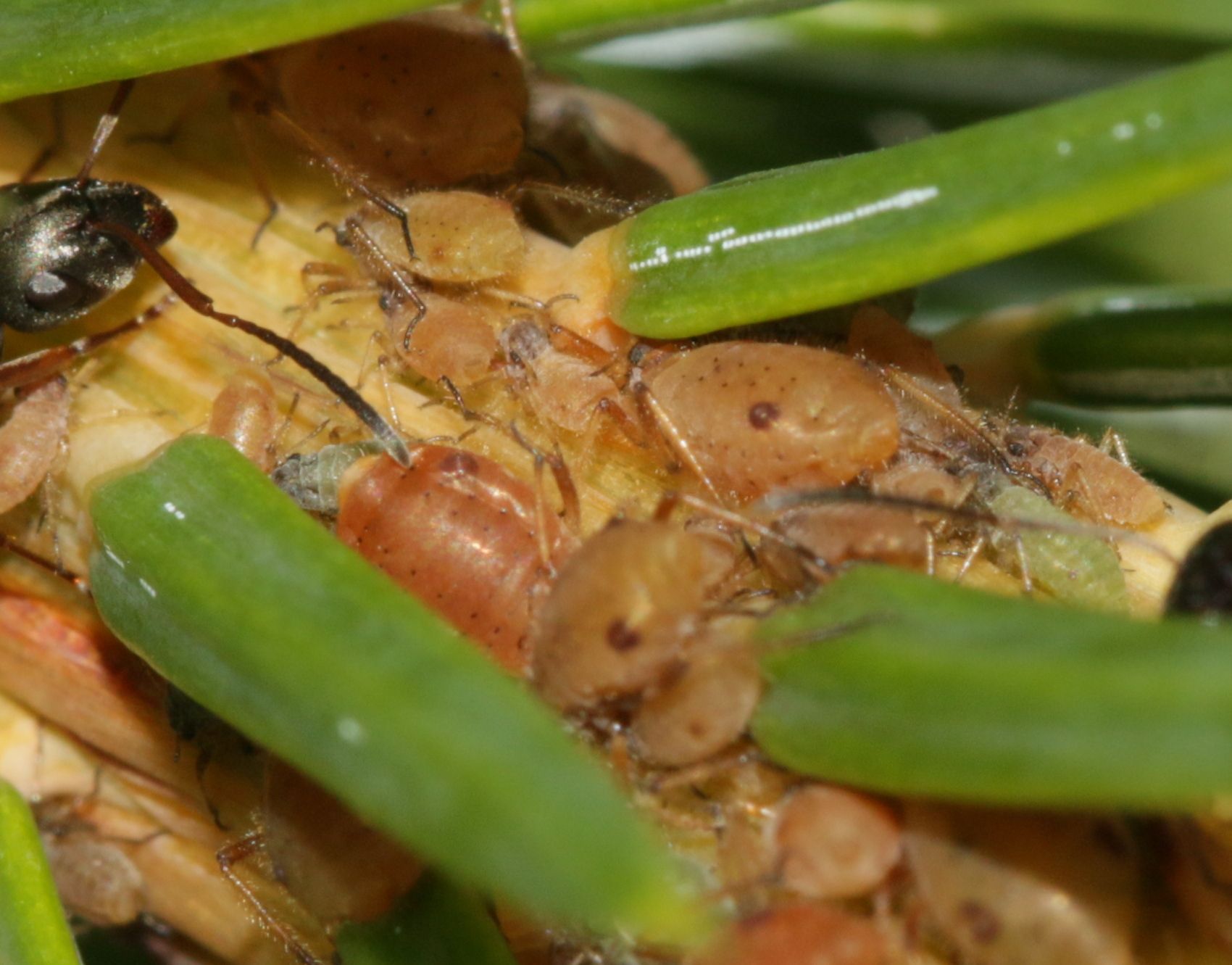
Cinara pilicornis, the spruce shoot aphid or brown spruce shoot aphid, is an aphid species in the genus Cinara found on Norway spruce (Picea abies) and Sitka spruce (Picea sitchensis). It is a quite large aphid species with a plump, dull brown body. It seems to have little effect on the tree. It is a European species but it has also been reported in spruce forests in New Zealand, together with the spruce aphid (Elatobium abietinum). Cinara pilicornis, which is attended by the honeydew-collecting ants Formica polyctena, is seldom attacked by the parasitoid wasp Pauesia pini. It is also a host for Entomophthora fungi. Cinara pilicornis produces the trisaccharide melezitose. Citronellol, cis Ctrans-nepetalactone and cis Ctrans-nepetalactol are stress-induced compounds released by the host plant. These compounds originated from the aphids and they are assumed to be pheromone components for this aphid species.
from Wikipedia
Taxonomic Information
Eukaryota
Arthropoda
Insecta
Hemiptera
Aphididae
Cinara
pilicornis
nan
Species
nan
k__Eukaryota;p__Arthropoda;c__Insecta;o__Hemiptera;f__Aphididae;g__Cinara;s__Cinara pilicornis
nan
Arthropods
Photos (5 photos)
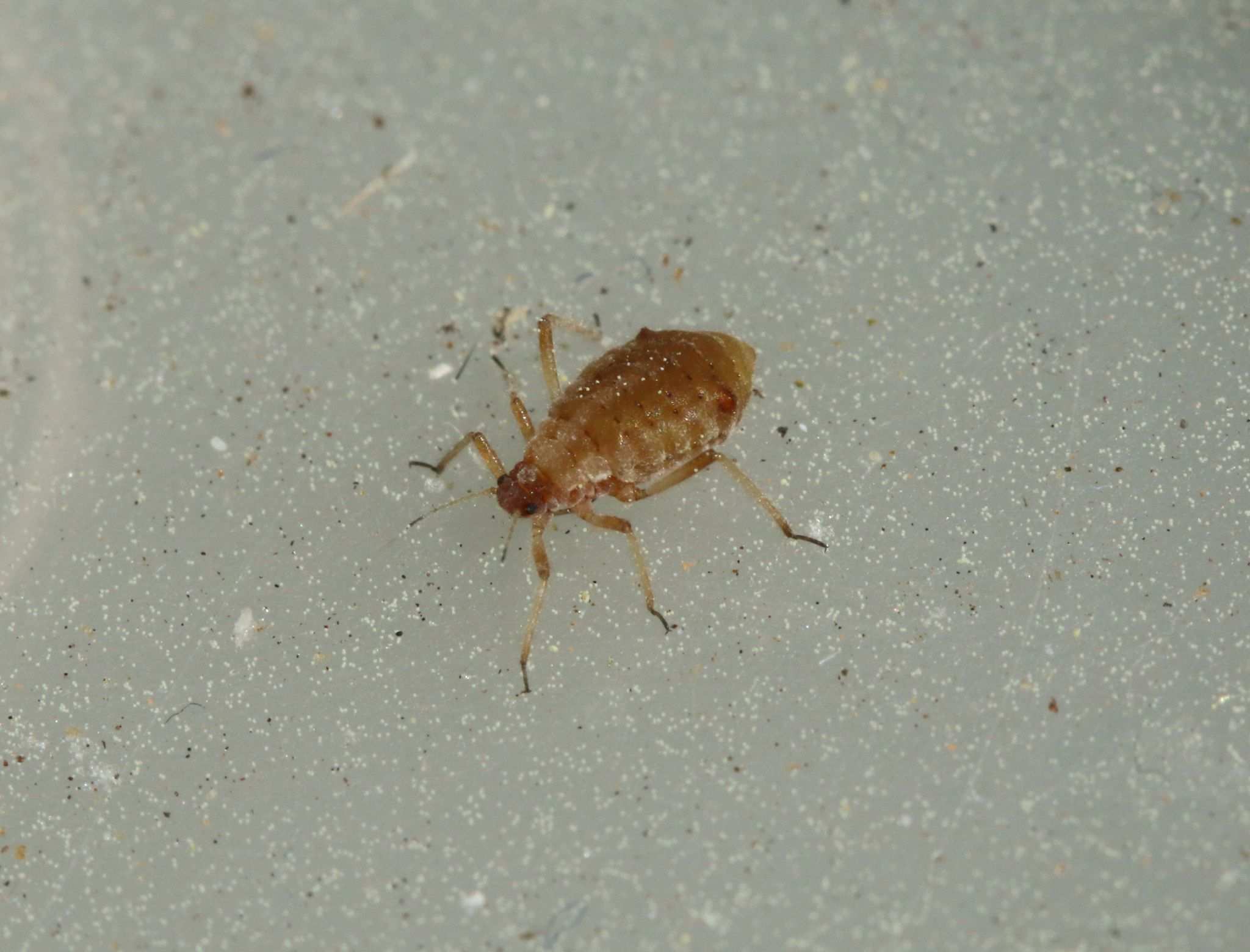
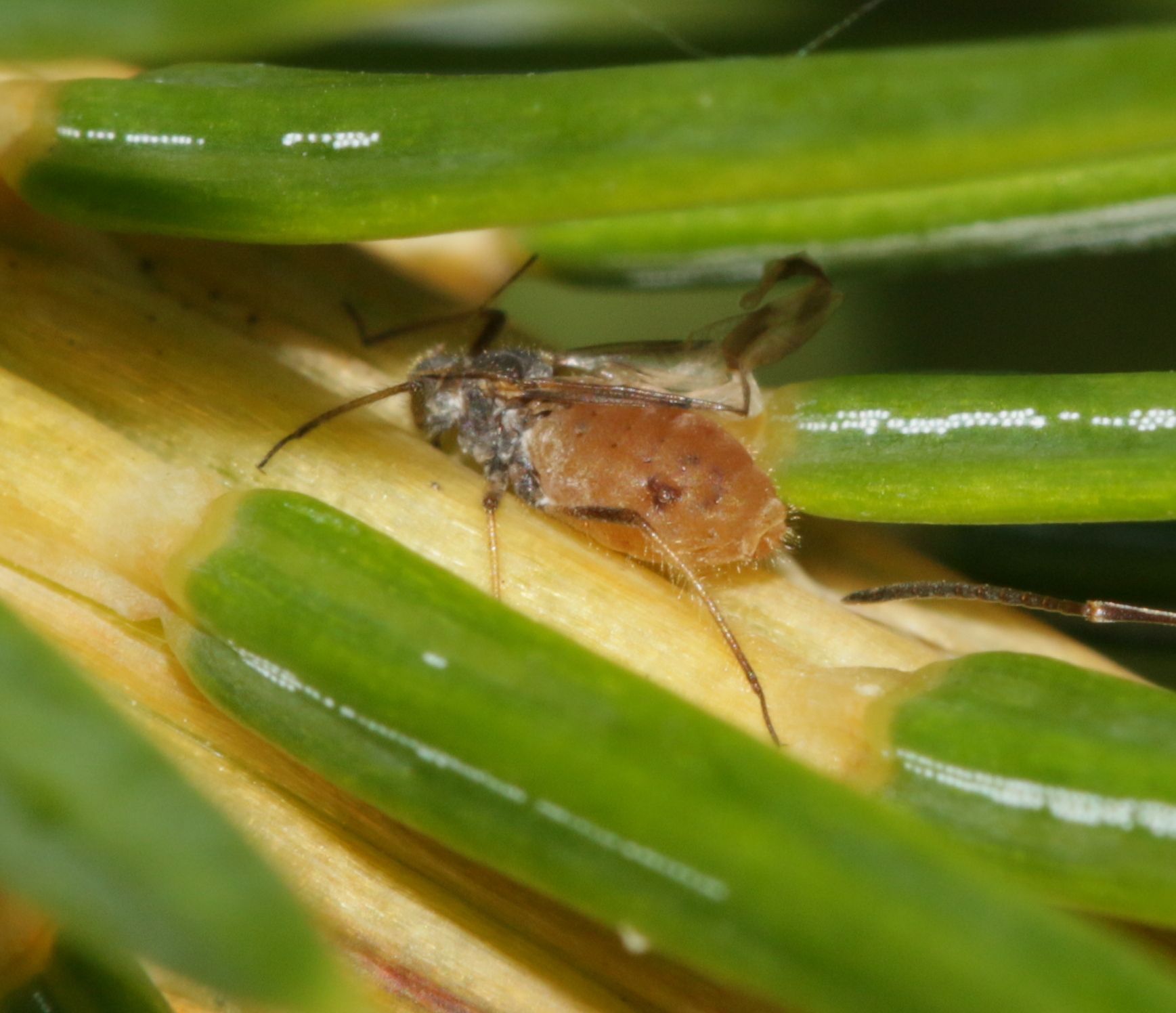
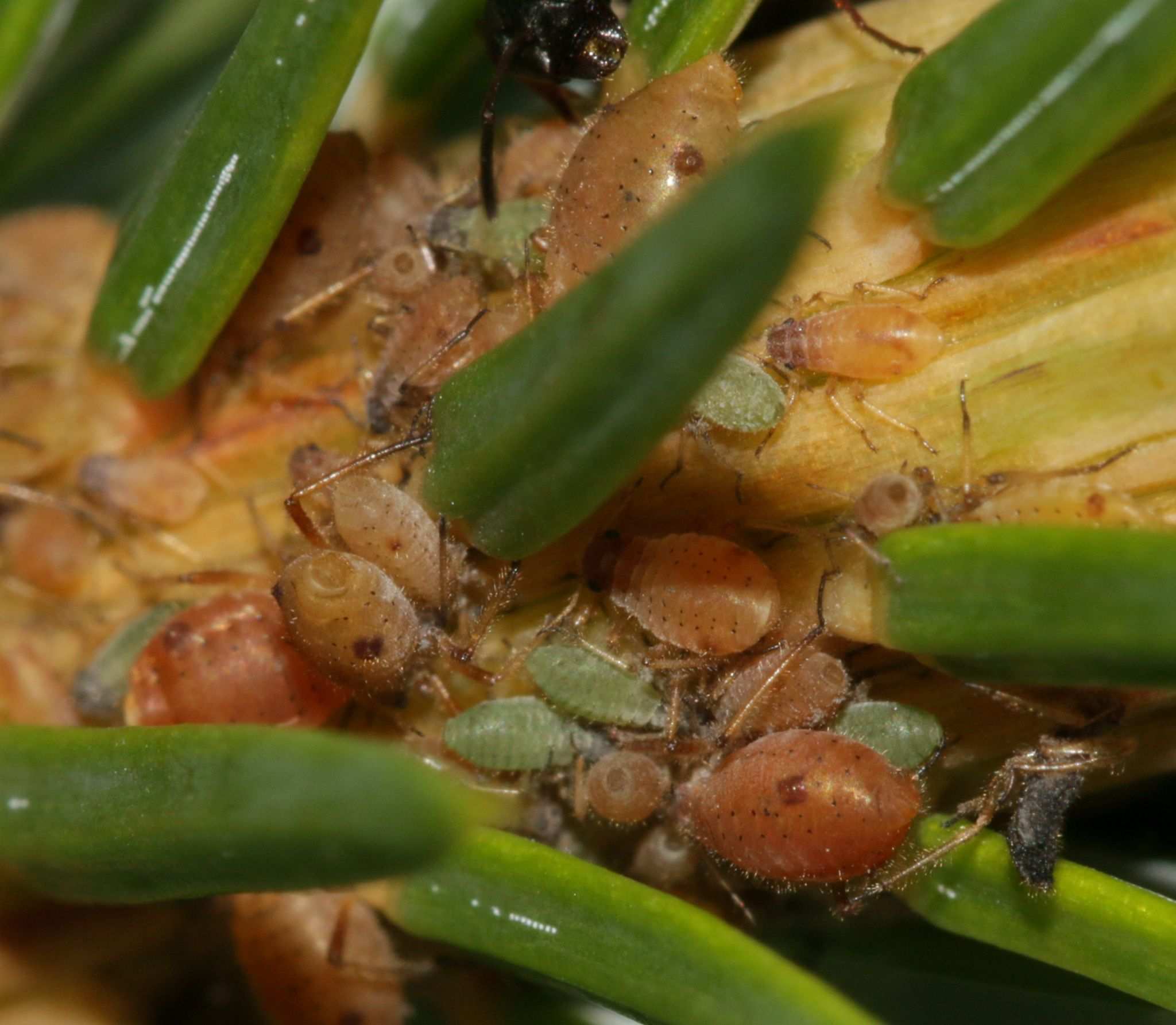
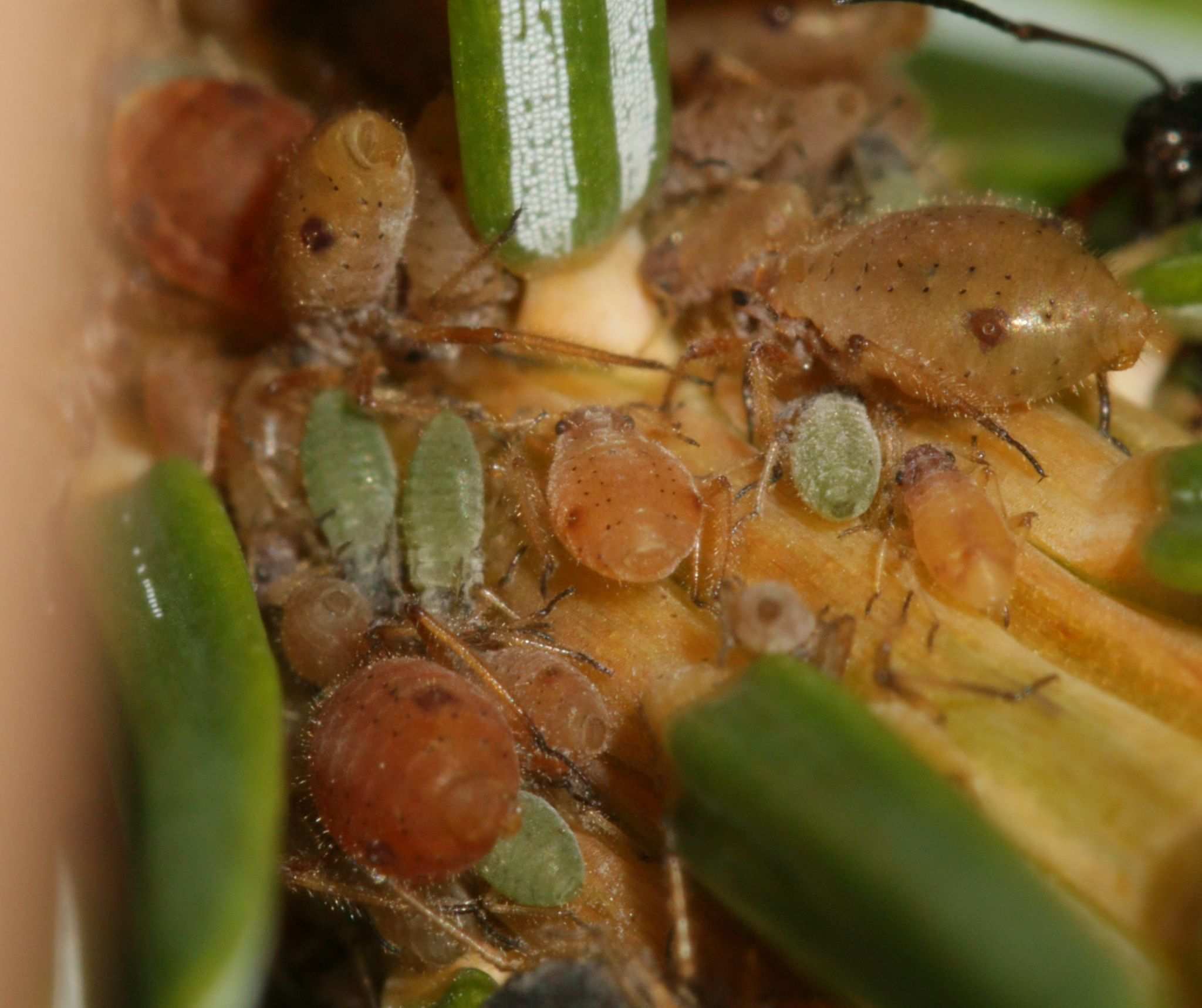
Morphological Features
Apterous viviparous female 2.1–4.7 mm, light red-brown, orange brown, olive or grey-green; abdominal dorsum usually with a conspicuous wax pattern. Antennal segment III with setae 2–3 times the diameter of the segment or more. Hind femur and tibia densely covered with long trichoid sensilla. Cauda semi-circular with many long (0.15–0.17 mm), fine, pointed setae. Siphunculi rather low, with a well-developed flange, lying on rounded or oval protuberant sclerites covered with 38–42 setae. Alate viviparous female: head, thorax, and abdomen orange-brown dusted with white wax; cauda semi-circular with many long (0.14–0.15 mm), fine, pointed setae; hind tibiae covered with long fine setae on dorsal side longer (0.19–0.22 mm) than width of tibia at midpoint.
Plazi taxonomic treatment
Host Plants (0 host plants)
Data sources: EPPO Global Database and relevant literature.
No host plants available.
Quarantine Status (1 records)
Data sources: IPPC website and national quarantine websites; verified by human review.
| Country | Status | Year Added |
|---|---|---|
| Republic of Korea | Quarantine pests | — |
Distribution (19 countries)
Data Sources: EPPO Global Database and GBIF.
| Country | Status | State |
|---|---|---|
| Australia | Present | — |
| Austria | Present | — |
| Belgium | Present | — |
| Bulgaria | Present | — |
| Canada | Present | — |
| China | Present | — |
| Germany | Present | — |
| Denmark | Present | — |
| Finland | Present | — |
| France | Present | — |
Distribution Map (Latitude and longitude coordinates sourced from GBIF.)
Download CSVGenomes (0 records)
Data source: NCBI.
No genome records available.
Transcriptomes (0 records)
Data source: NCBI.
No transcriptome records available.
DNA Barcodes (111 records)
View allData source: BOLD.
| Process ID | BIN | Marker | Length | Country | Date | Lat/Lon | Sequence |
|---|---|---|---|---|---|---|---|
| RFQC325-11 | BOLD:AAI3972 | COI-5P | 658 | Canada | 2010-07-18 | 45.55528, -73.555 | |
| RFQC278-11 | BOLD:AAI3972 | COI-5P | 658 | Canada | 2010-06-19 | 45.55528, -73.555 | |
| RFQC268-11 | BOLD:AAI3972 | COI-5P | 658 | Canada | 2010-06-12 | 45.544167, -73.33889 | |
| RFQC049-09 | BOLD:AAI3972 | COI-5P | 403 | Canada | 2009-07-05 | 45.6481, -72.9572 | |
| RFQC019-09 | BOLD:AAI3972 | COI-5P | 403 | Canada | 2009-06-16 | 45.545, -73.3417 | |
| RFLA189-12 | BOLD:AAI3972 | COI-5P | 559 | Canada | 2003-06-23 | 49.2393, -123.726 | |
| RFLA188-12 | BOLD:AAI3972 | COI-5P | 622 | Canada | 2003-06-23 | 49.2393, -123.131 | |
| RFLA187-12 | BOLD:AAI3972 | COI-5P | 563 | Canada | 2003-06-23 | 49.2393, -123.131 | |
| RFLA184-12 | BOLD:AAI3972 | COI-5P | 591 | Canada | 2003-06-22 | 49.26014, -123.11992 | |
| RFLA085-11 | BOLD:AAI3972 | COI-5P | 658 | Canada | 1994-06-03 | 45.3908, -75.7039 |
Literature
Fetching literature from NCBI PubMed...
Failed to fetch literature