Gypona
TaxID: 1465076
Basic Information
Gypona
Leafhoppers
Gypona is a genus of leafhopper belonging to the family Cicadellidae. Gypona is the largest genus of Gyponini. The species of this genus are found in South America. Species: Gypona abdominalis Sp?ngberg, 1878 Gypona abscida DeLong & Freytag, 1964 Gypona amapa DeLong & Linnavuori, 1977 Gypona anfracta DeLong & Linnavuori, 1977 Gypona compacta DeLong & Linnavuori, 1977 Gypona quadrella DeLong & Linnavuori, 1977
from Wikipedia
Taxonomic Information
Eukaryota
Arthropoda
Insecta
Hemiptera
Cicadellidae
Gypona
nan
nan
Genus
nan
k__Eukaryota;p__Arthropoda;c__Insecta;o__Hemiptera;f__Cicadellidae;g__Gypona;s__unclassified
nan
Arthropods
Photos (5 photos)
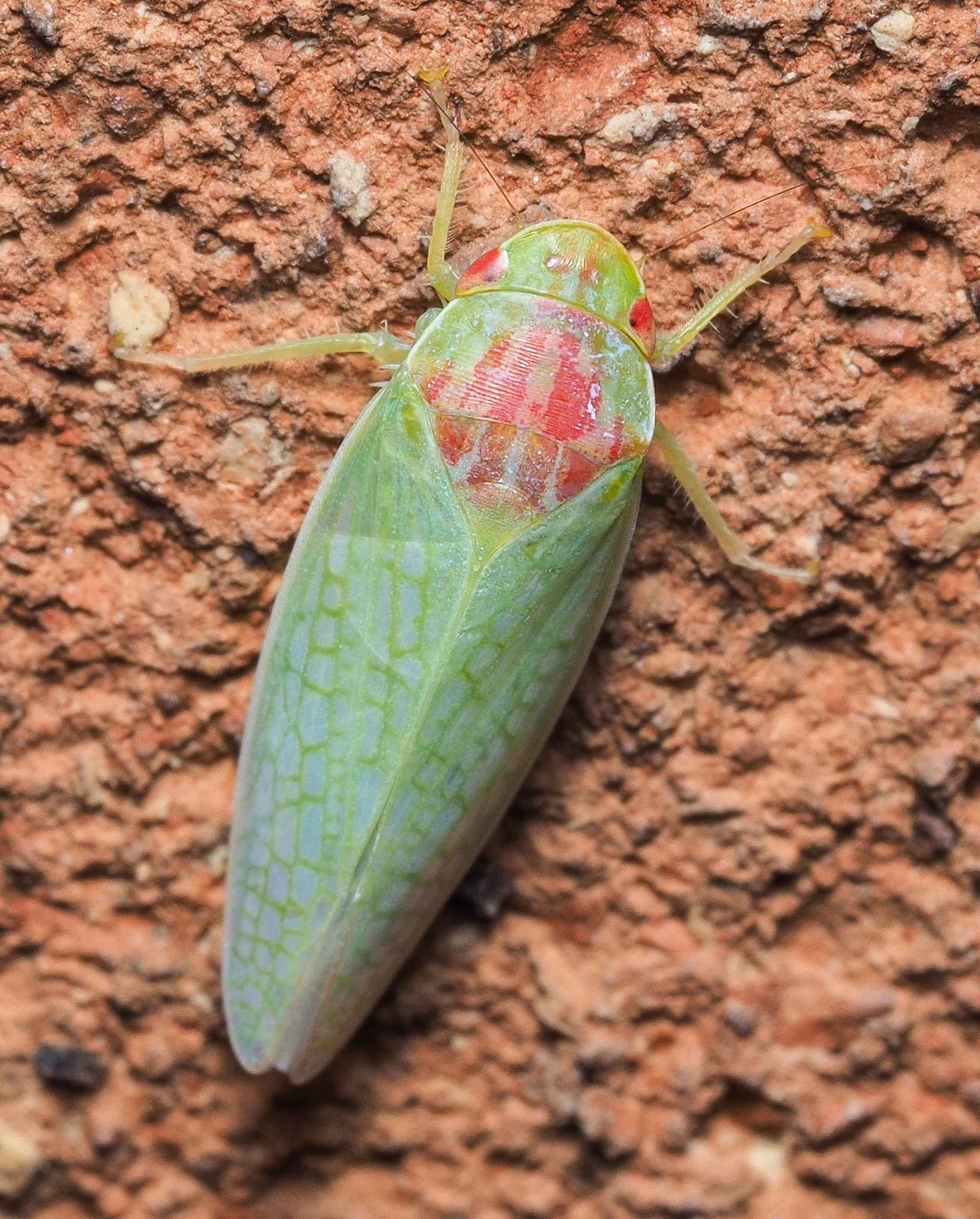
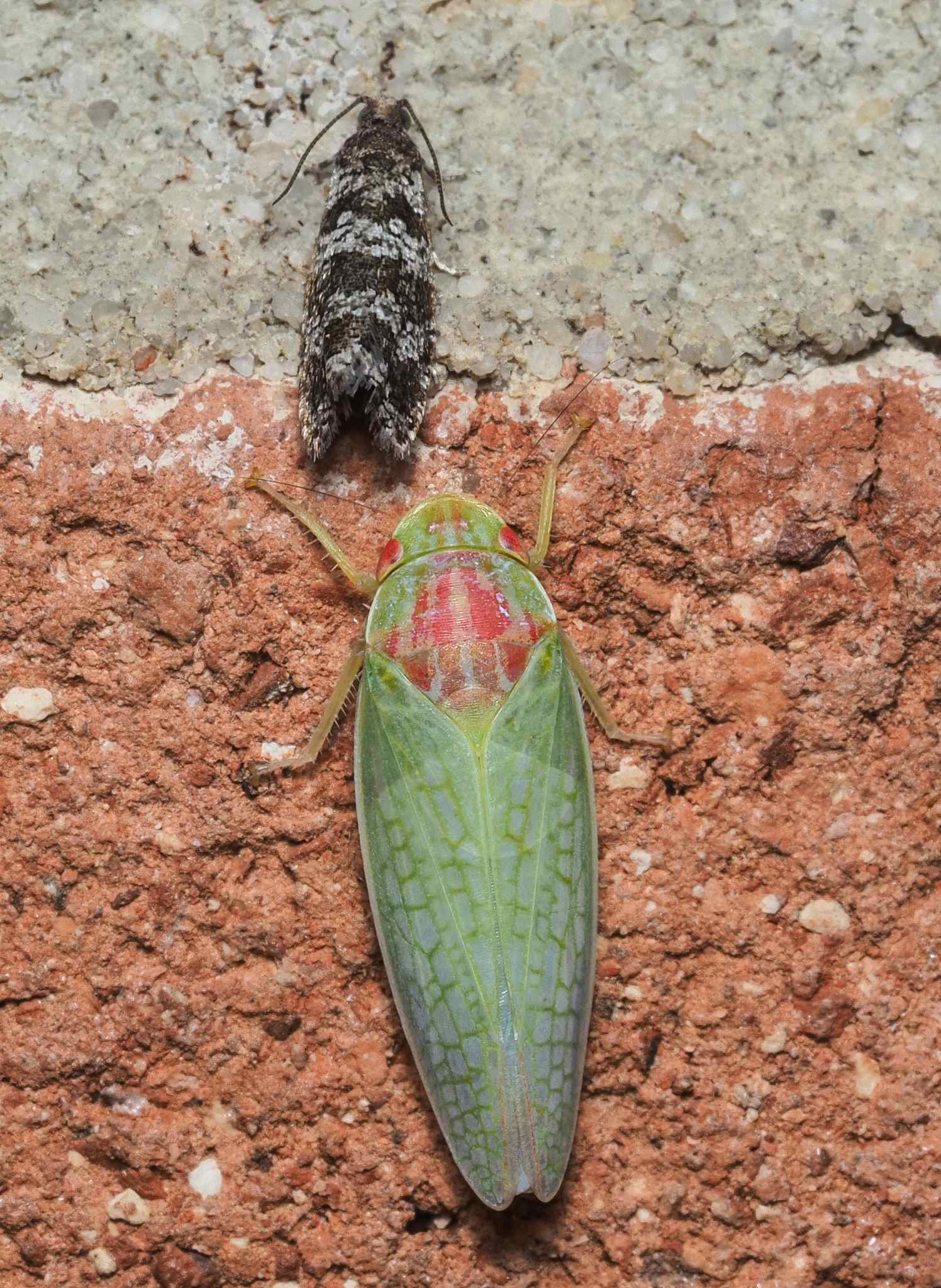
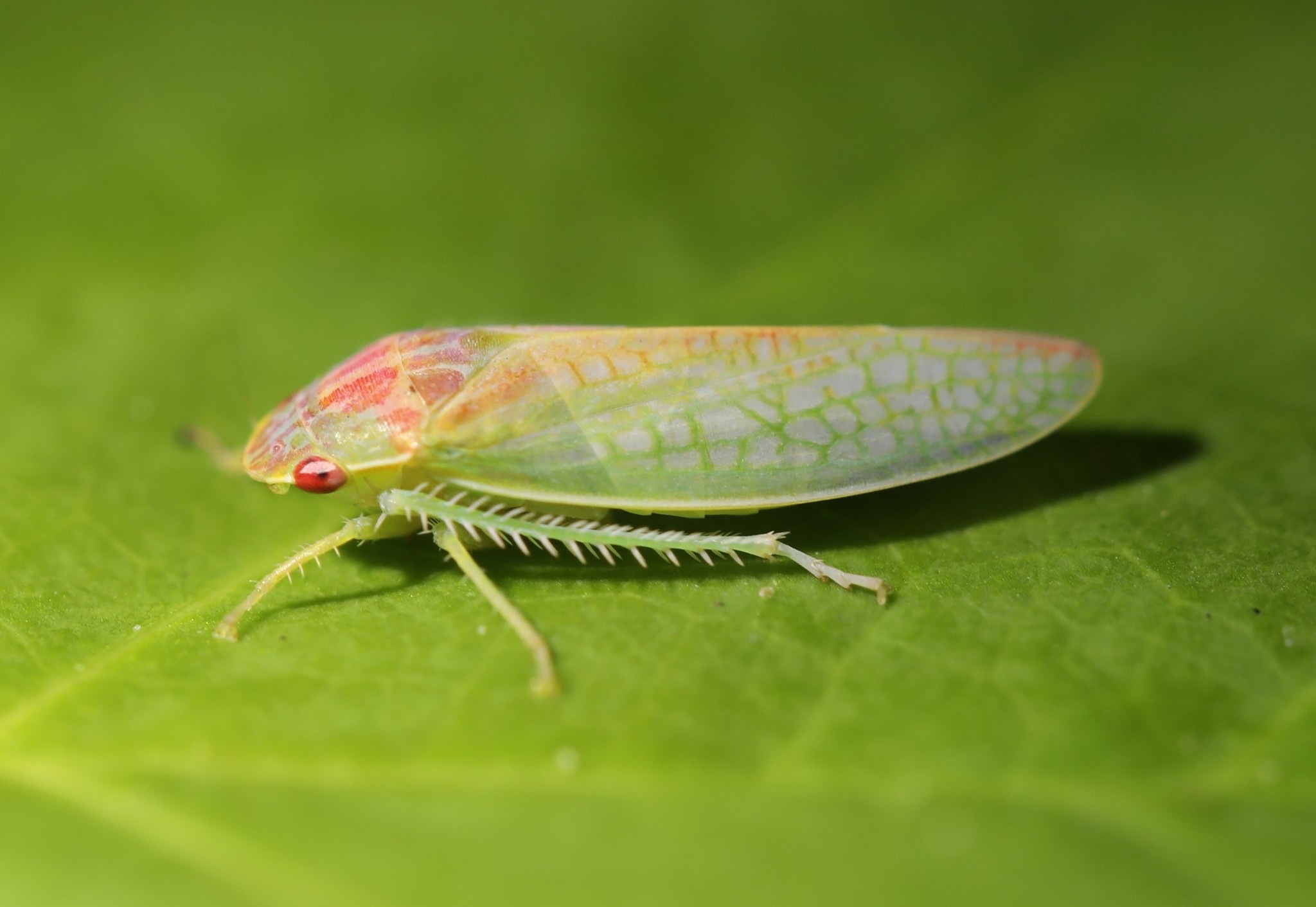
Morphological Features
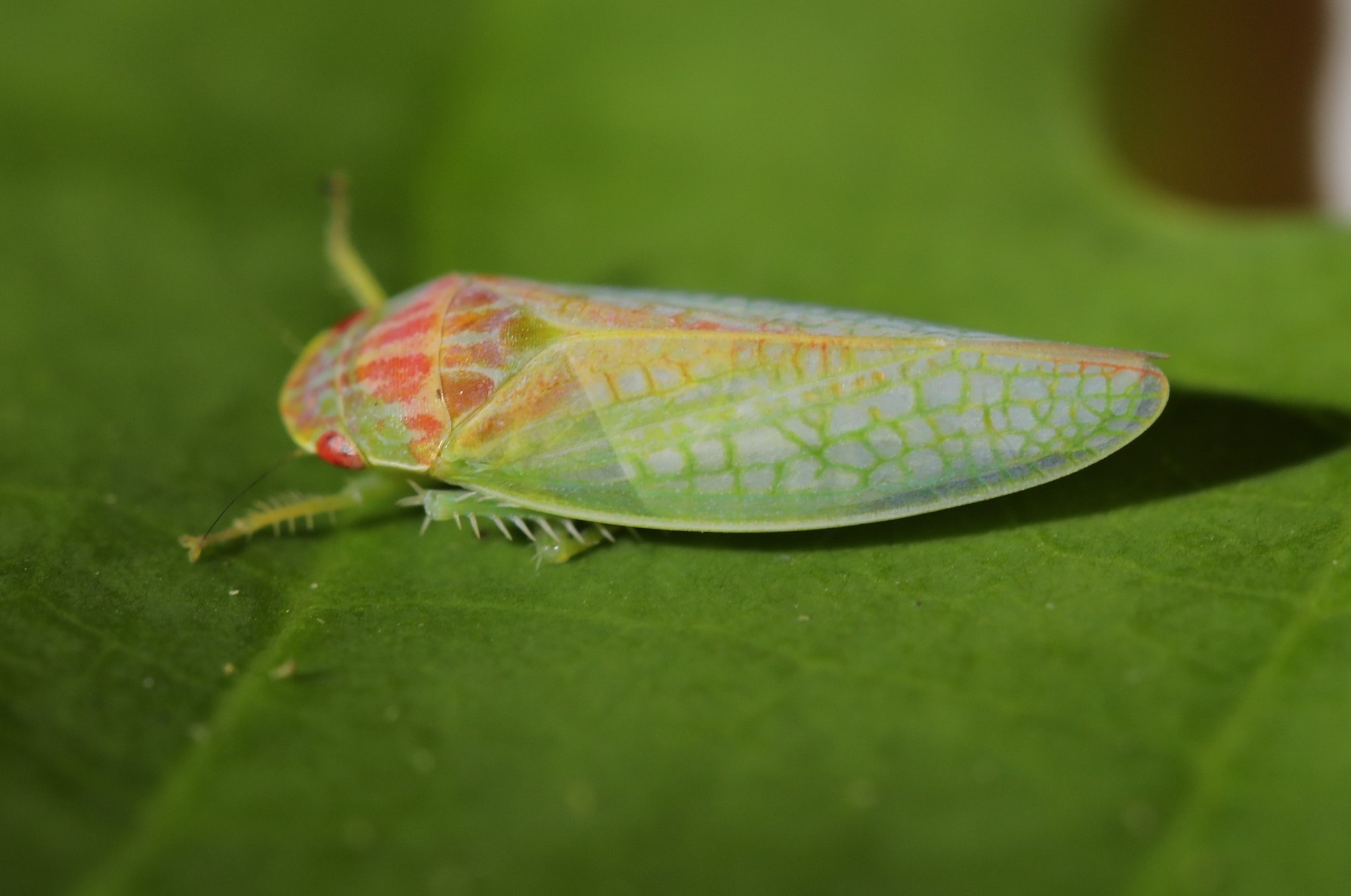
Gypona species are leafhoppers with a transocular width of head slightly narrower than maximum pronotum width. The frontogenal suture is distant from the eye margins by more than the maximum width of the clypeus, not surpassing the antennal ledge, and extending to the anterior margin of the crown by a short distance. The median length of the crown is less than half the interocular width. The antennal ledge is carinate and oriented transversely in relation to the frons. The frons is approximately 1.4 times longer than wide, with a shagreen surface texture, not excavated below the anterior margin of the crown. The clypeus is not inflated, 1.3 times longer than wide, with parallel lateral margins and a carinate apex. The maxillary plate is produced ventrally as far as the clypeus apex. The pronotum is slightly declivous, continuous with the head declivity. The forewing is light-yellow translucent, with the basal third of the clavus frequently orange-yellow; the appendix is well developed and borders the first and second apical cells, wider medially than the maximum width of the inner apical cell. The profemur has apical setae AD1, AM1, and PD1 present and well developed. The protibia is more or less cylindrical in cross-section, with a longitudinal carina adjacent to the PD row. The first tarsomere has two rows of 6–8 minute setae on the plantar surface; the second tarsomere pecten has 2 platellae flanked by 2 tapered lateral setae on the inner and 1 on the external corner. Color polymorphism occurs in males, with the pronotum varying from mostly black with yellow maculae on the posterior third to other patterns; the mesonotum may be black with a pair of large yellow maculae near the lateral angles or yellow with a median triangular black macula.
Plazi taxonomic treatment
Host Plants (0 host plants)
Data sources: EPPO Global Database and relevant literature.
No host plants available.
Quarantine Status (1 records)
Data sources: IPPC website and national quarantine websites; verified by human review.
| Country | Status | Year Added |
|---|---|---|
| United States of America | Quarantine pests | — |
Distribution (0 countries)
Data Sources: EPPO Global Database and GBIF.
No distribution records available.
Genomes (0 records)
Data source: NCBI.
No genome records available.
Transcriptomes (1 records)
Data source: NCBI.
| Run ID | Tissue | Developmental Stage | Sex | Read Count | Location | Actions |
|---|---|---|---|---|---|---|
| SRR16560663 | whole insect without the abdominal genital part | - | - | 21237599 | Brazil: Rio de Janeiro | |
|
PRJNA715047 SRX12762865 SRP342974 insect RNA-seq of Gypona sp. After the total RNA extraction and DNase I treatment, magnetic beads with Oligo (dT ) are used to isolate mRNA. Mixed with the fragmentation buffer, the mRNA is fragmented into short fragments. Then cDNA is synthesized using the mRNA fragments as templates. Short fragments are purified and repaired at the end, added single nucleotide A (adenine) and connected with adapters. The suitable fragments are selected for the PCR amplification as templates. After the construction of the library, Qubit2.0 and Agilent 2100 are used to detect the concentration and insert size of the library, and Q-PCR method is used to quantify the effective concentration of the library to ensure the quality of the library. At last, the library is sequenced using Illumina NovaSeq 6000. {'breed': 'wildtype', 'tissue': 'whole insect without the abdominal genital part', 'collected_by': 'Daniela Takiya', 'geo_loc_name': 'Brazil: Rio de Janeiro', 'identified_by': 'Chris Dietrich', 'biosamplemodel': 'Invertebrate', 'collection_date': '2019-04-28', 'isolation_source': 'wild-caught'} |
||||||
DNA Barcodes (174 records)
View allData source: BOLD.
| Process ID | BIN | Marker | Length | Country | Date | Lat/Lon | Sequence |
|---|---|---|---|---|---|---|---|
| PLZBY505-20 | BOLD:ACG3645 | COI-5P | 654 | Costa Rica | 2017-10-26 | 10.76, -85.3341 | |
| PLZBN153-20 | BOLD:ADA6861 | COI-5P | 653 | Costa Rica | 2017-08-10 | 10.76, -85.3341 | |
| PLZBI327-20 | BOLD:ACG3645 | COI-5P | 640 | Costa Rica | 2017-07-06 | 10.76, -85.3341 | |
| PLZBG256-20 | BOLD:ACG3645 | COI-5P | 654 | Costa Rica | 2017-06-22 | 10.76, -85.3341 | |
| PLZBB047-20 | BOLD:ACG3645 | COI-5P | 653 | Costa Rica | 2017-05-18 | 10.76, -85.3341 | |
| PLZAJ458-20 | BOLD:ACG3645 | COI-5P | 655 | Costa Rica | 2017-01-12 | 10.76, -85.3341 | |
| PLXDV1361-21 | BOLD:ADA6861 | COI-5P | 654 | Costa Rica | 2020-10-08 | 10.763, -85.334 | |
| PLXDB003-20 | BOLD:ADA6861 | COI-5P | 653 | Costa Rica | 2020-05-21 | 10.7631, -85.3344 | |
| PLXCI1771-20 | BOLD:ADA6861 | COI-5P | 655 | Costa Rica | 2020-01-02 | 10.7631, -85.3344 | |
| PLXCH1264-20 | BOLD:ACG3645 | COI-5P | 654 | Costa Rica | 2019-12-26 | 10.7631, -85.3344 |
Literature
Fetching literature from NCBI PubMed...
Failed to fetch literature