Phyllotreta striolata
TaxID: 444603
Basic Information
Phyllotreta striolata
Striped Flea Beetle
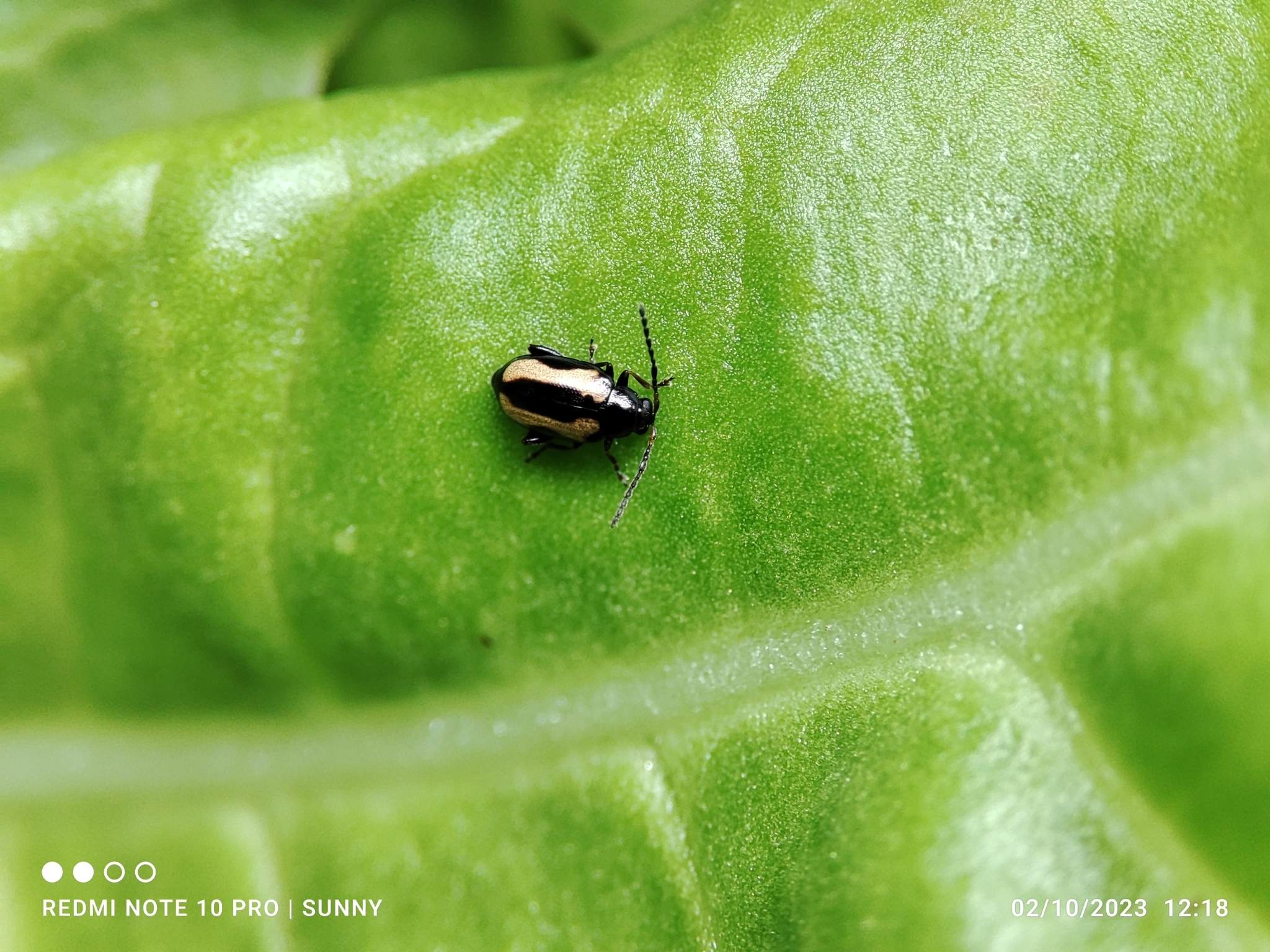
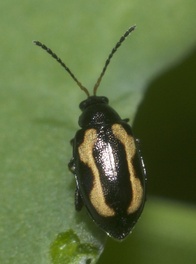
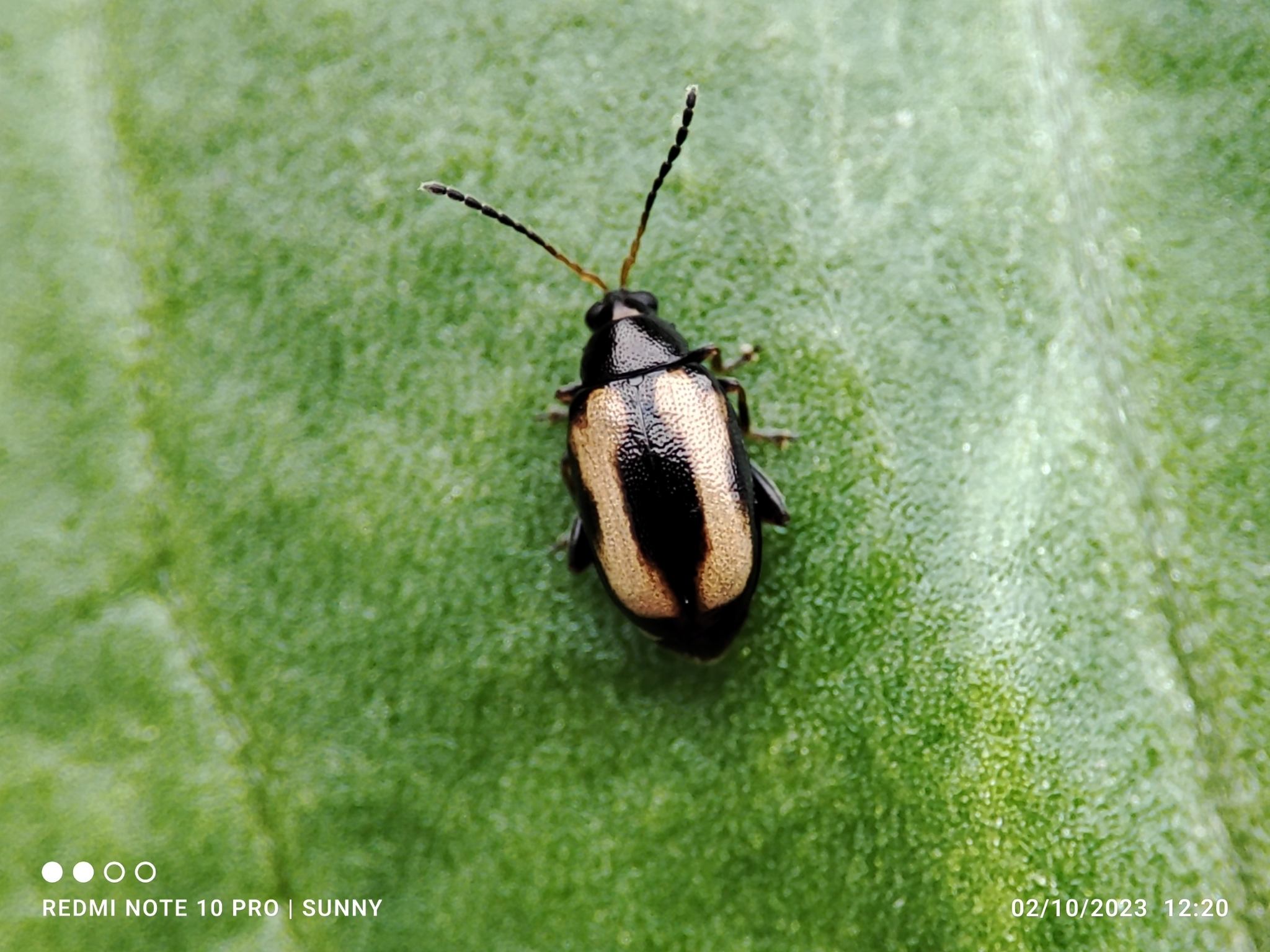
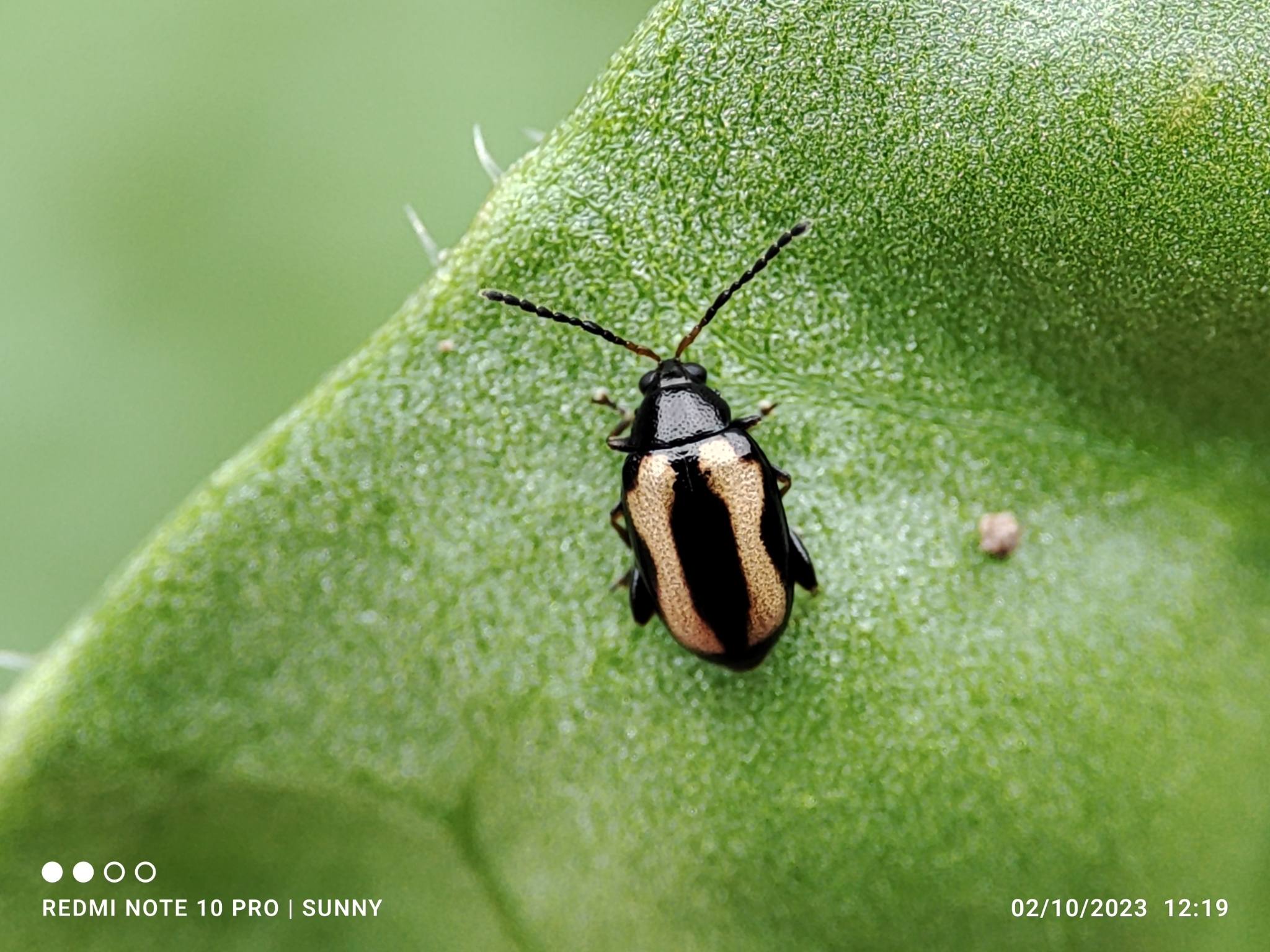
The striped flea beetle (Phyllotreta striolata) is a small flea beetle, shiny black with a greenish tinge, 1.5 to 2.5 mm long, having a wavy amber line running the length of each elytron (wing cover). It is a pest of cabbage and other brassicas. The hind legs are thickened, enabling the beetle to jump like a flea when disturbed. The minute, oval to elongate white eggs are laid in the soil close to the host plant. The white, brown-headed larva, when fully grown, is 3.2 to 5.0 mm long. It has three pairs of tiny legs near its head. The white pupa is approximately the same size and shape as the adult. Eurasian in origin, the striped flea beetle is common throughout the eastern and Pacific areas of the United States (though not in much of the Rocky Mountain region), as well as in South Africa. Although the larvae live in the soil, feeding on the roots of host plants, they are not significant pests. Rather, the primary damage is caused by adult beetles feeding on the foliage. With their chewing mouthparts, beetles make small round pits in the cotyledons and leaves of young plants. As the plants grow, the remaining thin layers of tissue eventually dry up and fall away, leaving small "shot holes" in the foliage. This type of injury is capable of killing young plants. The seedlings may be killed if severe damage occurs. In addition, beetles may act as vectors of plant disease. Striped flea beetles overwinter among debris in and around fields. Emerging early in spring, they attack seedlings and young plants. Eggs are deposited in tiny crevices gnawed out of the base of host plant stems. About ten days later, the grubs hatch from the eggs and move into the soil to attack roots. After feeding for three or four weeks, the larvae pupate for seven to ten days. A new generation of beetles then emerges. Generations can be continual in warmer climates, recurring at least twice a year. Cultivation practices and the use of resistant crop varieties help prevent severe flea beetle infestations. Seedbeds are covered with strips of a thin transparent gauze to protect seedlings from adult feeding before transplanting. Good weed control and the destruction of crop residue in and around fields reduce overwintering populations. After harvest, fields are plowed to expose larvae. For quick control of large populations attacking young seedlings, insecticide sprays are the only alternatives. Biological pest control can be introduced to fight the beetle. Many other insect species act as parasitoids, attacking the pest beetle. These parasitoids include the braconid wasps Microtonus epitricis, M. punctulatae, M. vittatae and Townesilitus psylliodis. Among biological insecticides, the nematode species Steinernema feltiae and S. carpocapsae show promise. The use of resistant plant varieties may reduce injury by existing beetles. Resistant cabbage varieties include 'Stein's Early Flat Dutch', 'Mammoth Red Rock', 'Savoy Perfection Drumhead', and 'Ferry's Round Dutch'. 'Vates and Georgia' is a resistant collard variety. 'Florida Broadleaf' is a resistant mustard plant, and 'American Purple Top' is a resistant rutabaga. Resistant cauliflower varieties include 'Snowball A' and 'Early Snowball X'. Varieties of broccoli resistant to the beetle include 'DeCicco', 'Coastal', 'Italian Green Sprouting' and 'Atlantic' and resistant kale varieties include 'Dwarf Siberian', 'Dwarf Green Curled Scotch', and 'Early Siberian'.
from Wikipedia
Taxonomic Information
Metazoa
Arthropoda
Insecta
Coleoptera
Chrysomelidae
Phyllotreta
striolata
unclassified
Species
nan
k__Metazoa;p__Arthropoda;c__Insecta;o__Coleoptera;f__Chrysomelidae;g__Phyllotreta;s__Phyllotreta striolata
nan
Arthropods
Photos (5 photos)
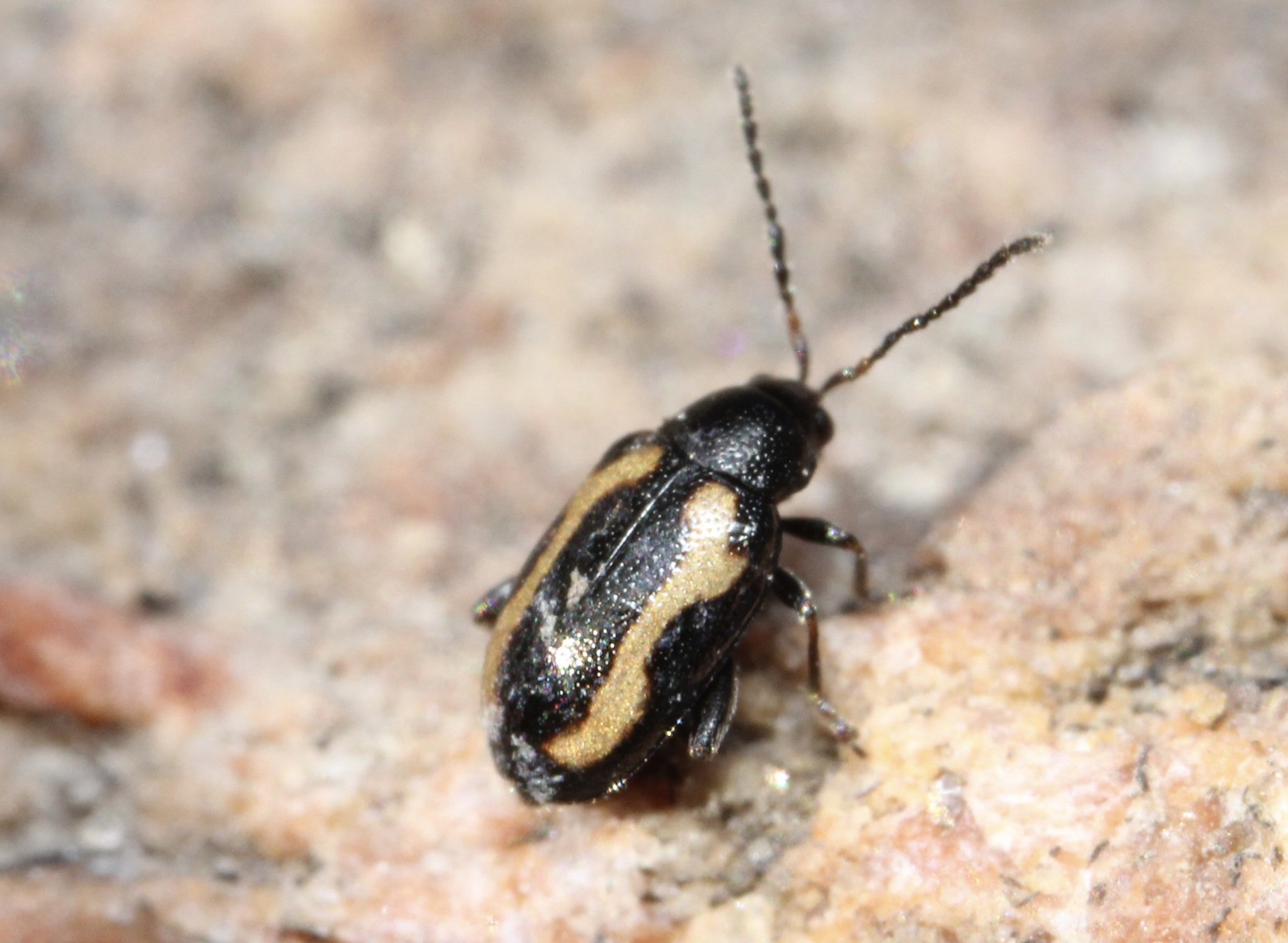
Morphological Features
Antennae pale brown to brown, consisting of 11 antennomeres; antennomeres 1–5 pale brown, antennomere 5 twice as long as antennomere 6 and swollen, antennomere 11 oval elongated.
jawad. 2025. Morphological description and Molecular identification of species Phyllotreta striolata (Coleoptera: Chrysomelidae: Alticinae) in Erbil, Iraq. Kirkuk University Journal For Agricultural Sciences
Host Plants (0 host plants)
Data sources: EPPO Global Database and relevant literature.
No host plants available.
Quarantine Status (5 records)
Data sources: IPPC website and national quarantine websites; verified by human review.
| Country | Status | Year Added |
|---|---|---|
| Costa Rica | Absent | — |
| Dominican Republic | Quarantine pests | — |
| Guatemala | Absent | — |
| Mozambique | Quarantine pests | — |
| Panama | Quarantine pests | — |
Distribution (47 countries)
Data Sources: EPPO Global Database and GBIF.
| Country | Status | State |
|---|---|---|
| Austria | Present | — |
| Belgium | Present | — |
| Bangladesh | Present | — |
| Bulgaria | Present | — |
| Belarus | Present | — |
| Belize | Present | — |
| Cambodia | Present | — |
| Canada | Present | — |
| Switzerland | Present | — |
| China | Present | — |
Distribution Map (Latitude and longitude coordinates sourced from GBIF.)
Download CSVGenomes (1 records)
Data source: NCBI.
| Assembly Accession | Assembly Level | Genome Size(Mb) | Contig N50(Kb) | Scaffold N50(Kb) | BUSCO% | Downloads | Actions |
|---|---|---|---|---|---|---|---|
| GCA_918026865.1 | Chromosome | 132 | 2676 | 8716 | - |
|
|
|
PGI_PHYEVI_v3 |
|||||||
Transcriptomes (3 records)
Data source: NCBI.
| Run ID | Tissue | Developmental Stage | Sex | Read Count | Location | Actions |
|---|---|---|---|---|---|---|
| SRR29488093 | whole adults | Adult | - | 7835864 | Canada: Saskatoon | |
|
PRJNA1126657 SRX24998777 SRP515244 insect IsoSeq of Phyllotreta striolata: pooled adults Adult beetles were pooled in a 1.5 ml tube, ground, and total RNA was extracted using the standard TRIzol Reagent protocol (Invitrogen), and then further cleaned using an Illustra RNAspin Mini Kit with DNase treatment (GE Healthcare Life Sciences) to remove any salts and potential contaminants. Total RNA concentration was quantified using a NanoDrop One spectrophotometer (Thermo Scientific) and quality assessed on an Agilent 2100 Bioanalyzer (Agilent Technologies, Santa Clara, CA, USA). Total RNA (1 g) from each replicate and tissue type was sent to Azenta Genewiz (South Plainfield, NJ), who generated the IsoSeq library and performed the sequencing as follows: RNA samples were quantified using Qubit 4.0 Fluorometer (Life Technologies, Carlsbad, CA, USA) and RNA integrities were checked with TapeStation 4200 (Agilent Technologies, Palo Alto, CA, USA). For Iso-Seq library construction, 300 ng of total RNA was converted into amplified full-length cDNA using the NEBNext® Single Cell/Low Input RNA Library Prep Kit (NEB) The library for PacBio Sequel was constructed using SMRTbell Express Template Prep Kit 3.0 (PacBio, Menlo Park, CA, USA). The final library was bound to polymerase and loaded onto PacBio Revio using the Revio Polymerase Kit (PacBio: 102-739-100). Movie Acquisition Time was set to 24hr. Iso-Seq barcode demultiplexing was performed. The CCS reads were classified into full-length and non-full-length reads based on the presence of cDNA primers and polyA tails in the reads. If both primers and polyAs were seen in a read then it was classified as a full-length read, otherwise the read was treated as a non-full-length read. AAFC Colony in Saskatoon, SK, Canada {'host': 'Brassica napus', 'tissue': 'whole adults', 'isolate': 'AAFC Colony in Saskatoon, SK, Canada', 'dev_stage': 'Adult', 'collected_by': 'Jennifer Holowachuk', 'geo_loc_name': 'Canada: Saskatoon', 'biosamplemodel': 'Invertebrate', 'collection_date': '2021'} |
||||||
| SRR32021155 | the whole worm | adult | male | 23268454 | China:Shanghai | |
|
PRJNA1211337 SRX27371603 SRP557777 insect Phyllotreta striolata Phyllotreta striolata RNA_seq not collected {'sex': 'male', 'tissue': 'the whole worm', 'isolate': 'not collected', 'dev_stage': 'adult', 'geo_loc_name': 'China:Shanghai', 'biosamplemodel': 'Model organism or animal', 'collection_date': '2024-10-30'} |
||||||
| SRR32021154 | the whole worm | adult | female | 23109947 | China:Shanghai | |
|
PRJNA1211337 SRX27371604 SRP557777 insect Phyllotreta striolata Phyllotreta striolata RNA_seq not collected {'sex': 'female', 'tissue': 'the whole worm', 'isolate': 'not collected', 'dev_stage': 'adult', 'geo_loc_name': 'China:Shanghai', 'biosamplemodel': 'Model organism or animal', 'collection_date': '2024-10-30'} |
||||||
Literature
Fetching literature from NCBI PubMed...
Failed to fetch literature