Tesserocerus
TaxID: 298263
Basic Information
Tesserocerus
Pin-hole Borer Beetle, pin-hole borer beetle
nan
from Wikipedia
Taxonomic Information
Eukaryota
Arthropoda
Insecta
Coleoptera
Curculionidae
Tesserocerus
nan
nan
Genus
nan
k__Eukaryota;p__Arthropoda;c__Insecta;o__Coleoptera;f__Curculionidae;g__Tesserocerus;s__unclassified
nan
Arthropods
Photos (3 photos)
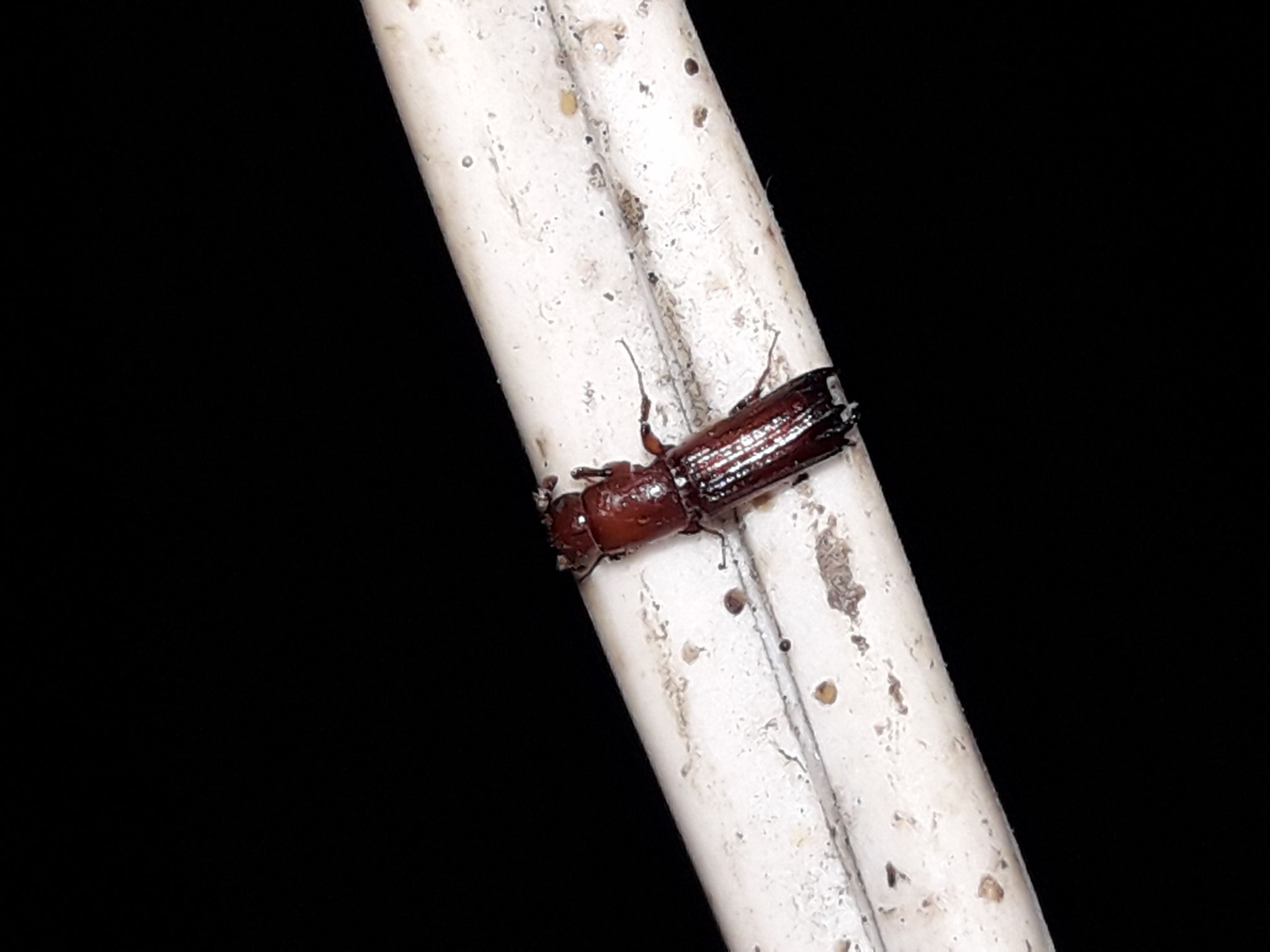
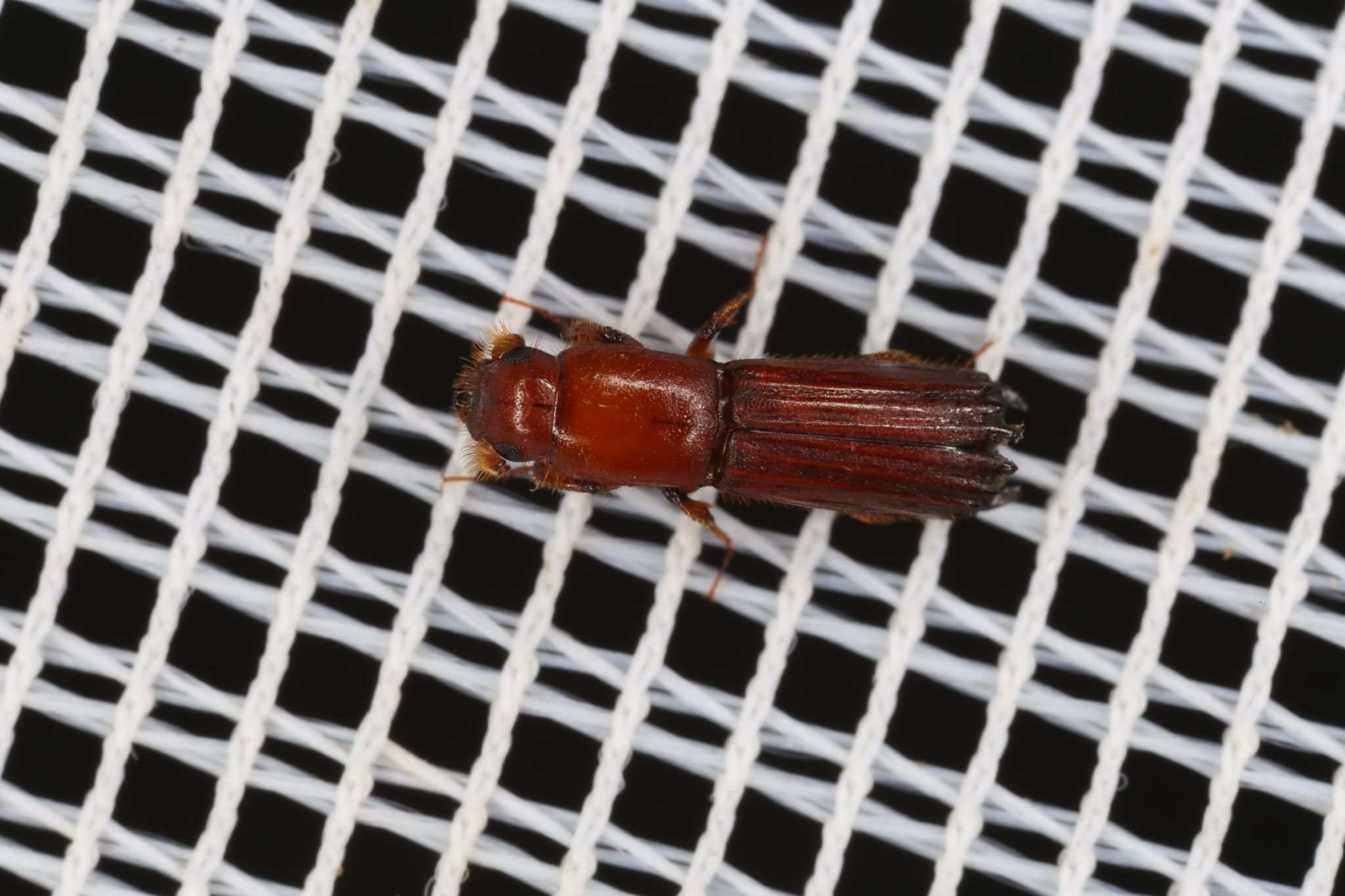
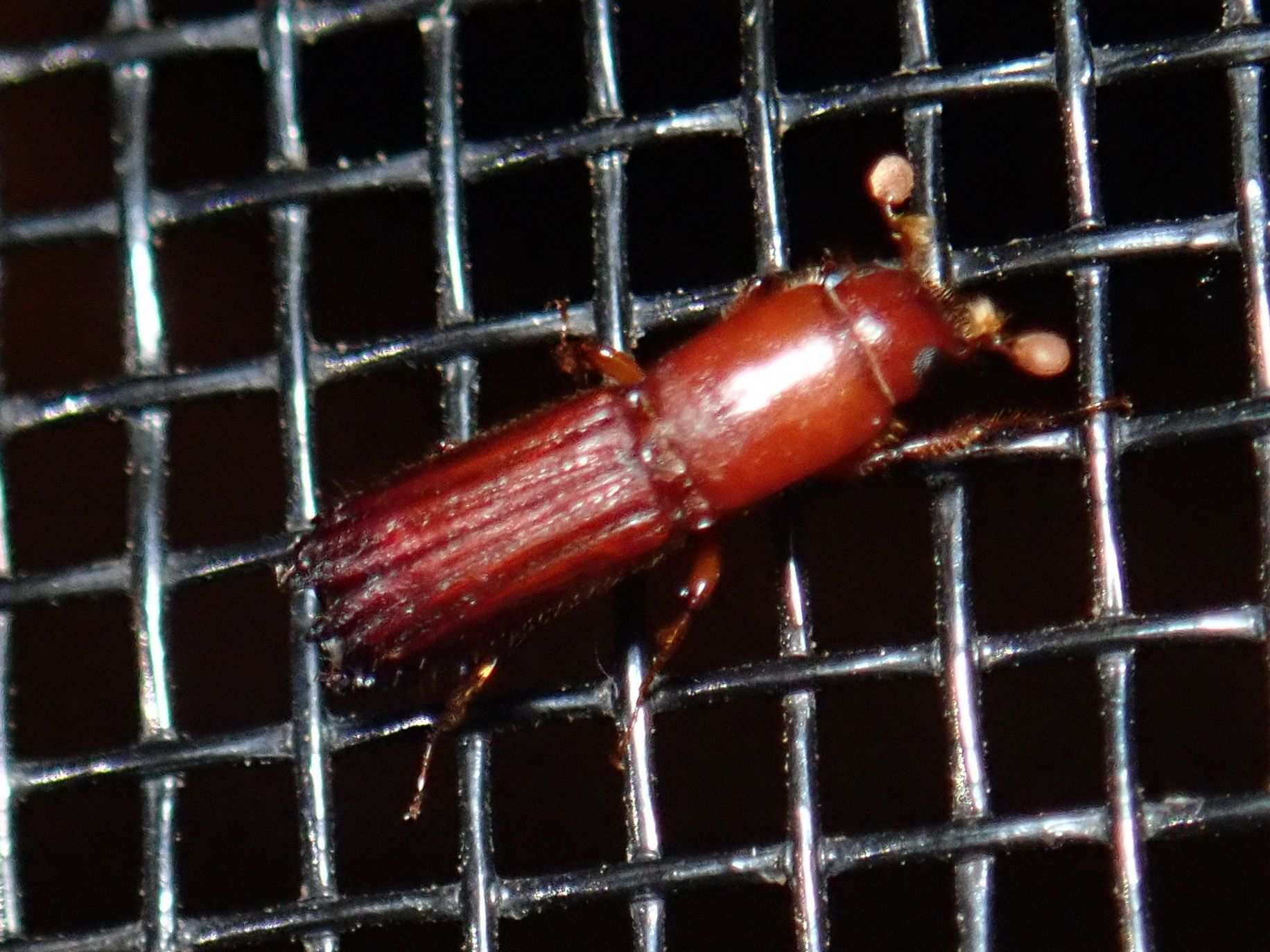
Morphological Features
Body length 5.35 mm, maximum width 0.97 mm at elytral apex, 5.5 times longer than wide. Head distinctly longer than wide, about two times longer than eye length; frons slightly concave transversely, surface with relatively long, fine, erect setae. Eyes lateral, elongate, approximately 1.5 times longer than wide, almost flat, slightly visible in dorsal view, subtriangular in outline, anterior margin entire. Antennal insertion basal, closer to mandibles than to eyes; scape large, slender, extending to fore margin of eyes, completely covered by long and stout setae, longer toward apex; funicle four-segmented (counting pedicel), pedicel attached near its apex. Mandibles large, with one large tooth at apex and one tooth at apical third of biting edge, smooth and convex on upper face. Pronotum 1.8 times longer than wide, narrower toward base; lateral margins thickened, with a set of long and stout setae along margins; posterior margin strongly procurved in pleural area. Prosternum long, covered by short and stout setae; precoxal piece acutely pointed; procoxae contiguous. Scutellum small, slender, pointed. Elytra subparallel, becoming wider apically, base slightly wider than pronotal base. Metasternum long, impressed near metacoxa for reception of femur, anterior margin of impression armed by one pointed spine. Protarsomeres: tarsomere 1 as long as tarsomeres 4 and 5 combined, 2 and 3 equal in length, 4 shortest (0.5 times length of tarsomere 3), 5 slightly longer than previous three combined, slender, with long, slender claws. Pubescence present along entire body, very conspicuous on head, frons, scape, mandibles, and prosternum. Vertex coarsely punctured, punctures two times longer than wide.
Plazi taxonomic treatment
Host Plants (0 host plants)
Data sources: EPPO Global Database and relevant literature.
No host plants available.
Quarantine Status (1 records)
Data sources: IPPC website and national quarantine websites; verified by human review.
| Country | Status | Year Added |
|---|---|---|
| United States of America | Quarantine pests | — |
Distribution (0 countries)
Data Sources: EPPO Global Database and GBIF.
No distribution records available.
Genomes (0 records)
Data source: NCBI.
No genome records available.
Transcriptomes (0 records)
Data source: NCBI.
No transcriptome records available.
Literature
Fetching literature from NCBI PubMed...
Failed to fetch literature