Charidotis
TaxID: 111227
Basic Information
Charidotis
Cat's Claw Tortoise Beetle
nan
from Wikipedia
Taxonomic Information
Eukaryota
Arthropoda
Insecta
Coleoptera
Chrysomelidae
Charidotis
nan
nan
Genus
nan
k__Eukaryota;p__Arthropoda;c__Insecta;o__Coleoptera;f__Chrysomelidae;g__Charidotis;s__unclassified
nan
Arthropods
Photos (5 photos)
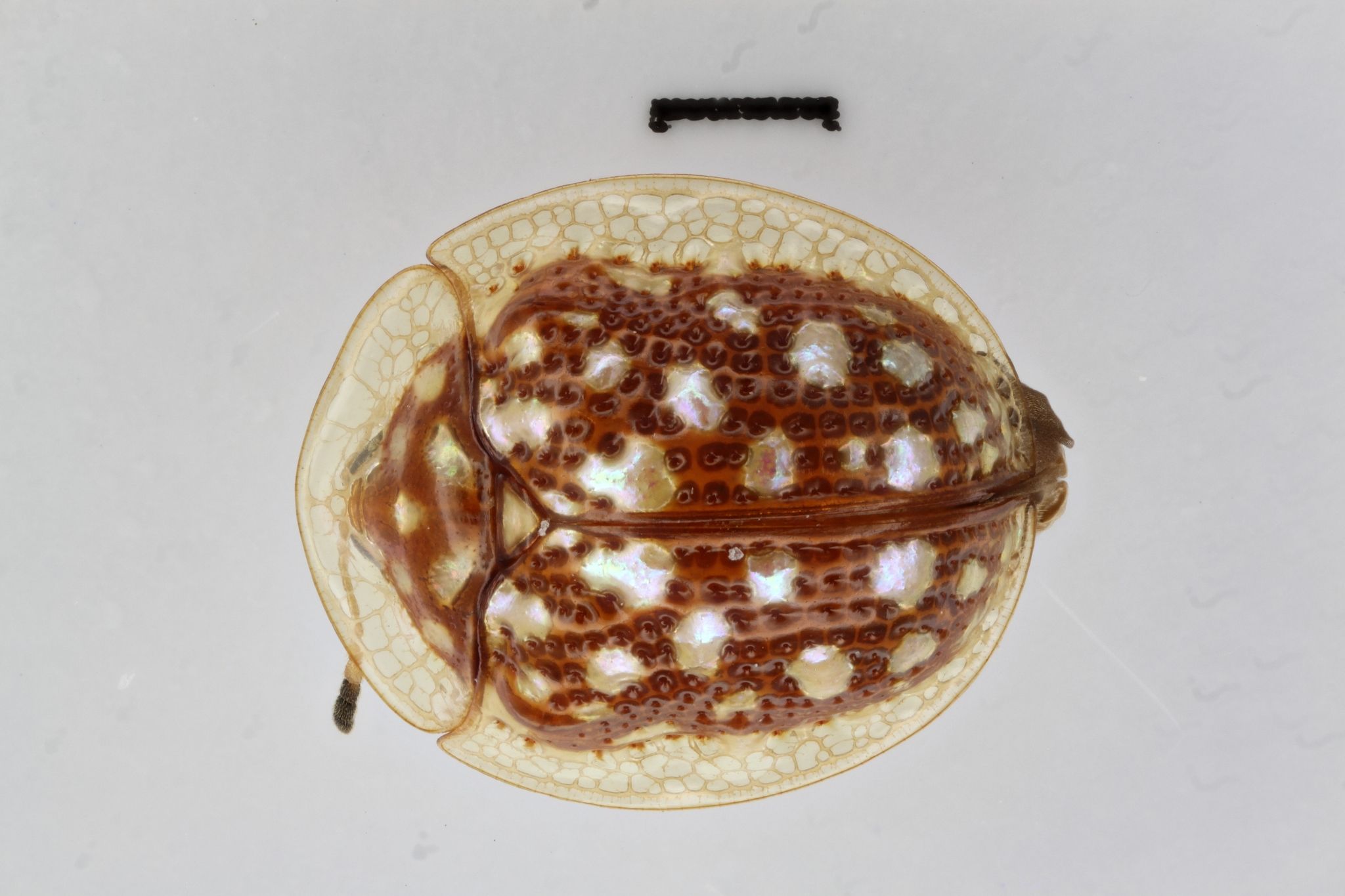
Morphological Features
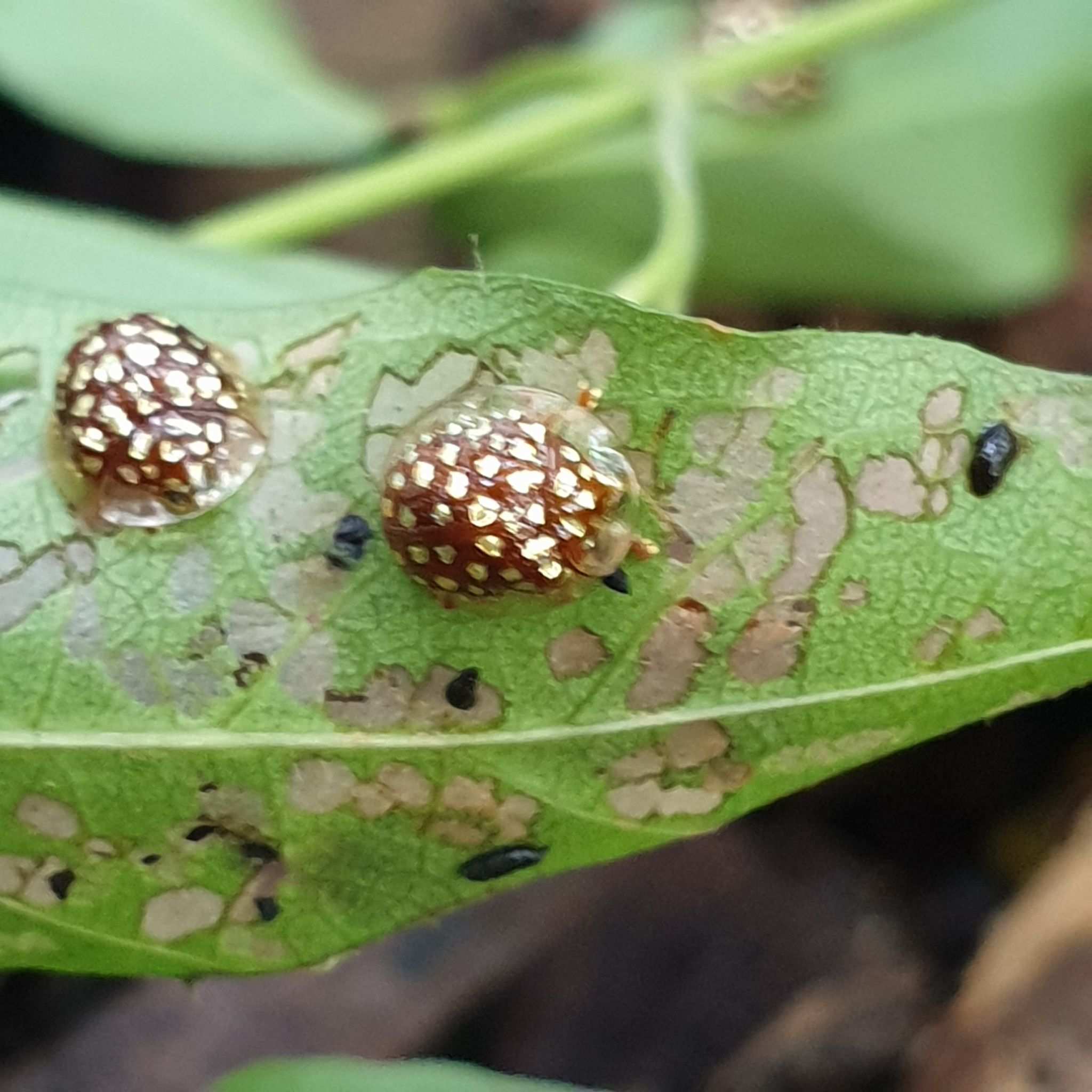
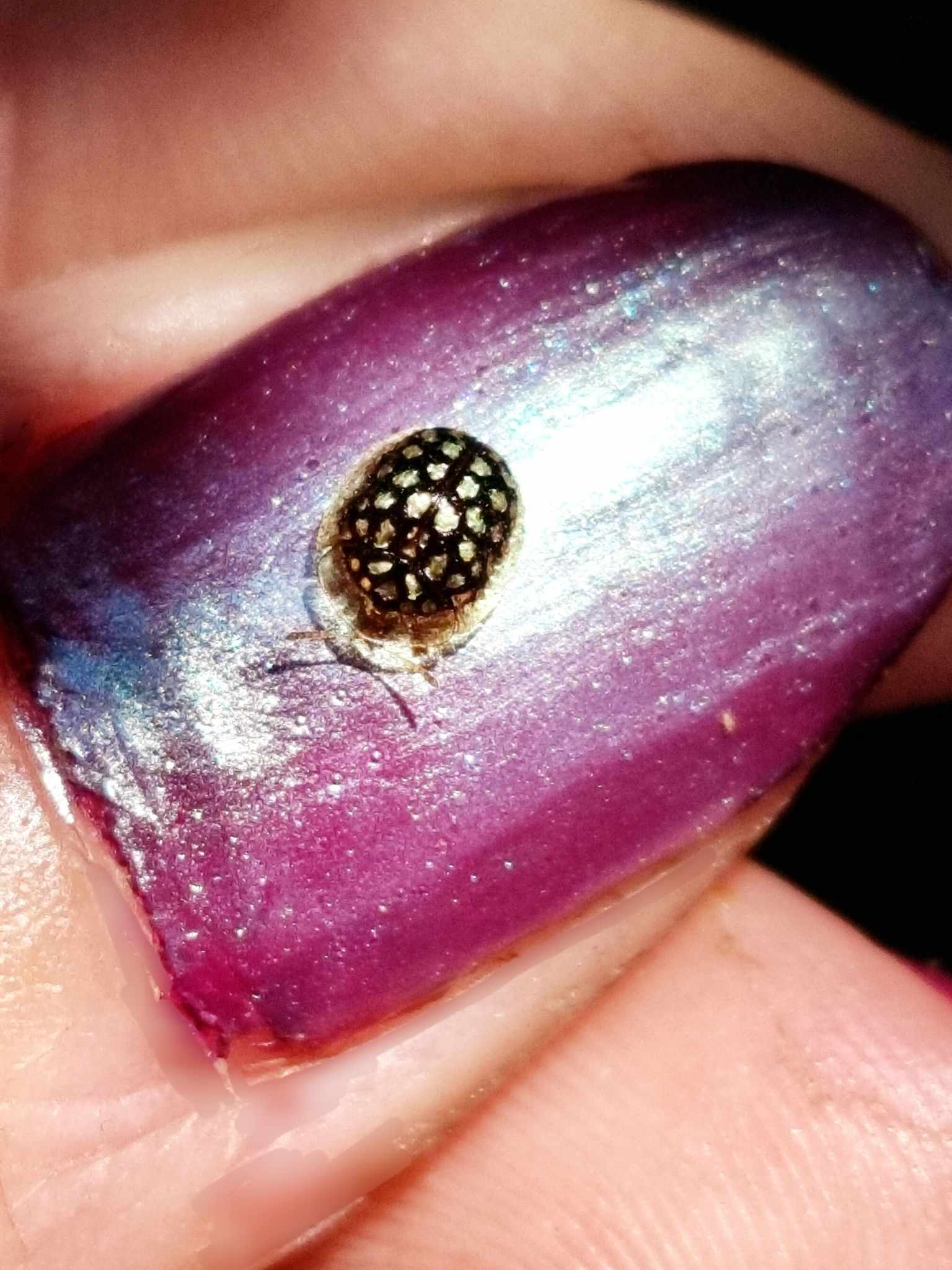
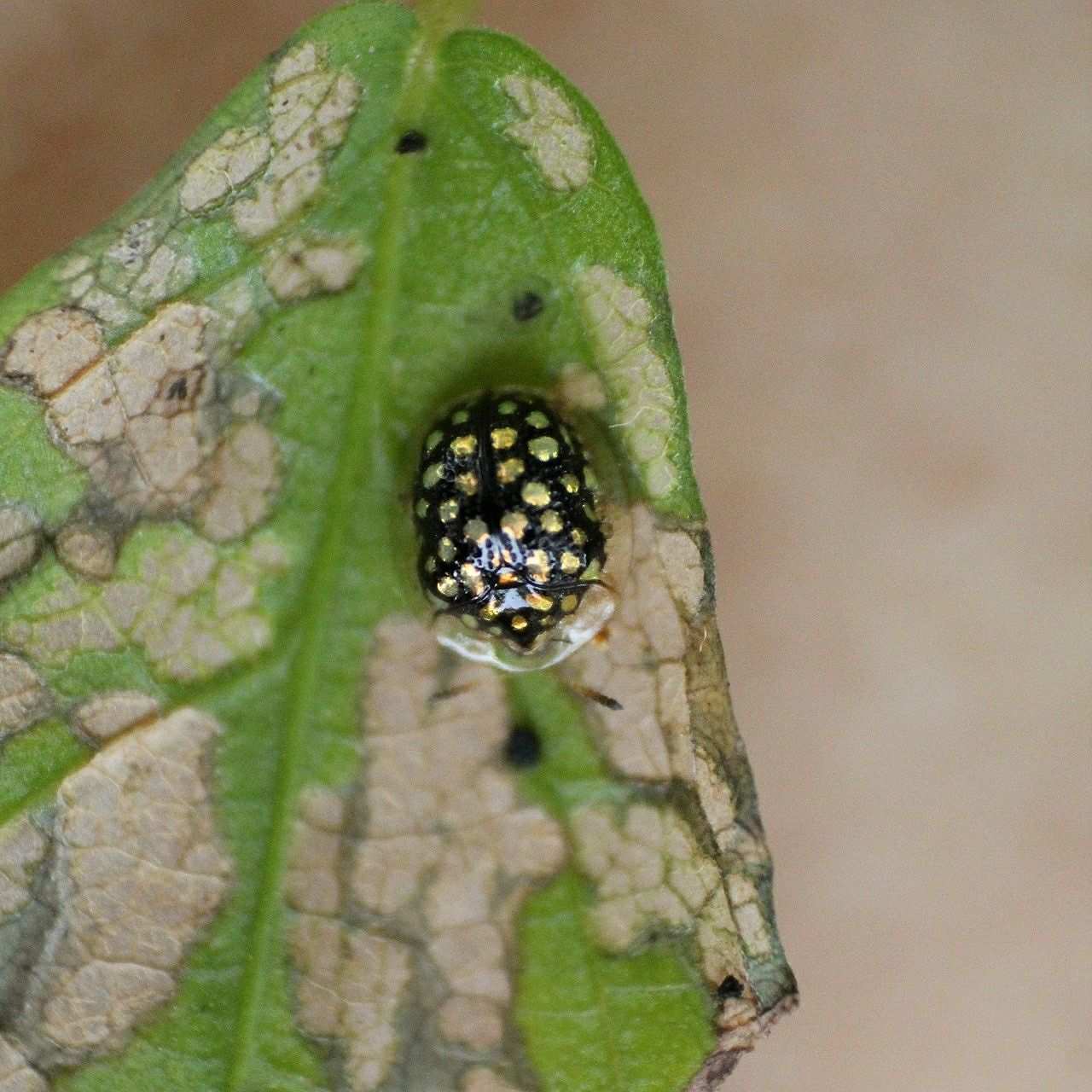
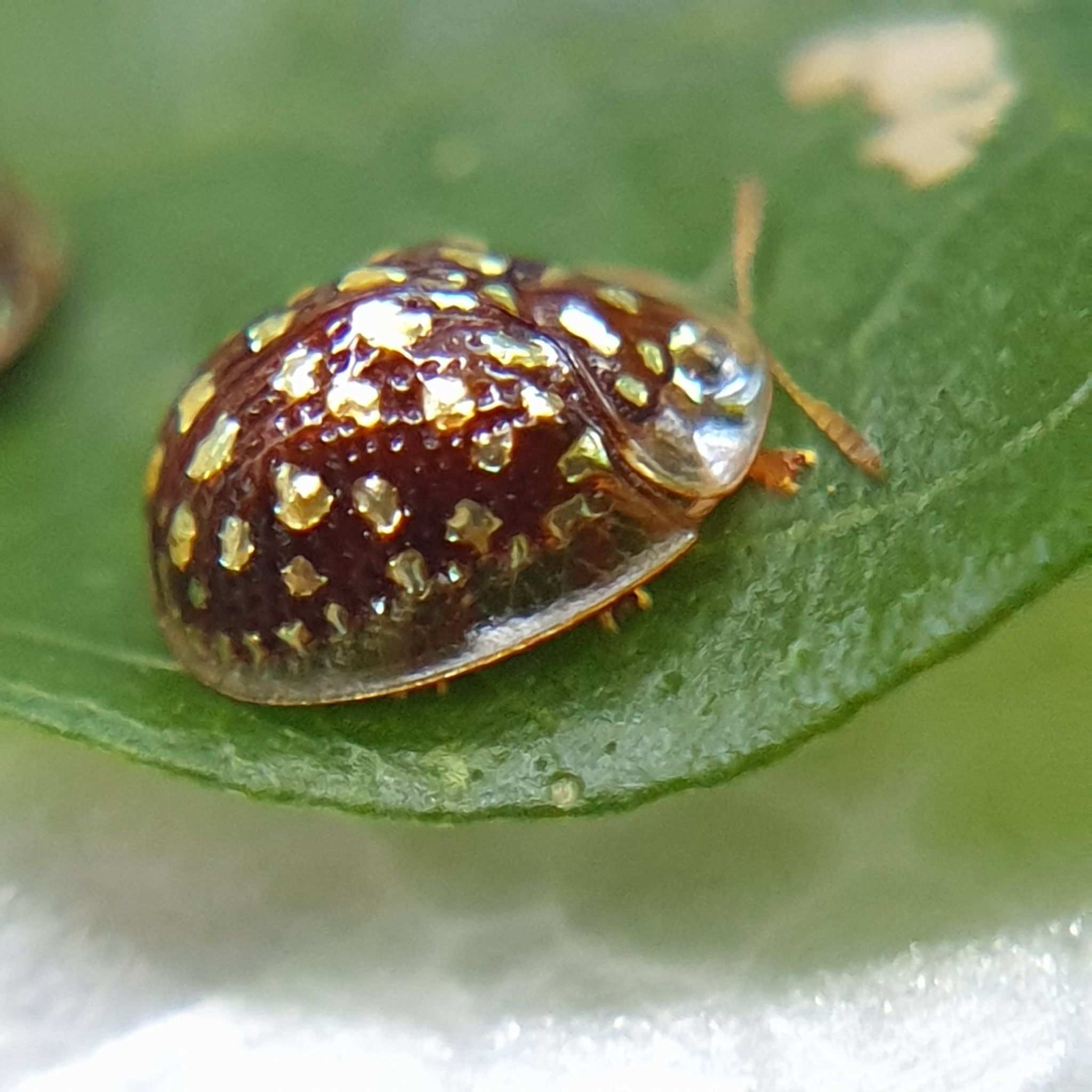
Body length 5.61–6.30 mm, width 4.65–5.49 mm, length/width ratio 1.14–1.20. Body broadly oval, moderately convex. Dorsum yellow with a wide black ring covering basal half of pronotal disc, scutellum, basal and apical 1/5 of elytral disc, and laterally extending from fourth to ultimate row of punctures. Head with eyes large, occupying laterally almost entire head; genae short. Clypeus nearly as wide as long, flat, smooth, shiny, impunctate, microreticulate; clypeal lines sparsely pubescent, fine, running along eyes to antennal insertions and converging in obtuse arch. Antennae moderately long, with five basal glabrous antennomeres and six distal ones moderately increased; antennomeres IV and V distinctly shorter than VI. Pronotum semicircular without sharp corners, maximum width slightly behind midlength, lateral sides broadly rounded; disc moderately convex, smooth, shiny, with several micropunctures on top and groups of moderately coarse punctures on slope on each side; basal margin moderately curved towards humeral angles, simple, smooth. Scutellum triangular, smooth, shiny, microreticulate. Elytra with marginal row distinct in whole length, with distinct vacancy around midlength, its punctures slightly coarser than punctures on slope of disc; explanate margin indistinctly separated from disc, slightly declivous, broad, smooth, shiny, impunctate, structured like a honeycomb, strongly narrowed in apical part. Prosternal process broad, slightly constricted in middle, moderately expanding apically, surface shiny, irregular, micro-rugose.
Plazi taxonomic treatment
Host Plants (0 host plants)
Data sources: EPPO Global Database and relevant literature.
No host plants available.
Quarantine Status (1 records)
Data sources: IPPC website and national quarantine websites; verified by human review.
| Country | Status | Year Added |
|---|---|---|
| United States of America | Quarantine pests | — |
Distribution (0 countries)
Data Sources: EPPO Global Database and GBIF.
No distribution records available.
Genomes (0 records)
Data source: NCBI.
No genome records available.
Transcriptomes (0 records)
Data source: NCBI.
No transcriptome records available.
Literature
Fetching literature from NCBI PubMed...
Failed to fetch literature