Scolytus multistriatus
TaxID: 160329
Basic Information
Scolytus multistriatus
European Elm Bark Beetle
Scolytus multistriatus, the European elm bark beetle or smaller European elm bark beetle, is a bark beetle species in the genus Scolytus. In Europe, while S. multistriatus acts as vector of the Dutch elm disease, caused by the Ascomycota Ophiostoma ulmi, it is much less effective than the large elm bark beetle, S. scolytus. S. multistriatus uses vanillin and syringaldehyde as signals to find a host tree during oviposition.
from Wikipedia
Taxonomic Information
Metazoa
Arthropoda
Insecta
Coleoptera
Curculionidae
Scolytus
multistriatus
unclassified
Species
nan
k__Metazoa;p__Arthropoda;c__Insecta;o__Coleoptera;f__Curculionidae;g__Scolytus;s__Scolytus multistriatus
nan
Arthropods
Photos (5 photos)
Morphological Features
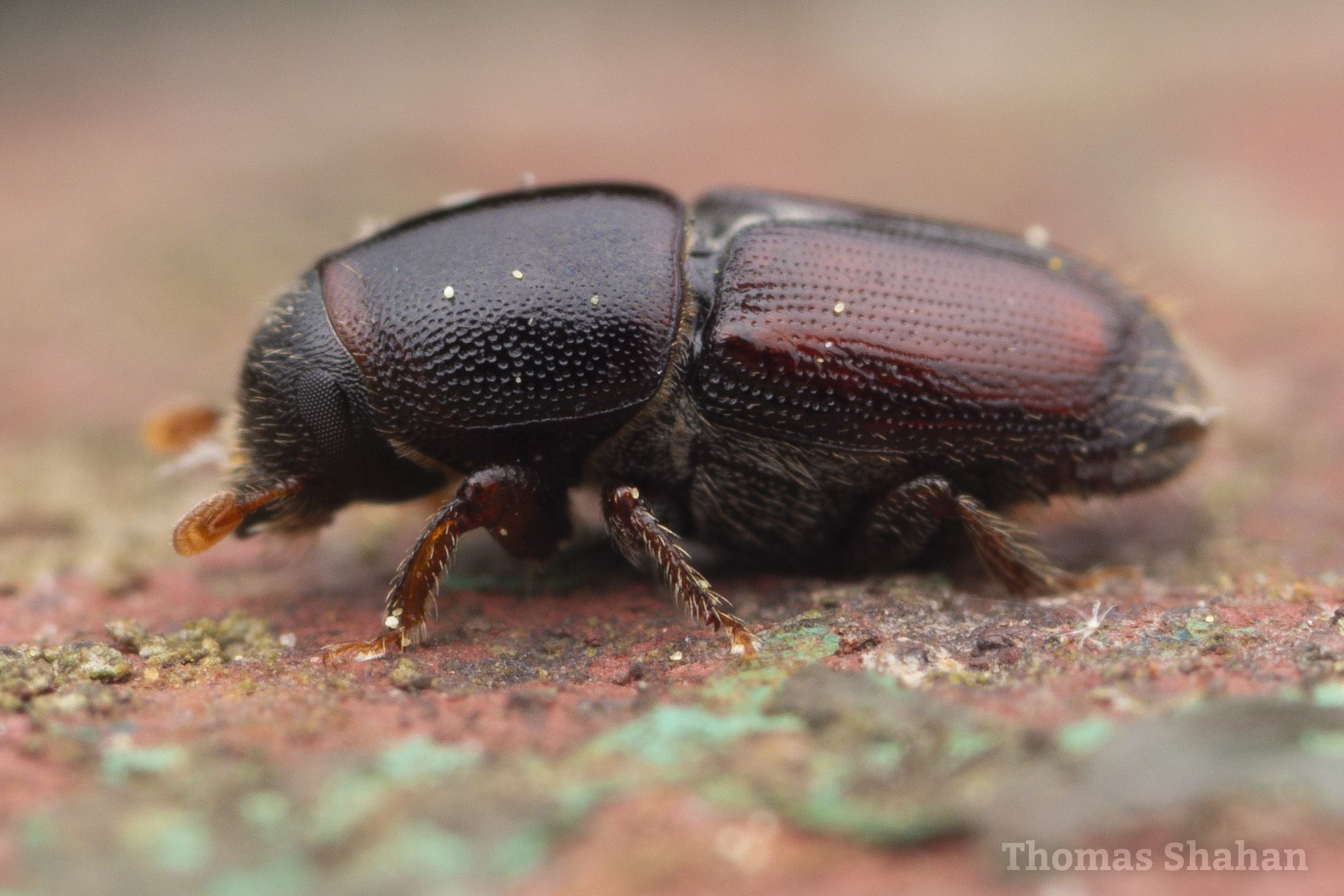
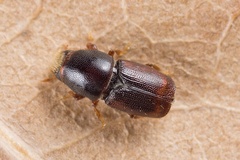
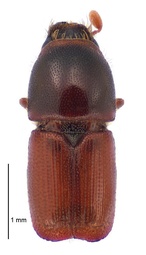
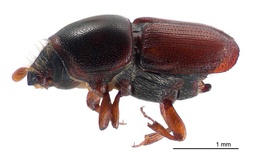
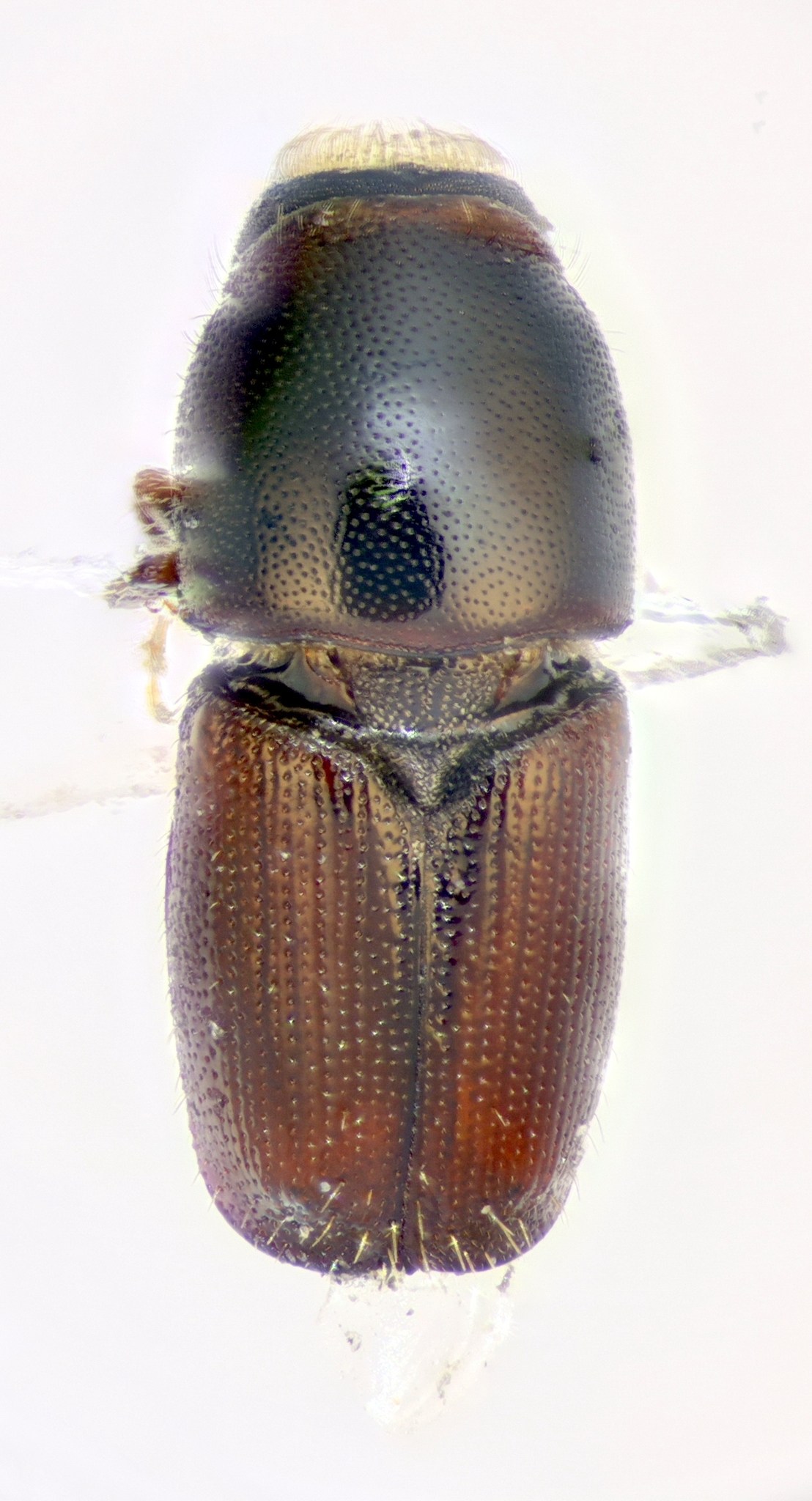
Adult body length 2.5–5.0 mm. Head, pronotum, and abdominal venter dark red-brown; legs light brown; antennae yellow-brown; elytra usually dark red-brown but may be brown, with pronotal and elytral surfaces frequently containing patches of red-brown mixed with dark red-brown. Head with median area above mandibles bearing dense patch of long, yellow, hair-like setae. Frons in male strongly convex when viewed laterally, weakly aciculate, setae sparser, shorter, less than width of eye; epistoma feebly entire. Antennal club flattened, thinner on apical half, irregularly ovoid, setose with partial septum, two sharply arcuate sutures visible. Pronotum surface smooth, shining, punctures on disc fine, shallow, moderately abundant, larger and more abundant laterally and on apical constriction; apical and anterolateral margins bearing sparse, erect, yellow, hair-like setae. Elytra with sides sub-parallel on apical half, narrowing to subquadrate, smooth apex; interstriae weakly impressed, more than twice width of striae, interstrial punctures uniseriate, smaller than those of striae, bearing sparse, long, semi-erect yellow hair-like setae (may be abraded). Metepimeron greater than half-length of metanepisternum. Abdominal ventrites: length of ventrite 5 greater than combined lengths of ventrites 3 and 4; basal margin of ventrite armed with a long, smooth, conical spine with its base extending from basal margin to half length of segment. Body moderately, uniformly covered by long, fine, yellow erect hair-like setae, these longer than width of midpoint of eye.
Plazi taxonomic treatment
Host Plants (4 host plants)
Data sources: EPPO Global Database and relevant literature.
| Scientific Name | Status |
|---|---|
| Populus sp. | Host |
| Prunus | Host |
| Ulmus | Host |
| Ulmus minor | Host |
Quarantine Status (5 records)
Data sources: IPPC website and national quarantine websites; verified by human review.
| Country | Status | Year Added |
|---|---|---|
| China | Quarantine pests | 2021 |
| Ecuador | Quarantine pests | — |
| Japan | Quarantine pests | — |
| Republic of Korea | Quarantine pests | — |
| Syrian Arab Republic | Absent | — |
Distribution (43 countries)
Data Sources: EPPO Global Database and GBIF.
| Country | Status | State |
|---|---|---|
| Algeria | Present | — |
| Argentina | Present | — |
| Armenia | Present | — |
| Australia | Present | — |
| Austria | Present | — |
| Belgium | Present | — |
| Bulgaria | Present | — |
| Canada | Present | — |
| Switzerland | Present | — |
| Chile | Present | — |
Distribution Map (Latitude and longitude coordinates sourced from GBIF.)
Download CSVGenomes (0 records)
Data source: NCBI.
No genome records available.
Transcriptomes (0 records)
Data source: NCBI.
No transcriptome records available.
Literature
Fetching literature from NCBI PubMed...
Failed to fetch literature