Curculio caryae
TaxID: 13025
Basic Information
Curculio caryae
Pecan Weevil, pecan weevil
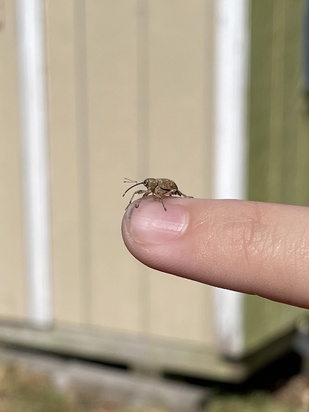
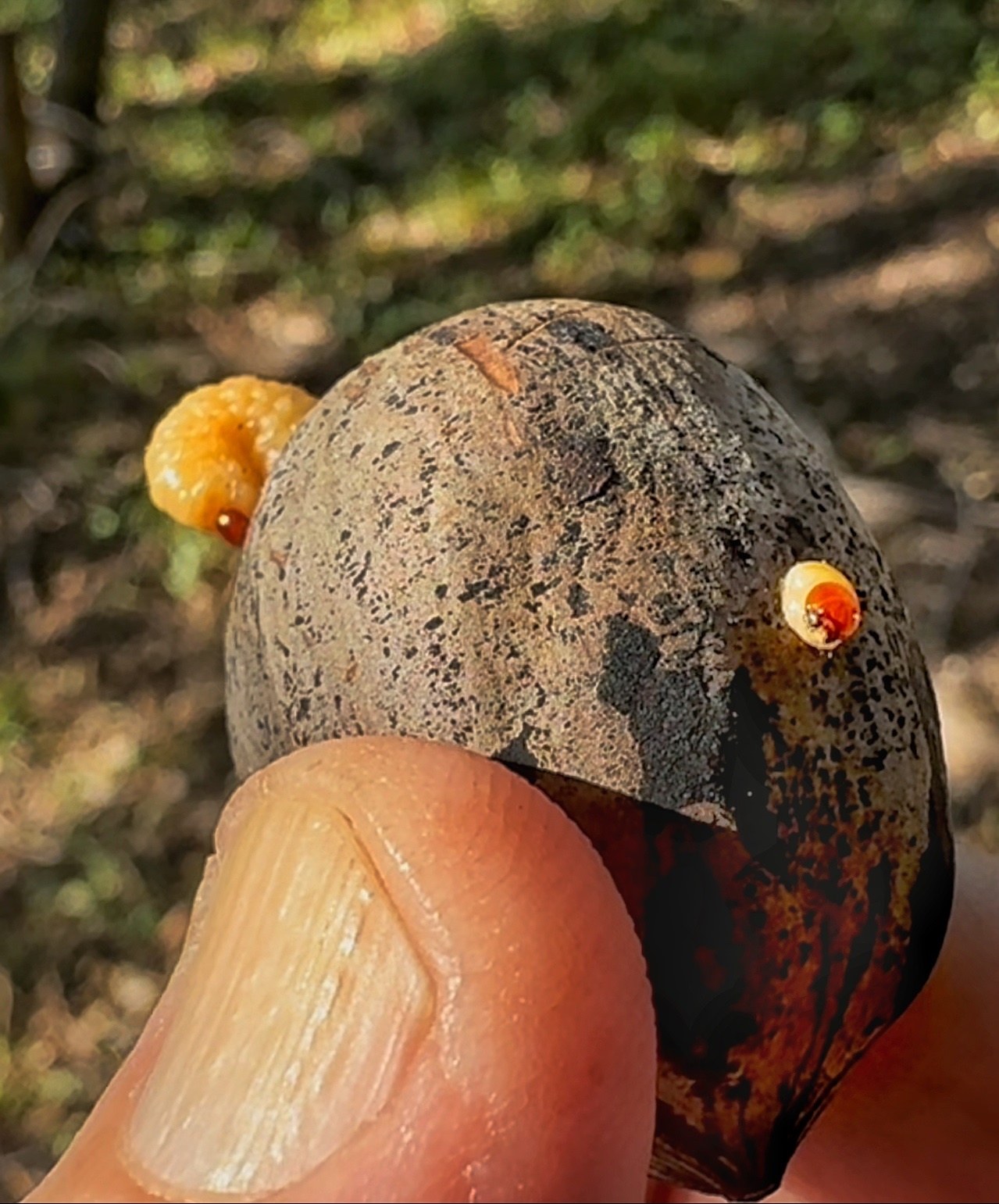
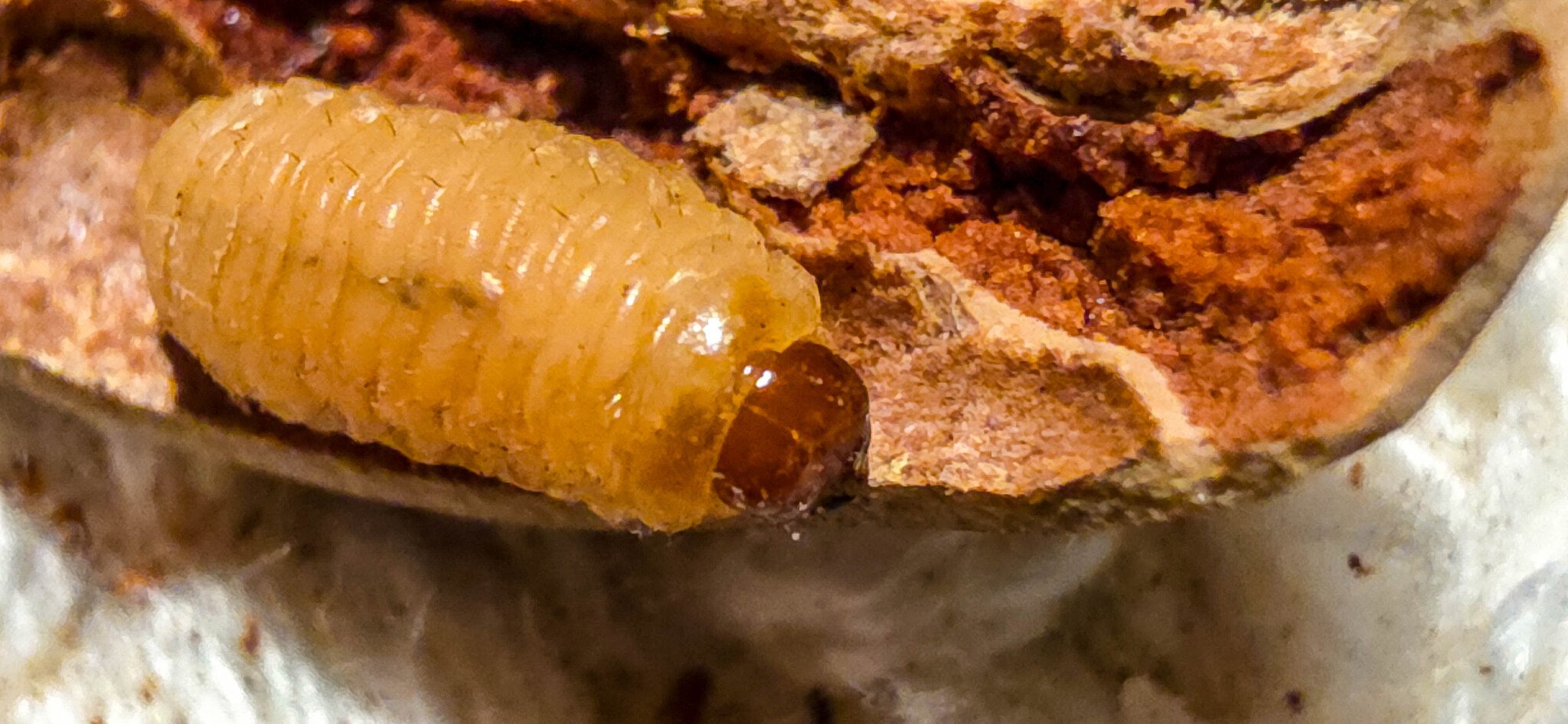
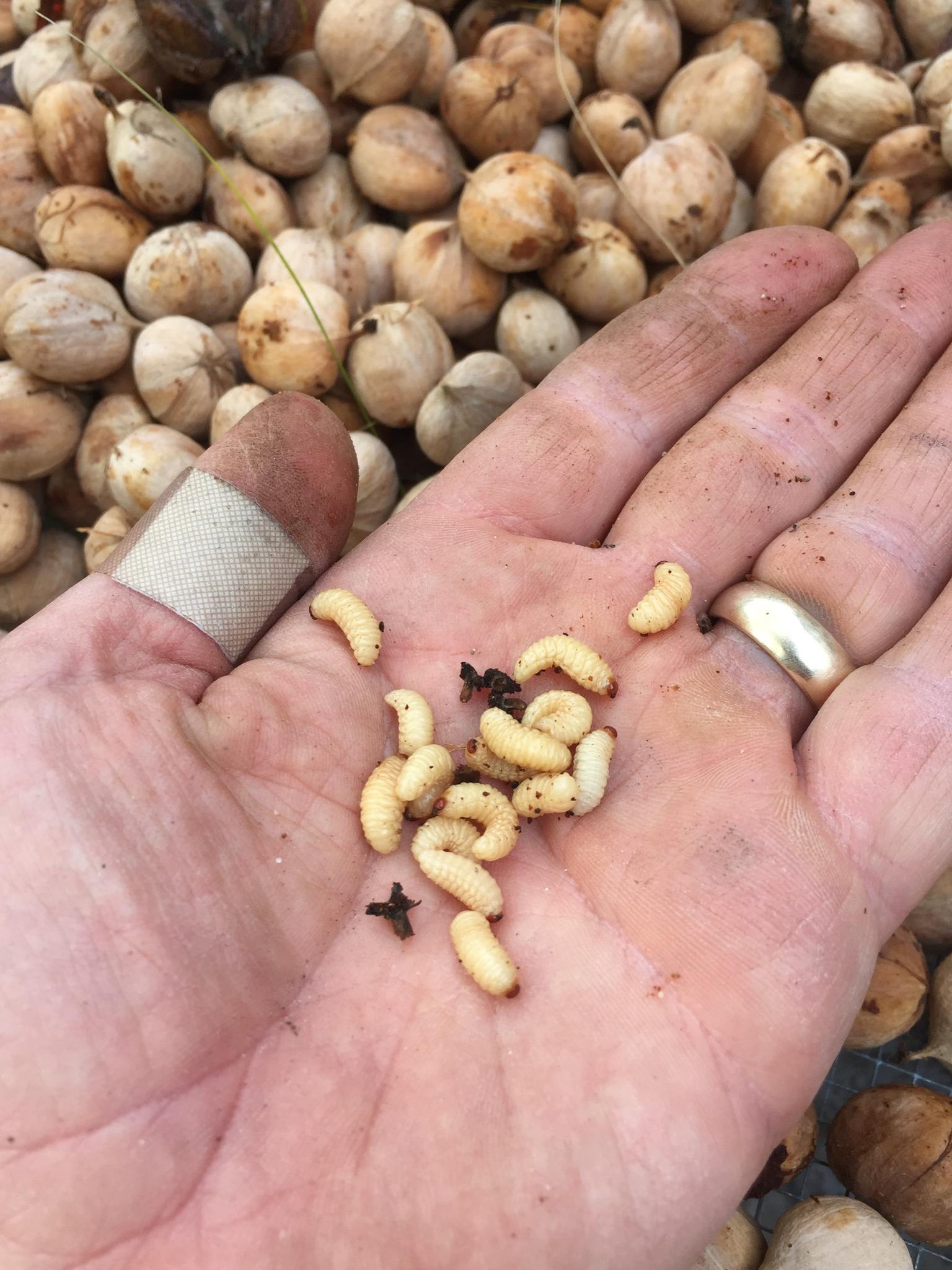
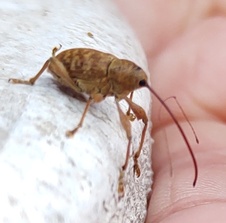
The pecan weevil, Curculio caryae (Coleoptera: Curculionidae) is an obligate feeder on the nuts of North American hickories and pecans (Carya species), most widely recognized as an economically important pest of the pecan, Carya illinoinensis (Fagales: Juglandaceae). It has also been observed to infest one Juglans species, the Persian walnut, Juglans regia. Adult pecan weevils are approximately 3?8 inch (9.5 mm) long, medium-brown beetles with a proboscis of equal length to their body, which has mouthparts at the distal end. The females use their proboscis to chew a hole through the husk of developing nuts and deposit eggs inside, which hatch into legless, creamy-white larvae with reddish-brown head capsules that feed inside the nuts from late summer through fall, developing through several instars up to 3?5 in (15 mm) long at full growth. In late fall and early winter, mature larvae chew a small hole in the nut shell and drop to the ground, where they burrow into the soil and construct a cell in which they remain for eight to ten months before pupating and transforming into adults. Newly formed adults remain in their cells in the soil and emerge the following year, two years after the beginning of the cycle, although some larvae do not pupate and transform to adults until an additional year has passed and the life cycle for some of each generation may take up to three years. Their economic importance results from crop loss due to their feeding and egg laying on the developing pecan nuts causing them to drop from the tree, and the destruction of the edible nut kernel by the larvae feeding inside the shell.
from Wikipedia
Taxonomic Information
Eukaryota
Arthropoda
Insecta
Coleoptera
Curculionidae
Curculio
caryae
nan
Species
nan
k__Eukaryota;p__Arthropoda;c__Insecta;o__Coleoptera;f__Curculionidae;g__Curculio;s__Curculio caryae
nan
Arthropods
Photos (5 photos)
Morphological Features
No morphological description available.
Host Plants (0 host plants)
Data sources: EPPO Global Database and relevant literature.
No host plants available.
Quarantine Status (3 records)
Data sources: IPPC website and national quarantine websites; verified by human review.
| Country | Status | Year Added |
|---|---|---|
| Chile | A1 list | 2019 |
| Republic of Korea | Quarantine pests | — |
| Mexico | Quarantine pests | 2018 |
Distribution (2 countries)
Data Sources: EPPO Global Database and GBIF.
| Country | Status | State |
|---|---|---|
| Canada | Present | — |
| United States of America | Present | — |
Distribution Map (Latitude and longitude coordinates sourced from GBIF.)
Download CSVGenomes (1 records)
Data source: NCBI.
| Assembly Accession | Assembly Level | Genome Size(Mb) | Contig N50(Kb) | Scaffold N50(Kb) | BUSCO% | Downloads | Actions |
|---|---|---|---|---|---|---|---|
| GCA_051047995.1 | Chromosome | 2169 | 4816 | 186897 | - |
|
|
|
icCurCary2.1 |
|||||||
Transcriptomes (0 records)
Data source: NCBI.
No transcriptome records available.
DNA Barcodes (4 records)
View allData source: BOLD.
| Process ID | BIN | Marker | Length | Country | Date | Lat/Lon | Sequence |
|---|---|---|---|---|---|---|---|
| GBCL46691-19 | - | COI-3P | 819 | - | - | - | |
| GBCL46690-19 | - | COI-3P | 818 | - | - | - | |
| GBCL46689-19 | - | COI-3P | 818 | - | - | - | |
| CNC947-11 | - | COI-5P | 407 | Canada | 1982-08-09 | - |
Literature
Fetching literature from NCBI PubMed...
Failed to fetch literature