Plutella xylostella
TaxID: 51655
Basic Information
Plutella xylostella
Diamond Backed Moth, Diamondback Moth, diamondback moth
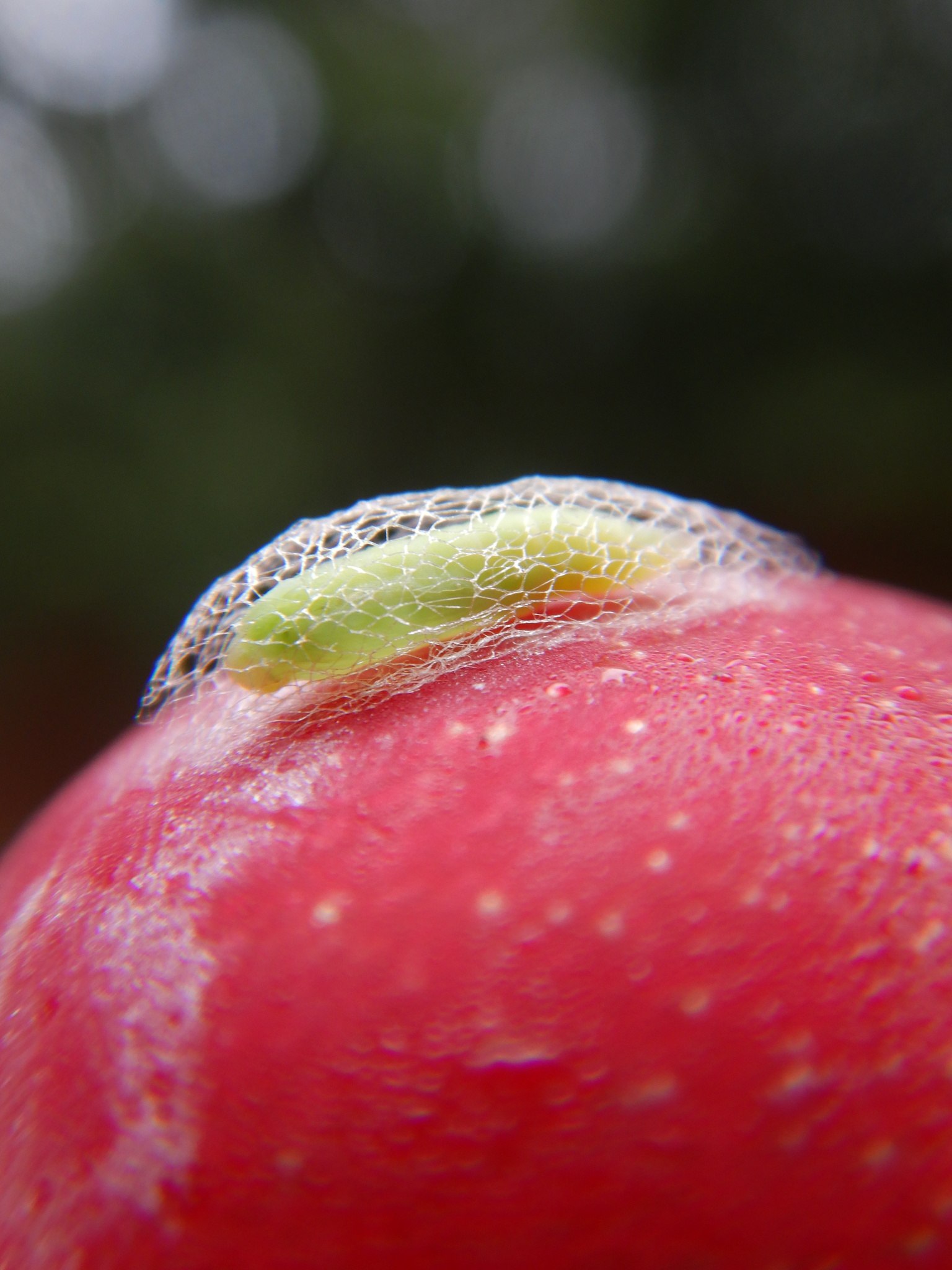
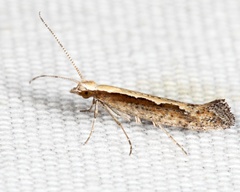
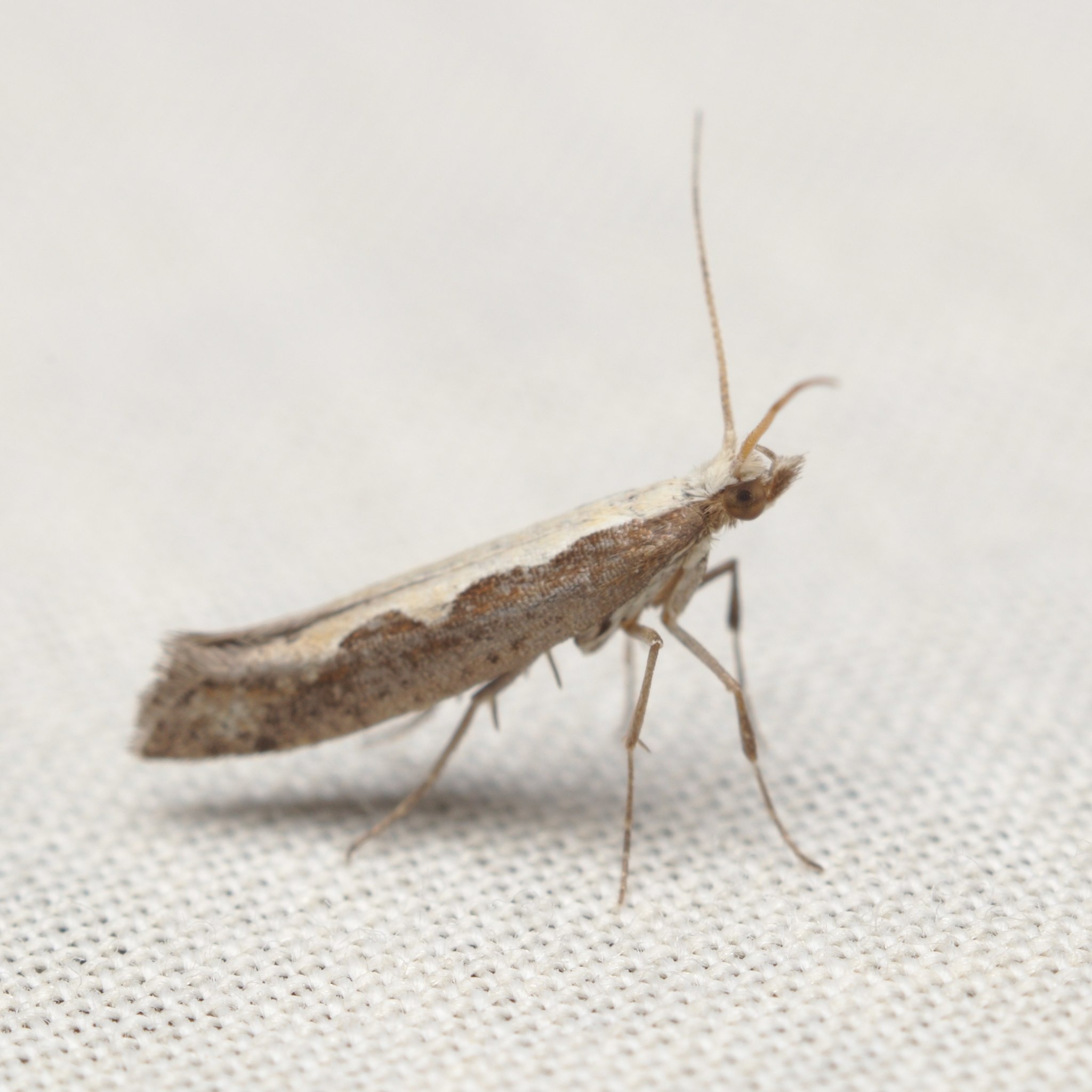
The diamondback moth (Plutella xylostella), sometimes called the cabbage moth, is a moth species of the family Plutellidae and genus Plutella. The small, grayish-brown moth sometimes has a cream-colored band that forms a diamond along its back. The species may have originated in Europe, South Africa, or the Mediterranean region, but it has now spread worldwide. The moth has a short life cycle (14 days at 25 C), is highly fecund, and is capable of migrating long distances. Diamondback moths are considered pests as they feed on the leaves of cruciferous crops and plants that produce glucosinolates. However, not all of these plants are equally useful as hosts to the moth. Because of this, studies have suggested using wintercress as a trap crop around agricultural fields because diamondback moths are highly attracted to that plant but their larvae fail to survive when eggs are laid on it. Originally, pesticides were used to kill the moths but diamondbacks have developed resistance to many of the common chemicals. For this reason, new biological and chemical controls, as well as different planting methods, are being pursued to reduce the destruction caused by the moths.
from Wikipedia
Taxonomic Information
Metazoa
Arthropoda
Insecta
Lepidoptera
Plutellidae
Plutella
xylostella
unclassified
Species
nan
k__Metazoa;p__Arthropoda;c__Insecta;o__Lepidoptera;f__Plutellidae;g__Plutella;s__Plutella xylostella
nan
Arthropods
Photos (5 photos)
Morphological Features
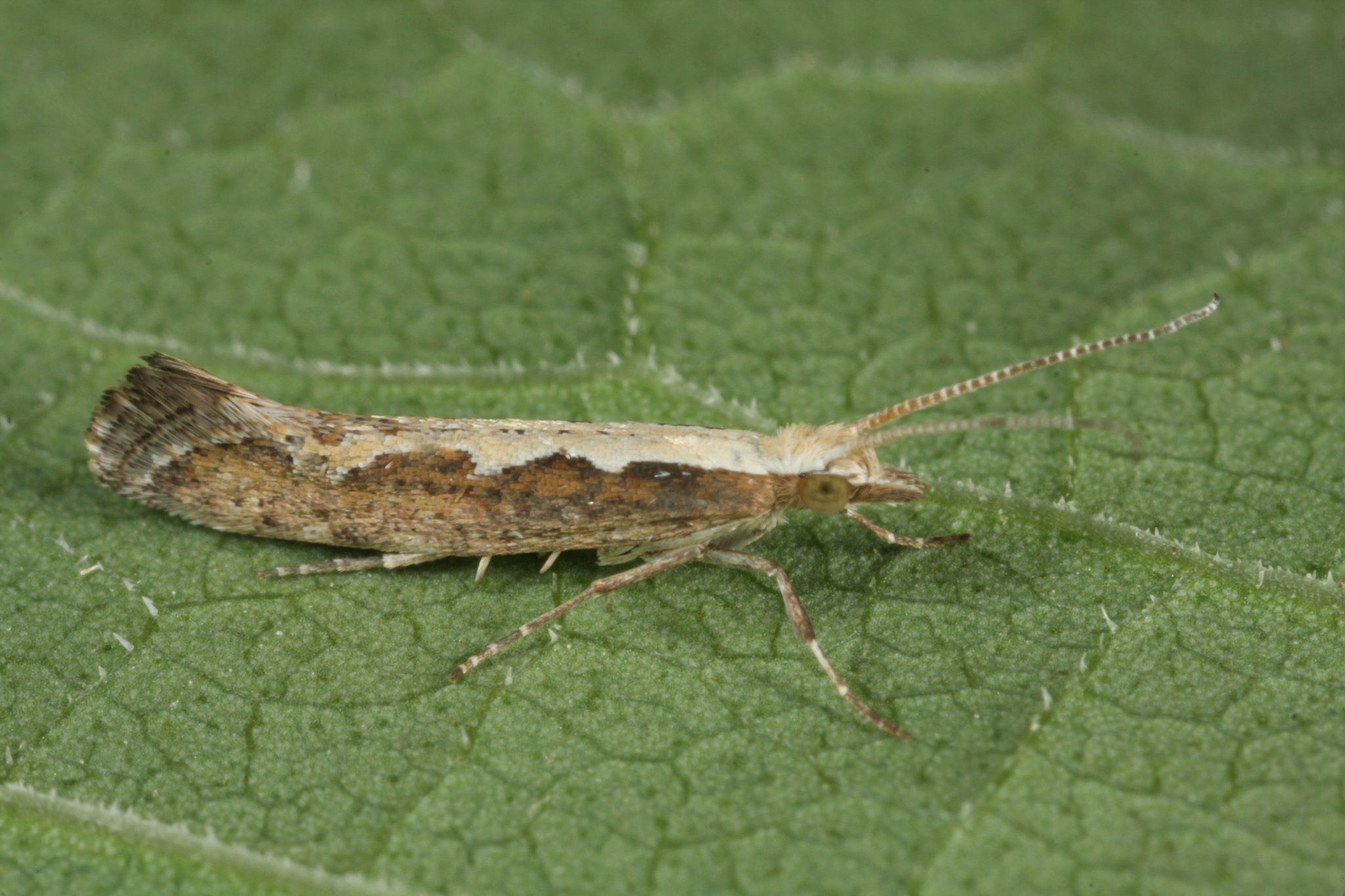
Adult. Forewing pattern: males have a strongly defined, ochre or cream-coloured, scalloped dorsal fascia contrasting markedly with the brown anterior two-thirds. Females display significant individual variation, from a more subdued dorsal fascia to one that is indistinct or nearly lacking. The colour differences described for host races fall within the known variation of this species and may not be diagnostically significant.
Plazi taxonomic treatment
Host Plants (0 host plants)
Data sources: EPPO Global Database and relevant literature.
No host plants available.
Quarantine Status (4 records)
Data sources: IPPC website and national quarantine websites; verified by human review.
| Country | Status | Year Added |
|---|---|---|
| Mexico | Quarantine pests | — |
| French Polynesia | Present | — |
| Sao Tome and Principe | Quarantine pests | — |
| United States of America | Quarantine pests | — |
Distribution (128 countries)
Data Sources: EPPO Global Database and GBIF.
| Country | Status | State |
|---|---|---|
| Albania | Present | — |
| Algeria | Present | — |
| United Arab Emirates | Present | — |
| Argentina | Present | — |
| Armenia | Present | — |
| Australia | Present | — |
| Austria | Present | — |
| Azerbaijan | Present | — |
| Belgium | Present | — |
| Bangladesh | Present | — |
Distribution Map (Latitude and longitude coordinates sourced from GBIF.)
Download CSVGenomes (6 records)
Data source: NCBI.
| Assembly Accession | Assembly Level | Genome Size(Mb) | Contig N50(Kb) | Scaffold N50(Kb) | BUSCO% | Downloads | Actions |
|---|---|---|---|---|---|---|---|
| GCF_932276165.1 | Chromosome | - | - | - | - | - |
|
|
ilPluXylo3.1 |
|||||||
| GCF_000330985.1 | Scaffold | - | - | - | - | - |
|
|
DBM_FJ_V1.1 |
|||||||
| GCA_932276175.1 | Scaffold | - | - | - | - | - |
|
|
ilPluXylo3.1 alternate haplotype |
|||||||
| GCA_932276165.2 | Chromosome | - | - | - | - | - |
|
|
ilPluXylo3.2 |
|||||||
| GCA_905116875.1 | Scaffold | 343 | 1812 | 11309 | - |
|
|
|
|
|||||||
| GCA_019096205.1 | Chromosome | - | - | - | - | - |
|
|
PxLV.1 |
|||||||
Transcriptomes (3 records)
Data source: NCBI.
| Run ID | Tissue | Developmental Stage | Sex | Read Count | Location | Actions |
|---|---|---|---|---|---|---|
| DRR813782 | whole body | 3rd instar larva | not determined | 24492974 | missing: data agreement established pre-2023 | |
|
PRJDB35106 DRX792256 DRP015414 insect HS_1 (CRX1621354; CRA024611) hot-evolved strain {'age': '3 Day', 'sex': 'not determined', 'strain': 'hot-evolved strain', 'tissue': 'whole body', 'dev_stage': '3rd instar larva', 'sample_name': 'SAMC4981106_HS_1', 'geo_loc_name': 'missing: data agreement established pre-2023', 'ngdc_sample_id': 'SAMC4981106', 'collection_date': 'missing: data agreement established pre-2023', 'ngdc_project_id': 'PRJCA038475', 'ngdc_release_date': '2025-05-01', 'biomaterial_provider': 'Fujian Agriculture and Forestry University'} |
||||||
| DRR813783 | whole body | 3rd instar larva | not determined | 23840681 | missing: data agreement established pre-2023 | |
|
PRJDB35106 DRX792257 DRP015414 insect HS_2 (CRX1621355; CRA024611) hot-evolved strain {'age': '3 Day', 'sex': 'not determined', 'strain': 'hot-evolved strain', 'tissue': 'whole body', 'dev_stage': '3rd instar larva', 'sample_name': 'SAMC4981107_HS_2', 'geo_loc_name': 'missing: data agreement established pre-2023', 'ngdc_sample_id': 'SAMC4981107', 'collection_date': 'missing: data agreement established pre-2023', 'ngdc_project_id': 'PRJCA038475', 'ngdc_release_date': '2025-05-01', 'biomaterial_provider': 'Fujian Agriculture and Forestry University'} |
||||||
| DRR813784 | whole body | 3rd instar larva | not determined | 25832307 | missing: data agreement established pre-2023 | |
|
PRJDB35106 DRX792258 DRP015414 insect HS_3 (CRX1621356; CRA024611) hot-evolved strain {'age': '3 Day', 'sex': 'not determined', 'strain': 'hot-evolved strain', 'tissue': 'whole body', 'dev_stage': '3rd instar larva', 'sample_name': 'SAMC4981108_HS_3', 'geo_loc_name': 'missing: data agreement established pre-2023', 'ngdc_sample_id': 'SAMC4981108', 'collection_date': 'missing: data agreement established pre-2023', 'ngdc_project_id': 'PRJCA038475', 'ngdc_release_date': '2025-05-01', 'biomaterial_provider': 'Fujian Agriculture and Forestry University'} |
||||||
Literature
Fetching literature from NCBI PubMed...
Failed to fetch literature