Paropsisterna selmani
TaxID: 3110980
Basic Information
Paropsisterna selmani
Eucalyptus Leaf Beetle
Paropsisterna selmani, the Tasmanian eucalyptus beetle, is a species of leaf beetle native to Tasmania which has been inadvertently introduced to the Republic of Ireland and United Kingdom. It is the first eucalyptus-feeding chrysomelid known to have become established in Europe.
from Wikipedia
Taxonomic Information
Eukaryota
Arthropoda
Insecta
Coleoptera
Chrysomelidae
Paropsisterna
selmani
-
Species
k__Eukaryota;p__Arthropoda;c__Insecta;o__Coleoptera;f__Chrysomelidae;g__Paropsisterna;s__Paropsisterna selmani
Arthropods
Photos (5 photos)
Morphological Features
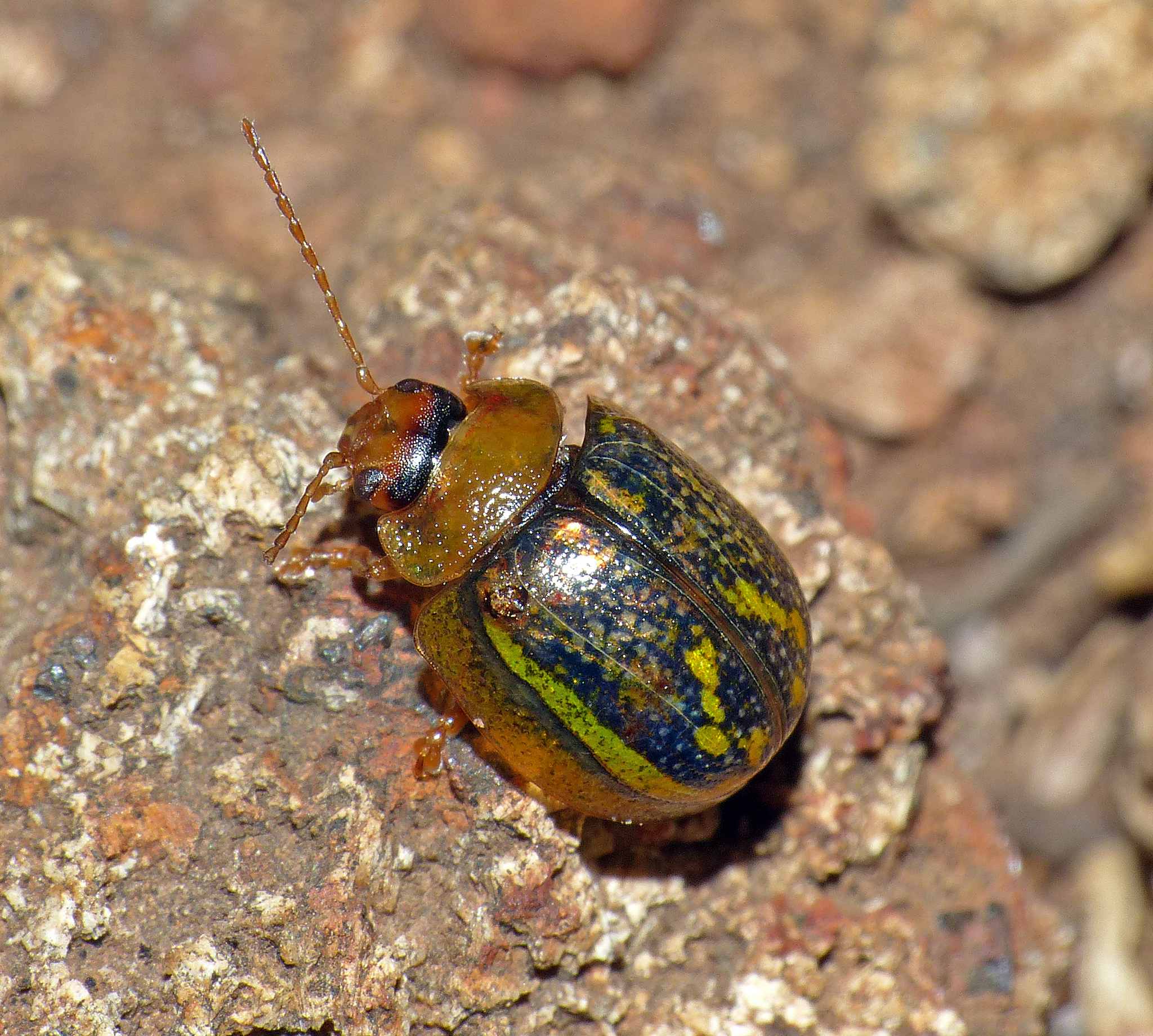
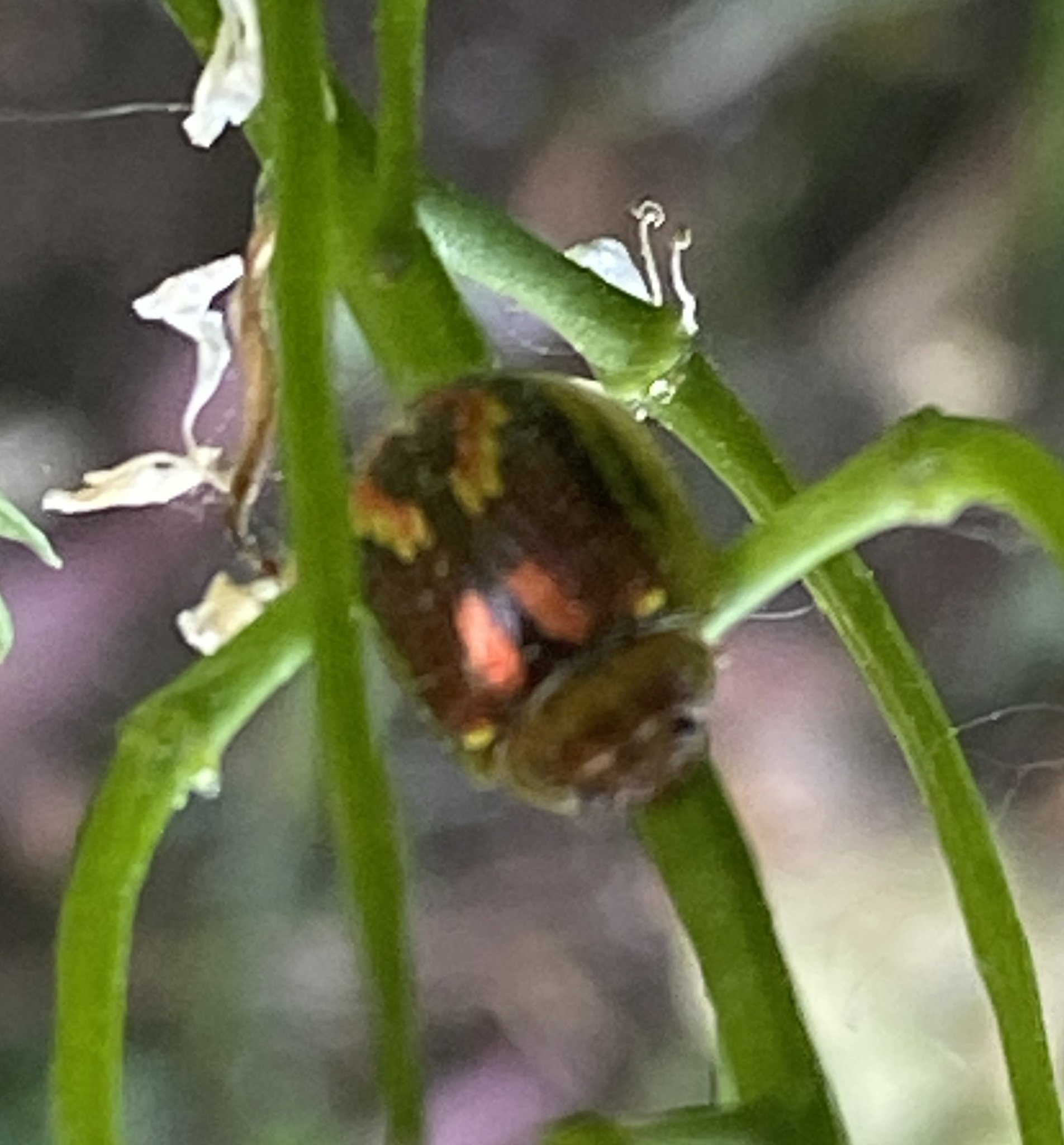
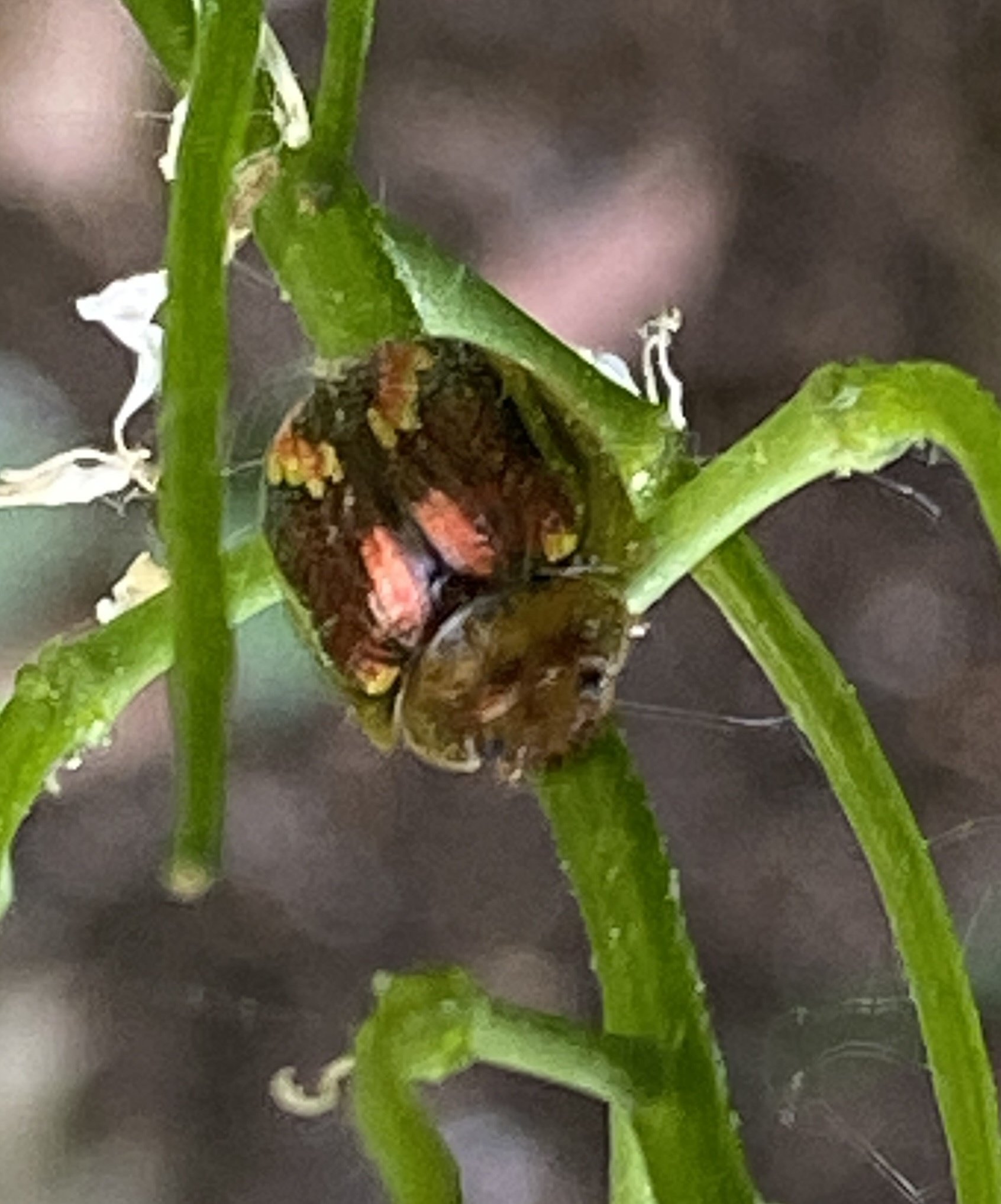
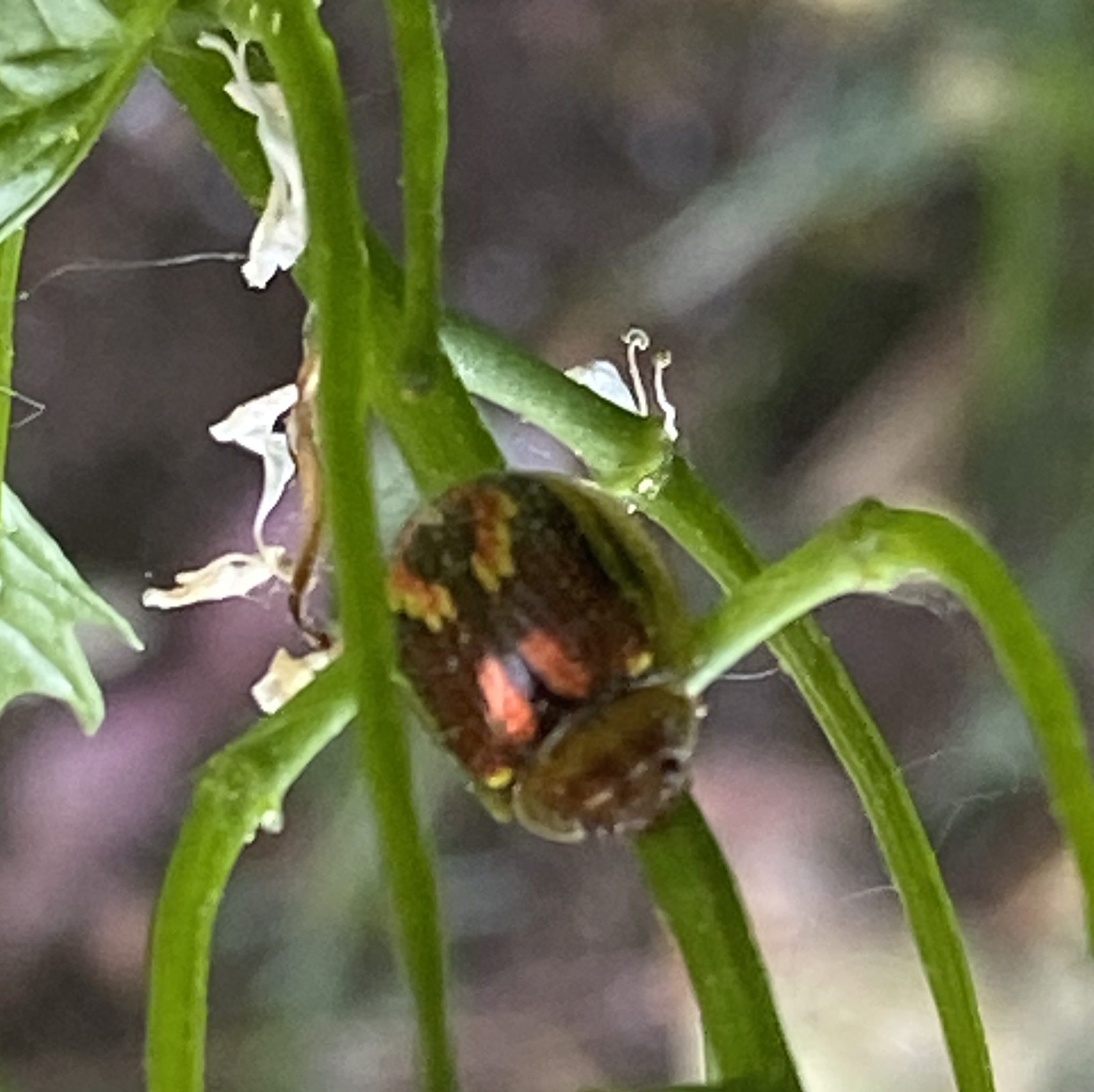
Body broadly ovate, length to width ratio 1.3, convex, length to height ratio 2.6, highest point at about half body length. Dead adult yellowish-brown with base of head black and lateral margins of metaventrite and metanepisterna brown. Vertex and frons entirely microtuberculate, sides slightly wrinkled; frontoclypeus irregularly punctured with mixed large and small punctures, often coalescent in small pits, densely and finely punctured in depressed areas adjacent to eyes. Antenna inserted on elevated flange, inner edge of flange as long as antenna; antennomeres 4–11 with smooth impunctate midline and raised setae either side. Pronotum with disc punctured as head but punctures larger and interspaces larger, punctures increasing in size and conflation towards sides, which are rugose with irregular slightly ridged intervals; anterior angles strongly anteriorly produced, posterior angles broadly rounded. Scutellum elongate semi-ovate, strongly microreticulate, minutely punctured. Elytra with diagnostic distribution of gold or yellow spots and stripes: lateral stripe on 7th–8th intervals and ring of elongate spots on apical half of combined elytra; each elytron usually with short reddish to gold streak at base of suture, constantly with gold to greenish-yellow streak from humerus to apex in 7th–8th intervals, series of 7–8 short elongate gold spots on apical half in a semi-circle; humeri prominent. Prosternum elevated as smooth ridge along midline, posteriorly bifurcating; prosternal process elongate spatulate, reaching well beyond posterior margins of procoxae. Metaventrite smooth except finely wrinkled and punctate in lateral angles. Legs: male pro- and meso-first tarsomeres with ovate pads of spatulate setae; male pro- and meso-first tarsomeres ovate, female elongate-triangular. Abdomen: ventrites I–IV shining but finely microreticulate, close and finely punctured at base, wrinkled at sides; ventrite V with subapical transverse setose groove in both sexes; apex of male ventrite V truncate with slight median convexity, apex of female broadly convex. Pubescence: head with depressed areas adjacent to eyes with erect setae, two long setae projecting anteriorly from sides of apical margin of clypeus; rest of head, pronotum, and elytra glabrous; prosternum glabrous except setose anterior margin and apex of prosternal process; abdominal ventrites glabrous except lateral margins and apex ventrite V densely setose.
Plazi taxonomic treatment
Host Plants (16 host plants)
Data sources: EPPO Global Database and relevant literature.
| Scientific Name | Status |
|---|---|
| Eucalyptus | Host |
| Eucalyptus brookeriana | Host |
| Eucalyptus dalrympleana | Host |
| Eucalyptus glaucescens | Host |
| Eucalyptus globulus | Host |
| Eucalyptus gunnii | Host |
| Eucalyptus johnstonii | Host |
| Eucalyptus moorei | Host |
| Eucalyptus nicholii | Host |
| Eucalyptus nitens | Host |
Quarantine Status (0 records)
Data sources: IPPC website and national quarantine websites; verified by human review.
No quarantine status records available.
Distribution (3 countries)
Data Sources: EPPO Global Database and GBIF.
| Country | Status | State |
|---|---|---|
| Australia | Present | |
| United Kingdom | Present | |
| Ireland | Present | — |
Distribution Map (Latitude and longitude coordinates sourced from GBIF.)
Download CSVGenomes (0 records)
Data source: NCBI.
No genome records available.
Transcriptomes (0 records)
Data source: NCBI.
No transcriptome records available.
Literature
Fetching literature from NCBI PubMed...
Failed to fetch literature